
Château Quercy
Updated on
Located in Vignonet, Château Quercy produces Saint-Émilion Grand Cru wines. Certified organic since 2012, the estate showcases a gravelly terroir and a grape variety profile dominated by Merlot.
Identity
Château Quercy is a winegrowing estate located in the commune of Vignonet, in the Gironde department. It produces wines under the Saint-Émilion Grand Cru appellation.
History and Philosophy
Built at the end of the 18th century, the château features a Directoire neoclassical architectural style. Its name, "Quercy", derives from the Latin word "Quercus", meaning "oak", referring to the centuries-old holm oaks gracing the property.
In 1988, the estate—then spanning approximately 6 hectares of land with 3.5 hectares of vineyard—was acquired. It has since come under the ownership of a Chinese family. Dedicated to an environmentally friendly approach, Château Quercy began its conversion to organic farming with the 2009 harvest, securing official certification with the 2012 vintage.
The Appellations
The plots of Château Quercy are located in the commune of Vignonet and exclusively produce wines under the Saint-Émilion Grand Cru appellation.
Practical Information
Address: 3, grave, 33330 Vignonet
Telephone: +33 (0) 557 84 56 07
Email: chateauquercy@wanadoo.fr
Opening hours: Monday to Friday, 8:00 am to 6:00 pm, year-round.
Château Quercy offers educational tours of the vineyard and cellars, followed by a tasting. These visits are available by appointment for individuals or groups (up to 25 people). Cellar-door sales are available, allowing purchases at direct cellar prices. Tours are conducted in English, Chinese, and Italian.
Find Out More
Frequently asked questions
- What is the main appellation of Château Quercy?
- Château Quercy produces wines under the Saint-Émilion Grand Cru appellation. This appellation is specific to the Saint-Émilion district and is renowned for its premium red wines.
- What is the vineyard surface area and grape variety composition at Château Quercy?
- The Château Quercy vineyard covers 3 hectares. The grape variety profile is largely dominated by Merlot (80%), complemented by Cabernet Franc (15%), and 5% of other varieties including Carmenère, Malbec, and Cabernet Sauvignon. The average age of the vines is 75 years.
- Is Château Quercy certified organic?
- Yes, Château Quercy is certified organic. The estate initiated its organic conversion with the 2009 harvest and achieved official certification for its 2012 vintage. The estate avoids chemical weedkillers, favouring natural plant protection methods.
- What are the visiting options and visitor facilities at Château Quercy?
- Château Quercy welcomes visitors by appointment for educational tours of the vineyard and cellars, followed by a tasting. Visits are available for individuals and groups (up to 25 people). Wines can be purchased directly from the estate. Tours can be conducted in English, Chinese, and Italian.
The Vineyard (Terroir)
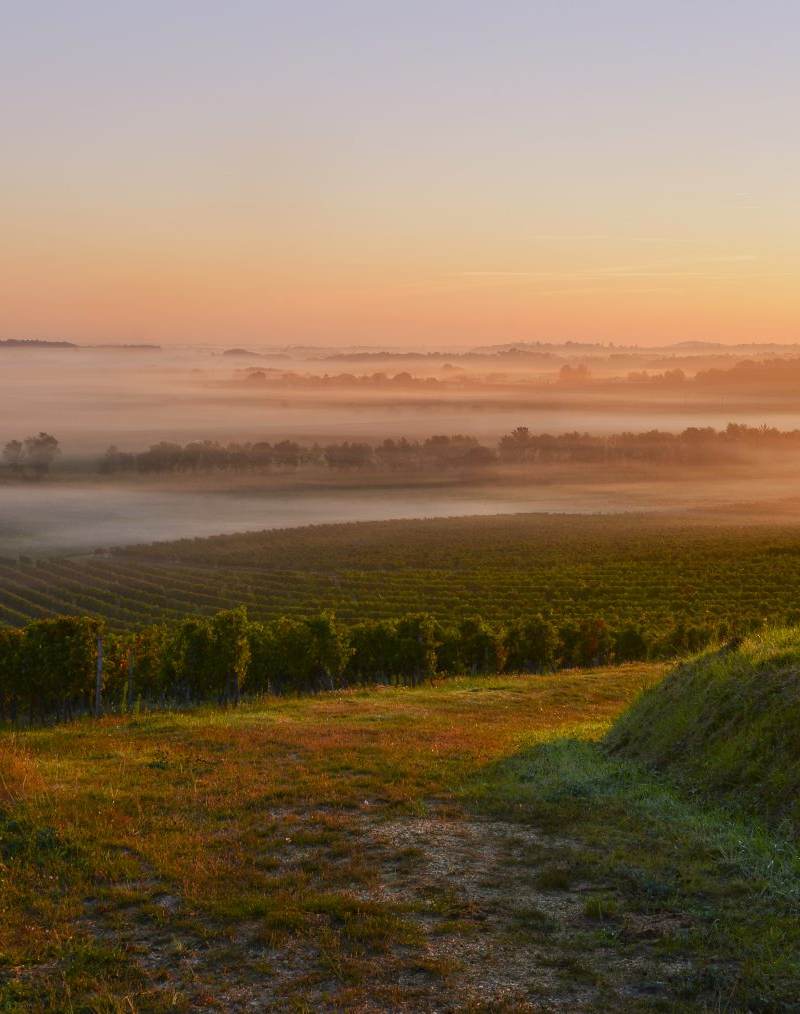
The Château Quercy vineyard covers 3 hectares within the Saint-Émilion Grand Cru appellation. The vines average around 75 years of age, with plantings dating back to 1901, 1961, 1988, and 1998. The soils are gravelly, composed of flint and pebbles, enriched by alluvium, silt, sand, and gravel from the former bed of the Dordogne.
The blend of grape varieties is dominated by Merlot (80%), complemented by Cabernet Franc (15%), alongside 5% of Carmenère, Malbec, and Cabernet Sauvignon. Viticultural practices adhere to organic farming principles, with no chemical herbicides and plant health management that encourages natural predators and ecosystem balance. The estate also carries out debudding, leaf thinning, and green harvesting.
Flagship Cuvées
Château Quercy Grand Cru Saint-Émilion
This grand vin is crafted from the estate's old vines, some of which date back to 1901. It is characterised by vinification in oak vats and 18 months of ageing in stave-wood oak barrels.
Château Graves de Peyroutas Grand Cru Saint-Émilion
This second wine is produced from younger vines planted in 1964 and 1988. Vinification takes place in concrete vats, followed by 12 months of ageing in stave-wood oak barrels.
Vinification and Ageing
Harvesting is carried out by hand using small crates to maintain berry integrity. A double sorting process is performed: first after picking to remove leaves, then a second pass on a sorting table after destemming, which is conducted without crushing. Gravity-led vats are filled using conveyor belts, avoiding the use of pumps.
The alcoholic fermentation, lasting 15 to 20 days, is indigenous and occurs without the addition of selected yeasts. Extractions are performed via pump-overs or manual punch-downs. A 2 to 4-week maceration precedes malolactic fermentation, which takes place partly in new oak barrels and partly in vats with submerged marc. Ageing lasts 15 to 18 months in stave-wood oak barrels, featuring regular lees stirring (bâtonnage) and controlled oxygenation. Around 80% of the barrels used are new, with the remaining 20% being one-wine barrels or older. The wine is bottled at the château.
- Appellation
- Saint-Émilion Grand Cru
- Commune
- Vignonet
- Wine region
- Libournais
- Owner
- famille chinoise
- Surface area
- 6.5 ha
- Second wine
- Château Graves de Peyroutas Grand Cru Saint-Émilion
- Certifications
- Bio
- Grape varieties
- Merlot 80%, Cabernet Franc 15%, Carmenère 5%, Malbec 5%, Cabernet Sauvignon 5%
Practical information
- Address
- 3 Grave, 33330 Vignonet
- Phone
- +33 (0) 557 84 56 07
- Contact form
- Contact the estate
- Opening hours
- Janvier, Février, Mars, Avril, Mai, Juin, Juillet, Août, Septembre, Octobre, Novembre, Décembre ; Lundi, Mardi, Mercredi, Jeudi, Vendredi ; De 08h00 à 18h00
- Visits
- sur rendez-vous, visite pédagogique du vignoble et des chais, suivie d'une dégustation, individuelle ou en groupe (25 personnes maximum)