Château Dassault
Updated on
Château Dassault is a Saint-Émilion Grand Cru Classé, owned by the Dassault family. Certified HVE 3, the 40-hectare winegrowing estate produces wines under the Saint-Émilion Grand Cru appellation, with a grape variety blend dominated by Merlot.
Identity
Château Dassault is a winegrowing estate located in Saint-Émilion, in Gironde. It is owned by the Dassault family through the Dassault Wine Estates entity, and holds the Grand Cru Classé classification. Management is led by Laurence Brun-Vergriette.
History and philosophy
The history of Château Dassault dates back to 1862 with the founding of Château Couperie. In 1955, Marcel Dassault acquired the property, which was then given its current name. In 1969, Château Dassault was recognised as a Grand Cru Classé. In 2002, the estate incorporated Château La Fleur. More recently, in 2022, the Faurie de Souchard property was added. The estate is committed to environmentally friendly viticulture, demonstrated by achieving level 3 Haute Valeur Environnementale certification in 2016.
The appellations
Château Dassault produces wines under the Saint-Émilion Grand Cru appellation.
Practical information
Château Dassault is located at 971 Route de Peyreau, 33330 Saint-Émilion. It can be reached by telephone on +33 (0)5 57 55 10 00 and by email at contact@dassaultwineestates.com. The estate is open from Monday to Sunday and offers visits by appointment. Payments by credit/debit card, cash, and cheque are accepted. Amenities such as parking and Wi-Fi are available. Guided tours are available in English.
Find out more
Frequently asked questions
- What is the classification of Château Dassault and its main appellation?
- Château Dassault is a Grand Cru Classé, a ranking reaffirmed in the 2022 classification. Its wines are produced under the principal Saint-Émilion Grand Cru appellation, located in the commune of Saint-Émilion in Gironde. This classification reflects official recognition of the quality of its wines within the Bordeaux region.
- What is the grape variety composition of the Château Dassault vineyard?
- The Château Dassault vineyard covers 40 hectares. It is predominantly planted with Merlot (66%), complemented by Cabernet Franc (26%) and Cabernet Sauvignon (8%). These grape varieties are cultivated on diverse soils, including clay-limestone slopes, clay over limestone bedrock, as well as sandy-clay and clay-sandy parcels.
- Which environmental certifications has Château Dassault obtained?
- Château Dassault is committed to environmentally conscious viticulture, as evidenced by its Haute Valeur Environnementale (HVE) level 3 certification. Awarded to the estate in 2016, this certification highlights viticultural practices designed to preserve biodiversity and minimise the environmental impact of wine production.
- Who owns Château Dassault and when was it founded under its current name?
- Château Dassault is owned by the Dassault family and managed through the Dassault Wine Estates entity, with Laurence Brun-Vergriette as director. The estate's history dates back to 1862, when it was originally known as Château Couperie. In 1955, Marcel Dassault acquired the property and renamed it Château Dassault.
The vineyard (terroir)
The Château Dassault vineyard covers 40 hectares, situated on the northern slope of Saint-Émilion. The soils are varied, comprising clay-limestone slopes, clay over limestone bedrock, as well as sandy-clay and clay-sandy parcels. The vines have an average age of 27 years. The grape variety distribution is dominated by Merlot (66%), complemented by Cabernet Franc (26%) and Cabernet Sauvignon (8%). A ten-year vineyard restructuring plan was launched in 2015, covering 25% of the planted area. Viticultural practices include double Guyot pruning, shallow soil tillage, and tailored cover cropping. Canopy management includes de-budding and leaf removal.
Flagship cuvées
The estate's principal cuvée is Château Dassault. The second wine, crafted since 1995, is named D de Dassault. The wines of Château Dassault are crafted to offer ageing potential typically ranging from 10 to 15 years.
Vinification and ageing
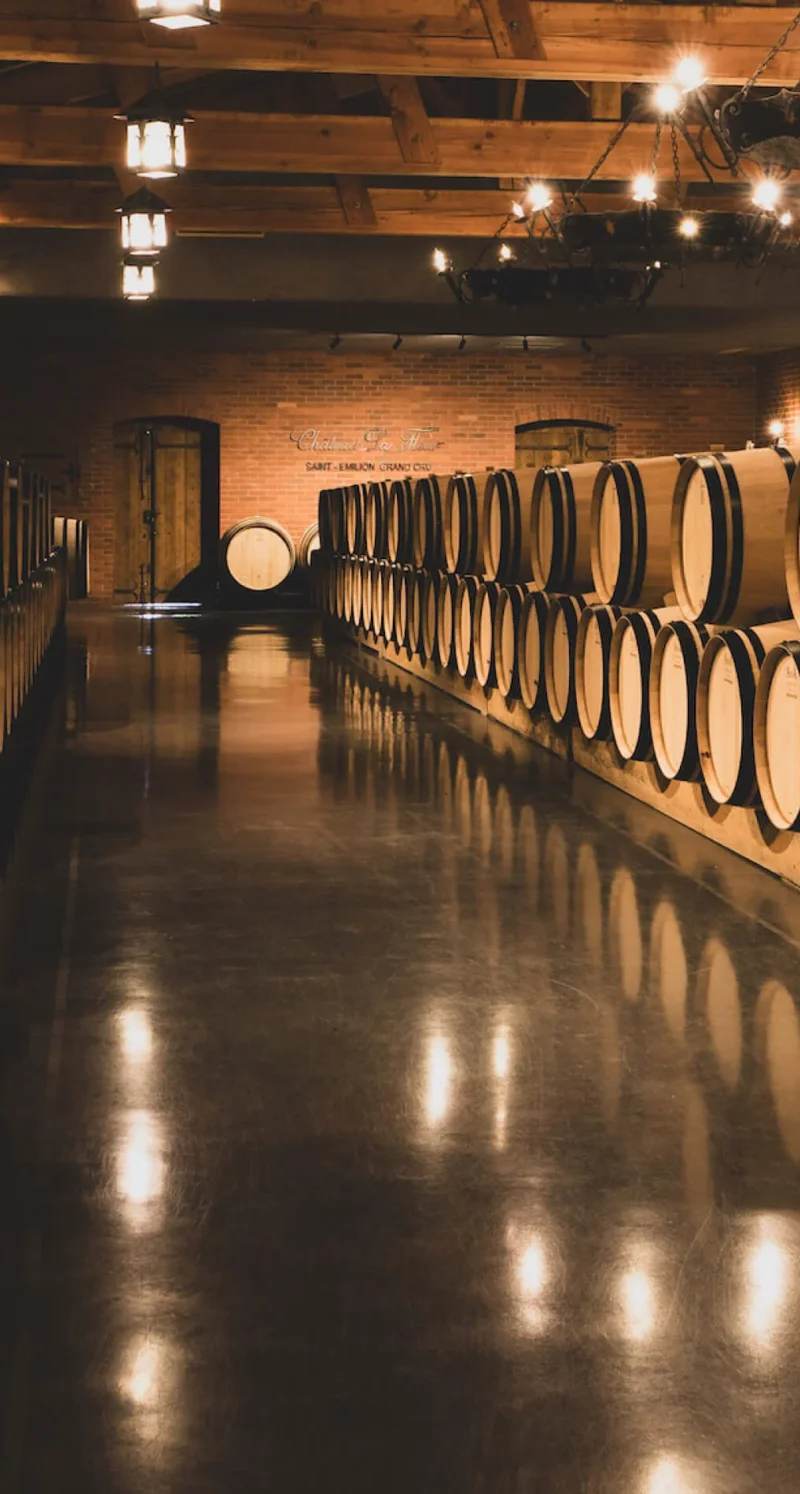
Harvesting is carried out by hand and includes densimetric sorting. Vinification is plot-by-plot and takes place in temperature-controlled stainless steel vats. In 2022, a new 3,500 m² production facility was inaugurated. Ageing lasts between 14 and 18 months, depending on the vintage, in a variety of vessels: new oak barrels, foudres, amphorae, and concrete vats.
- Appellation
- Saint-Émilion Grand Cru
- Commune
- Saint-Émilion
- Wine region
- Libournais
- Classification
- Grand Cru Classé (2022)
- Owner
- Dassault Wine Estates
- Technical direction
- Thomas Duclos
- Surface area
- 40 ha
- Second wine
- D de Dassault
- Certifications
- HVE
- Grape varieties
- Merlot 66%, Cabernet Franc 26%, Cabernet Sauvignon 8%
Estate news
07 August 2026
4e édition de la fête des vendanges de Saint-Émilion
La 4e édition de la Fête des vendanges de Saint-Émilion se tiendra les 10 et 11 octobre. Cet événement, axé sur la convivialité et la rencontre, mettra en lumière les grands crus classés de Saint-Émilion et le patrimoine viticole de l'appellation. La journée du samedi débutera par une balade historique, explorant les carrières, le plateau et les coteaux, suivie d'ateliers variés. Parmi ceux-ci, des sessions d'assemblage de cépages merlot, des dégustations de vins mariés au chocolat ou au fromage seront proposées. Un déjeuner vigneron, offrant différentes thématiques comme le brasero, le trésor de cave, ou le wine & beef, précédera d'autres ateliers. Ces derniers incluront de nouveau des associations vin-chocolat, ainsi que des découvertes autour du vin, du fromage et de l'illusion, et une collaboration avec les Compagnons du devoir. Une balade axée sur la biodiversité et les saveurs est également au programme. La première journée se clôturera par un dîner de la Fête des vendanges au Château Dassault. Le dimanche, les participants pourront profiter d'une escapade culturelle, suivie d'une dégustation gourmande et de déjeuners vignerons thématiques, tels que le millésime 2016, le bouillon du château, ou les champignons et truffes. Quarante-cinq grands crus classés de Saint-Émilion seront à déguster, servis exclusivement en magnums, perpétuant ainsi la tradition des grandes tablées vigneronnes.
Read the source — echos-judiciaires.comPractical information
- Address
- 971 Route de Peyreau, 33330 SAINT-EMILION
- Phone
- 05 57 55 10 00
- Contact form
- Contact the estate
- Opening hours
- AMPM
- Visits
- Oui sur rendez-vous