
Château du Mayne la Merci
Updated on
Château du Mayne La Merci is a certified organic winegrowing estate located in Barsac. It produces Sauternes appellation wines, predominantly crafted from Sémillon.
Identity
Château du Mayne La Merci is a winegrowing estate located in the commune of Barsac. It is run by Gilles, Brigitte and Caroline Bourjade.
History and philosophy
The property's history dates back to the 18th century. A notable historical figure associated with the estate was Marie-Thérèse Charlotte de Lamourous. The current owners, Gilles, Brigitte and Caroline Bourjade, established themselves at the estate in June 2017. The estate is committed to an environmentally friendly approach, backed by certified organic status.
Appellations
The estate's plots, situated in the Barsac area, produce wines under the Sauternes appellation.
Practical information
Email address: contact@lemayne.com
Telephone: +33 (0)9 50 03 65 45
Find out more
Frequently asked questions
- Where is Château du Mayne La Merci located and who owns it?
- Château du Mayne La Merci is a winegrowing estate established in the commune of Barsac. It is owned and managed by Gilles, Brigitte and Caroline Bourjade. They took over the property in June 2017, continuing the heritage of an estate whose origins date back to the 18th century.
- What is the size of the vineyard and its certification?
- The Château du Mayne La Merci vineyard covers a total area of 7 hectares, with just under 6 hectares currently under vine. The estate is committed to environmentally friendly viticulture, certified organic. The vineyard soils are composed of silica-gravel.
- What are the main grape varieties planted and which appellations are produced?
- The plantings at Château du Mayne La Merci are predominantly Sémillon, which makes up 80% of the vines cultivated on the estate. Thanks to its plots located in the Barsac area, the estate produces wines under the Sauternes appellation. These wines are renowned for their aromatic notes of apricot, honey and orange blossom.
- How are the wines of Château du Mayne La Merci made?
- Wines from Château du Mayne La Merci undergo a vinification process that includes dedicated ageing. This ageing is carried out in barrels for 18 months, enabling the wines to fully develop their aromatic complexity and character. The estate's first Sauternes vintage was produced in 2017.
The vineyard (terroir)
The Château du Mayne La Merci vineyard extends over a total area of 7 hectares, with just under 6 hectares under vine. The soils are silica-gravel. The grape varieties are predominantly Sémillon, accounting for 80% of the cultivated vines.
Flagship cuvées
Château du Mayne La Merci offers wines distinguished by aromatic notes of apricot, honey and orange blossom. The 2020 vintage of Château du Mayne La Merci is notably available. The estate's first Sauternes vintage was produced in 2017.
Vinification and ageing
The estate's wines benefit from 18 months of ageing in barrels.
- Commune
- Barsac
- Wine region
- Graves & Sauternais
- Owner
- Gilles, Brigitte et Caroline Bourjade
- Surface area
- 7 ha
- Certifications
- Bio
- Grape varieties
- Sémillon 80%
Estate news
29 November 2024
En Gironde, ce platane de 200 ans peut embrasser un destin exceptionnel
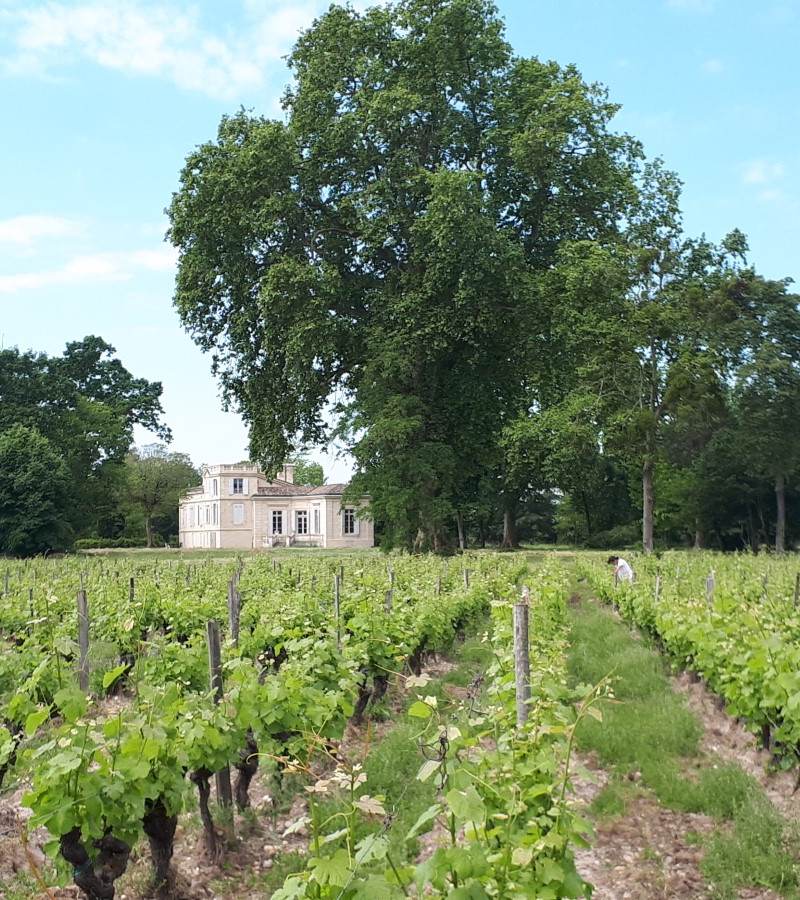
Un platane bicentenaire du château du Mayne La Merci, situé à Barsac en Gironde, est en lice pour le concours de l'Arbre de l'année 2024. Ce concours, organisé par le magazine Terre Sauvage en partenariat avec l'Organisation Nationale des Forêts (ONF), vise à récompenser les plus beaux spécimens du patrimoine naturel français, en prenant en compte leur esthétique, leur histoire, leur importance culturelle et affective, ainsi que leur symbolique. Le platane de 35 mètres de haut représente la Nouvelle-Aquitaine face à 13 autres arbres remarquables de différentes régions françaises, dont un chêne breton, un orme d’Île-de-France et un pin corse. Gilles Bourjade, le propriétaire du château du Mayne La Merci, a décidé de présenter cet arbre qu'il considère comme le "vaisseau amiral de sa propriété". Il souligne que ce platane est le seul en compétition à défendre les couleurs de la viticulture et estime qu'il participe à la qualité du vin grâce à son ombre. Le concours décerne deux prix : le Prix du jury et le Prix du public. Les votes pour le Prix du public sont ouverts jusqu'au 20 décembre 2024. Le platane de Barsac pourrait devenir le premier lauréat girondin du concours depuis sa création en 2011 et le quatrième pour la Nouvelle-Aquitaine. Les résultats seront annoncés le 16 janvier 2025.
Read the source — actu.frPractical information
- Address
- Barsac
- Phone
- +33 (0)9 50 03 65 45
- contact@lemayne.com
- Contact form
- Contact the estate