
Château Climens
Updated on
Château Climens is a Premier Cru Classé of Barsac, committed to biodynamic viticulture. Renowned primarily for its sweet Sémillon wine, it also produces dry white wines. The estate has been owned by the Moitry family since 2022.
Identity
Château Climens is a winegrowing estate located in the commune of Barsac. It was ranked Premier Cru Classé in 1855.
Since 2022, the Moitry family, via their property investment company Patrimonia Développement, have owned Château Climens. Jérôme Moitry manages the estate. Frédéric Nivelle is the technical director, and Paul Marchais is in charge of commercial development.
History and philosophy
The estate's origins are recorded as early as 1547. Château Climens developed from the 16th century under the Roborel family. In 1802, the estate was acquired by Bordeaux wine merchant Jean Binaud, and subsequently by the Gounouilhou family in 1885.
In 1971, Lucien Lurton acquired the estate. Bérénice Lurton took over the management of Château Climens in 1992. The Lurton family remained owners until 2022, when a majority stake was sold to the Moitry family.
The estate committed to sustainable viticulture and began its transition towards biodynamics in 2010, achieving certification in 2014 for the vineyard and in 2016 for the wines.
The appellations
Château Climens wines are produced under the Barsac and Sauternes appellations. The estate also produces wines under the Bordeaux blanc sec appellation.
Practical information
Address: 33720 BARSAC
Telephone: 05 56 27 15 33
Email: contact@chateau-climens.com
The estate offers visits by appointment. The “Le savoir-faire de Climens” tour lasts 1 hour 30 minutes and includes an introduction to biodynamic viticultural practices, a presentation of the herbal preparation room, and a tasting of three wines: Asphodèle, Lilium, and Château Climens. The rate is €70 per person. Visits are available from 9:30 am to 3:30 pm. Dining options are available. Cellar-door sales and mail orders are possible.
Find out more
Frequently asked questions
- What is the classification status of Château Climens and who is the current owner?
- Château Climens is recognised as a Premier Cru Classé according to the 1855 classification. Since 2022, the Moitry family, through their property investment company Patrimonia Développement, has owned the estate. Jérôme Moitry oversees the estate's management, while Frédéric Nivelle is the technical director and Paul Marchais is responsible for commercial development.
- What is the vineyard surface area and grape variety mix at Château Climens?
- The Château Climens vineyard spans 32 continuous hectares. The grape variety planted is exclusively 100% Sémillon. The average vine age is 46 years, with some parcels reaching 70 years. The planting density is 6,500 vines per hectare, and viticultural practices are managed biodynamically.
- What are the terroir and microclimate characteristics that favour wine production at Château Climens?
- The terroir of Château Climens consists of clayey and iron-rich sands, known as the “red sands of Barsac”, resting on a limestone bedrock. This topsoil, generally less than 50 cm deep, is located on a plateau at an altitude of 20 metres. The Sauternais microclimate, with its alternation of morning mists generated by the confluence of the Ciron and Garonne rivers and sunny afternoons, is ideal for the development of Botrytis Cinerea, the noble rot essential to the crafting of sweet wines.
- What certifications has Château Climens obtained for its viticultural practices?
- Château Climens is committed to sustainable viticulture, particularly biodynamics. The estate has achieved Organic and Biodynamic certification, as well as Ecocert certification. The transition to biodynamics began in 2010, resulting in certification for the vineyard in 2014 and for the wines in 2016, reflecting its environmental commitment.
The vineyard (terroir)
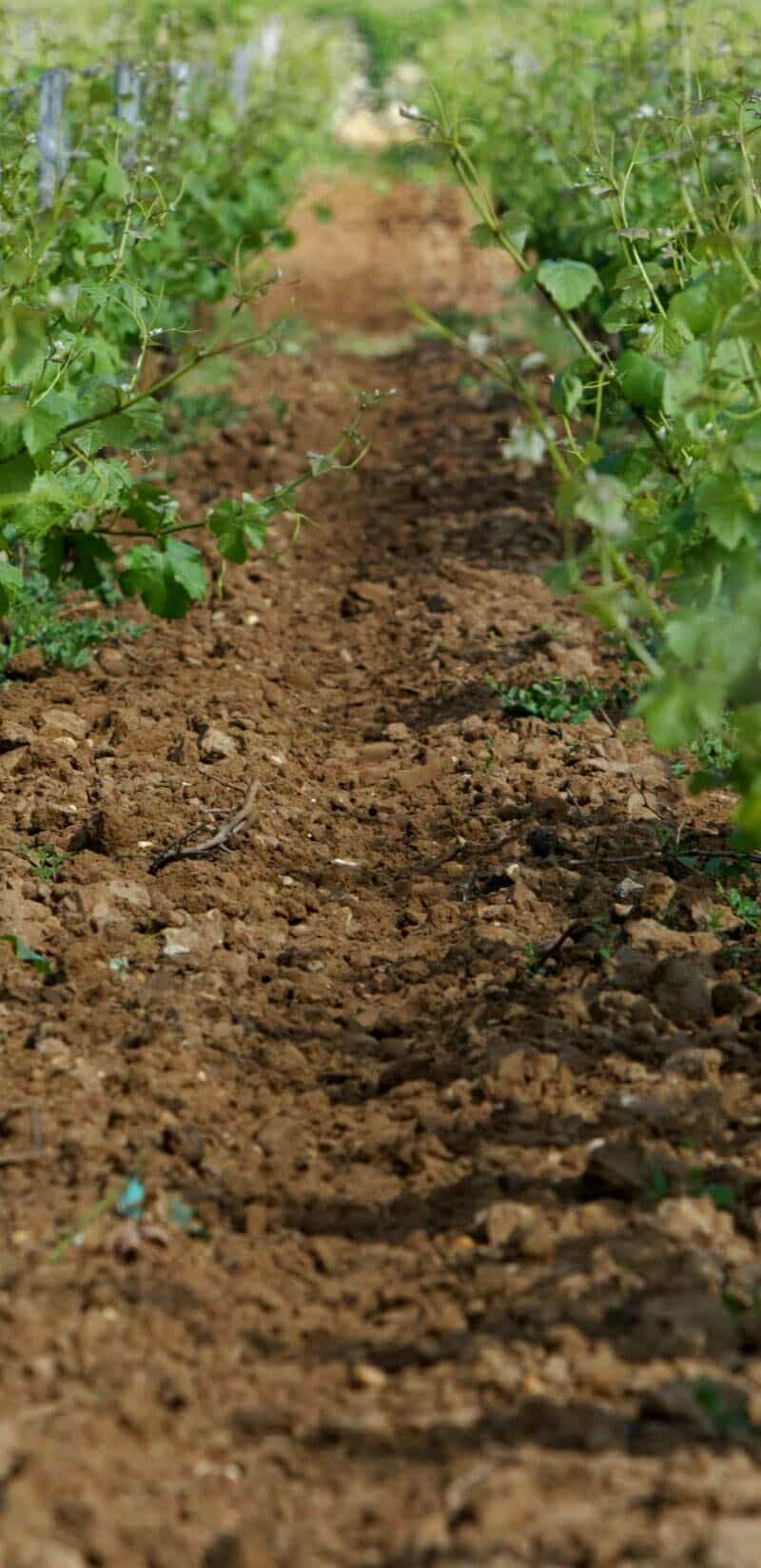
The Château Climens vineyard spans 32 continuous hectares on a plateau roughly 20 metres above sea level. The soils consist of clayey and iron-rich sands, known as the “red sands of Barsac”, resting on a fissured limestone bedrock dating from the lower Oligocene. The topsoil layer is generally less than 50 cm deep.
The Sauternais microclimate, characterised by the alternation of morning mists fostered by the confluence of the Ciron and Garonne rivers and sunny afternoons, is ideal for the development of Botrytis Cinerea, or noble rot.
The grape varieties planted are exclusively Sémillon (100%). The average vine age is 46 years, with certain old parcels reaching 70 years. Planting density is 6,500 vines per hectare.
Viticultural practices follow biodynamic methods, and the estate uses wind turbines and wood-pellet heating systems to protect the vineyard from frost. Harvesting is carried out by hand.
Flagship cuvées
Château Climens is the estate's Premier Cru Classé, a sweet wine crafted from botrytised Sémillon. It is renowned for its aromatic complexity and richness.
The estate also produces dry white wines. Asphodèle, introduced with the 2018 vintage, is a 100% Sémillon dry white wine crafted according to biodynamic principles. Lilium is another fine dry white wine. An additional dry white cuvée is Petite Lily.
The estate's second sweet wine is Cyprès de Climens.
Certain vintages of the grand vin were not produced, notably in 1984, 1987, 1992, and 1993.
Vinification and ageing
Fermentation of the grand vin is carried out using indigenous yeasts in oak barrels. Ageing lasts approximately eighteen months, with the use of 30% new oak. For the 2023 vintage, ageing lasted 20 months on fine lees, followed by 9 months in bottle.
For the dry white wine Asphodèle, ageing takes place in concrete vats on fine lees, with stirring, for a period of four to six months.
- Commune
- Barsac
- Wine region
- Graves & Sauternais
- Classification
- 1er Cru Classé 1855
- Owner
- famille Moitry
- Technical direction
- Frédéric Nivelle
- Surface area
- 32 ha
- Second wine
- Cyprès de Climens
- Certifications
- Bio, Biodynamie, Ecocert
- Grape varieties
- Sémillon 100%
Estate news
03 February 2010
Classement 1855 Sauternes et Barsac
Cet article présente le classement officiel des vins de Sauternes et Barsac, établi en 1855 à la demande de l'Empereur Napoléon III pour l'Exposition Universelle de Paris. La classification a été confiée au Syndicat des Courtiers de Commerce de la bourse de Bordeaux et visait à reconnaître la qualité et la notoriété de chaque cru. Le classement initial comprenait 25 châteaux, mais en raison de successions et de partages de sols, il en compte aujourd'hui 26. Le classement inclut une catégorie "Premier Cru Supérieur" représentée par le Château d'Yquem. Les "Premiers Crus" sont les Châteaux La Tour Blanche, La Faurie-Peyraguey, Clos Haut-Peyraguey, de Rayne-Vigneau, Suduiraut, Coutet, Climens, Guiraud, Rieussec, Rabaud-Promis et Sigalas-Rabaud. Enfin, la catégorie des "Seconds Crus" regroupe les Châteaux de Myrat, Doisy Daêne, Doisy-Dubroca, Doisy-Vedrines, d'Arche, Filhot, Broustet, Noirac, Caillou, Suau, de Malle, Romer-Du-Hayot, Lamothe et Lamothe-Guignard. L'article a été rédigé par Adelin Pâques et publié le 3 février 2010.
Read the source — chais-et-vignes.comPractical information
- Address
- 33720 BARSAC, 33720
- Phone
- +33556271533
- Contact form
- Contact the estate
- Opening hours
- De 9h30 à 15h30
- Visits
- Oui sur rendez-vous