
Château de Lussac
Updated on
Château de Lussac is a winegrowing estate in Lussac, within the AOC Lussac Saint-Émilion. It produces red wines from Merlot and Cabernet Franc across 28 hectares of clay and clay-limestone soils.
Identity
Château de Lussac is a winegrowing estate located in Lussac, in the Gironde. It is renowned for its dedication to crafting wines that showcase the distinctive characteristics of its terroir.
History and philosophy
Château de Lussac is deeply rooted in the winemaking heritage of its region. The estate is committed to viticultural practices that respect the natural balance of its land.
Appellations
The estate produces wines under the AOC Lussac Saint-Émilion appellation.
Practical information
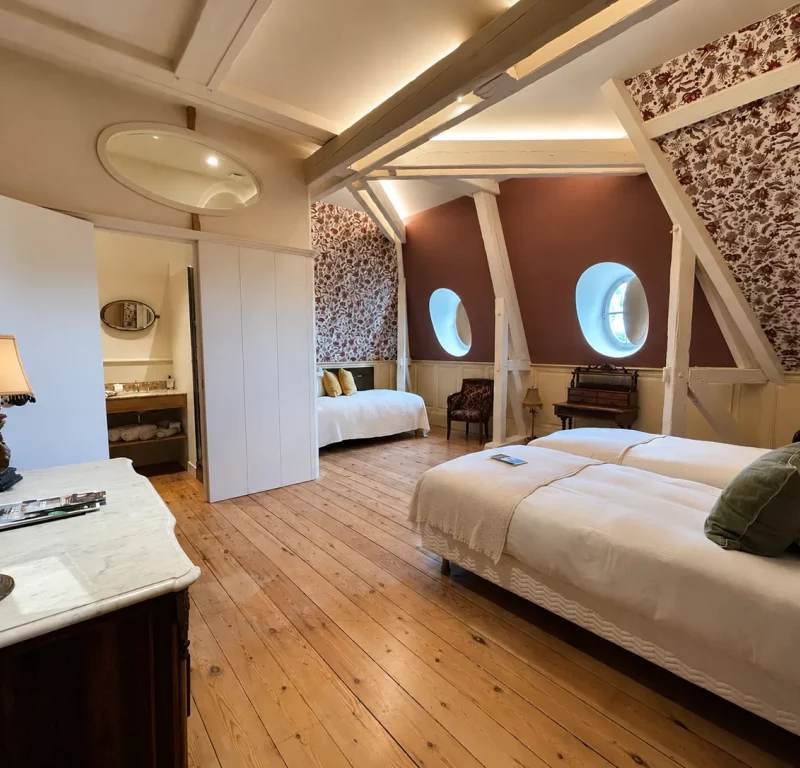
Château de Lussac is situated at 15, rue de Lincent, 33570 LUSSAC. For enquiries or bookings, you can call +33 (0)5 57 74 56 58 or email info@chateaudelussac.com. The estate provides guest rooms (six in the château, four in a holiday cottage, accommodating up to 28 guests in total), with breakfast served between 8:00 am and 10:00 am. Wine tourism experiences are also available, including tastings, vineyard visits, cycling tours, and excursions in the surrounding area. On-site amenities include an outdoor swimming pool, a padel court, and a pétanque pitch. Weddings and corporate seminars can be hosted; for enquiries, contact jeremy.lollia@sarmentsvignobles.com or call +33 (0)6 51 54 24 49.
Find out more
Frequently asked questions
- What grape varieties are planted at Château de Lussac?
- Château de Lussac relies on two main grape varieties for its wines. The main cuvée, Château de Lussac, is a blend of 75% Merlot and 25% Cabernet Franc. The second wine, Marquis de Lussac, is made entirely from Merlot. These varieties shape the aromatic profile and structure of the estate's wines.
- What is the size of the Château de Lussac vineyard and its terroir?
- The Château de Lussac vineyard covers an area of 28 hectares. The terroir is predominantly composed of clay and clay-limestone soils. Vine density ranges from 6,000 to 8,200 vines per hectare, with the vines trained using the double Guyot method to enhance grape quality.
- What are the vinification and ageing methods at Château de Lussac?
- Vinification at Château de Lussac begins with mechanical harvesting followed by densimetric sorting. Alcoholic fermentation is conducted in temperature-controlled stainless steel vats ranging from 90 to 120 hectolitres. For the Château de Lussac cuvée, ageing takes place in equal parts in oak barrels (new and seasoned) and vats. Marquis de Lussac is aged mainly in vats (80%), with the remaining portion in oak barrels (20%).
- Does Château de Lussac offer wine tourism activities or accommodation?
- Yes, Château de Lussac offers guest accommodation featuring six rooms in the château and four in a holiday cottage, accommodating up to 28 guests. Breakfast is served daily. The estate also offers a range of wine tourism activities, including tastings, vineyard tours, and cycling outings. Facilities such as an outdoor swimming pool, a padel court, and a pétanque pitch are available. The estate is also fully equipped to host weddings and corporate seminars.
The vineyard (terroir)
The Château de Lussac vineyard extends over 28 hectares. The soils are predominantly clay and clay-limestone. Planting density varies between 6,000 and 8,200 vines per hectare, with the vines trained in double Guyot. For the Château de Lussac cuvée, the grape varieties planted comprise 75% Merlot and 25% Cabernet Franc, with an average vine age of 32 years. The Marquis de Lussac cuvée is produced from 100% Merlot, with vines averaging 20 years of age.
Flagship cuvées
Château de Lussac
This cuvée is the estate's primary wine. It is distinguished by fruity aromas and a balanced structure, reflecting the blend of Merlot and Cabernet Franc.
Marquis de Lussac
Marquis de Lussac is the estate's second wine. Crafted exclusively from Merlot, it offers a fruit-forward and approachable profile with supple tannins.
Vinification and ageing
Winemaking at Château de Lussac begins with mechanical harvesting followed by densimetric sorting. Alcoholic fermentation takes place in temperature-controlled stainless steel vats ranging from 90 to 120 hectolitres for both cuvées. For Château de Lussac, ageing is carried out equally between oak barrels (new and seasoned) and vats. The Marquis de Lussac cuvée is aged primarily in vats (80%) alongside a proportion in oak barrels (20%).
- Appellation
- Lussac-Saint-Émilion
- Commune
- Lussac
- Wine region
- Libournais
- Surface area
- 28 ha
- Second wine
- Marquis de Lussac
- Grape varieties
- Merlot 75%, Cabernet Franc 25%
Practical information
- Address
- 15, rue de Lincent – 33570 LUSSAC
- Phone
- +33 (0)5 57 74 56 58
- Contact form
- Contact the estate