
Château Doisy Daëne
Updated on
Château Doisy Daëne is an 1855 Second Cru Classé in Barsac, owned by the Dubourdieu family. It is renowned for its sweet white wines, crafted from a 15-hectare vineyard on a clay-limestone terroir. Jean-Jacques Dubourdieu is the owner and winemaker.
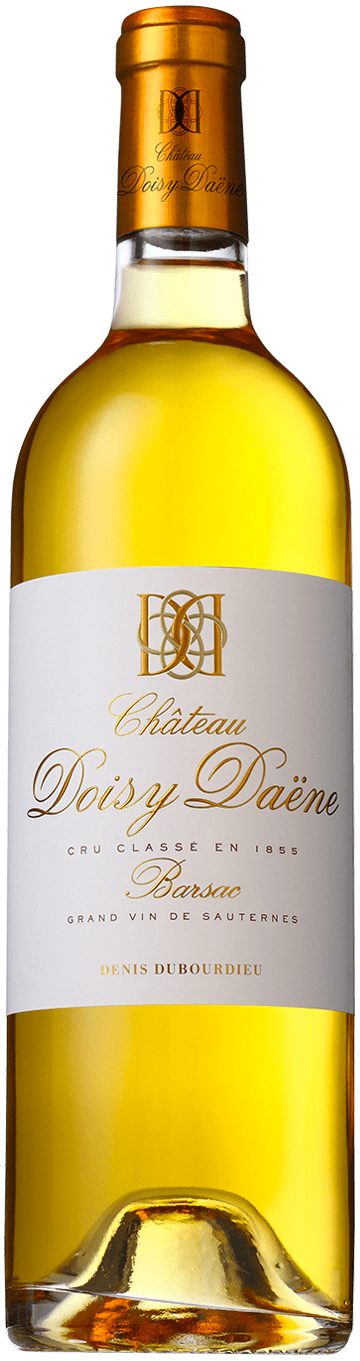
Identity
Château Doisy Daëne is a winegrowing estate located in Barsac, in the Gironde département. It is owned by the Dubourdieu family, with Jean-Jacques Dubourdieu serving as owner and winemaker. The estate is recognised as a Second Cru Classé in the 1855 classification.
History and philosophy
The existence of a Doisy cru has been documented since 1832. In 1855, the Doisy cru, then owned by the Daëne family, was ranked as a Second Cru. The Dubourdieu family acquired the estate in 1924 through Georges Dubourdieu. His son, Pierre Dubourdieu, subsequently took over. Later, Denis Dubourdieu took the helm in 2000, leaving a lasting mark on the estate's history until his passing in 2016. Since 2016, his sons, Fabrice and Jean-Jacques Dubourdieu, have managed the estate. The vineyard is farmed according to the principles of sustainable viticulture (agriculture raisonnée).
Appellations
The wines of Château Doisy Daëne are produced under the Barsac appellation, located in the Sauternais sub-region.
Practical information
Château Doisy Daëne is located at 15, Gravas, 33720 BARSAC. The estate can be reached by telephone on +33 (0)5 56 621 96 51 and by email at contact@denisdubourdieu.fr. The cellar is open from 9:00 to 12:30 and from 13:30 to 17:00. The estate offers cellar-door sales and mail order. Visits are welcome without an appointment.
Find out more
Frequently asked questions
- Who are the current owners of Château Doisy Daëne and what is their approach to viticulture?
- Château Doisy Daëne has been owned by the Dubourdieu family since 1924. The estate is currently managed by Fabrice and Jean-Jacques Dubourdieu, with Jean-Jacques Dubourdieu also serving as winemaker. The vineyard is cultivated according to the principles of sustainable viticulture (agriculture raisonnée), reflecting their commitment to environmentally friendly practices that respect the terroir. This approach continues the family legacy that has shaped the history of the estate.
- What are the grape varieties planted at Château Doisy Daëne and what are the characteristics of its terroir?
- The vineyard of Château Doisy Daëne covers 15 hectares. The grape varieties are predominantly Sémillon (85%), complemented by Sauvignon blanc (14%) and a small proportion of Muscadelle (1%). The terroir is characterised by a clay-limestone plateau, consisting of a thin layer of clayey sand overlaying a limestone subsoil. The vines, with an average age of 50 years, take root down to about 50 cm deep in this distinctive soil.
- How are the sweet wines of Château Doisy Daëne vinified and how long are they aged?
- The grapes for the sweet wines of Château Doisy Daëne are hand-harvested in successive passes (tries successives) to select only botrytised berries. Fermentation takes place in oak barrels, and the pre-blend is prepared approximately three months after harvest. Ageing continues in barrels for an average of twelve months, contributing to the aromatic richness and unctuous texture that characterise these wines.
- What are the options for visiting Château Doisy Daëne or purchasing its wines?
- Château Doisy Daëne is located at 15, Gravas, 33720 BARSAC. Visits to the estate are possible without an appointment. To purchase wine, the cellar door is open from 9:00 to 12:30 and from 13:30 to 17:00. The estate offers cellar-door direct sales as well as mail-order delivery. For any further information, you can contact the estate by phone on +33 (0)5 56 621 96 51 or by email at contact@denisdubourdieu.fr.
The vineyard (terroir)
The Château Doisy Daëne vineyard covers an area of 15 hectares. The soils are characterised by a clay-limestone plateau, featuring a thin layer of clayey sand known as "les sables rouges du barsacais" overlaying a limestone subsoil. The vines have an average age of 50 years and take root down to a depth of around 50 cm. The grape varieties are dominated by Sémillon (85%), complemented by Sauvignon blanc (14%) and a small proportion of Muscadelle (1%). The entire harvest is carried out by hand, using successive selective pickings.
Flagship cuvées
Château Doisy Daëne is primarily renowned for its sweet white wines, distinguished by their aromatic richness and unctuous texture, while maintaining a distinctive freshness. A special cuvée, L'Extravagant de Doisy Daëne, is also produced. Historically, the estate crafted a dry white wine based on Sauvignon as early as 1948. A new expression of dry white wine emerged in 2023, produced exclusively from old-vine Sémillon on the estate.
Vinification and ageing
Harvesting is done by hand in successive selective pickings to select botrytised grapes. Fermentation takes place in oak barrels. The pre-blend is prepared approximately 3 months after harvest. Ageing then takes place in barrels for an average duration of 12 months. For the 2019 vintage, barrel fermentation was carried out with one-third new oak, followed by ageing split equally between barrels and vats.
- Commune
- Barsac
- Wine region
- Graves & Sauternais
- Classification
- 2e Cru Classé 1855
- Owner
- famille Dubourdieu
- Technical direction
- Jean-Jacques Dubourdieu
- Surface area
- 15 ha
- Grape varieties
- Sémillon 85%, Sauvignon blanc 14%, Muscadelle 1%
Estate news
03 February 2010
Classement 1855 Sauternes et Barsac
Cet article présente le classement officiel des vins de Sauternes et Barsac, établi en 1855 à la demande de l'Empereur Napoléon III pour l'Exposition Universelle de Paris. La classification a été confiée au Syndicat des Courtiers de Commerce de la bourse de Bordeaux et visait à reconnaître la qualité et la notoriété de chaque cru. Le classement initial comprenait 25 châteaux, mais en raison de successions et de partages de sols, il en compte aujourd'hui 26. Le classement inclut une catégorie "Premier Cru Supérieur" représentée par le Château d'Yquem. Les "Premiers Crus" sont les Châteaux La Tour Blanche, La Faurie-Peyraguey, Clos Haut-Peyraguey, de Rayne-Vigneau, Suduiraut, Coutet, Climens, Guiraud, Rieussec, Rabaud-Promis et Sigalas-Rabaud. Enfin, la catégorie des "Seconds Crus" regroupe les Châteaux de Myrat, Doisy Daêne, Doisy-Dubroca, Doisy-Vedrines, d'Arche, Filhot, Broustet, Noirac, Caillou, Suau, de Malle, Romer-Du-Hayot, Lamothe et Lamothe-Guignard. L'article a été rédigé par Adelin Pâques et publié le 3 février 2010.
Read the source — chais-et-vignes.comPractical information
- Address
- 15, Gravas, 33720 BARSAC
- Phone
- +33556629651
- Contact form
- Contact the estate
- Opening hours
- De 9h à 12h30 et de 13h30 à 17h.
- Visits
- Oui sans rendez-vous