
Château Doisy-Védrines
Updated on
Château Doisy-Védrines, a 2e Cru Classé 1855 in Barsac, produces Sauternes wines and a dry white Bordeaux across 51 hectares. Managed by Olivier Castéja, the estate is HVE certified.
Identity
Château Doisy-Védrines is a winegrowing estate located in Barsac, in the Gironde. It is owned by Olivier Castéja and managed by Guillaume Lefebvre, who also oversees winemaking. The consultant oenologist is Hervé Romat and the cellar master is Frédéric Deyres. Château Doisy-Védrines is a 2e Cru Classé in 1855.
History and philosophy
The history of Château Doisy-Védrines dates back to 1677. Over the centuries, the estate has experienced several key milestones, notably in 1704, 1716, and 1846. The 1855 classification recognised the estate as a Grand Cru Classé. It has been in the hands of the Castéja family ever since, with Olivier Castéja representing the sixth generation at the helm of the property. The estate holds HVE (High Environmental Value) certification.
Appellations
Château Doisy-Védrines produces wines under the Sauternes appellation. It also crafts a dry white wine under the Bordeaux appellation.
Practical information
Château Doisy-Védrines is located at the following address: 1, Védrines, 33720 Barsac. For any enquiries, the estate can be contacted by telephone on +33 (0)5 56 27 15 13 or by email at guillaume.lefebvre@doisy-vedrines.com. The estate welcomes visitors by appointment and offers cellar-door sales from 9:00 am to 12:00 pm and from 2:00 pm to 4:00 pm.
Find out more
Frequently asked questions
- What is the main appellation of Château Doisy-Védrines wines?
- Château Doisy-Védrines is renowned primarily for its wines produced under the Sauternes appellation, where it is classified as a 2e Cru Classé in 1855.
- Who owns and manages Château Doisy-Védrines?
- Château Doisy-Védrines is owned by Olivier Castéja. Guillaume Lefebvre serves as estate manager and winemaker, supported by consultant oenologist Hervé Romat and cellar master Frédéric Deyres.
- What is the size and grape variety breakdown of the Château Doisy-Védrines vineyard?
- The vineyard extends over 51 hectares in Barsac, planted predominantly with Sémillon (80–83%), complemented by Sauvignon Blanc, Sauvignon Gris, and Muscadelle. The vines have an average age of around 35 years.
- Is Château Doisy-Védrines certified for its viticultural practices?
- Yes, Château Doisy-Védrines has achieved HVE (High Environmental Value) certification, reflecting its commitment to environmentally friendly farming practices.
The vineyard (terroir)
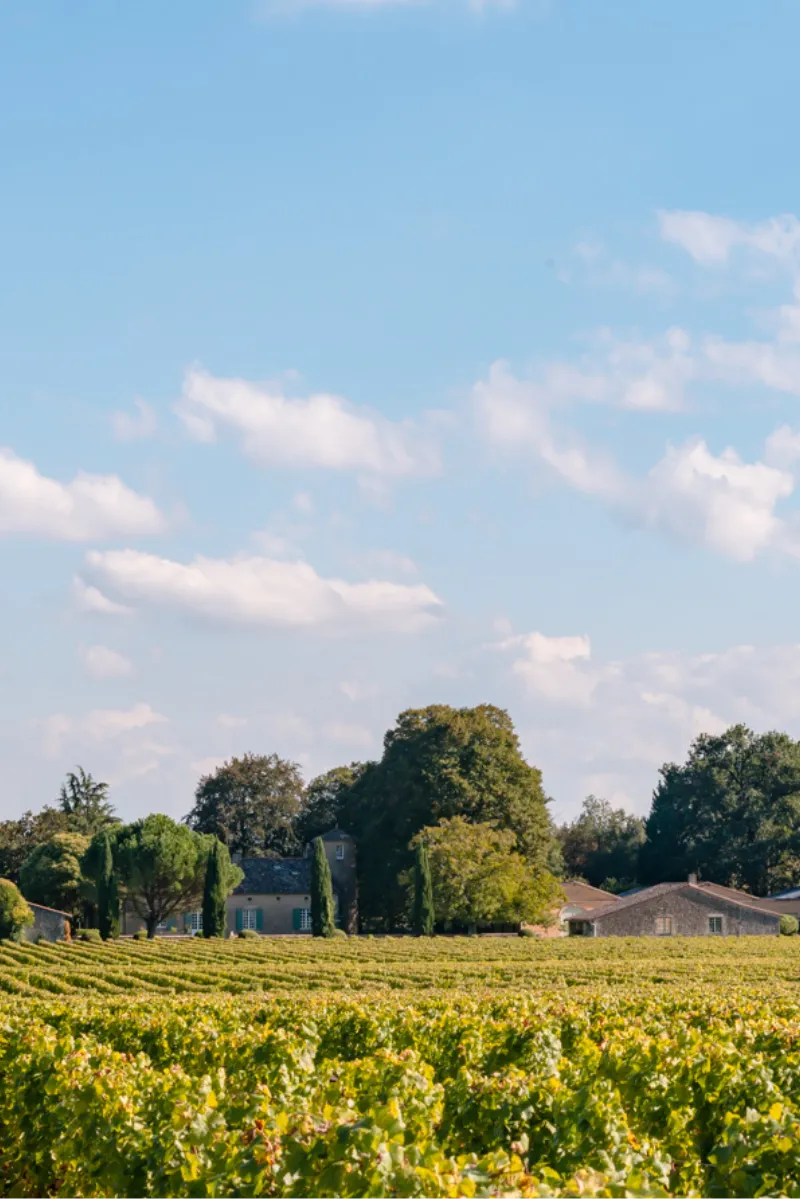
The Château Doisy-Védrines vineyard spans 51 hectares in the commune of Barsac. It is characterised by clay-limestone, red soils, and fine gravels. The vines have an average age of around 35 years. The grape varieties consist predominantly of Sémillon (80–83%), complemented by Sauvignon Blanc (5–10%), Sauvignon Gris (5–10%), and Muscadelle (2–5%). The proximity of the Ciron river, some 400 metres away, fosters the development of Botrytis cinerea, which is vital for sweet wines. Harvesting is carried out by hand with a team of around thirty pickers and can last between 6 and 8 weeks, with up to nine successive passes (tris).
Flagship cuvées
The estate's principal cuvée is Château Doisy-Védrines, a sweet wine. There is also a second wine, Château Petit-Védrines. Another sweet cuvée is the Sauternes DV By Château Doisy-Védrines. In addition, the estate produces a dry white wine, Chevalier de Védrines, under the Bordeaux appellation.
Vinification and ageing
Fermentation for Château Doisy-Védrines takes place in French oak barrels at a temperature of around 20°C, lasting between 3 and 4 weeks. Ageing for the Grand Vin, Château Doisy-Védrines, lasts 18 months in oak barrels, 60% to 90% of which are renewed each year. The second wine, Château Petit-Védrines, is aged for 12 months in oak barrels, while the DV By cuvée is aged for 10 months in oak. Racking is carried out every three months, and blending takes place after one year of ageing. Bottling occurs after two years.
- Commune
- Barsac
- Wine region
- Graves & Sauternais
- Classification
- 2e Cru Classé 1855
- Owner
- Olivier Castéja
- Technical direction
- Hervé Romat
- Surface area
- 51 ha
- Second wine
- Château Petit-Védrines
- Certifications
- HVE
- Grape varieties
- Sémillon 80%, Sauvignon blanc 10%, Sauvignon gris 5%, Muscadelle 5%
Estate news
14 October 2020
Sud-Gironde : les vendanges à Sauternes, c’est tout un art
L'article met en lumière la complexité et la minutie des vendanges dans l'appellation Sauternes, particulièrement au Château Doisy-Védrines, situé à Barsac. Après un épisode de pluie fin septembre suivi d'une remontée des températures, le botrytis cinerea, un champignon essentiel à l'élaboration des vins liquoreux, a fait son apparition sur les grappes de sémillon. La deuxième trie, ou second passage des vendangeurs, a débuté lundi au Château Doisy-Védrines, quatre semaines après la première. Guillaume Lefebvre, le nouveau directeur et gérant de cette propriété familiale, grand cru classé en 1855, supervise ses premières vendanges. Il souligne l'importance de ne pas céder à la tentation de vendanger trop tôt, afin de garantir la complexité aromatique qui caractérise un grand Sauternes. Olivier Castéja, le beau-père de Guillaume Lefebvre et ancien propriétaire, apporte son expérience en surveillant la sélection drastique des raisins. Seules les parties de grappes parfaitement confites et concentrées par le botrytis sont récoltées, laissant de côté les grains immatures ou trop évolués. Jennifer Vermeulen, une vendangeuse expérimentée, explique la sélection visuelle méticuleuse. Le succès de ces vendanges dépend d'un équilibre délicat avec les conditions météorologiques, le froid ayant stoppé le développement du botrytis avant que la chaleur ne le relance. Une trentaine de vendangeurs, locaux et étrangers, sont mobilisés pour cette récolte délicate et artistique.
Read the source — sudouest.fr03 February 2010
Classement 1855 Sauternes et Barsac
Cet article présente le classement officiel des vins de Sauternes et Barsac, établi en 1855 à la demande de l'Empereur Napoléon III pour l'Exposition Universelle de Paris. La classification a été confiée au Syndicat des Courtiers de Commerce de la bourse de Bordeaux et visait à reconnaître la qualité et la notoriété de chaque cru. Le classement initial comprenait 25 châteaux, mais en raison de successions et de partages de sols, il en compte aujourd'hui 26. Le classement inclut une catégorie "Premier Cru Supérieur" représentée par le Château d'Yquem. Les "Premiers Crus" sont les Châteaux La Tour Blanche, La Faurie-Peyraguey, Clos Haut-Peyraguey, de Rayne-Vigneau, Suduiraut, Coutet, Climens, Guiraud, Rieussec, Rabaud-Promis et Sigalas-Rabaud. Enfin, la catégorie des "Seconds Crus" regroupe les Châteaux de Myrat, Doisy Daêne, Doisy-Dubroca, Doisy-Vedrines, d'Arche, Filhot, Broustet, Noirac, Caillou, Suau, de Malle, Romer-Du-Hayot, Lamothe et Lamothe-Guignard. L'article a été rédigé par Adelin Pâques et publié le 3 février 2010.
Read the source — chais-et-vignes.comPractical information
- Address
- 1, Védrines, 33720 Barsac
- Phone
- +33556271513
- Contact form
- Contact the estate
- Opening hours
- De 9h à 12h et de 14h à 16h.