
Château Doisy-Dubroca
Updated on
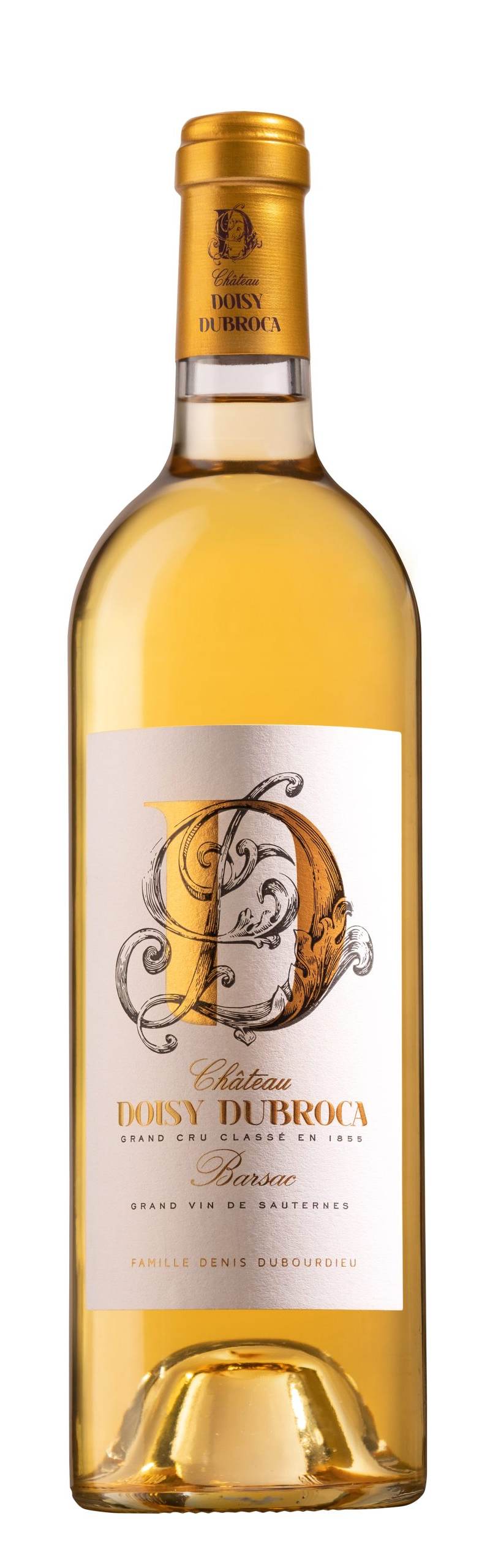
Château Doisy-Dubroca, a 1855 Deuxième Cru Classé in Barsac, produces a sweet white wine made from Sémillon on clay-limestone terroir, aged in oak barrels.
Identity
Château Doisy-Dubroca is a winegrowing estate located in the commune of Barsac. It was classified as a Deuxième Cru Classé in 1855.
History and philosophy
The history of Château Doisy-Dubroca dates back to the acquisition of part of the Doisy estate by Jean-Jacques-Emmanuel Daëne in 1809. A section of this estate was transferred to the Dubroca brothers on 9 December 1875, giving rise to Château Doisy-Dubroca as it is known today.
In 2014, Château Doisy-Dubroca was reunited with Château Doisy Daëne. Following a period of replanting the vineyard, the estate resumed small-scale production starting from the 2019 vintage.
Appellations
Château Doisy-Dubroca produces wines under the Barsac appellation.
Practical information
Find out more
Official estate websiteFrequently asked questions
- What is the primary appellation of Château Doisy-Dubroca wines?
- Château Doisy-Dubroca produces its wines under the Barsac appellation. This is the sole appellation designated for the estate's wines. The property is specifically located in the commune of Barsac, confirming its roots in this renowned winegrowing district. The characteristics of this appellation are fully reflected in the wines crafted by the château.
- What is the classification of Château Doisy-Dubroca?
- Château Doisy-Dubroca was ranked as a Deuxième Cru Classé in the 1855 classification. This historical recognition highlights the estate's quality and standing among Bordeaux wines. The classification remains a major benchmark for wine lovers and professionals, attesting to the château's standard of excellence.
- What is the vineyard surface area and grape variety breakdown of Château Doisy-Dubroca?
- The Château Doisy-Dubroca vineyard covers an area of 1.5 hectares. The plantings consist exclusively of Sémillon, representing 100% of the grape varieties cultivated on the estate. The clay-limestone terroir is a key characteristic of this vineyard. The vineyard is young, with an average vine age currently under 5 years.
- How are vinification and ageing carried out at Château Doisy-Dubroca?
- Vinification and ageing for Château Doisy-Dubroca wines begin with 12 months in oak barrels, 33% of which are new oak. This stage is crucial for developing the wine's aromatic complexity and structure. A complementary 6-month ageing period then takes place in stainless-steel vats to refine the wine prior to bottling. Annual production stands at around 2,700 bottles.
The vineyard (terroir)
The Château Doisy-Dubroca vineyard covers a surface area of 1.5 hectares. Its terroir is characterised by clay-limestone soils. The grape varieties are 100% Sémillon. The average vine age is currently under 5 years.
Signature cuvées
Château Doisy Dubroca produces a still white wine. Harvesting is carried out by hand in successive selections (tries). This wine is distinguished by an aromatic complexity and structure that give it notable ageing potential, generally between 2026 and 2038. It pairs wonderfully with aperitifs, world cuisine dishes, or desserts.
Vinification and ageing
Vinification and ageing of Château Doisy-Dubroca wine take place in oak barrels, of which 33% are new oak. This phase lasts 12 months. An additional 6-month ageing period is carried out in stainless-steel vats. Annual production is approximately 2,700 bottles.
- Appellation
- Barsac
- Commune
- Barsac
- Wine region
- Graves & Sauternais
- Classification
- 2e Cru Classé 1855
- Surface area
- 1.5 ha
- Grape varieties
- Semillon 100%
Estate news
03 February 2010
Classement 1855 Sauternes et Barsac
Cet article présente le classement officiel des vins de Sauternes et Barsac, établi en 1855 à la demande de l'Empereur Napoléon III pour l'Exposition Universelle de Paris. La classification a été confiée au Syndicat des Courtiers de Commerce de la bourse de Bordeaux et visait à reconnaître la qualité et la notoriété de chaque cru. Le classement initial comprenait 25 châteaux, mais en raison de successions et de partages de sols, il en compte aujourd'hui 26. Le classement inclut une catégorie "Premier Cru Supérieur" représentée par le Château d'Yquem. Les "Premiers Crus" sont les Châteaux La Tour Blanche, La Faurie-Peyraguey, Clos Haut-Peyraguey, de Rayne-Vigneau, Suduiraut, Coutet, Climens, Guiraud, Rieussec, Rabaud-Promis et Sigalas-Rabaud. Enfin, la catégorie des "Seconds Crus" regroupe les Châteaux de Myrat, Doisy Daêne, Doisy-Dubroca, Doisy-Vedrines, d'Arche, Filhot, Broustet, Noirac, Caillou, Suau, de Malle, Romer-Du-Hayot, Lamothe et Lamothe-Guignard. L'article a été rédigé par Adelin Pâques et publié le 3 février 2010.
Read the source — chais-et-vignes.comPractical information
- Address
- Barsac
- Contact form
- Contact the estate