
Château la Lagune
Updated on
Château La Lagune, a 3ème Cru Classé de 1855 and certified Biodyvin estate, is located in Ludon-Médoc. Managed by Caroline Frey, it produces flagship Haut-Médoc wines from a 104-hectare vineyard.
Identity
Château La Lagune is a 3ème Cru Classé de 1855 located in Ludon-Médoc. The property is managed by Caroline Frey and belongs to the Frey family.
History and philosophy
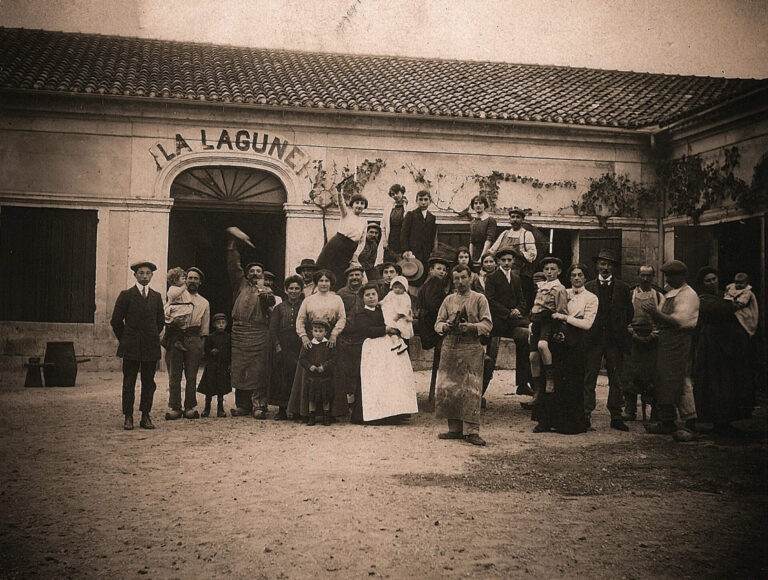
The history of Château La Lagune dates back to 1587, with plantings established in the 16th century by Dutch polder workers. The estate became a renowned winegrowing property in the 18th century, and its chartreuse was built around 1730 by the architect Baron Victor Louis.
The château was classified as a Troisième Grand Cru in 1855. Over the years, the property saw several changes of ownership. In 1898, the Sèze family took over the estate. In 1958, Georges Brunet acquired the château when it covered just 4 hectares. Champagne Ayala bought La Lagune in 1962 and remained the owner until 1999, the year it was acquired by Jean-Jacques Frey. The Frey family has owned the estate since 2000, with Caroline Frey serving as managing director since 2004.
Between 2002 and 2004, a new vat house was built. The estate is committed to an environmentally friendly approach, certified Biodyvin since 2021 alongside organic (Bio) certification.
The appellations
Château La Lagune produces wines under the Haut-Médoc appellation. Another cuvée, Mademoiselle L, is also crafted under the Haut-Médoc appellation, made from grapes sourced from Cussac.
Practical information
Château La Lagune is located at 81, avenue de l'Europe, 33290 Ludon-Médoc. The estate can be contacted by telephone on 05 57 88 82 77 or by email at contact@chateau-lalagune.com. Cellar-door sales are available, and the tasting room is open from Monday to Friday morning from 09:00 to 12:00 and from 14:00 to 17:00. Visits are arranged by appointment.
Find out more
Frequently asked questions
- Where is Château La Lagune located and which appellation does it belong to?
- Château La Lagune is a winegrowing estate located in the commune of Ludon-Médoc. It is classified as a 3ème Cru Classé de 1855, and its wines are produced under the main appellation Haut-Médoc. The estate's history dates back to 1587, and its chartreuse was built around 1730. The property was acquired by the Frey family in 2000, with Caroline Frey managing the estate since 2004.
- What is the size of the vineyard and which grape varieties are grown at Château La Lagune?
- The Château La Lagune vineyard covers a planted area of 104 hectares, of which 80 hectares are currently in production. The plantings are dominated by Cabernet-Sauvignon, accounting for 58% of the vineyard. Merlot represents 35%, and Petit Verdot completes the plantings with 7%. The average age of the vines is 35 years. Harvesting is carried out by hand, and the estate has used optical sorting technology since 2010.
- What environmental certifications does Château La Lagune hold?
- Château La Lagune is committed to an environmentally friendly approach, confirmed by several certifications. The estate is certified organic (Bio) and has also held biodynamic certification (Biodyvin) since 2021. This commitment reflects the estate's philosophy regarding sustainable viticulture and respect for the vineyard's ecosystems.
- What types of wines are produced by Château La Lagune?
- Château La Lagune produces several cuvées. The grand vin is Château La Lagune. A second wine, Le Moulin de la Lagune, is also crafted. A third cuvée, named Mademoiselle L, is offered under the Haut-Médoc appellation, made from grapes sourced from Cussac. The estate also produces the cuvée Evidence, a blend of Syrah and Cabernet Sauvignon, first released in the 2010 vintage. The Cabernet Sauvignon for Evidence comes from the vines producing Le Moulin de la Lagune, and the Syrah is sourced from the vines of Domaine de Thalabert.
The vineyard (terroir)
The Château La Lagune vineyard extends over a planted surface of 104 hectares, with 80 hectares in production. The average vine age is 35 years. The grape varieties consist of 58% Cabernet-Sauvignon, 35% Merlot, and 7% Petit Verdot. Harvesting is carried out by hand, and the estate has used optical sorting technology since 2010. The property also encompasses 34 hectares of wetlands.
Flagship cuvées
Château La Lagune produces a grand vin and a second wine, Le Moulin de la Lagune. A third cuvée named Mademoiselle L is also produced. The estate also offers the cuvée Evidence, an equal-parts blend of Syrah and Cabernet Sauvignon. This cuvée, whose first vintage was 2010, followed the cuvée Duo, which was first vinified in 2006. The Cabernet Sauvignon used for Evidence comes from vines that produce Le Moulin de Lagune, while the Syrah is sourced from the vines of Domaine de Thalabert. For the cuvée Duo, the Cabernet Sauvignon came from the vines of Château La Lagune and the Syrah from vines of Hermitage La Chapelle. Around 10,000 bottles of the cuvée Evidence are produced.
Vinification and ageing
The estate built a new vat house between 2002 and 2004 and has utilised optical sorting technology since 2010.
- Appellation
- Haut-Médoc
- Commune
- Ludon-Médoc
- Wine region
- Médoc
- Classification
- 3e Cru Classé 1855
- Owner
- famille Frey
- Technical direction
- Caroline Frey
- Surface area
- 104 ha
- Second wine
- Le Moulin de la Lagune
- Certifications
- Bio, Biodynamie
- Grape varieties
- Cabernet-Sauvignon 58%, Merlot 35%, Petit Verdot 7%
Estate news
07 August 2026
Les vignobles de Provence et de la Loire ont le vent en poupe : un domaine historique trouve un acquéreur britannique
Le Château Vignelaure, domaine viticole provençal, a été acquis par l'entrepreneur britannique Neil Utley et sa famille. Cette transaction, dont le montant n'a pas été divulgué, fait suite à une série d'opérations immobilières marquantes en Provence, une région très prisée pour ses vignobles. Le Château Vignelaure, dont l'histoire moderne a débuté dans les années 1960 sous l'impulsion de Georges Brunet, ancien propriétaire du Château La Lagune à Bordeaux, est particulièrement reconnu pour la qualité de ses vins rouges, issus de vignes situées à des altitudes relativement élevées. Neil Utley a été séduit par le pedigree du domaine en matière de vins rouges, qu'il considère comme un joyau. Il prévoit de replanter une partie des vignes, d'en planter de nouvelles sur des terres préparées, et de lancer une marque de cosmétiques, Maison Minu, en utilisant les ressources du domaine. Des oliviers et des ruches seront également installés pour favoriser la biodiversité, et un spa sera construit. Le directeur et vigneron, Philippe Bru, restera en poste. Selon Adam Dakin, fondateur de Wine Objectives, la Provence et la vallée de la Loire sont les destinations privilégiées des acheteurs de vignobles en France. Le marché provençal est très actif, malgré des prix élevés (le cœur du marché se situant entre 5 et 10 millions d'euros), tandis que la Loire offre des opportunités plus abordables. L'intérêt pour ces deux régions contraste avec un marché plus difficile pour certaines régions viticoles traditionnelles de vins rouges, comme le Bordeaux générique, tandis que la Bourgogne a vu ses prix continuer d'augmenter en 2025 selon un rapport de la Safer. L'article original a été publié dans Decanter le 5 août 2026.
Read the source — wineobjectives.com20 May 2017
Ces «Suisses» et leurs vignobles bordelais - thomasvino.ch
L'article explore la présence de propriétaires suisses ou résidant en Suisse, souvent d'origine française, à la tête de nombreux châteaux viticoles prestigieux dans le Bordelais. Il souligne l'attractivité de Bordeaux pour les investisseurs, d'abord les géants du luxe dans les années 1990, puis plus récemment les investisseurs chinois. Parmi les propriétaires mentionnés, Pierre Castel, dont la fille Romy réside à Genève, est associé au Château Mirefleurs et au Château Beychevelle. Bernard Arnault, patron de LVMH, est cité pour ses acquisitions du Château d'Yquem et copropriétaire du Château Cheval-Blanc. La famille Wertheimer de Chanel possède le Château Canon et Rauzan-Ségla. Silvio Denz, un Bâlois, est propriétaire du Château Faugères et de Lafaurie-Peyraguey. Karl Friederich Scheufele de Chopard détient le Château Monestier La Tour à Bergerac. Michel Reybier, établi à Genève, est le châtelain de Cos d'Estournel. Bruno Prats, ancien propriétaire de Cos d'Estournel, réside près de Morges. May-Eliane Miailhe, veuve du général de Lencquesaing, s'est installée à Vevey après avoir vendu le Château Pichon Comtesse-Lalande. Hervé Laviale et Griet van Malderen ont possédé les châteaux Franc-Mayne, Château de Lussac et Vieux-Maillet. Le prince Robert de Luxembourg, genevois d'adoption, préside les Domaines Clarence Dillon, incluant le Château Haut Brion. Caroline Frey gère le Château La Lagune. Enfin, la branche genevoise des Rothschild, avec le baron Benjamin (décédé en 2021), était à la tête des châteaux Clarke et des Laurets, regroupés sous Edmond de Rothschild Heritage avec d'autres domaines mondiaux. L'article, actualisé en mai 2017 et octobre 2022, est paru initialement en janvier 2016 dans une version du magazine L'Hebdo.
Read the source — thomasvino.chPractical information
- Address
- 81, avenue de l'Europe, 33290 LUDON-MÉDOC
- Phone
- 05 57 88 82 77
- Contact form
- Contact the estate
- Opening hours
- Du lundi au vendredi matin de 9h à 12h et de 14h à 17h
- Visits
- Oui sur rendez-vous