
Château Latour
Updated on
Château Latour, a 1er Grand Cru Classé of Pauillac, is renowned for its Grand Vin. Owned by the Pinault family, the 93-hectare winegrowing estate has been certified organic since 2018 and is committed to biodynamic viticulture.
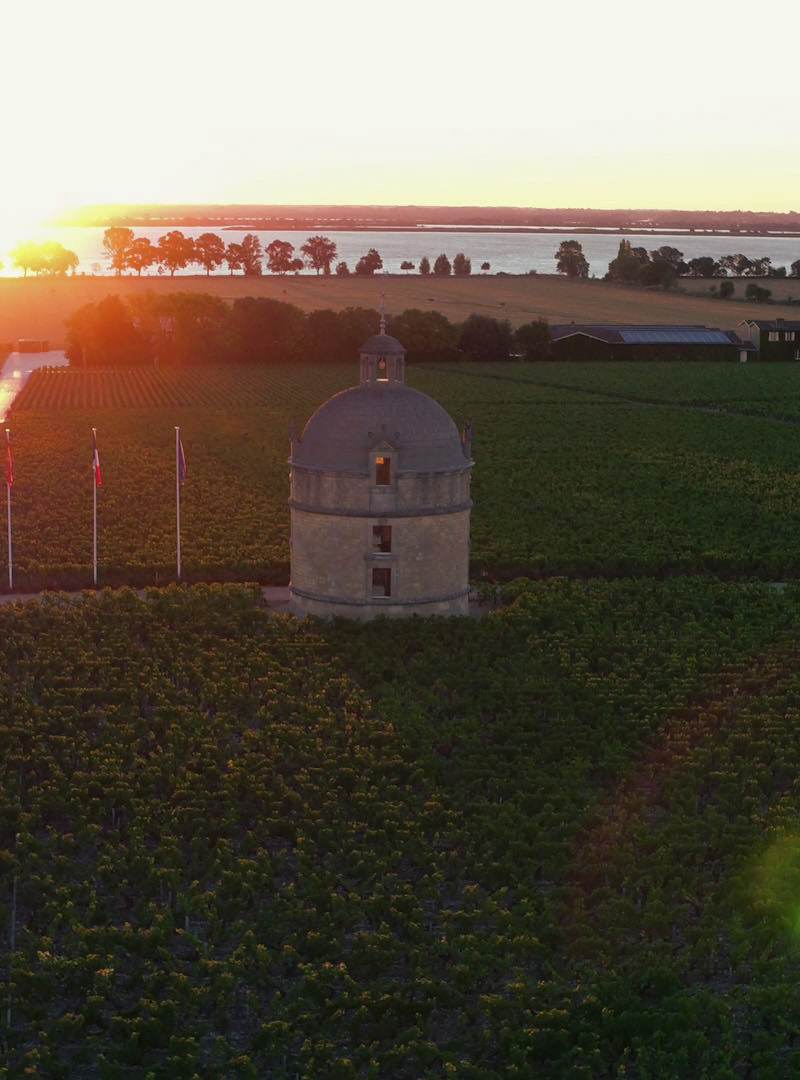
Identity
Château Latour is a winegrowing estate located in the commune of Pauillac, in the Gironde. It is one of the most iconic estates in Bordeaux, classified as a Premier Grand Cru Classé in the 1855 classification.
The estate has belonged to the Pinault family since 1993 as part of the Artémis Domaine group. It is managed by Frédéric Engerer, with Hélène Génin serving as technical director.
History and philosophy
The history of Château Latour dates back to 1331 with the construction of the Tour de Saint-Maubert. The estate entered the heritage of the de Ségur family in the early 18th century.
After being owned by the Pearson Group in the 1960s, and subsequently by Allied Lyons in 1988, it was acquired by François Pinault in 1993. Since 2012, Château Latour has chosen to no longer sell its wines en primeur, releasing them only when ready to drink at full maturity.
Committed to an environmental approach, the estate began trials in organic viticulture in 2009. Château Latour obtained organic farming certification (Ecocert) across its entire vineyard in 2018. The 2018 vintage is the first to be fully certified organic. This approach includes horse-drawn ploughing, the use of green manure and mycorrhizae, as well as planting hedges and installing bat boxes to promote biodiversity.
Appellations
Château Latour produces its wines under the Pauillac appellation.
Practical information
Address: 27 Route des Châteaux, 33250 Pauillac
Telephone: +33556731980
Email: contact@chateau-latour.com
Cellar opening hours: Monday to Friday from 8:30 am to 12:30 pm and 2:00 pm to 5:00 pm.
Visits to the estate are available by appointment.
Find out more
Official estate websiteFrequently asked questions
- What is the main appellation of Château Latour?
- Château Latour primarily produces wines under the Pauillac appellation, situated in the Médoc wine region in Bordeaux.
- Who owns Château Latour?
- Château Latour is owned by François Pinault and has been part of the Artémis Domaine group since its acquisition in 1993.
- What is the vineyard surface area and grape variety breakdown of Château Latour?
- The Château Latour vineyard spans 93 hectares. The grape varieties are predominantly Cabernet Sauvignon (76%), complemented by Merlot (22%) and Petit Verdot (2%).
- Is Château Latour certified organic?
- Yes, Château Latour obtained organic certification (Ecocert) for its entire vineyard in 2018, and a portion is also cultivated biodynamically.
The vineyard (terroir)
The Château Latour vineyard covers a total area of 93 hectares, 47 hectares of which are dedicated to the Grand Vin. It is located in the Médoc, bordering the Garonne estuary. The soils consist of clay-gravel, gravelly sands, and marly clays.
The average age of the vines is around 60 years, with a planting density of 10,000 vines per hectare. The grape varieties are dominated by Cabernet Sauvignon (76%), complemented by Merlot (22%) and Petit Verdot (2%). Harvesting is carried out by hand.
A 54-hectare portion of the vineyard is also cultivated biodynamically, with the support of an external consultant. Plant protection practices are limited to sulphur and copper.
Flagship cuvées
The estate produces several cuvées, including the Grand Vin de Château Latour, renowned for its structure and ageing potential. The second wine, Les Forts de Latour, is also an iconic cuvée. A third wine, Le Pauillac de Latour, completes the range.
Vinification and ageing
Specific details on vinification and ageing techniques are not detailed here. The wines have been released exclusively upon reaching maturity since 2012.
- Appellation
- Pauillac
- Commune
- Pauillac
- Wine region
- Médoc
- Classification
- 1er Grand Cru Classé 1855
- Owner
- François Pinault
- Technical direction
- Hélène Génin
- Surface area
- 90 ha
- Second wine
- Les Forts de Latour
- Certifications
- Bio
- Grape varieties
- Cabernet Sauvignon 76%, Merlot 22%, Petit Verdot 2%
Estate news
Vins de Bordeaux, une passion chinoise - Le Monde
L'article explore l'engouement croissant des consommateurs chinois pour les vins de Bordeaux. Cette passion se manifeste par une augmentation significative des importations de vins français en Chine, faisant du pays le premier marché à l'export pour le vignoble bordelais. L'intérêt ne se limite plus aux grands crus classés, mais s'étend désormais aux vins de milieu de gamme. Les Chinois voient dans le vin de Bordeaux un symbole de prestige et de raffinement, un produit à la fois d'investissement et de consommation. De nombreux investisseurs chinois ont d'ailleurs acquis des propriétés viticoles dans la région, à l'instar du Château de Viaud à Lalande-de-Pomerol, du Château de Ricaud, du Château Reclos de la Croix, du Château de Lagarosse ou du Château La Fleur Picon. Ces acquisitions sont motivées par un désir d'intégrer verticalement le marché du vin, depuis la production jusqu'à la distribution en Chine, souvent via des plateformes de vente en ligne et des réseaux de distribution spécialisés. L'article souligne également l'importance de la culture du vin qui se développe en Chine, avec une classe moyenne et aisée de plus en plus éduquée sur les subtilités des différentes appellations et millésimes. Les Châteaux tels que Château Latour, Château Lafite Rothschild, Château Mouton Rothschild, Château Margaux et Château Haut-Brion, bien que mentionnés pour leur prestige, ne sont plus les seuls à capter l'attention, une preuve de la maturité grandissante du marché chinois. Cette tendance transforme profondément l'économie du vignoble bordelais, créant de nouvelles opportunités tout en posant des défis en termes de positionnement et de stratégie commerciale pour les producteurs locaux.
Read the source — lemonde.frPractical information
- Address
- Saint-Lambert, 33250 Pauillac
- Phone
- +33556731980
- Contact form
- Contact the estate
- Opening hours
- Du lundi au vendredi de 8h30 à 12h30 et de 14h à 17h.
- Visits
- Oui sur rendez-vous