
Château Pontet-Fumet
Updated on
Château Pontet-Fumet, owned by the Bardet family, crafts Saint-Émilion Grand Cru wines from a 55-hectare vineyard. Committed to agroecology and certified HVE, the estate focuses on precise vinification and oak barrel ageing.
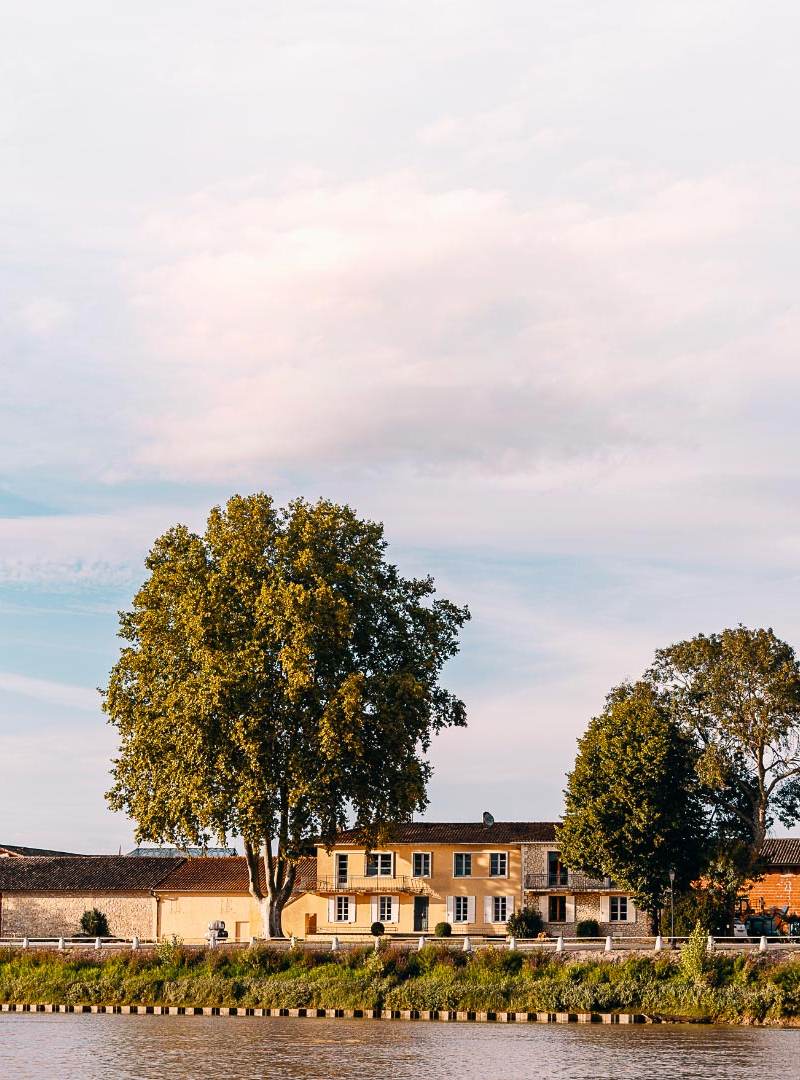
Identity
Château Pontet-Fumet is a winegrowing estate belonging to Vignobles Bardet, an established family in the Bordeaux wine region. Roger Bardet's grandchildren currently manage the property, with Thibault Bardet serving as winemaker.
History and philosophy
The history of Château Pontet-Fumet dates back to 1962, when Roger Bardet produced the estate's very first vintages. Since then, the property has remained in the hands of the Bardet family, continuing their dedicated commitment to viticulture. The estate applies agroecological practices across its vineyard and holds the Haute Valeur Environnementale (HVE) certification.
Appellations
Château Pontet-Fumet produces wines under the Saint-Émilion Grand Cru appellation.
Practical information
For detailed information or any enquiries, please visit the estate's official website.
Find out more
Official estate websiteFrequently asked questions
- What is the primary appellation of Château Pontet-Fumet?
- Château Pontet-Fumet produces wines under the Saint-Émilion Grand Cru appellation, situated on the Right Bank of Bordeaux.
- Who are the current owners of Château Pontet-Fumet?
- Château Pontet-Fumet is owned by the Bardet family. The grandchildren of Roger Bardet, who crafted the estate's first vintages in 1962, currently manage the property.
- What is the vineyard size and grape variety blend at Château Pontet-Fumet?
- The Château Pontet-Fumet vineyard covers 55 hectares. The planted grape varieties include Merlot, Cabernet Franc, and Cabernet Sauvignon, grown on sand, clay, and gravel soils.
- What environmental certifications does Château Pontet-Fumet hold?
- Château Pontet-Fumet holds the Haute Valeur Environnementale (HVE) certification. The estate is also committed to agroecological practices, featuring complete and permanent natural grass cover throughout the vineyard.
The vineyard (terroir)
The Château Pontet-Fumet vineyard covers 55 hectares. The soils are composed of sand, clay, and gravel. The grape varieties planted are Merlot, Cabernet Franc, and Cabernet Sauvignon. The average vine age is 41 years. Vineyard management practices include complete, permanent natural grass cover throughout the plots.
Flagship cuvées
Château Pontet-Fumet produces red wines under the Saint-Émilion Grand Cru appellation. These wines are crafted for an ageing potential of over 15 years and are available in 75 cl bottles and 1.5 L magnums. They typically display a well-defined structure shaped by barrel ageing.
Vinification and ageing
Vinification at Château Pontet-Fumet takes place in temperature-controlled stainless steel vats. The process incorporates research into wine microbiology to ensure greater control and reduce sulphite levels. An infusion technique involving full cap immersion is used for gentle extraction of grape compounds without pumping. The wines are then aged in oak barrels for 14 to 18 months.
- Appellation
- Saint-Émilion Grand Cru
- Wine region
- Libournais
- Owner
- Vignobles Bardet
- Technical direction
- Thibault Bardet
- Surface area
- 17 ha
- Certifications
- HVE
- Grape varieties
- Merlot, Cabernet Franc, Cabernet Sauvignon
Estate news
VIGNE & VIN - Côté châteaux - franceinfo
Cet article met en lumière les travaux viticoles essentiels réalisés en hiver dans le Bordelais, ainsi que l'évolution du marché foncier viticole. Il détaille les activités spécifiques menées à la vigne et au chai entre le château Tour Birol et le château Labadie, tous deux situés en Côtes de Bourg. Damien Labiche du château Tour Birol explique l'importance de la taille, qu'il a choisi de retarder cette année pour anticiper les gelées printanières. Damien Dupuy du château Labadie présente le broyage des sarments pour enrichir le sol, le carassonnage qui consiste à remplacer les piquets endommagés, et le pliage des astes, réalisé par Sandrine et Sandrine, pour assurer une bonne répartition de la future récolte. Au chai, Damien Labiche effectue des soutirages mensuels pour préparer le millésime 2019, qu'il décrit comme prometteur avec des arômes de fruits noirs et rouges, une belle concentration et des tanins soyeux. Le vin est un assemblage de 60% merlot et 40% malbec, destiné aux primeurs de mars-avril. Le second dossier aborde la question du foncier viticole en Nouvelle-Aquitaine. Il est noté que les appellations comme Bordeaux, Entre-Deux-Mers, Bourg, Blaye et les Côtes restent accessibles, tandis que Saint-Estèphe, Margaux, Pauillac et Saint-Emilion-Pomerol voient leurs prix s'envoler. Fronsac a vu l'hectare se vendre entre 30 000 et 60 000 €, et Canon-Fronsac entre 80 000 et 130 000 €. Des propriétés comme le château Gaby, le château La Rivière et le château La Dauphine ont été vendues à des prix élevés, souvent à des investisseurs étrangers ou de grandes familles, comme l'Américain Tom Sullivan pour Gaby, la famille Labrune pour La Dauphine, et une famille chinoise pour La Rivière. Michel Lachat de la Safer souligne l'importance de son organisme pour permettre aux jeunes vignerons de s'installer, notamment dans les appellations moins onéreuses. Il évoque des prix allant de 15 000 € l'hectare pour un Bordeaux, jusqu'à 3,7 millions d'euros pour les terroirs les plus prestigieux de Saint-Emilion et Pomerol, 2,6 millions pour Pauillac et 2,5 millions pour Margaux. La transmission des domaines familiaux, comme les Vignobles Bardet (château Val d'Or, château Pontet-Fumet, château Franc Le Maine et château Du Paradis), est également un défi en raison de ces coûts élevés, Thibault Bardet mentionnant des solutions comme la mise en société pour gérer cet aspect.
Read the source — france3-regions.blog.franceinfo.frPractical information
- Contact form
- Contact the estate