
Château de Camarset
Updated on
Château Camarset, located in Saint-Morillon, produces wines in the Graves appellation. Its 3-hectare vineyard, managed using sustainable viticulture, thrives on gravel and clay-limestone soils. Rich in history dating back to the 17th century, the estate crafts structured red wines and fruit-forward white wines.
Identity
Château Camarset is a winegrowing estate located in the commune of Saint-Morillon, in the Gironde department.
History and philosophy
The origins of Château Camarset date back to the 17th century, when the Montesquieu family built a hunting lodge on the property. In 1868, the estate was listed in Édouard Ferret's guide among the "Grands Vins de Bordeaux". At that time, in 1898, the vineyard covered 40 hectares. In 1990, the owners initiated a revival and replanting programme, planting red grape varieties on the gravel knolls and white grape varieties on the clay-limestone terroirs. Today, the estate is dedicated to sustainable viticulture across its vineyard.
Appellations
Château Camarset produces both red and white wines under the Graves appellation.
Flagship wines
The red wines of Château Camarset are distinguished by their aromatic profile, fine structure, and good cellaring potential. The white wines stand out for their fruit-forward expression, showing aromas of peach and citrus fruit paired with a delightful roundness. The estate produces around 10,000 bottles per year.
Practical information
Find out more
Official website of the estateFrequently asked questions
- What is the history and origin of Château Camarset?
- The origins of Château Camarset date back to the 17th century, when the Montesquieu family established a hunting lodge there. The estate's wine quality gained recognition as early as 1868, appearing in Édouard Ferret's guide among the "Grands Vins de Bordeaux". Over time, the vineyard underwent significant changes, notably with a revival and replanting programme launched in 1990 by the current owners, shaping the estate into what it is today. Situated in Saint-Morillon, the estate now covers 3 hectares.
- What are the terroir characteristics and grape varieties of Château Camarset?
- Château Camarset benefits from a diverse terroir. Soils dedicated to red varieties consist of gravel over sandy-clay subsoils, while the white varieties are planted on fossiliferous clay-limestone soils. The red grape varieties include Merlot, Cabernet Sauvignon, and Cabernet Franc, complemented by Sauvignon and Sémillon for the whites. The vineyard is managed using sustainable viticulture and enjoys a favourable microclimate surrounded by meadows and woods, supporting a vibrant ecosystem.
- How are the red and white wines at Château Camarset vinified and aged?
- For the red wines, vinification begins with maceration and alcoholic fermentation lasting around three weeks. The free-run wine is then blended for malolactic fermentation, followed by 15 months of barrel ageing. For the white wines, the grapes are pressed immediately after harvesting. Fermentation takes place in barrels, and the wine is aged on its lees for 10 months, with regular lees stirring (bâtonnage) and racking to enhance texture and aromatic complexity.
- What is the style and appellation of the wines produced at Château Camarset?
- Château Camarset produces both red and white wines under the Graves appellation. The red wines are renowned for their expressive aromatics, solid structure, and ageing potential. The white wines are appreciated for their fruit-driven character, featuring notes of peach and citrus alongside a rich, velvety texture on the palate. The estate is committed to sustainable viticultural practices throughout its vineyard.
The vineyard (terroir)
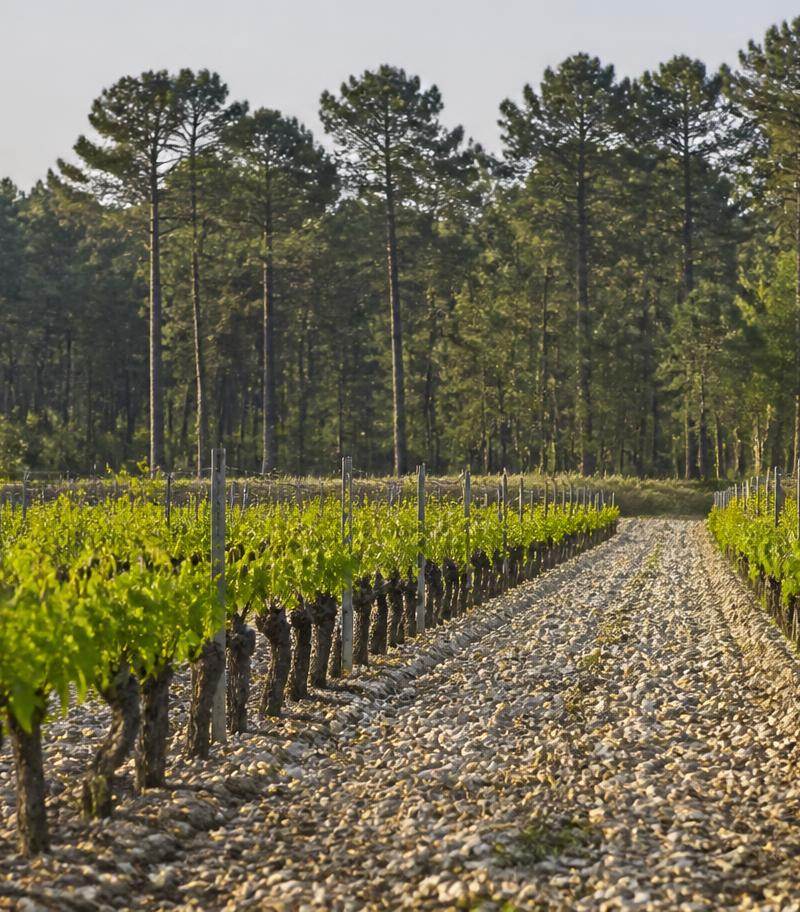
The Château Camarset vineyard spans approximately 3 hectares, comprising 1.5 hectares of red grape varieties and 1 hectare of white grape varieties. The soils planted with red varieties are characterised by gravel over sandy-clay subsoils, while the white varieties grow on fossil-rich clay-limestone soils. The vineyard benefits from a microclimate shaped by surrounding meadows and woodlands (oaks, poplars, pines, acacias, and cedars), fostering a diverse ecosystem. Vineyard management relies on sustainable practices, including natural grass cover and keeping vineyard interventions to a strict minimum. The vine's vegetative cycle begins in April with budbreak and concludes in late June with fruit set. Pruning takes place in January, and harvest generally occurs in September, around 100 days after flowering. The red grape varieties consist of Merlot, Cabernet Sauvignon, and Cabernet Franc, while the white grape varieties are Sauvignon and Sémillon.
Vinification and ageing
For the red wines, vinification begins with vatting for maceration and alcoholic fermentation lasting around three weeks, followed by blending of the free-run wine for malolactic fermentation. Ageing takes place in oak barrels for 15 months. For the white wines, the grapes are pressed immediately upon harvest, with fermentation carried out in barrels. The wine is then aged on its lees for 10 months, with regular stirring (bâtonnage) and racking.
- Appellation
- Graves
- Commune
- Saint-Morillon
- Wine region
- Graves & Sauternais
- Surface area
- 3 ha
- Grape varieties
- Merlot, Cabernet Sauvignon, Cabernet Franc, Sauvignon, Sémillon
Practical information
- Address
- Saint-Morillon
- Contact form
- Contact the estate