
Château de Vayres
Updated on
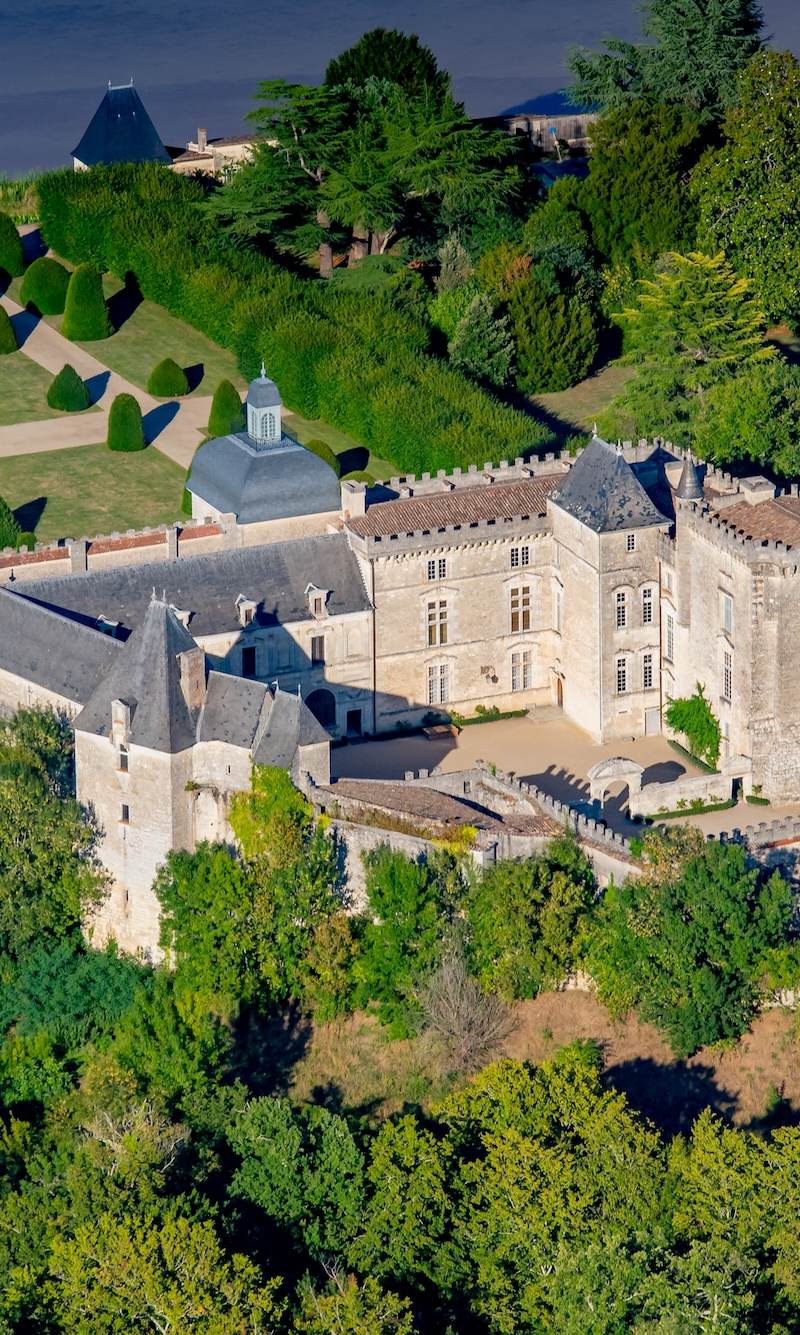
Château de Vayres is a historic, listed monument estate situated in Vayres in Gironde. Combining medieval and Renaissance architecture, it features award-winning listed gardens. The estate is a privately owned property open to the public.
Identity
Château de Vayres is an estate located in the commune of Vayres, in Gironde. It stands gracefully on the banks of the Dordogne.
History and philosophy
The site of Château de Vayres boasts an ancient history, originating from a Roman oppidum named "Varatedo". A medieval fortress was erected here in the 11th century, subsequently transformed and fortified by the d'Albret family. During the Renaissance, the château was converted into a pleasure residence, undergoing significant architectural alterations throughout the 17th and 18th centuries. On 19 July 1583, Ogier de Gourgue acquired the château de Vayres from Henri de Navarre.
Listed as a historic monument (monument historique), the château displays an architectural blend of medieval, Renaissance, and classical features, as evidenced by the Tour du Moulin, the Renaissance Gallery, and the Grand Salon. The Salon Henri IV, decorated prior to 1583, commemorates the king's stay.
The grounds and gardens of Château de Vayres have also evolved across the centuries. In 1608, a vast formal parterre graced the north side, alongside a tree-lined avenue and an orchard. The gardens suffered damage during the Fronde. In the late 17th and early 18th centuries, Armand Jacques de Gourgue, Bishop of Bazas, undertook restoration works, notably on the façade. The 1759 earthquake caused extensive damage, prompting a restoration of the building between 1769 and 1770, followed by that of the gardens.
At the beginning of the 20th century, vineyards occupied the space between the château and the village, alongside an enclosed kitchen garden. In 1938–1939, landscape architect Ferdinand Duprat redesigned the gardens, creating a French formal garden (jardin à la française). In 2012, a medieval-inspired garden was added. The library was fully fitted out in 2009. The estate holds the prestigious "Jardin Remarquable" label.
Château de Vayres is a private estate open to visitors and collaborates with the Fondation Etrillard for the loan of fine artworks.
Appellations
Information on the specific appellations produced by Château de Vayres is not documented in the provided sources.
Practical information
Château de Vayres is located at 33870 Vayres.
You can contact the estate by telephone on 05 57 84 96 58 or by email at contact@chateaudevayres.com.
The château is open daily starting from 1 July. Tickets are available online and on site.
Find out more
Frequently asked questions
- Where is Château de Vayres located?
- Château de Vayres is a wine estate located in the commune of Vayres, in Gironde. It stands majestically on the banks of the Dordogne, offering a picturesque setting and rich history. This landmark estate is easily accessible and invites visitors to explore its architectural and landscape heritage.
- What is the history of Château de Vayres?
- The history of Château de Vayres dates back to Antiquity, originating from a Roman oppidum. A medieval fortress was built in the 11th century before being transformed into a pleasure residence during the Renaissance. Key historical figures such as Ogier de Gourgue and Henri de Navarre shaped its past. The château underwent extensive architectural alterations in the 17th and 18th centuries and was restored following the 1759 earthquake. Today, it is listed as a historic monument and displays a rich variety of architectural styles.
- What are the architectural highlights of Château de Vayres?
- Château de Vayres features an eclectic architecture, seamlessly blending medieval, Renaissance, and classical elements. Notable structures include the Tour du Moulin, the Renaissance Gallery, and the Grand Salon. The Salon Henri IV, designed before 1583, commemorates the king's stay. These diverse eras are reflected throughout the estate's design, offering a testament to its evolution across the centuries.
- What types of gardens can be explored at Château de Vayres?
- Château de Vayres is home to several remarkable gardens. Visitors can enjoy a French formal garden, redesigned in 1938–1939 by Ferdinand Duprat, offering views over the Dordogne along with structured parterres and clipped yews. A medieval-inspired garden, created in 2012, is arranged in a chequerboard layout with hedges, medicinal and culinary herbs, and fruit trees including cherry, apple, and Mirabelle plum trees. The estate is officially awarded the "Jardin Remarquable" label.
The vineyard (terroir)
The estate is located in the commune of Vayres, in Gironde, on the banks of the Dordogne.
The estate's grounds feature a French formal garden, renowned for its elegance and symmetry, commanding views over the Dordogne, with hornbeam-bordered parterres and sculpted yews. A medieval garden, created in 2012, is laid out in a regular chequerboard pattern with hedges, medicinal and aromatic herbs, as well as fruit trees including cherry, apple, and Mirabelle plum trees.
Flagship cuvées
Information on the specific cuvées produced by Château de Vayres is not documented in the provided sources.
Vinification and ageing
Information regarding the vinification and ageing practices at Château de Vayres is not documented in the provided sources.
- Commune
- Vayres
Estate news
19 October 2026
Où bouger du 19 au 25 octobre à Bordeaux ?
Cet article présente un agenda complet des sorties et activités à Bordeaux et en Gironde pour la semaine du 19 au 25 octobre, coïncidant avec les vacances et la période d'Halloween. Le lundi 19 octobre, Florent Pagny se produira à l'Arkéa Arena. Le mardi 20 octobre, le Château de Vayres proposera des animations familiales pour Halloween, incluant une visite du château décoré, un atelier créatif et des jeux de piste dans le parc pour les enfants de 3 à 12 ans. Le mercredi 21 octobre, l'Espace Culturel E.Leclerc Saint-Médard accueillera les auteurs Stéphanie Pérez et Olivier Grondeau pour des dédicaces et une rencontre littéraire. Le jeudi 22 octobre, le Pin Galant à Mérignac présentera "Drag Race France Live", un spectacle avec Nicky Doll et le casting de la saison 4. Le week-end débutera le vendredi 23 octobre avec Bordeaux Classic, un salon dédié aux voitures et motos de collection, au Parc des Expositions, se tenant jusqu'au 25 octobre. Le samedi 24 octobre mettra à l'honneur le vignoble bordelais avec les Portes Ouvertes Fronsac & Canon-Fronsac. Trente-trois propriétés de Fronsac et Canon-Fronsac accueilleront le public les 24 et 25 octobre pour des visites, échanges avec les vignerons et dégustations. Des initiations gratuites à la dégustation seront offertes par la Maison des Vins, animées par l'École du Vin de Bordeaux (réservation conseillée). Des balades guidées et un petit train sont également prévus pour découvrir le terroir. Ce même samedi, la librairie Mollat organisera "La Petite Librairie de l’Horreur". La semaine se terminera le dimanche 25 octobre au Château Théâtre Descas à Bordeaux avec "Peur Bleue !", un conte musical d'Halloween. Ce spectacle racontera l'histoire de Jack le fantôme, accompagné par un orchestre symphonique jouant des musiques de films célèbres. L'article offre ainsi un large éventail d'options pour profiter de cette semaine festive.
Read the source — bougerabordeaux.com19 October 2026
Quoi faire à Bordeaux cette semaine du 19 au 23 octobre 2026
L'article liste les activités et événements prévus à Bordeaux et ses environs du 19 au 23 octobre 2026, durant la première semaine des vacances de la Toussaint. La programmation est dense, mêlant culture, divertissement, sport et sorties familiales. Le lundi 19 octobre, le BB Comedy Club ouvre ses portes au 18 Bourbon Street pour des soirées stand-up, tandis que Florent Pagny donne un concert à l'Arkéa Arena de Floirac. Le mardi 20 octobre, une librairie éphémère dédiée aux romans d'horreur s'installe Place Gambetta. Pour les jeunes, le Château de Vayres, près de Libourne, organise des visites hantées et ateliers créatifs sur le thème d'Halloween. Le mercredi 21 octobre, Amélie Nothomb dédicace son roman "L’adolescence du perroquet" à la Station Ausone de Mollat. Un autre comedy club anime la soirée à La Grande Poste. Le jeudi 22 octobre, la billetterie grand public ouvre pour le match France-Turquie au Stade Atlantique. Le Pin Galant de Mérignac accueille "Drag Race France Live" pour deux soirées. Le vendredi 23 octobre voit l'ouverture du salon Bordeaux Classic au Parc des Expositions, consacré aux voitures de collection. Sur le plan sportif, les Boxers de Bordeaux affrontent les Gothiques d’Amiens à la patinoire Mériadeck. Une nouvelle enseigne, Bill’s Burger, inaugure son restaurant Place Casablanca avec une offre spéciale. Tout au long de la semaine, des animations d'Halloween sont accessibles aux familles : La Forêt Magique, à Fargues-Saint-Hilaire, propose trois parcours de jeux. Le Château de Siaurac, à Néac, se transforme en école de magie avec des jeux d'énigmes et des ateliers, dont les billets doivent être réservés en ligne.
Read the source — quoifaireabordeaux.com18 October 2026
Vayres : le Conseil municipal des enfants a élu son nouveau maire et dévoilé ses projets
L'article de Sud Ouest rapporte l'élection du nouveau maire et de ses adjoints au sein du Conseil municipal des enfants (CME) de Vayres, un événement qui s'est déroulé le lundi 11 octobre. Le jeune Mahé a été élu maire, avec Justine et Rose comme adjointes. Les jeunes conseillers, issus des classes de CE2, CM1 et CM2, sont désormais prêts à se réunir en commissions pour développer leurs idées. Ces commissions seront axées sur trois domaines principaux : le cadre de vie et l'environnement, les sports et les loisirs, et la communication. Laura Gheorghe a été nommée nouvelle animatrice pour accompagner les enfants dans leurs projets. L'article mentionne également les réalisations du précédent CME, parmi lesquelles figuraient des ateliers sportifs organisés au sein de l'école élémentaire, une initiation à la musique (solfège et piano), et la création d'un journal pour informer de l'actualité du Conseil. Une initiative notable du CME précédent fut également la mise en place d'une association scolaire, le B.A.R à bonheur, destinée à offrir un espace d'échange aux enfants pour aborder leurs difficultés et leurs tensions, soulignant ainsi l'engagement citoyen et les initiatives locales des jeunes Vayrais.
Read the source — sudouest.fr02 August 2026
Incendie de Gironde : quand la peur du feu calcine le tourisme bien au-delà des flammes
L'article du 2 août 2026, "Incendie de Gironde : quand la peur du feu calcine le tourisme bien au-delà des flammes", traite de l'impact dévastateur des incendies en Gironde sur l'économie touristique, bien au-delà des zones directement touchées par les flammes. Malgré l'absence de victimes, la peur et les messages d'alerte, notamment ceux de la préfète de région Sophie Brocas, ont provoqué une vague d'annulations de séjours dans tout le département, y compris dans des zones éloignées comme le Blayais et le Libournais. Franck Chaumes, président de l'Umih 33, décrit la situation comme un "deuxième Covid", avec des baisses de chiffre d'affaires de 60% à 80% pour l'hôtellerie et la restauration. À Bordeaux Métropole, l'Office de tourisme, dirigé par Olivier Occeli, rapporte une baisse de 40% des nuitées hôtelières et une chute de fréquentation de 50% à 70% pour des sites comme la Cité du vin et les Bassins des lumières. Sur la côte, à Lacanau, Nicolas Jabaudon de l'office de tourisme Médoc Atlantique déplore les conséquences des évacuations préventives, ayant paralysé l'économie locale. Dans le sud du bassin d'Arcachon, des commerçants et ostréiculteurs, dont Vincent Gerbaud et Benjamin Rochette, expriment leur désarroi face à des baisses d'activité allant jusqu'à 70% et de nombreuses annulations chez Thalazur Arcachon, dirigé par Gilles Delepaux. En Libournais, Alexis Gilbert de l'office de tourisme mentionne que le Château de Vayres a perdu des centaines de visites scolaires et que la Bataille de Castillon a dû annuler ses représentations. Pour contrer cette crise, une campagne d'urgence "Ne nous abandonnez pas" a été lancée par l'Umih, et un plan de bataille médiatique est en préparation avec le CIVB, les offices de tourisme, le CRT, la Région, les Métropoles et Atout France, pour relancer le tourisme en août et septembre.
Read the source — sudouest.fr24 September 2012
Le château de Vayres - Noblesse & Royautés
L'article du 24 septembre 2012 présente l'histoire et l'évolution architecturale du château de Vayres, un édifice majestueux situé sur les bords de la Dordogne, près de Bordeaux. Construit avant le XIe siècle, le château voit son destin lié à la famille d'Albret à partir du XIIIe siècle. Bérard d'Albret, prenant parti pour le roi d'Angleterre Édouard II au XIVe siècle, obtient des moyens pour fortifier le château, dont subsistent encore le donjon, le châtelet d'entrée et les douves. Durant la Guerre de Cent ans, le château change de mains à plusieurs reprises. Parmi ses propriétaires célèbres figure César Borgia, duc de Valentinois et de Romagne, qui l'acquiert par son mariage avec Charlotte d'Albret. Sa fille, Louise Borgia, le restitue à Henri d'Albret, roi de Navarre et grand-père d'Henri IV. Ce dernier le vend en 1583 à Ogier de Gourgue, qui transforme le château médiéval en une somptueuse résidence d'agrément de style Renaissance, sous la direction de l'architecte Louis de Foix. Au XVIIe siècle, le château subit des dommages suite à l'opposition des Gourgue à Louis XIV et Mazarin. Jacques-Joseph de Gourgue, évêque de Bazas, entreprend sa restauration en 1700, achevant notamment la façade monumentale dominant la Dordogne. Les Gourgue restent propriétaires jusqu'en 1900. L'article souligne l'engagement des propriétaires actuels, qui, par de multiples campagnes de restauration et un réameublement respectueux de l'esprit du lieu, ont redonné sa splendeur au château de Vayres, classé monument historique en 2001. Le château est ouvert à la visite et est présenté comme un exemple de restauration réussie, permettant à la fois l'habitation et la mise en valeur de son patrimoine architectural. L'article mentionne le site officiel du Château de Vayres pour plus d'informations.
Read the source — noblesseetroyautes.comPractical information
- Address
- 33870 Vayres, 33870
- Phone
- 05 57 84 96 58
- Contact form
- Contact the estate
- Visits
- Château ouvert tous les jours à partir du 1er juillet. Billetterie en ligne et sur place.