
Château Duplessy
Updated on
Château Duplessy is a winegrowing estate in Cénac. Certified organic and biodynamic, it produces wines under the Côtes-de-Bordeaux, Bordeaux Blanc Sec and Bordeaux Clairet appellations. Its 11.5-hectare vineyard is planted with both red and white grape varieties.
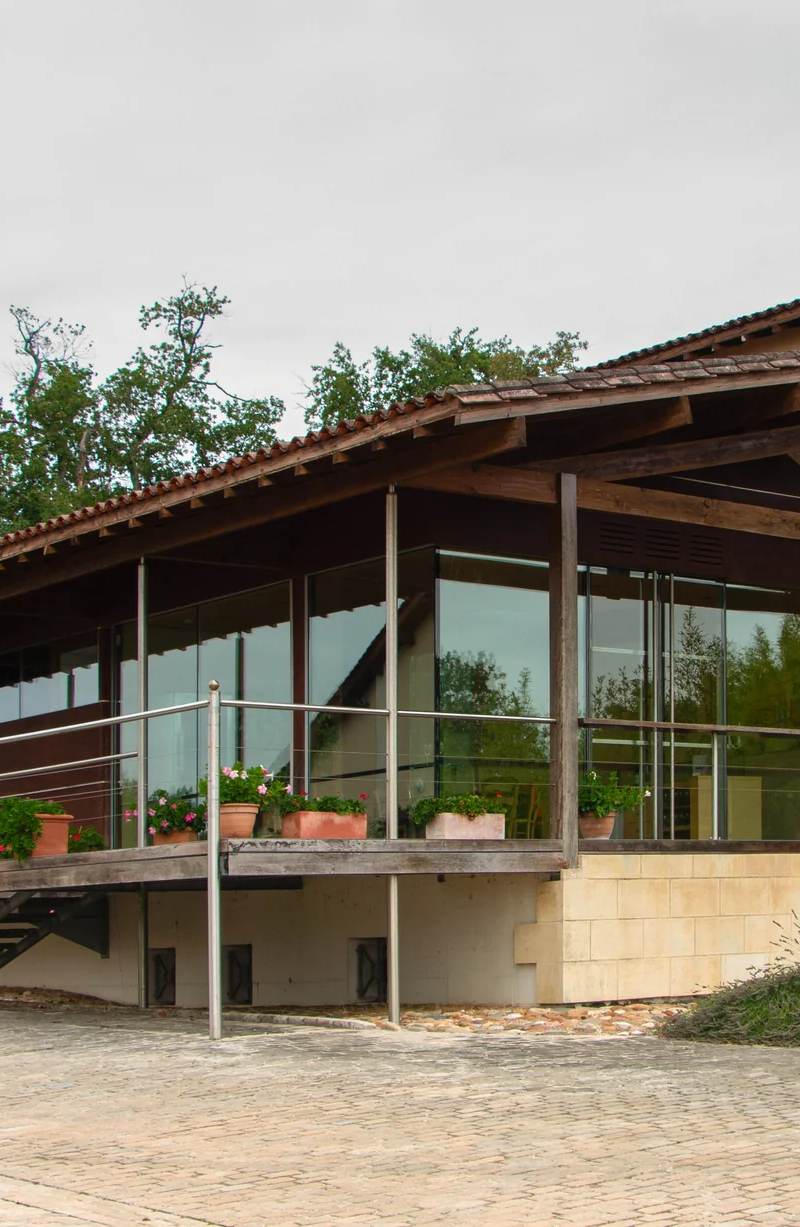
Identity
Château Duplessy is located in the commune of Cénac. The estate is owned by Josiane and Willi Liebherr, alongside François Sick. Its name originates from an ancient family of Bordeaux parliamentarians.
History and philosophy
The vineyard of Château Duplessy was first recorded in 1728. The estate began its conversion to organic farming in 2010, achieving Bio-Ecocert certification for its vintages in 2014. Its commitment to biodynamics began in 2018, with Demeter certification awarded to the wines that same year.
Appellations
Château Duplessy produces wines under the Côtes-de-Bordeaux, Bordeaux Blanc Sec and Bordeaux Clairet appellations. The plots are located on the prime hillsides bordering the Garonne.
Practical information
The estate is located at 1, avenue de Bordeaux, 33360 Cénac. Tastings and on-site purchases are available. For further information, the estate can be contacted by telephone on +33 5 56 20 73 28 or 06 50 64 63 16, or by email at delphine.marches@chateau-duplessy.fr.
Find out more
Frequently asked questions
- Which appellations are produced at Château Duplessy?
- Château Duplessy produces wines under several appellations: Cadillac Côtes de Bordeaux, Côtes de Bordeaux and Bordeaux Clairet. The vineyard is situated on the front slopes near the Garonne, contributing to the diversity and distinct character of the estate's wines.
- Which grape varieties are used for the red and white wines?
- For red wines, the plantings are predominantly Merlot (70%), complemented by Cabernet Sauvignon (15%) and Cabernet Franc (15%). For white wines, Château Duplessy uses 70% Sauvignon Blanc, 20% Sémillon, 5% Sauvignon Gris and 5% Muscadelle. This combination of grape varieties allows for the crafting of diverse cuvées.
- Is Château Duplessy certified for its viticultural practices?
- Yes, Château Duplessy is certified organic and biodynamic. The estate began its conversion to organic viticulture in 2010, obtaining Bio-Ecocert certification in 2014. Its biodynamic commitment started in 2018, with Demeter certification awarded the same year, reflecting the environmentally conscious practices implemented across the vineyard.
- What is the vineyard area and the nature of its terroir?
- The Château Duplessy vineyard spans 11.5 hectares. The terroir is characterised by gravel topsoils and clay-limestone subsoils. The vines enjoy south and south-westerly exposure—favourable conditions that contribute to the quality of the grapes produced at the estate.
The vineyard (terroir)
The vineyard spans an area of 11.5 hectares. The soils consist of gravel over clay-limestone subsoils. The vines enjoy south and south-westerly exposure, with an average age of 30 years. Harvesting is carried out entirely by hand using small crates. The grape variety distribution for red wines is 70% Merlot, 15% Cabernet Sauvignon and 15% Cabernet Franc. For white wines, it is 70% Sauvignon Blanc, 20% Sémillon, 5% Sauvignon Gris and 5% Muscadelle.
Flagship cuvées
Château Duplessy Charlotte
Produced as both a red and a rosé, this cuvée is a still wine. The 2019 red vintage is a blend of 90% Merlot and 10% Cabernet Franc. The 2022 vintage is a rosé. The wine is aged in oak barrels.
Château Duplessy Rouge Tradition
Available across various vintages, this cuvée is crafted from 70% Merlot, 15% Cabernet Franc and 15% Cabernet Sauvignon. The 2019 vintage undergoes 12 months of ageing in French oak barrels.
Château Duplessy Rouge Nature
This red wine, crafted from 100% Merlot for the 2021 vintage, is vinified with indigenous yeasts, without fining or filtration, and with no added sulphites or inputs.
Château Duplessy Blanc Barrique
This white cuvée is produced from a blend of 70% Sauvignon Blanc, 20% Sémillon, 5% Sauvignon Gris and 5% Muscadelle. The vines have an average age of 16 years. Fermentation takes place in new oak barrels, followed by 7 months of ageing on fine lees with light bâtonnage.
Château Duplessy Blanc Tradition
This white wine shares the same varietal blend as Blanc Barrique: 70% Sauvignon Blanc, 20% Sémillon, 5% Sauvignon Gris and 5% Muscadelle. Ageing lasts 7 months on fine lees with light bâtonnage.
Château Duplessy Clairet
This rosé wine is a blend of 80% Merlot and 20% Cabernet Franc.
Château Duplessy Rouge Icône
The 2020 vintage of this red cuvée is crafted from 70% Merlot, 15% Cabernet Franc and 15% Cabernet Sauvignon.
Vinification and ageing
All grapes undergo sorting on a sorting table upon harvest. Fermentation takes place in temperature-controlled stainless steel vats of varying capacities, tailored to individual parcels, with constant temperature management. Château Duplessy uses only natural products in its organic vinification. For barrel ageing, the wines are transferred into French oak barrels towards the end of December, using a ratio of roughly one-third new barrels, one-third two-year-old barrels, and one-third three-year-old barrels maximum. Bottling is carried out using an automated bottling machine that removes air from the neck, and the bottles are sealed with natural corks.
- Appellations
- Cadillac Côtes de Bordeaux, Côtes de Bordeaux, Bordeaux Clairet
- Commune
- Cénac
- Wine region
- Entre-deux-Mers
- Owner
- Josiane et Willi Liebherr, François Sick
- Surface area
- 11.5 ha
- Certifications
- Bio, Biodynamie
- Grape varieties
- Merlot 70%, Cabernet Sauvignon 15%, Cabernet Franc 15%, Sauvignon Blanc 70%, Sémillon 20%, Sauvignon Gris 5%, Muscadelle 5%
Practical information
- Address
- 1, av. de Bordeaux, 33360 Cénac
- Phone
- +33 5 56 20 73 28
- Contact form
- Contact the estate