
Château Guiraud
Updated on
Château Guiraud is a 1er Cru Classé de Sauternes, certified organic since 2011. Matthieu Gufflet is its majority shareholder. The 80-hectare vineyard is renowned for its agroecological approach and biodiversity.
Identity
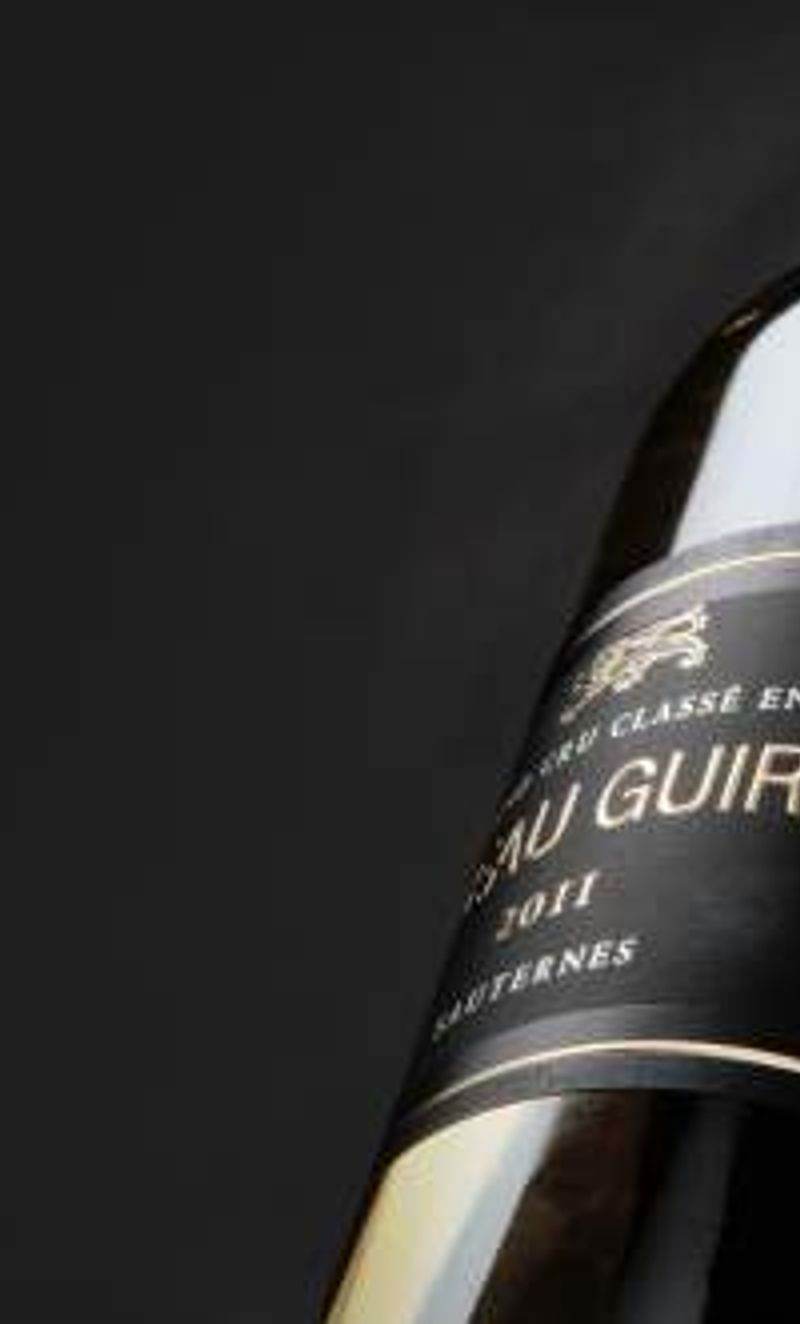
Château Guiraud is a winegrowing estate located in the commune of Sauternes, in Gironde. It is owned by Matthieu Gufflet, the majority shareholder since late 2021. General management has been led by Sandrine Garbay since 2022, with Matis Bouscarra Gaubert as cellar master and Christine Sourdes as oenologist. The estate is also co-owned by Xavier Planty. Château Guiraud is a Premier Grand Cru Classé en 1855.
History and philosophy
The history of Château Guiraud dates back to 1766, when it was acquired by the Guiraud family. The estate distinguished itself through its early commitment to agroecology, launching a pioneering biodiversity-focused approach as early as 1996. This commitment culminated in obtaining Agriculture Biologique (organic) certification in 2011, making Château Guiraud the first of the Premiers Grands Crus Classés de 1855 to be certified organic. In 2022, the estate joined the Terres de Natures label, founded by majority shareholder Matthieu Gufflet.
Appellations
Château Guiraud produces wines under the Sauternes appellation. The estate also crafts wines under the Bordeaux appellation.
Practical information
Château Guiraud is located at 1 Château Guiraud, 33210 Sauternes. The estate is open 7 days a week, including public holidays, from 10:00 to 18:00. Tours and tastings are available with or without reservation, in French, English, or Norwegian. A paid tour and tasting provides an opportunity to discover the estate and taste four wines. The estate also offers vineyard walks, an introduction to permaculture in the vegetable garden, and cellar visits. Audio guides are available. Groups (12–100 people) and pets are welcome. Château Guiraud has received several wine tourism awards, including the Best Of d’Or in 2019 for winery dining and the Best Of d’Or in 2022 for Wine Tourism and Environmental Practices. An on-site shop offers the estate's wines, and an online shop is available with delivery options. Wi-Fi is accessible. Accepted payment methods include American Express, payment cards, cash, and bank transfers.
The estate also features two restaurants: La Chapelle de Guiraud, offering bistronomic cuisine at the heart of the château under the direction of Chef Yoann Amado. This venue can host weddings, family celebrations, and corporate events. Le Cercle Guiraud, also helmed by Chef Yoann Amado and Pastry Chef Juliette Bonnard, opened in summer 2023 in the centre of Sauternes village and is listed among the starred establishments in the 2026 MICHELIN Guide.
Telephone: +33 5 56 76 61 01
Email: accueil@chateauguiraud.com
Find out more
Frequently asked questions
- What makes Château Guiraud unique in terms of certification?
- Château Guiraud was the first of the 1855 Premiers Grands Crus Classés to obtain Agriculture Biologique (organic) certification in 2011, underlining its environmental commitment.
- What is the grape blend of Château Guiraud's Grand Vin?
- Château Guiraud's Grand Vin is primarily crafted from Sémillon (65%) and Sauvignon blanc (35%), reflecting the traditional grape varieties of the Sauternes appellation.
- What is the size of the Château Guiraud vineyard and the nature of its terroir?
- The vineyard covers 80 hectares, characterised by soils composed of gravel, sand, and deep clay. The average age of the vines is 35 years.
- Does Château Guiraud offer wine tourism activities?
- Yes, Château Guiraud offers tours and tastings with or without prior booking, in multiple languages. The estate also features two restaurants and provides varied activities focused on discovering the vineyard and its eco-friendly practices.
The vineyard (terroir)
The Château Guiraud vineyard spans 80 hectares within a 128-hectare estate. The soils consist of gravel, sand, and deep clay, notably gravelly sand. The average age of the vines is 35 years. The grape varieties planted are Sémillon (65%) and Sauvignon blanc (35%). The estate is actively engaged in biodiversity conservation, maintaining a collection of 145 clones of Sémillon and Sauvignon, with more than 630 distinct insect species recorded in the vine rows. The entire vineyard is farmed organically, with certification obtained in 2011. Harvesting is carried out by hand.
Flagship cuvées
Château Guiraud produces several cuvées, including Château Guiraud, a Sauternes crafted from a blend of 65% Sémillon and 35% Sauvignon blanc. This wine is aged for 18 months in new French oak barrels. Fermentations are carried out using indigenous yeasts. The estate also crafts Petit Guiraud, a Sauternes that serves as the château's second wine, partially vinified alongside the Grand Vin. The Le G de Guiraud cuvée is a dry white wine made from equal parts Sauvignon and Sémillon. It is aged for 6 months on its lees, partly in stainless steel vats and partly in barrels previously used for the sweet 1er Cru. Finally, the Grand Vin Blanc Sec de Château Guiraud is a dry white wine sourced from parcel selections and vinified in barrels from the Sauternes 1er Cru.
Vinification and ageing
Vinification at Château Guiraud relies on indigenous yeasts. The Grand Vin is aged for 18 months in new French oak barrels. Le G de Guiraud is aged for 6 months on its lees, half in stainless steel vats and half in barrels from the sweet 1er Cru. The Grand Vin Blanc Sec is vinified in barrels from the estate's Sauternes 1er Cru.
- Commune
- Sauternes
- Wine region
- Graves & Sauternais
- Classification
- 1er Cru Classé 1855
- Owner
- Matthieu Gufflet
- Technical direction
- Sandrine Garbay
- Surface area
- 128 ha
- Second wine
- Petit Guiraud
- Certifications
- Bio
- Grape varieties
- Sémillon 65%, Sauvignon blanc 35%
Estate news
04 August 2026
La Route des Vins de Bordeaux : Parcours œnologique d'exception
L'article "La Route des Vins de Bordeaux : Parcours œnologique d'exception" présente le vignoble bordelais comme le plus vaste vignoble d'AOC au monde, s'étendant sur 111 000 hectares avec 57 appellations et 6 000 châteaux. Il décrit la Route des Vins non pas comme un itinéraire unique, mais comme un réseau de circuits thématiques à travers les terroirs prestigieux de la région. Les grandes régions viticoles sont détaillées : le Médoc, connu pour ses Grands Crus Classés tels que Margaux, Pauillac, Saint-Julien et Saint-Estèphe, abritant des châteaux monumentaux du XIXe siècle, dont le Château Margaux et le Château Lynch-Bages sont spécifiquement mentionnés. Saint-Émilion est présenté comme une cité médiévale classée UNESCO, caractérisée par ses paysages de coteaux et ses vins chaleureux dominés par le Merlot. Le Sauternais est la région des vins liquoreux légendaires, avec le Château d'Yquem, le Château de Malle et le Château Guiraud cités. L'Entre-deux-Mers, entre Garonne et Dordogne, est réputé pour ses vins blancs secs et ses rouges accessibles, et les Graves, aux portes de Bordeaux, pour ses vins élégants. Des itinéraires recommandés sont proposés, incluant des visites au Château Margaux (sur rendez-vous), au Château Lynch-Bages, à la Maison du Vin de Pauillac, à la Maison des Vins de Sauternes, au Château de Malle et au Château Guiraud. L'article conseille de réserver à l'avance pour les Grands Crus Classés, d'utiliser les Maisons des Vins pour s'informer et de privilégier les vendanges ou les Portes Ouvertes pour visiter. Des informations pratiques sont fournies par l'Office de Tourisme de Bordeaux et le Conseil Interprofessionnel du Vin de Bordeaux (CIVB).
Read the source — sudouestfrance.fr03 February 2010
Classement 1855 Sauternes et Barsac
Cet article présente le classement officiel des vins de Sauternes et Barsac, établi en 1855 à la demande de l'Empereur Napoléon III pour l'Exposition Universelle de Paris. La classification a été confiée au Syndicat des Courtiers de Commerce de la bourse de Bordeaux et visait à reconnaître la qualité et la notoriété de chaque cru. Le classement initial comprenait 25 châteaux, mais en raison de successions et de partages de sols, il en compte aujourd'hui 26. Le classement inclut une catégorie "Premier Cru Supérieur" représentée par le Château d'Yquem. Les "Premiers Crus" sont les Châteaux La Tour Blanche, La Faurie-Peyraguey, Clos Haut-Peyraguey, de Rayne-Vigneau, Suduiraut, Coutet, Climens, Guiraud, Rieussec, Rabaud-Promis et Sigalas-Rabaud. Enfin, la catégorie des "Seconds Crus" regroupe les Châteaux de Myrat, Doisy Daêne, Doisy-Dubroca, Doisy-Vedrines, d'Arche, Filhot, Broustet, Noirac, Caillou, Suau, de Malle, Romer-Du-Hayot, Lamothe et Lamothe-Guignard. L'article a été rédigé par Adelin Pâques et publié le 3 février 2010.
Read the source — chais-et-vignes.comPractical information
- Address
- 1 Château Guiraud, 33210 SAUTERNES
- Phone
- +33 5 56 76 61 01
- Contact form
- Contact the estate
- Opening hours
- 7 jours/7, jours fériés inclus, de 10h00 à 18h00
- Visits
- Visite-dégustation payante, 4 produits dégustés. Balade dans les vignes, initiation à la permaculture dans le potager, visite des chais, dégustation des vins du domaine