
Château d'Arche
Updated on
Château d'Arche, a 2ème Grand Cru Classé of Sauternes, is renowned for its sweet botrytised wines and wine tourism initiatives. Under the leadership of Caroline and Nathalie Boël, the winegrowing estate is committed to innovative viticultural practices.
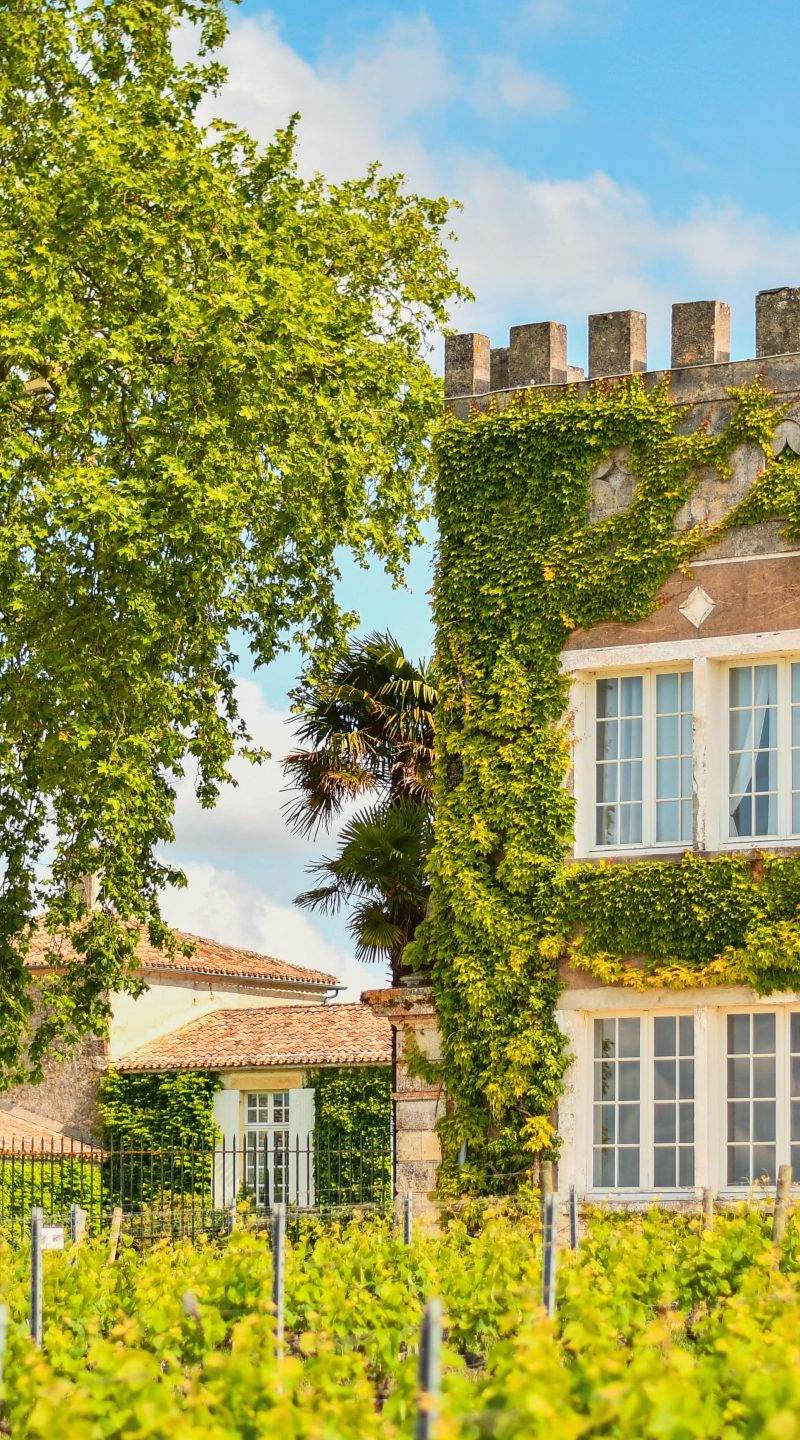
Identity
Château d'Arche is a winegrowing estate located in the commune of Sauternes. It was recognised as a Grand Cru Classé in 1855. Historically owned by the d’Arche family, it now belongs to Caroline and Nathalie Boël, daughters of Philippe Boël, who passed away in January 2024. The estate is managed by a team comprising Matthieu Arroyo as technical director, Solène Loutter heading marketing, communication, and hospitality, and Julie Naud-Raillard overseeing finance, administration, and human resources.
History and philosophy
The history of Château d'Arche began in 1611 with Étienne d’Arche, regarded as the family's viticultural pioneer. In 1733, François d’Arche acquired the cru of Braneyre and settled at Château d’Arche in 1753. In the 1855 Classification, the estate was distinguished as a 2ème Grand Cru among the classified white wines of Gironde, while under the ownership of Monsieur Lafaurie & Cie. Armand Bastit-Saint-Martin became the owner in 1925. In 1996, Château d’Arche was acquired by new owners, with the existing team continuing their work. The estate was a pioneer of wine tourism in Sauternes, opening a hotel in 2002. A modern, eco-certified cellar was built in 2019.
The estate began converting to organic viticulture in 2019, but brought the process to an end in 2024. It holds the environmental label « Bordeaux cultivons demain » and was awarded Best Of 2014 in the "Discovery and Innovation" category, followed by Best Of 2022 for its "Architecture and Landscapes". The estate experiments with robots, horses, and electric tractors in its vineyards, and has committed to training its pruning teams with Italian master pruners for the past three years. In 2022, one hectare of Floréal—a grape variety resistant to downy and powdery mildew—was planted, with a first harvest expected in 2024. The estate is also conducting trials in saffron cultivation.
Appellations
The parcels of Château d'Arche are located in the heart of the Sauternes commune. The estate produces wines under the AOC Sauternes, Bordeaux, and Graves appellations.
Practical information
Château d'Arche is located in 33210 Sauternes, France. The estate is open Tuesday to Saturday, from 10:00 to 13:00 and from 14:00 to 18:00. The telephone number is 05 56 76 67 67 and the email address is info@chateau-arche.com.
Tours and tastings are available in French and English. A one-hour paid tour and tasting includes an introduction to the château, a walk through the vineyards, a visit to the barrel cellar, and a tutored tasting of three wines. Tutored tastings are also available on site without prior booking. The estate welcomes groups from 8 to 100 people. Pets are not allowed.
Available services include an on-site and online shop, delivery options, and Wi-Fi. Payment can be made by payment cards, bank and postal cheques, cash, or bank transfer. The estate takes part in the Sauternes-Barsac Appellation Open Days (Journées Portes Ouvertes), which will be held on 14 and 15 November 2026, with no booking required.
Find out more
Official estate websiteFrequently asked questions
- What appellations are produced by Château d'Arche?
- Château d'Arche, located in Sauternes, produces wines under several Appellations d'Origine Contrôlée. Its grand vin is crafted under the Sauternes appellation. The estate also offers wines under the Bordeaux and Graves appellations. These distinct appellations reflect the diversity of styles produced, ranging from iconic Sauternes sweet wines to dry white wines.
- What is the size of the Château d'Arche vineyard and what are the main grape varieties?
- The Château d'Arche vineyard spans a planted area of 75 hectares. The primary grape variety blend for Château d'Arche's grand vin is composed of 85% Sémillon and 15% Sauvignon. For other cuvées such as Arche Perlée, the proportions vary, and also include the more recently planted Floréal variety, reflecting the estate's commitment to experimentation and adaptation.
- What is the historical classification of Château d'Arche and who are the current owners?
- Château d'Arche was recognised as a 2ème Cru Classé in the 1855 Classification, a prestigious distinction for classified white wines of Gironde. Currently, the estate is owned by Caroline and Nathalie Boël. They took over the property following the passing of their father, Philippe Boël, in January 2024, continuing the heritage of this iconic winegrowing estate.
- What are the specific terroir characteristics that influence the quality of Château d'Arche wines?
- The terroir of Château d'Arche is characterised by silty-gravel soils with calcaire à astéries on the higher elevations. The estate enjoys an exceptionally favourable geographic position, benefiting from morning mists created by the proximity of the cold Ciron and warmer Garonne waters. These unique climatic conditions are essential for the development of noble rot, Botrytis cinerea, which imparts aromatic complexity and luscious sweetness to Sauternes wines.
The vineyard (terroir)
The Château d'Arche vineyard extends over a planted area of 75 hectares out of a total of 90 hectares of winegrowing land. The soils are described as silty-gravelly, with the presence of calcaire à astéries at the highest points. The estate sits at an altitude of 65 metres. The proximity of the cold waters of the Ciron and the warmer Garonne generates morning mists, a vital feature of the Sauternes terroir. Average yields are approximately 2,000 bottles per hectare, well below the maximum limit of 3,333 bottles per hectare permitted for the Sauternes appellation. In 2023, 22 hectares were certified organic.
The grape variety blend for Château d'Arche's grand vin consists of 85% Sémillon and 15% Sauvignon. For the Arche Perlée cuvée, the blend is 50% Sauvignon and 50% Sémillon. The Floréal grape variety was also planted in 2022.
Flagship cuvées
Château d'Arche produces its grand vin under the AOC Sauternes, crafted primarily from Sémillon and Sauvignon. Harvesting is carried out by hand. The estate also offers « A de Château d’Arche », a dry white wine composed of 90% Sémillon and 10% Sauvignon Blanc. Another cuvée, Arche Perlée, is a Brut Blanc de Blancs made using the traditional method from 50% Sauvignon and 50% Sémillon. The dosage liqueur used is based on Château d’Arche Sauternes.
Vinification and ageing
Alcoholic fermentation takes place in vats. For the grand vin, ageing is carried out on fine lees, half in vats and half in oak barrels (20% new oak, 30% in one-wine Sauternes barrels). For the « A de Château d’Arche » cuvée, the ageing is described as "lightly oaked". Malolactic fermentation is partially carried out in barrels.
- Commune
- Sauternes
- Wine region
- Graves & Sauternais
- Classification
- 2e Cru Classé 1855
- Owner
- Caroline et Nathalie Boël
- Technical direction
- Matthieu Arroyo
- Surface area
- 75 ha
- Second wine
- A de Château d’Arche
- Grape varieties
- Sémillon 85%, Sauvignon 15%
Estate news
16 October 2026
Le Grand Banquet des Pessac-Léognan, Graves et Sauternes
Le Grand Banquet des Pessac-Léognan, Graves et Sauternes est un événement annuel, s'inscrivant dans le cadre de l'opération nationale « Vignobles en Scène », qui célèbre la richesse et la diversité du territoire viticole. Il propose un dîner étoilé élaboré par trois chefs renommés : Jérôme Schilling, Meilleur Ouvrier de France 2023 et chef du restaurant Lalique au Château Lafaurie-Peyraguey, Yoann Amado, chef du Cercle Guiraud à Sauternes, et Nicolas Masse, chef du restaurant La Grand'Vigne. Chaque chef réalise une partie du menu (entrée, plat, dessert) en accord avec les vins des appellations Pessac-Léognan, Graves et Sauternes/Barsac. L'entrée de Yoann Amado est associée aux vins blancs secs de Pessac-Léognan et Graves. Le plat de Jérôme Schilling est servi avec les vins blancs liquoreux de Sauternes et Barsac. Le dessert de Nicolas Masse est marié aux vins rouges de Pessac-Léognan et Graves. L'événement est conçu comme un moment de convivialité et de partage, permettant aux participants de rencontrer les vignerons et producteurs locaux. Le lieu précis du banquet est tenu secret jusqu'à peu de temps avant la date, mais il se situe à environ 45 minutes de la gare de Bordeaux Saint-Jean. En parallèle, plusieurs châteaux de la Route des Vins proposent des activités dans le cadre de « Vignobles en Scène », notamment les Châteaux des Graves, Vignoles Reynaud, Château Malartic-Lagravière, Château Lafaurie Peyraguey, Château de Malle, Château Jouvente et Château d'Arche.
Read the source — bordeaux-graves-sauternes.com03 February 2010
Classement 1855 Sauternes et Barsac
Cet article présente le classement officiel des vins de Sauternes et Barsac, établi en 1855 à la demande de l'Empereur Napoléon III pour l'Exposition Universelle de Paris. La classification a été confiée au Syndicat des Courtiers de Commerce de la bourse de Bordeaux et visait à reconnaître la qualité et la notoriété de chaque cru. Le classement initial comprenait 25 châteaux, mais en raison de successions et de partages de sols, il en compte aujourd'hui 26. Le classement inclut une catégorie "Premier Cru Supérieur" représentée par le Château d'Yquem. Les "Premiers Crus" sont les Châteaux La Tour Blanche, La Faurie-Peyraguey, Clos Haut-Peyraguey, de Rayne-Vigneau, Suduiraut, Coutet, Climens, Guiraud, Rieussec, Rabaud-Promis et Sigalas-Rabaud. Enfin, la catégorie des "Seconds Crus" regroupe les Châteaux de Myrat, Doisy Daêne, Doisy-Dubroca, Doisy-Vedrines, d'Arche, Filhot, Broustet, Noirac, Caillou, Suau, de Malle, Romer-Du-Hayot, Lamothe et Lamothe-Guignard. L'article a été rédigé par Adelin Pâques et publié le 3 février 2010.
Read the source — chais-et-vignes.comPractical information
- Address
- 33210 Sauternes, France, 33210
- Phone
- +33556766767
- Contact form
- Contact the estate
- Opening hours
- mardi 10h-14h / 13h-18h, mercredi 10h-14h / 13h-18h, jeudi 10h-14h / 13h-18h, vendredi 10h-14h / 13h-18h, samedi 10h-14h / 13h-18h
- Visits
- Visite-dégustation payante, Nombre de produits dégustés : 3