
Château Mirefleurs
Updated on
Located in Yvrac, Château Mirefleurs is managed by Antoine Moueix Propriétés. It produces AOC Bordeaux Supérieur wines from a 40-hectare vineyard certified HVE 3 and Terra Vitis. Its history dates back to the 15th century.
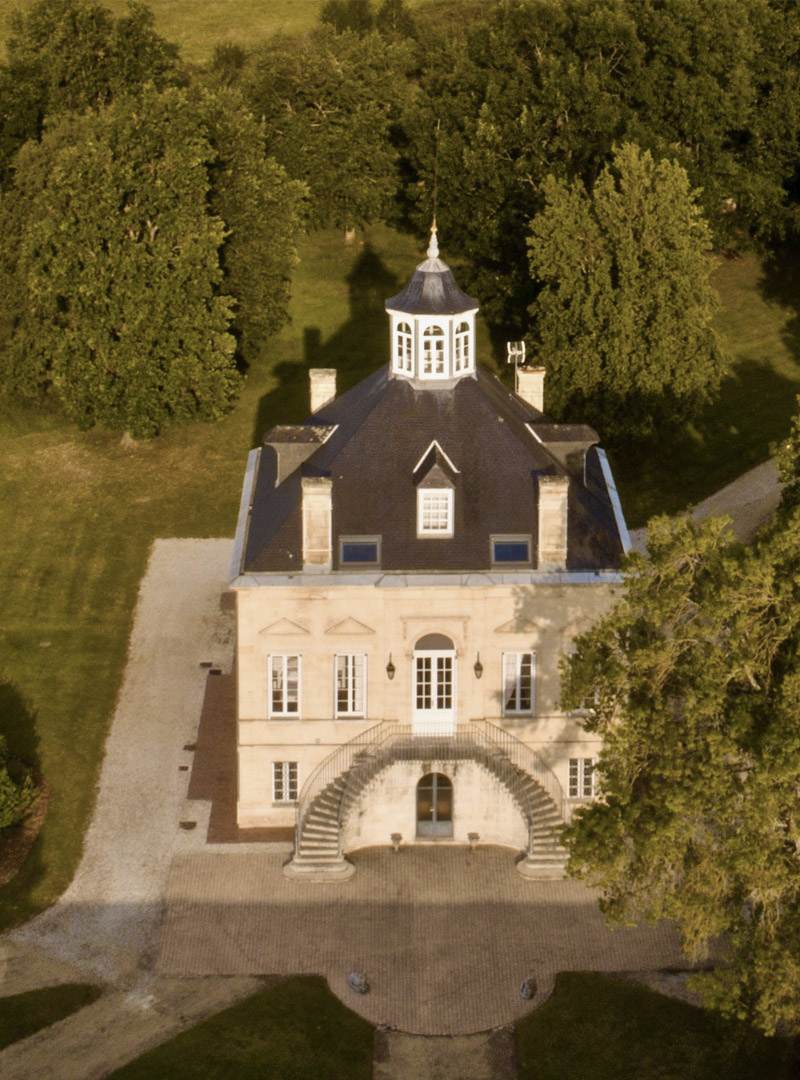
Identity
Château Mirefleurs is located in the commune of Yvrac in the Gironde. It is currently managed by Antoine Moueix Propriétés, under the technical direction of Robin Jeudy, alongside consulting oenologist Cécile Cazaux.
History and philosophy
The history of Château Mirefleurs dates back at least to the 15th century with Jean Chou de la Moneterie. In the 18th century, Maître François de Vivans was its owner. During the 19th century, the estate went through several ownership changes, notably being acquired by Sémilien Birly in 1855, and subsequently by the Cazillac family in 1873. The Castel family purchased the property in 1970. In December 2015, Changyu, the leading Chinese wine producer, acquired a 90% stake in Château Mirefleurs from Castel. Since 2018, a joint venture between Advini and Changyu has also been established.
The estate is committed to sustainable winegrowing. Château Mirefleurs has held Terra Vitis certification since 2009, as well as HVE 3 (High Environmental Value) and EMS (Environmental Management System) certifications since 2019.
The appellations
Château Mirefleurs produces red wines under the Bordeaux Supérieur appellation. The vineyard parcels are located across the communes of Yvrac and Saint-Loubès.
Practical information
Château Mirefleurs is located at Chemin de Mirefleurs, 33370 Yvrac.
Find out more
Frequently asked questions
- What is the main appellation of Château Mirefleurs?
- Château Mirefleurs primarily produces wines under the Bordeaux Supérieur appellation, in the Bordeaux wine region.
- What is the vineyard surface area of Château Mirefleurs and which grape varieties are grown?
- The Château Mirefleurs vineyard spans 40 hectares. The grape varieties planted comprise 65% Merlot and 35% Cabernet Sauvignon.
- Which environmental certifications does Château Mirefleurs hold?
- Château Mirefleurs is dedicated to sustainable viticulture, certified by Terra Vitis since 2009, as well as HVE 3 (High Environmental Value) and EMS (Environmental Management System) since 2019.
- What winemaking and ageing methods are used at Château Mirefleurs?
- Vinification is carried out in stainless steel vats, with a 3 to 4-week maceration. Ageing takes place for 12 months in one- and two-year-old barrels.
The vineyard (terroir)
The Château Mirefleurs vineyard covers 40 hectares. The soils consist of gravel, clay, sandy-clay and silt. The average vine age is 25 years, with a planting density of 6,300 vines per hectare. The grape varieties planted are 65% Merlot and 35% Cabernet Sauvignon.
Viticultural practices include working every other row, mechanical weed control, and cover cropping within the rows. Harvesting is carried out mechanically.
Flagship cuvées
Château Mirefleurs produces a red wine crafted from a blend of Merlot (70%) and Cabernet Sauvignon (30%). This wine boasts a structure that offers an ageing potential of 5 to 7 years.
Vinification and ageing
Vinification takes place in stainless steel vats, with a maceration period of 3 to 4 weeks. Ageing lasts for 12 months in one- and two-year-old oak barrels.
- Appellation
- Bordeaux Supérieur
- Commune
- Yvrac
- Wine region
- Bordeaux & Bordeaux Supérieur
- Owner
- Changyu
- Technical direction
- Robin Jeudy
- Surface area
- 40 ha
- Certifications
- Terra Vitis, HVE
- Grape varieties
- Merlot 65%, Cabernet Sauvignon 35%
Estate news
20 May 2017
Ces «Suisses» et leurs vignobles bordelais - thomasvino.ch
L'article explore la présence de propriétaires suisses ou résidant en Suisse, souvent d'origine française, à la tête de nombreux châteaux viticoles prestigieux dans le Bordelais. Il souligne l'attractivité de Bordeaux pour les investisseurs, d'abord les géants du luxe dans les années 1990, puis plus récemment les investisseurs chinois. Parmi les propriétaires mentionnés, Pierre Castel, dont la fille Romy réside à Genève, est associé au Château Mirefleurs et au Château Beychevelle. Bernard Arnault, patron de LVMH, est cité pour ses acquisitions du Château d'Yquem et copropriétaire du Château Cheval-Blanc. La famille Wertheimer de Chanel possède le Château Canon et Rauzan-Ségla. Silvio Denz, un Bâlois, est propriétaire du Château Faugères et de Lafaurie-Peyraguey. Karl Friederich Scheufele de Chopard détient le Château Monestier La Tour à Bergerac. Michel Reybier, établi à Genève, est le châtelain de Cos d'Estournel. Bruno Prats, ancien propriétaire de Cos d'Estournel, réside près de Morges. May-Eliane Miailhe, veuve du général de Lencquesaing, s'est installée à Vevey après avoir vendu le Château Pichon Comtesse-Lalande. Hervé Laviale et Griet van Malderen ont possédé les châteaux Franc-Mayne, Château de Lussac et Vieux-Maillet. Le prince Robert de Luxembourg, genevois d'adoption, préside les Domaines Clarence Dillon, incluant le Château Haut Brion. Caroline Frey gère le Château La Lagune. Enfin, la branche genevoise des Rothschild, avec le baron Benjamin (décédé en 2021), était à la tête des châteaux Clarke et des Laurets, regroupés sous Edmond de Rothschild Heritage avec d'autres domaines mondiaux. L'article, actualisé en mai 2017 et octobre 2022, est paru initialement en janvier 2016 dans une version du magazine L'Hebdo.
Read the source — thomasvino.ch29 November 2010
Castel met ses vins premium (châteaux et domaines) en Bag-In-Box®
Le négociant Castel se tourne vers le Bag-In-Box® (BIB®) pour commercialiser certains de ses vins premium, châteaux et domaines, en réponse à l'augmentation de la popularité de ce conditionnement dans la grande distribution, qui représente 26% des ventes de vin en 2009-2010. Au printemps 2011, Castel lancera notamment un BIB® de deux litres de son Château Mirefleurs, un AOC Bordeaux supérieur, dans les supermarchés Intermarché. Le prix de ce BIB® devrait être légèrement inférieur à 15 euros, alors que les bouteilles de 75 cl du Château Mirefleurs se vendent entre 6 et 7,5 euros. Castel propose déjà ce format pour ses vins de marque et une cuvée de son domaine provençal, le Château de Cavalier, mais cette initiative marque une première pour des appellations plus prestigieuses. L'objectif est de s'adapter à la tendance de consommation des clients qui privilégient de petites quantités de vin de qualité au quotidien. Parallèlement, ce format BIB® sera également proposé aux restaurateurs, afin de leur permettre d'améliorer leur offre de vins au verre et d'accroître leurs ventes. Cet événement s'inscrit dans un contexte où le salon Vinitech aborde la question de la maîtrise de l'oxygène appliquée au BIB®, avec une intervention de Patrick Shea de Performance BiB, soulignant l'importance technologique et commerciale de ce type de conditionnement.
Read the source — vitisphere.comPractical information
- Address
- Chemin de Mirefleurs, 33370 Yvrac
- Contact form
- Contact the estate