
Château Siran
Updated on
Château Siran is a family-owned winegrowing estate located in Labarde, in the Margaux appellation. Owned by the Miailhe family since 1859, it is renowned for its wines nurtured on a terroir of fine siliceous gravel and its artist-designed labels.
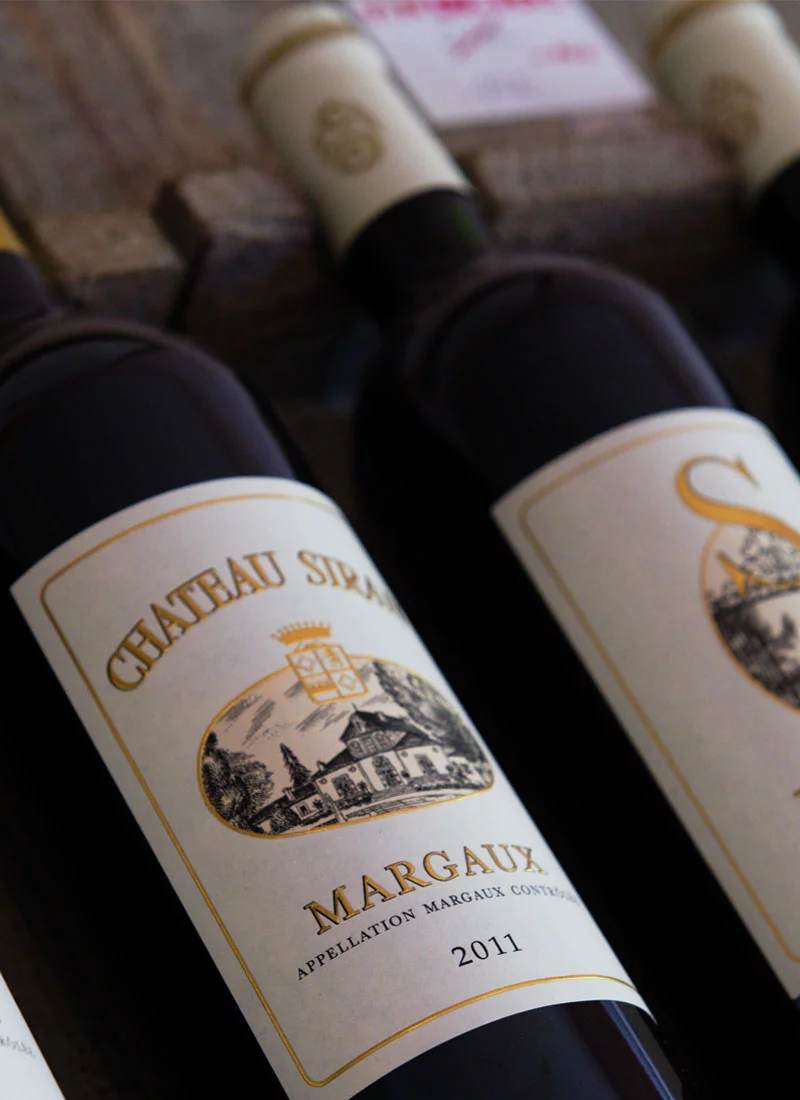
Identity
Château Siran is a winegrowing estate located in Labarde, in the Gironde department. It is owned by the Miailhe family, represented by Édouard Miailhe, the sixth generation at the helm. Technical management and winemaking are overseen by Marjolaine Defrance, with Hubert de Boüard serving as consultant oenologist.
History and philosophy
Château Siran boasts a rich heritage, with mentions of the estate dating back to 1650 and a feudal oath by Guilhem de Siran recorded in 1428. The Miailhe family acquired the property in 1859. In 1953, the estate began working with oenologist Émile Peynaud. In 1980, the château built an underground wine cellar with a capacity of nearly 25,000 bottles and introduced bespoke labels illustrated by a different artist for each vintage. This tradition was paused in 2005 and revived in 2020. Château Siran was recognised as a Cru Bourgeois Exceptionnel in 2003. Following the annulment of this classification in 2007, the estate permanently relinquished the status. In terms of viticultural practices, a sustainable approach (lutte raisonnée) was introduced in 2000, and organic farming was initiated on selected plots in 2018. The estate is also committed to an HVE certification process.
Appellations
Château Siran primarily produces wines under the Margaux appellation in the Médoc, based in Labarde. The estate also crafts wines under the Bordeaux appellation.
Winemaking and ageing
Winemaking at Château Siran focuses on gentle extraction and maceration, notably at moderate temperatures. Ageing takes place over a period of 12 to 18 months, with 30% new oak barrels.
Practical information
Château Siran is located at 13, avenue du Comte-Jean-Baptiste-Lynch, 33460 Labarde. The estate can be contacted by telephone on +33 (0)5 57 88 34 04 or by email at visites@chateausiran.com or commercial@chateausiran.com. Visits are by appointment only. The cellar door is open from 10:00 to 12:30 and from 14:00 to 17:30, and from May to September, it is open daily, including public holidays. The estate also offers dining and accommodation services, alongside direct on-site and mail-order sales. The château houses a collection museum showcasing the original artworks created for its illustrated labels.
Find out more
The vineyard (terroir)
The vineyard of Château Siran covers 25 hectares under vine within a total estate of 88 hectares. The vines have an average age of 38 years. The terroir is distinguished by a plateau of fine siliceous gravel. The grape varieties planted comprise Merlot (46%), Cabernet Sauvignon (44%), Petit Verdot (9%), and Cabernet Franc (1%). The estate does not purchase external fruit. Harvesting is carried out by hand. The property also incorporates diverse ecological features, including woodlands, parkland, ponds, orchards, and meadows.
Signature cuvées
The estate's grand vin is Château Siran Margaux. The property also produces a second wine, S de Siran. The estate is renowned for its labels illustrated by an artist for each vintage.
- Appellation
- Margaux
- Commune
- Labarde
- Wine region
- Médoc
- Classification
- Cru Bourgeois Exceptionnel
- Owner
- Famille Miailhe (Édouard Miailhe)
- Technical direction
- Marjolaine Defrance
- Surface area
- 25 ha
- Second wine
- S de Siran
- Certifications
- HVE
- Grape varieties
- Merlot 46%, Cabernet-Sauvignon 44%, Petit Verdot 9%, Cabernet Franc 1%
Estate news
23 August 2026
Tour de France durch die Weingärten von Bordeaux
Cet article explore le vignoble bordelais à travers une "Tour de France" à vélo, mettant en lumière la diversité de ses vins et les défis actuels de l'industrie. Le viticulteur Alexis Charrier, de Bommes, un village près de Sauternes, évoque la tradition familiale autour des vins liquoreux. L'itinéraire cyclable commence à Bordeaux, passe par la Cité du Vin, puis s'étend vers l'Entre-deux-Mers jusqu'à Saint-Émilion. On y apprend que, malgré l'afflux de visiteurs, l'industrie viticole est en crise, notamment pour les vins rouges, poussant les châteaux à innover dans le tourisme. Le Château Fleur de Lisse propose des cours de cuisine et des chais monumentaux. Dans le Graves-Sauternes, Caroline et Xavier Perromat du Château de Cérons ont développé des expériences œnologiques immersives, soulignant la passion qui les anime. Le pays du Margaux est représenté par le Château Siran, qui mise sur des dégustations pédagogiques et son riche patrimoine. Enfin, dans les Côtes de Bourg, Valérie Bassereau du Château de la Grave a réduit ses surfaces viticoles pour se diversifier dans l'œnotourisme. L'article conclut sur la beauté des paysages viticoles et l'expérience sensorielle d'une dégustation au Château Eyquem, tout en mentionnant que la région de Bordeaux n'a pas été affectée par les récents incendies. La période idéale pour cette découverte est du printemps à l'automne, avec des options d'hébergement sur des domaines comme Sigalas Rabaud et le Château de la Grave.
Read the source — lz.dePractical information
- Address
- 13 av du comte JB Lynch, 33460 Labarde
- Phone
- +33 (0)5 57 88 34 04
- Contact form
- Contact the estate
- Opening hours
- tous les jours, inclus les jours fériés de 10h00 à 12h30 et de 14h00 à 17h30
- Visits
- sur réservation