Château Giscours
Updated on
Overview of Château Giscours, a 3e Grand Cru Classé 1855 in Margaux. Owned by the Albada Jelgersma family and managed by Alexander Van Beek, the estate farms 100 hectares under agroecology and is committed to CSR.
Identity
Château Giscours is a Grand Cru Classé in Margaux, located in the commune of Labarde in Gironde. It is managed by Alexander Van Beek and owned by the Albada Jelgersma family.
History and philosophy
The history of Château Giscours dates back to the 14th century, originating with a defensive keep. Winemaking on these lands began in the 16th century, initiated by Pierre de Lhomme, who acquired the estate and planted vines. In the late 1840s, Jean-Pierre Pescatore became the owner and commissioned the construction of the neoclassical château. He passed away in late 1855, the year of the historic classification. In 1952, Nicolas Tari took over the reins, followed by Pierre Tari in 1970. Since 2023, the Dutch Albada Jelgersma family has owned the estate.
Château Giscours is committed to the CIVB's “Bordeaux Cultivons Demain” CSR initiative and is also HVE certified. The estate has welcomed visitors for over 30 years and has been recognised with Best Of Wine Tourism awards, including a Best Of d'Or in 2024 in the “Wine Tourism Services” category.
Appellations
The parcels of Château Giscours are located within the Margaux appellation.
Practical information
Address: 10 route de Giscours, 33460 Labarde
Telephone: +33 5 57 97 09 09
Email: receptif@chateau-giscours.fr
Boutique opening hours (from 1 January 2026 to 31 March 2026): Monday to Saturday, 9:30 am to 12:30 pm and 1:30 pm to 5:30 pm.
Tours and tastings: Paid individual tour-and-tasting visits are offered, including a tasting of two wines. The estate accommodates groups of 5 to 15 people.
Accommodation: The estate provides accommodation options.
Payment methods accepted: American Express, payment cards, cash.
Languages spoken: French, English, Spanish, Dutch.
Amenities: Wi-Fi available.
Pets not allowed.
Find out more
Frequently asked questions
- What is the classification of Château Giscours in Bordeaux?
- Château Giscours holds the ranking of 3e Cru Classé under the 1855 classification, positioning it among the grands crus of Bordeaux. This distinction bears witness to the historic recognition of its wine quality within the Margaux wine region.
- What is the composition of the Château Giscours vineyard?
- The vineyard at Château Giscours covers around 100 hectares and is predominantly planted with Cabernet Sauvignon (64%) and Merlot (30%), alongside Cabernet Franc (3%) and Petit Verdot (3%). These grape varieties are cultivated on deep Garonnaise gravel soils located on the plateaux of Labarde and Arsac.
- Who are the current owners of Château Giscours and what is its history?
- Château Giscours has been owned by the Albada Jelgersma family since 2023. Its history dates back to the 14th century with a defensive keep, and wine production began in the 16th century. The neoclassical château was constructed in the late 1840s by Jean-Pierre Pescatore. Over the centuries, several prominent owners have contributed to its development and renown.
- Does Château Giscours offer wine tourism activities?
- Yes, Château Giscours offers wine tourism experiences, including paid individual tour-and-tasting visits featuring a tasting of two wines. The estate also welcomes groups of 5 to 15 people. On-site accommodation options are available, and the property has been awarded for its wine tourism services.
The vineyard (terroir)
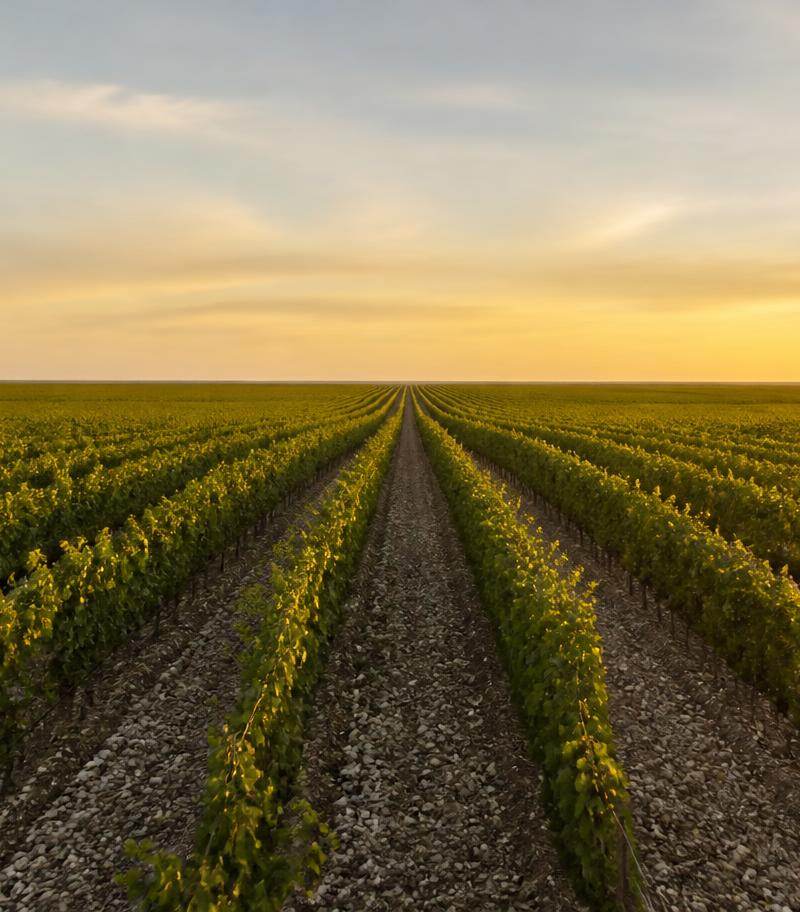
The vineyard at Château Giscours extends over approximately 100 hectares planted with red grape varieties. The average age of the vines is 35 years. The soils consist of deep Garonnaise gravel, distributed across the plateaux of Labarde and Arsac. The estate’s total area, including vineyards and woodlands, spans around 400 hectares, of which 140 hectares are forest. Winegrowing practices respect the rhythm of nature and the balance of this ecosystem, following agroecological principles. Harvesting is carried out by hand.
The grape variety plantings comprise:
- Cabernet Sauvignon: 64%
- Merlot: 30%
- Cabernet Franc: 3%
- Petit Verdot: 3%
Flagship cuvées
The grand vin of Château Giscours is renowned for its finesse and delicacy. It generally reveals a refined palate with soft tannins. The estate also produces a second wine, La Sirène de Giscours.
Vinification and ageing
The wines are aged in oak barrels (around 50% new oak) for an average duration of 17 months. Annual production is approximately 200,000 bottles.
- Appellation
- Margaux
- Commune
- Labarde
- Wine region
- Médoc
- Classification
- 3e Cru Classé 1855
- Owner
- Famille Albada Jelgersma
- Technical direction
- Alexander Van Beek
- Surface area
- 100 ha
- Second wine
- La Sirène de Giscours
- Certifications
- HVE
- Grape varieties
- Cabernet Sauvignon 64%, Merlot 30%, Cabernet Franc 3%, Petit Verdot 3%
Estate news
19 October 2026
French winegrowers are retooling vineyards after Bordeaux logged 32 days above 35C
Face aux vagues de chaleur répétées et à leurs impacts sur l'acidité des vins, les viticulteurs français de Bordeaux et de Bourgogne modifient leurs pratiques. L'article révèle qu'à Bordeaux, les jours à plus de 35°C sont passés de 3,9 annuels (normale 1991-2020) à 32 en 2026, entraînant une désynchronisation entre la montée rapide des sucres et la maturité aromatique/phénolique. Pour préserver la fraîcheur, les pratiques culturales évoluent. La suppression des feuilles est inversée pour protéger les grappes du soleil direct. Au Château Giscours à Margaux, le directeur général Jérôme Poisson utilise des couvre-sols pour réduire la chaleur du sol et adapte la gestion de la canopée avec plus de masse foliaire. Les vendanges sont désormais plus longues et effectuées en plusieurs passages par parcelle, s'étendant du 25 août au 21 septembre en 2026 pour le Château Giscours, contre un début le 2 septembre en 2022. En cave, des ajustements sont aussi mis en œuvre. Antoine Médeville (Oenoconseil) recommande des fermentations à des températures plus basses (23-24°C) et des remontages plus doux pour éviter la surextraction. Le Château Giscours adopte également ces mesures pour des vins moins structurés. Des biostimulants sont testés pour des récoltes plus précoces et un meilleur équilibre. Malgré une résilience des vignes, la recherche explore pourquoi des vins issus de raisins à faible acidité peuvent encore paraître frais, soulignant que l'acidité n'est pas le seul critère de fraîcheur. Ces adaptations sont cruciales pour la stabilité, la conservation et le positionnement commercial des vins.
Read the source — vinetur.com15 October 2026
Caiarossa Opens the Doors of Its Villa: Guests Can Now Stay in the Heart of the Estate
L'article annonce que le domaine viticole Caiarossa, situé à Riparbella sur la côte toscane, ouvre pour la première fois les portes de sa villa, la Villa Caiarossa, aux hôtes. Cette initiative offre une expérience immersive au cœur de la propriété, invitant les visiteurs à se connecter profondément avec la nature, l'architecture raffinée et la philosophie biodynamique du domaine. La villa, une élégante résidence privée, est nichée au milieu des vignobles et du maquis méditerranéen, offrant des vues imprenables jusqu'à la mer Tyrrhénienne. Les intérieurs, avec leurs sols en terre cuite et poutres apparentes, créent une ambiance chaleureuse et lumineuse. Les vastes espaces intérieurs et extérieurs, agrémentés d'un jardin à l'italienne et d'une piscine privée, sont idéaux pour les familles ou les groupes d'amis. Les hôtes peuvent admirer les rangs du vignoble Podere Serra all’Olio, planté de Cabernet Sauvignon et de Cabernet Franc, qui entourent la cave rouge distinctive de Caiarossa. Le séjour est enrichi par des dégustations privées dans la cave de la villa, des visites guidées des vignobles et de la cave, ainsi que des services personnalisés comme des chefs privés. Le domaine produit des vins selon les principes de l'agriculture biodynamique depuis sa création, visant à renforcer la vitalité du sol. Caiarossa est également un élément du circuit Toscana Wine Architecture et entretient une relation privilégiée avec son « domaine sœur » français, le Château Giscours, une propriété renommée de l'appellation Margaux à Bordeaux. Acquis en 2004 par Eric Albada Jelgersma, également propriétaire de Château Giscours, le domaine est aujourd'hui dirigé par ses enfants, Dennis, Derk et Valérie. Cette offre permet de découvrir une Toscane plus secrète, celle de la côte étrusque, loin des sentiers touristiques les plus fréquentés, où la beauté de la région se révèle à un rythme plus détendu et intime. Riparbella est présentée comme une destination émergente pour l'œnotourisme, la gastronomie et le tourisme de nature.
Read the source — wineindustryadvisor.comPractical information
- Address
- Labarde
- Contact form
- Contact the estate