
Château Smith Haut Lafitte
Updated on
Château Smith Haut Lafitte, a Grand Cru Classé de Graves in Martillac, is owned by Florence and Daniel Cathiard. A pioneer in biodynamics and certified organic, it is renowned for its red and white wines crafted from a Günzian gravel terroir.
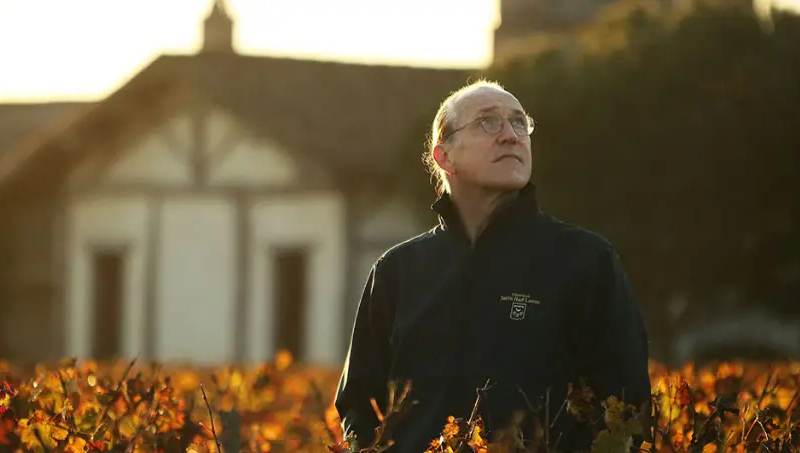
Identity
Château Smith Haut Lafitte is a Grand Cru Classé de Graves, located in the commune of Martillac, in Gironde. The estate is owned by Florence and Daniel Cathiard.
The management team includes Fabien Teitgen as managing director, who is also an agricultural engineer and oenologist. Yann Laudeho Leroy is the cellar master and Nicolas Poumeyrau is the vineyard manager.
History and philosophy
The history of Château Smith Haut Lafitte dates back to the 14th century, with the earliest deed of ownership recorded in 1365. The vineyard was established by Verrier Du Bosq. In the mid-18th century, George Smith, a Scotsman, acquired the estate and gave it his name. In 1842, under the ownership of Lodi Martin Duffour Dubergier, the estate was elevated to the rank of “Grand Cru exceptionnel”.
In 1958, the Château was bought by Maison Louis Eschernauer. In 1990, Florence and Daniel Cathiard acquired the property. They introduced a philosophy of “Bio-Precision”, combining tradition and innovation, and shifted the estate towards biodynamic viticulture around a decade ago. The estate achieved certified organic status (Agriculture Biologique) in 2019.
The Cathiard family also owns other winegrowing estates, including Château Le Thil (acquired in 2012) and Château Beauregard (acquired in 2014), as well as Cathiard Vineyard.
Appellations
The wines of Château Smith Haut Lafitte are produced under the Pessac-Léognan appellation. The estate also oversees wine production under the Graves and Pomerol appellations for other properties owned by the Cathiard family.
Flagship wines
The estate's grand vin rouge is Château Smith Haut Lafitte red, while the grand vin blanc is Château Smith Haut Lafitte white.
The estate offers several second wines: Le Petit Haut Lafitte red and white, as well as Les Hauts de Smith red and white. A rosé, Les Hauts de Smith, is also crafted. In addition, the Cathiard family produces Château Le Thil red and Château Beauregard red.
Practical information
Château Smith Haut Lafitte is located at Chemin du Carosse, 33650 Martillac, France. The telephone number is +33 (0)5 57 83 11 22. The email address for visits is visites@smith-haut-lafitte.com.
The wine shop is open from May to October, Monday to Saturday from 10:00 to 19:00, and Sunday (and public holidays) from 10:00 to 18:00. From November to April, it is open Monday to Saturday from 10:00 to 18:00, and Sunday (and public holidays) from 10:00 to 17:00. The estate offers tours and tastings by appointment, as well as workshops. Visits to the cooperage are also available. Groups (5–35 people) are welcome. A boutique is available on site, with delivery options. Wi-Fi is accessible, and payment methods include credit/debit cards, cheques, and cash.
The estate is actively involved in wine tourism, featuring a five-star hotel and spa, Les Sources de Caudalie, as well as a Michelin-starred restaurant. Château Smith Haut Lafitte has been awarded the “Vignobles et Découvertes” and “Best Of Wine Tourism” labels, including a Gold Best Of in 2019 in the Art and Culture category, thanks in part to its contemporary outdoor sculptures and an 18th-century chapel.
Find out more
The vineyard (terroir)
The vineyard of Château Smith Haut Lafitte spans 80 hectares. The soils consist of Günzian gravel (Graves Günziennes), characterised by pebbles and stones that ensure natural drainage and create a beneficial mirror effect for grape ripening. The vine roots can reach depths of over six metres.
The grape varieties planted for the red wines comprise 63% Cabernet Sauvignon, 30% Merlot, 6% Cabernet Franc, and 1% Petit Verdot. For the white wines, the planting consists of 90% Sauvignon Blanc, 5% Sauvignon Gris, and 5% Sémillon. The average age of the vines is 35 to 40 years, with a planting density ranging from 7,500 to 10,000 vines per hectare.
Viticultural practices focus on respecting nature and safeguarding biodiversity. The estate produces its own organic compost, plants hedges, woodlands, and trees amidst the vines, and maintains beehives, orchards, and vegetable gardens. Work on fragile slopes, particularly for the white wine plots, is sometimes carried out by horse. The estate has embraced biodynamics for a decade, cultivating medicinal plants such as yarrow, horsetail, and tansy to help prevent diseases. Cutting-edge technologies, including satellite and drone imaging alongside in-depth soil studies, are also used for precision vineyard management. The estate operates its own nursery on Île de Lalande for rootstocks.
Vinification and ageing
Harvesting is entirely manual and conducted in small batches, featuring meticulous sorting of whole bunches, vibrating tables, and high-precision optical sorting via photographic analysis. The vat room, installed in 2013, operates entirely by gravity. Fermentations for the red wines take place in truncated cone-shaped wooden vats at temperatures between 26°C and 28°C. White wine fermentations take place at 20°C, with integral vinification in oak barrels. The red wines undergo 12 to 18 months of ageing—around 18 months for the grand vin—in oak barrels (60% new). The white wines are aged for 12 months in barrels, with 50% new oak. Fining is carried out using bentonite (natural clay), a vegan fining agent.
The estate has had its own in-house cooperage since 1993, which produces almost all of its barrels. Oak trees are selected from French forests for their moderate tannin levels and fine grain. This cooperage holds the “Entreprise du Patrimoine Vivant” (Living Heritage Company) distinction.
The Chai Furtif (Stealth Cellar), dedicated to the second wines, is designed according to circular economy and positive energy principles, featuring low energy consumption, solar power generation, rainwater harvesting, and cooling via an underground Canadian well. In 2014, the estate introduced the world’s first system for capturing and recycling CO2 generated during wine fermentation.
- Appellations
- Pessac-Léognan, Graves, Pomerol
- Commune
- Martillac
- Wine region
- Graves & Sauternais
- Classification
- Cru Classé de Graves
- Owner
- Florence & Daniel Cathiard
- Technical direction
- Yann Laudeho Leroy
- Surface area
- 80 ha
- Second wine
- Les Hauts de Smith
- Certifications
- Bio, Biodynamie
- Grape varieties
- Cabernet Sauvignon 63%, Merlot 30%, Cabernet Franc 6%, Petit Verdot 1%, Sauvignon Blanc 90%, Sauvignon Gris 5%, Sémillon 5%
Practical information
- Address
- Chemin du Carosse, 33650 MARTILLAC
- Phone
- +33 5 57 83 11 22
- Contact form
- Contact the estate
- Opening hours
- De Mai à Octobre : Ouvert du lundi au samedi de 10h à 19h et le dimanche (et jours fériés) de 10h à 18h. De Novembre à Avril : du lundi au samedi de 10h à 18h et dimanche (et jours fériés) de 10h à 17h.
- Visits
- Visite et dégustation sur rendez-vous tous les jours.