
Château Coutet (Saint-Émilion)
Updated on
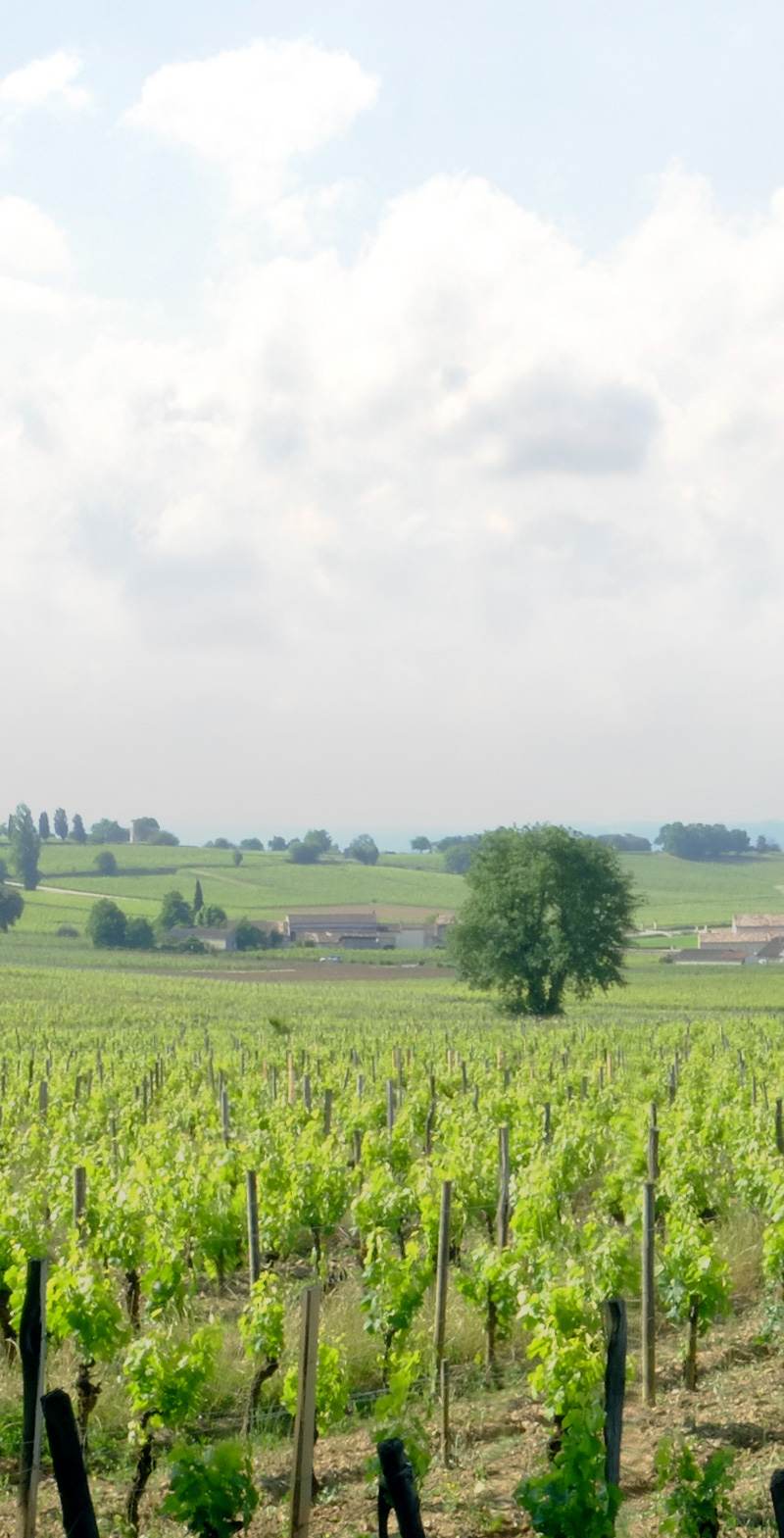
Château Coutet, a family-owned and certified organic winegrowing estate in Saint-Émilion, has been held by the David Beaulieu family since 1601. It is celebrated for its Saint-Émilion Grand Cru wines, crafted from a diversified vineyard set across limestone plateau, hillside slopes and foot of the slopes.
Identity
Château Coutet is a winegrowing estate located in Saint-Émilion, Gironde. The David Beaulieu family are the owners. Management and winemaking are overseen by Alain David Beaulieu, assisted by his nephew Adrien David Beaulieu, who also serves as commercial director, and his son Matthieu.
History and Philosophy
The history of Château Coutet dates back to the 15th century. In 1601, Thomas d’Augereau, married to Marie David, acquired the estate. The current name "Coutet" has been in use since the 15th century, succeeding the former name Domaine de Francs. The David Beaulieu family has retained ownership of the property ever since, spanning fourteen generations and more than 400 years. In 1874, Édouard Féret already described the estate as "situated on one of the slopes of Saint-Émilion, in an enviable position overlooking the Dordogne valley, offering picturesque scenery and land exceptionally suited to the vine", producing "smooth wines remarkable for the longevity of their bouquet".
Château Coutet was included in the Grand Cru Classé classification from 1955 to 1969, before stepping away from the ranking in 1986. The estate has been certified organic (Agriculture Biologique) since 2012. Its environmental commitment is demonstrated by a historical absence of chemical treatments (herbicides, pesticides, synthetic fertilisers) and the cultivation of polyculture including market gardening, orchards, woodland, and livestock. Collaborations have been established with the Bordeaux agronomy school for the installation of temperature sensors and microbiological analysis, as well as with Vitirover for the trial of a solar-powered vineyard robot. The estate has also expanded its wine tourism offerings since 2013.
Appellations
Château Coutet produces wines under the Saint-Émilion Grand Cru appellation.
Practical Information
Château Coutet is open to the public Monday to Saturday, from 9:00 am to 6:00 pm. The estate offers various tour and tasting experiences, on foot or by buggy, lasting from 1 to 2 hours, with options to include charcuterie and cheese boards or aperitif platters. Visits are by appointment and can be conducted in French, English, or Spanish. The estate provides on-site parking and amenities such as Wi-Fi, air conditioning, international shipping, and direct cellar door sales or mail order. Pets are welcome. A reception room is also available for private and corporate events.
- Address: Château Coutet, Saint Emilion, 33330
- Telephone: +33 (0)5 57 74 43 21 (Tour bookings: 07 82 22 01 05)
- Email: chateau.coutet@gmail.com
Find Out More
Frequently asked questions
- What is the history of Château Coutet and its founding family?
- The history of Château Coutet dates back to the 15th century. The David Beaulieu family has owned the estate since 1601—spanning more than 400 years and fourteen generations—when Thomas d'Augereau, married to Marie David, purchased the property. The name "Coutet" has been used since the 15th century, replacing the earlier "Domaine de Francs". As early as 1874, the estate was praised for the quality of its wines and prime location. It was classified as a Grand Cru Classé from 1955 to 1969 before renouncing the ranking in 1986. The estate has been certified organic since 2012.
- What are the key characteristics of the Château Coutet vineyard?
- The Château Coutet vineyard covers 12.7 hectares out of a 16-hectare total estate. It is situated on the Saint-Martin de Mazerat plateau in Saint-Émilion with a south-westerly exposure. The terroir comprises heavy clay-limestone soils on the Plateau de Saint-Martin, clay-limestone on the Côte de Franc, and recarbonated clayey sands on the Pied de Côte. The grape varieties are 60% Merlot, 30% Cabernet Franc, 7% Malbec, and 3% Cabernet Sauvignon. The average vine age is 41 years, with parcels exceeding 80 years. Harvesting is manual, replanting uses indigenous massal selection, and the estate has been certified organic since 2012.
- Which cuvées are produced by Château Coutet?
- Château Coutet produces several cuvées under the Saint-Émilion Grand Cru appellation. The flagship wine is Château Coutet, aged for 18 months in oak barrels (20% new) and vats, with an annual output of around 55,000 bottles. Cuvée Emeri is inspired by an archival discovery and sourced from dedicated parcels of Merlot and Cabernet Franc, aged for 18 months with 50% new oak. Les Demoiselles is made from old vines (around 85 years old) of Merlot and Cabernet Franc grown on the limestone plateau. All grapes are hand-harvested and vinified using indigenous yeasts.
- Does Château Coutet offer wine tourism activities?
- Yes, Château Coutet has offered wine tourism experiences since 2013 and is open to visitors Monday to Saturday, from 9:00 am to 6:00 pm. It offers various walking and buggy tours with tastings, lasting between 1 and 2 hours. Visits can include artisan cheese and charcuterie platters, and are available by appointment in French, English, or Spanish. The property features parking, Wi-Fi, air conditioning, and offers international shipping. Pets are welcome, and a private reception room is available for hire.
The Vineyard (Terroir)
The Château Coutet vineyard spans 12.7 hectares, part of an overall 16-hectare estate of which 4 hectares are deliberately left uncultivated. It is situated on the Saint-Martin de Mazerat plateau in Saint-Émilion, with a south-westerly exposure. The vineyard comprises several soil types:
- The Plateau de Saint-Martin (4.5 ha): Its subsoil consists of starfish limestone (calcaire à astéries), covered by a shallow calcareous brown soil, with limestone bedrock outcropping in places. Parcels include Peycocut, Le Journal, Les Pommiers, Martin, Les Vendangeurs, Le Plateau, and Les Blaireaux.
- The Côte de Franc (3.5 ha): Composed of heavy clay-limestone soils and lower slopes. Parcels are La Côte (south and north), L’Escalier, Le Squelette, Cucurot, and part of Canon.
- The Pied de Côte (5 ha): Primarily surface-recarbonated clayey sand, with iron pan (crasse de fer) at shallow depths. Parcels include the other half of Canon, La Porte Rouge, La Toumièle, Les Tilleuls, Chez Jeannot, Les Sables, and Les Peupliers (north and south).
The average age of the vines is 41 years, with some plots featuring vines over 80 years old. Planting density is approximately 6,000 vines per hectare. Pruning is carried out using the Guyot simple method. Harvesting is done by hand, using small crates. The vineyard is distinguished by its remarkable biodiversity, boasting diverse flora (pedunculate oaks, wild tulips, orchids) and fauna (bats, wild rabbits, migratory birds).
The estate's grape varieties are 60% Merlot, 30% Cabernet Franc (Bouchet), 7% Malbec (Pressac), and 3% Cabernet Sauvignon. Replanting is carried out using indigenous massal selection.
Flagship Cuvées
Château Coutet crafts several cuvées from hand-harvested grapes. Ageing takes place in oak barrels (including 20% new oak) and stainless steel tanks over a period of 18 months.
- Château Coutet (main cuvée): Made using indigenous yeasts, this wine offers an ageing potential of 5 to 10 years, and even longer for exceptional vintages. Average annual production is approximately 55,000 bottles.
- Cuvée Emeri: Inspired by the discovery of a bottle dating from 1750 sealed with an emery glass stopper, this cuvée comes from the Peycocut parcels. It is crafted from red-stemmed Merlot ("Merlots à queue rouge") and Cabernet Franc. It is aged for 18 months, with 50% new oak.
- Les Demoiselles: Sourced from the upper parcels of Peycocut, planted with red-stemmed Merlot and Bouchet (Cabernet Franc) on the limestone plateau, featuring vines approximately 85 years old.
Vinification and Ageing
Vinification at Château Coutet relies on indigenous yeasts. The estate still works with presses dating back to 1920. Wine ageing takes place in oak barrels (20% new, 60% one-wine-old or older) and vats (20%) over an 18-month period. The cellar is housed in former 18th-century stables, which were once historically linked to Château d’Yquem.
- Appellation
- Saint-Émilion Grand Cru
- Commune
- Saint-Émilion
- Wine region
- Libournais
- Classification
- Saint-Émilion Grand Cru
- Owner
- Famille David Beaulieu
- Technical direction
- Alain David Beaulieu
- Surface area
- 12 ha
- Certifications
- Bio
- Grape varieties
- Merlot 60%, Cabernet Franc 30%, Malbec 7%, Cabernet Sauvignon 3%
Estate news
08 March 2026
Consommation de vin : « Les jeunes sont toujours à l’affût des nouveautés »
L'article de Sud Ouest met en lumière les tendances actuelles de consommation de vin, notamment chez les jeunes, à travers le témoignage de Fabien Bouchereau, propriétaire du Clos des Millésimes, une enseigne située dans le quartier de Bacalan à Bordeaux. Ce caviste expérimenté, fort d'une solide formation en viti-œno et commerce, observe que les jeunes sont constamment à la recherche de nouveautés et influencés par les réseaux sociaux, ce qui peut créer des engouements éphémères pour certains vins. Il souligne la nécessité de diversifier son offre et de soigner la présentation en magasin pour capter cette clientèle. Le Clos des Millésimes propose ainsi une large sélection, avec des vins de Bordeaux en tête, suivis par le Languedoc-Roussillon, la Bourgogne et la Loire. Fabien Bouchereau mentionne plusieurs "bonnes affaires locales" comme le Château Peyrat (Graves), L’Impertinent (Vignobles Perez, Entre-deux-Mers) et le Château Coutet (Saint-Émilion). Il constate par ailleurs une évolution dans le pouvoir d'achat des clients depuis 2024, avec une baisse des ventes de bouteilles à plus de 100 euros, impactée par la conjoncture géopolitique et politique. Concernant les vins de Bordeaux, il estime que les rapports qualité-prix sont souvent bons, notant que les prix n'augmentent plus autant que par le passé, contrairement aux bourgognes et champagnes. Enfin, il aborde le phénomène de "bordeaux bashing" local, contrecarré par l'attrait constant des vins de Bordeaux pour les consommateurs extérieurs à la région, et se montre optimiste pour l'avenir du vignoble girondin, malgré un ralentissement du marché des spiritueux haut de gamme.
Read the source — sudouest.fr03 February 2010
Classement 1855 Sauternes et Barsac
Cet article présente le classement officiel des vins de Sauternes et Barsac, établi en 1855 à la demande de l'Empereur Napoléon III pour l'Exposition Universelle de Paris. La classification a été confiée au Syndicat des Courtiers de Commerce de la bourse de Bordeaux et visait à reconnaître la qualité et la notoriété de chaque cru. Le classement initial comprenait 25 châteaux, mais en raison de successions et de partages de sols, il en compte aujourd'hui 26. Le classement inclut une catégorie "Premier Cru Supérieur" représentée par le Château d'Yquem. Les "Premiers Crus" sont les Châteaux La Tour Blanche, La Faurie-Peyraguey, Clos Haut-Peyraguey, de Rayne-Vigneau, Suduiraut, Coutet, Climens, Guiraud, Rieussec, Rabaud-Promis et Sigalas-Rabaud. Enfin, la catégorie des "Seconds Crus" regroupe les Châteaux de Myrat, Doisy Daêne, Doisy-Dubroca, Doisy-Vedrines, d'Arche, Filhot, Broustet, Noirac, Caillou, Suau, de Malle, Romer-Du-Hayot, Lamothe et Lamothe-Guignard. L'article a été rédigé par Adelin Pâques et publié le 3 février 2010.
Read the source — chais-et-vignes.comPractical information
- Address
- Château Coutet, 33330 Saint Emilion
- Phone
- 05 57 74 43 21
- Contact form
- Contact the estate
- Opening hours
- Du lundi au samedi de 9h à 18h. Fermé le dimanche.
- Visits
- Plusieurs formules de visites et dégustations sont proposées, à pied ou en buggy, allant de 1h à 2h avec dégustation de 3 ou 4 vins, avec ou sans plateau charcuterie/fromage ou planche apéritive.