
Château le Puy
Updated on
Identity
Château Le Puy is a winegrowing estate located in the commune of Saint-Cibard (33570). It is owned by the Amoreau family, whose presence on the property dates back to 1610. Jean-Pierre Amoreau previously managed the estate and has since handed over the cellar keys to his son, Pascal Amoreau. Harold Langlais serves as the estate director.
History and philosophy
The history of Château Le Puy is defined by more than four centuries of family heritage since 1610. Animal draught was introduced as early as 1640, and the use of plant-based compost was recorded around 1700.
The estate stands out for its early commitment to environmentally respectful viticulture. In 1924, Château Le Puy rejected all chemical inputs. This philosophy was reinforced in 1964 when Pierre-Robert Amoreau joined Nature & Progrès, making Château Le Puy the first Bordeaux estate to adhere to the organisation's charter by completely banning synthetic chemical treatments. The earliest records of organic farming also date back to 1964. In 1970, the estate focused its efforts on fostering a balanced ecosystem.
During the 1990s, under the leadership of Jean-Pierre Amoreau, biodynamic practices were introduced and the first cuvées crafted without added sulphur were released. The estate also began producing white wines in 1996.
The turn of the 21st century brought initiatives aimed at enhancing biodiversity and estate self-sufficiency. Bees returned in 2006, followed by horses working the vineyards in 2008. In 2011, Château Le Puy conducted the first carbon audit for a winegrowing estate. The estate established its own analytical laboratory tools in 2014, and in 2015, China officially recognised Le Puy's organic methods.
In 2016, the estate transitioned to permaculture, reducing tillage to promote natural plant cover. That same year, the Château Le Puy vineyard expanded with the acquisition of a neighbouring property in Saint-Cibard. In 2019, ancestral grape varieties were reintroduced, and in 2020 pollination corridors were established alongside measures to reduce water consumption. The estate planned further reductions in copper treatments from 2021.
In 2003, Château Le Puy achieved global recognition when its 2003 vintage was named the "ultimate wine" in the Japanese manga Les Gouttes de Dieu, an accolade reaffirmed in 2009. The estate is revered in Japan as a "living treasure". In 2017, a 100-vintage vertical tasting was held in Paris, New York, and Hong Kong. In 2018, a new label was created for the American market ahead of a planned restaurant project in Washington.
Appellations
Château Le Puy produces wines under the Francs Côtes de Bordeaux and Vin de France appellations.
Winemaking and ageing
Harvesting is carried out by hand. The red wines are aged for two years, spending their first year in large oak casks (foudres) followed by a second year in oak barrels (barriques). The Émilien cuvée is aged without the use of new oak. White and rosé wines are aged in wood. The "Retour des Îles" cuvée undergoes a specialised maturation process where barrels of Barthélémy travel for several months across the Atlantic Ocean.
Practical information
Château Le Puy is located at Le Puy, 33570 Saint-Cibard. Contact is available by telephone on +33 (0)5 57 40 61 82 or by email at contact@chateau-le-puy.com. Direct cellar-door purchases and mail-order sales are available. The estate does not offer tours, accommodation, or catering facilities.
Find out more
Frequently asked questions
- Where is Château Le Puy located and who owns it?
- Château Le Puy is a winegrowing estate located in the commune of Saint-Cibard, in the Gironde département. It is owned by the Amoreau family, whose presence on the estate dates back to 1610, representing over four centuries of family stewardship. Jean-Pierre Amoreau managed the property before handing over the reins to his son, Pascal Amoreau, with Harold Langlais currently serving as estate director.
- What are Château Le Puy's distinctive viticultural practices?
- Château Le Puy is renowned for its early, pioneering commitment to eco-conscious viticulture. The estate rejected synthetic chemicals as early as 1924, joined Nature & Progrès in 1964, and adopted biodynamic farming in the 1990s. In 2016, the property transitioned to permaculture, reducing tillage to promote living plant cover. The vines have been cultivated without synthetic chemicals for over a century, and the estate has been certified organic across three generations.
- What types of wine does Château Le Puy produce and what are its signature cuvées?
- Château Le Puy produces red, white, and rosé wines under the Francs Côtes de Bordeaux and Vin de France appellations. Its key red cuvées include Château Le Puy Émilien (the flagship wine), Château Le Puy Barthélémy, and Retour des Îles, which is matured during a transatlantic sailing voyage. In white wine, the estate produces Marie-Cécile, and in rosé, Rose-Marie, both of which are oak-aged.
- What grape varieties are planted and how are the wines aged?
- Château Le Puy's 50-hectare vineyard is situated on clay-limestone soils with an average vine age of around 50 years. The red plantings comprise Merlot (85%), Cabernet Sauvignon (7%), Cabernet Franc (6%), Malbec (1%), and Carmenère (1%). Harvesting is carried out by hand. Red wines are aged for two years: the first year in foudres and the second in barriques. White and rosé wines are aged in wood, while the special Retour des Îles cuvée undergoes a distinctive maturation period at sea.
The vineyard (terroir)
The Château Le Puy vineyard covers a total surface area of 50 hectares. The terroir features clay-limestone soils, and the average vine age is approximately 50 years. The estate does not purchase outside grapes.
The red grape varieties planted are Merlot (85%), Cabernet Sauvignon (7%), Cabernet Franc (6%), Malbec (1%), and Carmenère (1%).
The estate has farmed its vines without chemical inputs for over a century and has been certified organic across three generations. Biodynamic methods have been implemented since the 1990s, and the vineyard transitioned to permaculture in 2016. A megalithic stone circle stands adjacent to the estate's vines.
Flagship cuvées
The estate crafts several cuvées, with an annual output of approximately 170,000 bottles.
Red Wines
- Château Le Puy Émilien: The estate's core cuvée, made predominantly from Merlot (85%). This wine is known for its natural aromatic purity and balanced structure.
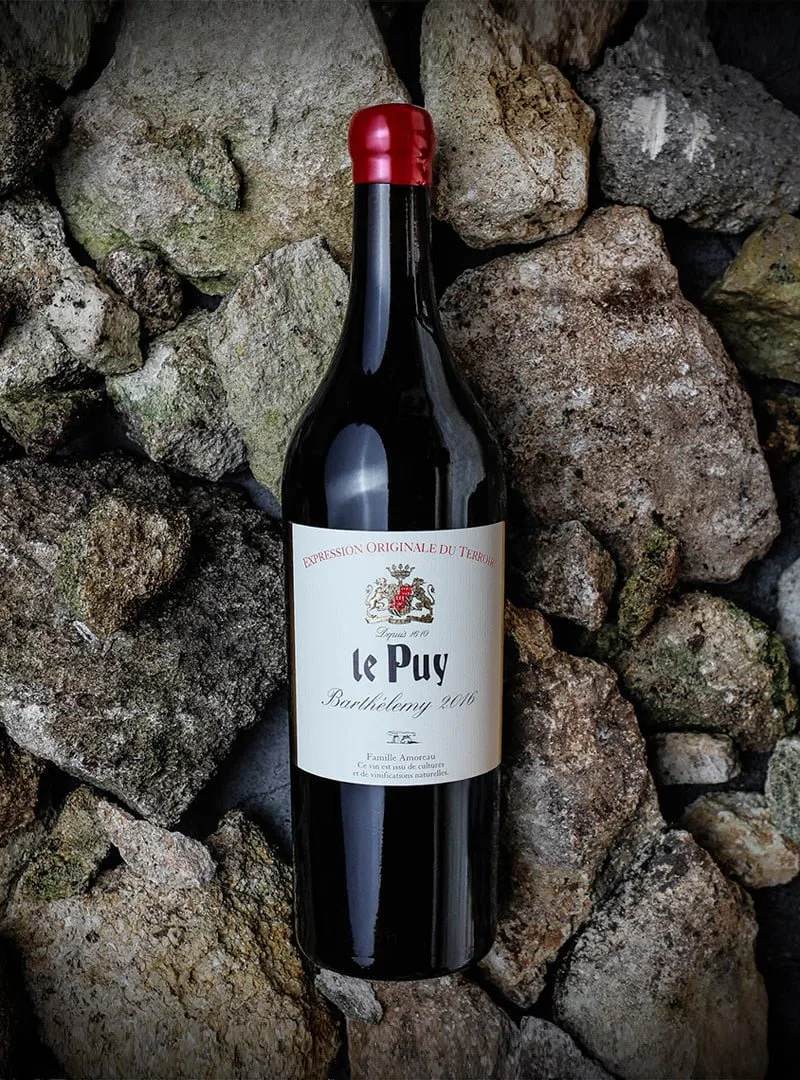
- Château Le Puy Barthélémy: A red cuvée offering a distinct expression of the estate's terroir.
- Retour des Îles: Introduced with the 2012 vintage, this cuvée is sourced from barrels of Barthélémy that undergo a transatlantic voyage aboard a sailing ship, acquiring distinctive characteristics from this unique ageing method.
White Wines
- Marie-Cécile: A white wine cuvée aged in oak.
Rosé Wines
- Rose-Marie: A rosé cuvée, also aged in wood.
- Appellations
- Francs Côtes de Bordeaux, Vin de France
- Commune
- Saint-Cibard
- Wine region
- Les Vins de Côtes
- Classification
- Domaine nature emblématique
Practical information
- Address
- Le Puy, 33570 SAINT-CIBARD
- Phone
- 05 57 40 61 82
- Contact form
- Contact the estate
- Visits
- Pas de visite