
Château Rieussec
Updated on
Château Rieussec is a Sauternes Premier Cru Classé owned by Domaines Barons de Rothschild (Lafite). The 85-hectare vineyard, planted with Sémillon, Sauvignon and Muscadelle, sits on sandy-clay gravel soils. The estate is currently in organic conversion.
Identity
Château Rieussec is a winegrowing estate located in Fargues, in the Gironde. Classified as a Premier Cru Classé in 1855, it has been part of Domaines Barons de Rothschild (Lafite) since 1984. Operations are managed by Mathieu Crosnier, alongside cellar master Bertrand Roux and vineyard manager Mathieu Desblancs. Ondine Sanfins heads Research and Development.
History and Philosophy
The history of Château Rieussec dates back to the 18th century, when the property was run by the Carmelite monks of Langon. Over time, the estate passed through several hands, including Charles Crepin around 1870, Paul Defolie in 1892, M. Bannil in 1907, the Gasqueton family before the war, F.F. Berry during the war, M. Balaresque in 1957, and Albert Vuillier in 1971. In 1984, Château Rieussec joined Domaines Barons de Rothschild Lafite. A new cellar was built in 1989. The 2001 vintage of Château Rieussec received major acclaim in 2004. In 2021, organic conversion was initiated, and the estate achieved B Corp certification in 2023.
Appellations
The wines of Château Rieussec are produced under the Sauternes appellation. The estate also produces under the Barsac appellation.
Practical Information
Address: 33210 Fargues
Telephone: +33 (0)5 57 98 14 14
Email: rieussec@lafite.com
Find Out More
The Vineyard (Terroir)
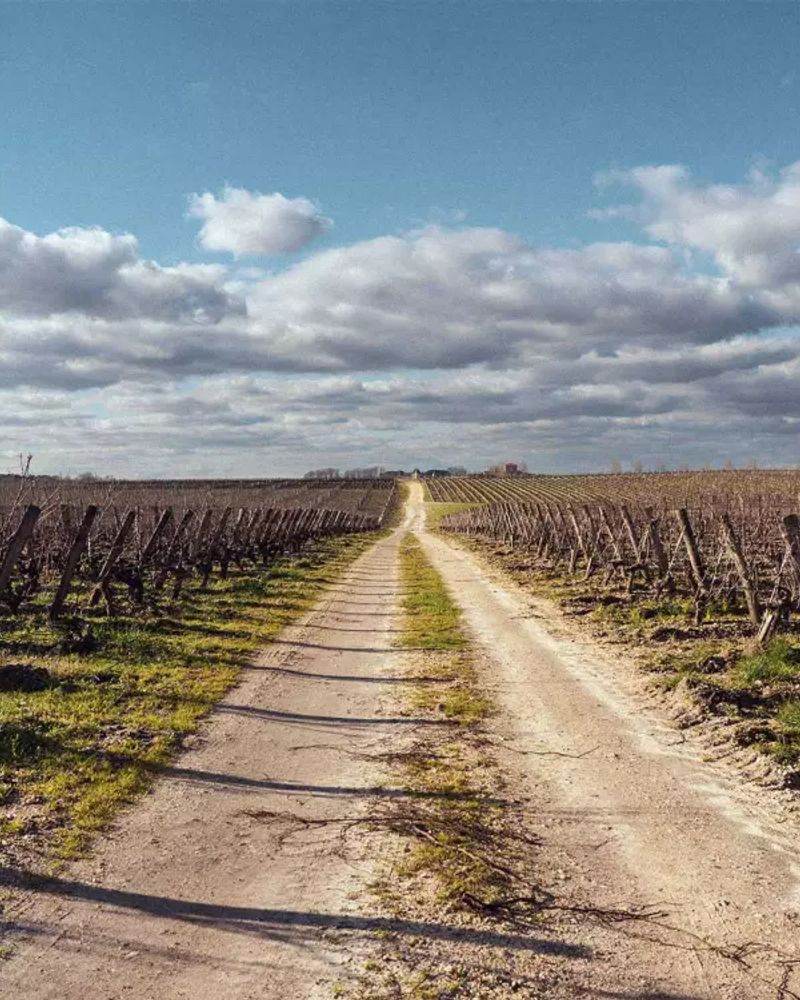
The Château Rieussec vineyard extends over 85 hectares at the junction of the Fargues and Sauternes communes, adjacent to Château d’Yquem. The soils consist of sandy-clay gravel with limestone outcrops. The vineyard is completely grassed over. The grape varieties are dominated by Sémillon (around 80–81%), complemented by Sauvignon Blanc (around 17–18%) and Muscadelle (around 2–3%). Hand-harvesting generally takes place from September to November over a 6 to 8-week period. The estate also hosts a 20-are white grape variety conservatory on a gravelly rise. This repository features 44 clones—just over 1,200 vines—derived from massal selection, including 36 selections of Sémillon, 6 of Sauvignon Blanc, and 2 of Muscadelle. It is certified as mother vines by AgriMer.
Signature Cuvées
The estate's principal cuvée is Château Rieussec. The estate also produces a second wine named Carmes de Rieussec, as well as a dry white wine, R de Rieussec. For the 2019 vintage, the property introduced a new opaque bottle made from PCR glass (96% recycled) featuring a distinctive shape, a screen-printed 3-branch crown, and a technical agglomerated cork stopper. Packaging consists of a 4-bottle kraft cardboard box with paper adhesive tape and bilingual instructions printed on recycled paper. The back label is detachable.
Vinification and Ageing
Vinification is overseen by cellar master Bertrand Roux. R de Rieussec undergoes 20% fermentation in oak barrels. Wine ageing takes place in oak casks for 16 to 22 months, with the proportion of new oak ranging between 70% and 90%. The barrels are primarily sourced from the Domaines' own cooperage.
- Commune
- Fargues
- Wine region
- Graves & Sauternais
- Classification
- 1er Cru Classé 1855
- Owner
- Domaines Barons de Rothschild (Lafite)
- Technical direction
- Bertrand Roux
- Surface area
- 85 ha
- Second wine
- Les Carmes de Rieussec
- Certifications
- Bio
- Grape varieties
- Sémillon 81%, Sauvignon 17%, Muscadelle 2%
Estate news
03 February 2010
Classement 1855 Sauternes et Barsac
Cet article présente le classement officiel des vins de Sauternes et Barsac, établi en 1855 à la demande de l'Empereur Napoléon III pour l'Exposition Universelle de Paris. La classification a été confiée au Syndicat des Courtiers de Commerce de la bourse de Bordeaux et visait à reconnaître la qualité et la notoriété de chaque cru. Le classement initial comprenait 25 châteaux, mais en raison de successions et de partages de sols, il en compte aujourd'hui 26. Le classement inclut une catégorie "Premier Cru Supérieur" représentée par le Château d'Yquem. Les "Premiers Crus" sont les Châteaux La Tour Blanche, La Faurie-Peyraguey, Clos Haut-Peyraguey, de Rayne-Vigneau, Suduiraut, Coutet, Climens, Guiraud, Rieussec, Rabaud-Promis et Sigalas-Rabaud. Enfin, la catégorie des "Seconds Crus" regroupe les Châteaux de Myrat, Doisy Daêne, Doisy-Dubroca, Doisy-Vedrines, d'Arche, Filhot, Broustet, Noirac, Caillou, Suau, de Malle, Romer-Du-Hayot, Lamothe et Lamothe-Guignard. L'article a été rédigé par Adelin Pâques et publié le 3 février 2010.
Read the source — chais-et-vignes.comPractical information
- Address
- 33210 Fargues, 33210
- Phone
- +33556630853
- rieussec@lafite.com
- Contact form
- Contact the estate