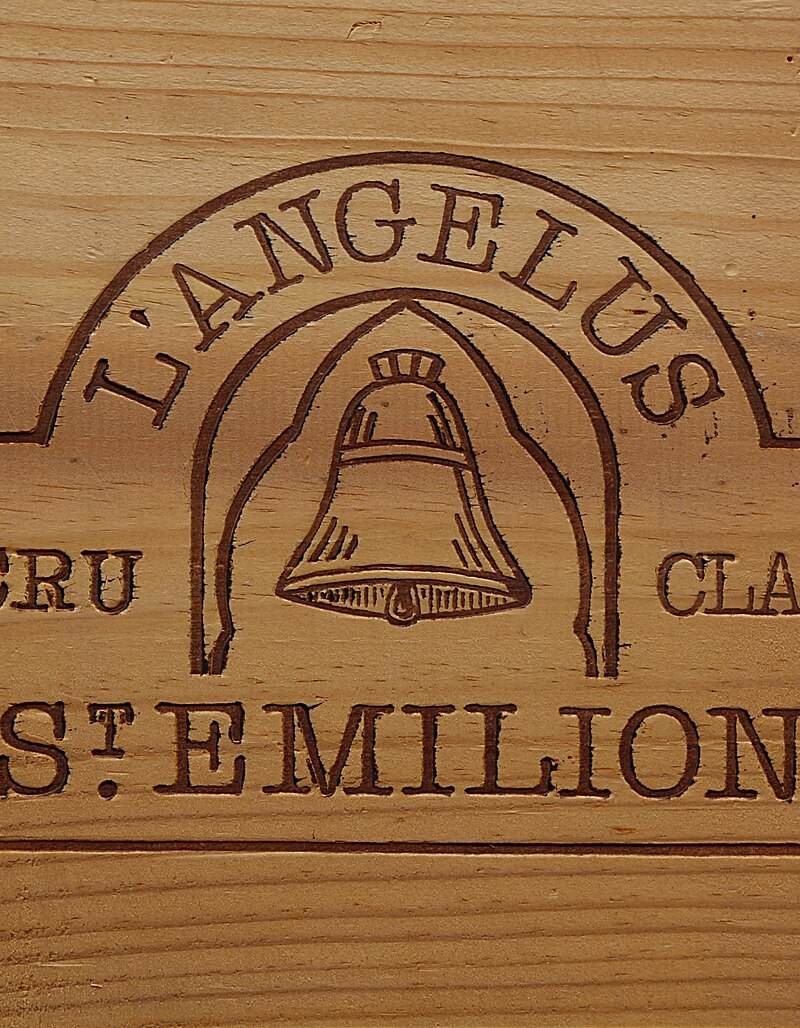
Château Angélus
Updated on
Discover Château Angélus, Premier Grand Cru Classé A (withdrawn from the 2022 classification) in Saint-Émilion, a family-owned estate for eight generations, renowned for its elegant red wines crafted from its clay-limestone terroir and organic viticulture.
Identity
Château Angélus is a winegrowing estate managed by Stéphanie de Boüard-Rivoal, alongside Thierry Grenié-de Boüard since 2017. The de Boüard de Laforest family has owned the property for eight generations. Hubert de Boüard de Laforest and Emmanuelle d'Aligny-Fulchi serve as the estate’s oenologists. Château Angélus is situated in Saint-Émilion, in the Gironde.
History and Philosophy
The presence of the de Boüard de Laforest family in the Saint-Émilion vineyard is documented as far back as 1782. The estate expanded from the 1920s through to the 1970s, notably through the acquisition of Clos de l'Angélus in the early 20th century by Maurice de Boüard, and a plot from Château Beauséjour Duffau-Lagarrosse in the late 1960s. The estate was ranked Grand Cru Classé in 1955. Hubert de Boüard took over management in 1985. In 1987, Carillon d'Angélus, the château's second wine, was created. In 1996, Château Angélus was promoted to Premier Grand Cru Classé B. The estate rose to Premier Grand Cru Classé A in 2012, the year the family’s eighth generation took the reins. Major cellar renovation and enhancement projects were undertaken in 2012, with a new winery inaugurated in 2014 and a dedicated winery for the second wine in 2019. In 2016, Stéphanie de Boüard-Rivoal officially took the helm of the château. In 2022, Château Angélus chose to withdraw from the Saint-Émilion classification. The estate is certified in organic farming, an accreditation made official in 2021.
Appellations
Château Angélus produces wines under the Saint-Émilion Grand Cru appellation. The estate also produces wines under the Bordeaux, Castillon-Côtes de Bordeaux, and Atlantique appellations.
Practical Information
Address: Angelus, 33330 Saint-Émilion
Telephone: 05 57 24 71 39
Email: angelus@angelus.com
Visits are by appointment only, from Monday to Friday. The estate does not offer accommodation, catering, or direct cellar-door sales.
Find Out More
Frequently asked questions
- What is the history of Château Angélus and its connection to the Saint-Émilion classification?
- The de Boüard de Laforest family has been established in the Saint-Émilion vineyard since 1782. Château Angélus was classified Grand Cru Classé in 1955, then Premier Grand Cru Classé B in 1996, and Premier Grand Cru Classé A in 2012. However, the estate chose to withdraw from the Saint-Émilion classification in 2022.
- Which appellations and cuvées are produced at Château Angélus?
- Château Angélus primarily produces wines under the Saint-Émilion Grand Cru appellation. It also makes a second wine, Carillon d’Angélus, created in 1987, as well as a third cuvée, N°3 d'Angélus. In addition, the estate produces wines under the Bordeaux, Castillon-Côtes de Bordeaux, and Atlantique appellations.
- What grape varieties are planted at Château Angélus and what makes its vineyard unique?
- The Château Angélus vineyard is planted with Merlot (51%), Cabernet Franc (47%), and Cabernet Sauvignon (2%). The vines, averaging 38 years of age, are set within a natural amphitheatre with clay-limestone soils. The estate practises certified organic viticulture.
- Is it possible to visit Château Angélus and how can visits be arranged?
- Yes, Château Angélus welcomes visitors by prior appointment from Monday to Friday. However, the property does not offer accommodation, dining, or direct cellar-door sales. Contact details to arrange a booking are available on their official website.
The Vineyard (Terroir)
The Château Angélus vineyard spans a planted area of 52 hectares dedicated to red wines. The average vine age is 38 years. It is planted on a natural amphitheatre situated on the south-facing slope (côte) and foot of the slope (pied de côte) of Saint-Émilion. The soils are clay-limestone. The grape variety proportions are 51% Merlot, 47% Cabernet Franc, and 2% Cabernet Sauvignon. Merlot is predominantly grown on the clay-rich hillside, while Cabernet Franc thrives on the sandy-clay-limestone soils at the foot of the slope. The vines are cultivated with grass cover between rows and managed traditionally, including summer debudding and green harvesting. A draught horse is used to plough certain plots. The estate practises organic viticulture, for which it has been certified since 2021.
Flagship Cuvées
The estate's principal cuvée is Saint-Émilion Grand Cru. The second wine, created in 1987, is Carillon d’Angélus, sourced from a dedicated 18-hectare vineyard area planted predominantly with Merlot (around 90%). The estate also produces a third cuvée called N°3 d'Angélus, whose blend comprises 85 to 90% Merlot. The estate’s average annual production is approximately 90,000 to 100,000 bottles.
Vinification and Ageing
Harvesting is carried out by hand, with rigorous sorting in the vineyard and cellar, followed by 100% destemming. Vinification of Merlot takes place in wooden and stainless steel vats, whereas Cabernet Franc is fermented in concrete vats. Ageing generally lasts between 20 and 22 months. It is carried out in new oak barrels, as well as in 30 hl large wooden casks (foudres) for a portion of the Cabernet Franc. The second wine, Carillon d’Angélus, is vinified in stainless steel vats and aged for 16 months, primarily in 60% new oak barrels.
- Appellations
- Saint-Émilion, Saint-Émilion Grand Cru, Bordeaux, Castillon Côtes de Bordeaux, IGP Atlantique
- Commune
- Saint-Émilion
- Wine region
- Libournais
- Classification
- Ancien 1er Grand Cru Classé A (retiré du classement 2022)
- Owner
- famille de Boüard de Laforest
- Technical direction
- Hubert de Boüard de Laforest et Emmanuelle d'Aligny-Fulchi
- Surface area
- 39 ha
- Second wine
- Saint-Émilion Grand Cru Carillon de l’Angélus
- Certifications
- Bio
- Grape varieties
- Merlot 51%, Cabernet Franc 47%, Cabernet Sauvignon 2%
Estate news
11 October 2026
Bordeaux : la vente aux enchères des vins du restaurant Gabriel a « dépassé nos espérances »
La vente aux enchères des 7 800 bouteilles de la prestigieuse cave du restaurant Gabriel à Bordeaux, placé en liquidation judiciaire en juin dernier, a "dépassé toutes les espérances", selon le commissaire-priseur Me Antoine Briscadieu. L'établissement, doublement étoilé, était jusqu'alors la propriété du château Angélus. Organisée sur deux journées complètes et clôturée le vendredi 9 octobre, cette dispersion a vu les 1 528 lots trouver acquéreurs aux quatre coins du monde. Le montant total des ventes a atteint près de 900 000 euros, un chiffre bien supérieur aux 500 000 euros d'achat du stock, générant ainsi un actif significatif au profit des créanciers. Parmi les pièces maîtresses, une bouteille de Romanée Conti, Domaine de la Romanée Conti, millésime 2020, s'est adjugée à 16 600 euros (hors frais). Si les vins de Bourgogne ont attisé d'âpres batailles entre enchérisseurs, majoritairement français, les grands bordeaux ont également réalisé d'excellentes ventes, malgré leur représentation limitée à un quart de la cave. Les champagnes millésimés ont aussi maintenu une forte dynamique tout au long de l'événement. Me Briscadieu a mis en avant la valorisation de l'ensemble des vins, y voyant un signe de soutien au marché viticole, actuellement en repli. La qualité et la rareté de la sélection ont permis aux amateurs d'acquérir des cuvées épuisées ou des vins d'allocations, récompensant le travail des sommeliers qui avaient bâti cette cave.
Read the source — sudouest.fr06 August 2026
Tendance vin 2025 : les 7 évolutions qui transforment la dégustation
L'article "Tendance vin 2025 : les 7 évolutions qui transforment la dégustation" de Quentin Jamrozik, publié le 6 août 2026, met en lumière cinq dynamiques majeures qui redéfinissent le marché du vin. La recherche de vins légers (11-12°) est privilégiée, avec des exemples comme les Sancerre 2024, les Riesling secs du domaine Trimbach, ou les crus du Beaujolais comme ceux de Marcel Lapierre ou Jean-Paul Brun. Même les châteaux bordelais s'adaptent en proposant des cuvées "Atlantic" à 12,5°. La croissance exponentielle des vins bio et biodynamiques est également soulignée, avec des domaines comme Leflaive et Trapet en Bourgogne, et l'émergence de labels tels que Demeter et Nature & Progrès. Le retour des cépages oubliés est une autre tendance forte, portée par des domaines comme Plageoles dans le Gaillac ou des châteaux en Provence pour le Tibouren, ainsi que le Jura avec le Savagnin et le Trousseau, notamment au Château-Chalon. Les vins oranges, produits par macération pelliculaire, connaissent un essor remarquable, avec des références comme Les Vins Conté dans le Gaillac ou les domaines Rietsch et Bannwarth en Alsace. Le packaging durable (bag-in-box, canettes, bouteilles allégées) et l'éco-conception des étiquettes (Château Maris, Gérard Bertrand) modifient les modes de consommation. Enfin, le marché des effervescents se polarise entre les Champagnes de prestige comme ceux de Billecart-Salmon et Charles Heidsieck, et les crémants, notamment ceux de Louis Bouillot ou Vitteaut-Alberti, avec une préférence pour les dosages faibles (Brut Nature, Extra Brut). La digitalisation, la traçabilité blockchain (Château Angelus) et la vente directe en ligne transforment également le secteur.
Read the source — doretdevins.comPractical information
- Address
- Angelus, 33330 SAINT-ÉMILION
- Phone
- 05 57 24 71 39
- angelus@angelus.com
- Contact form
- Contact the estate
- Visits
- Oui sur rendez-vous