
Château Durfort-Vivens
Updated on
Château Durfort-Vivens, a Deuxième Grand Cru Classé in Margaux, is managed by Gonzague Lurton. Certified organic and biodynamic (Demeter) since 2016 across its 65-hectare vineyard, the estate is renowned for its terracotta amphora cellar and single-plot cuvées.
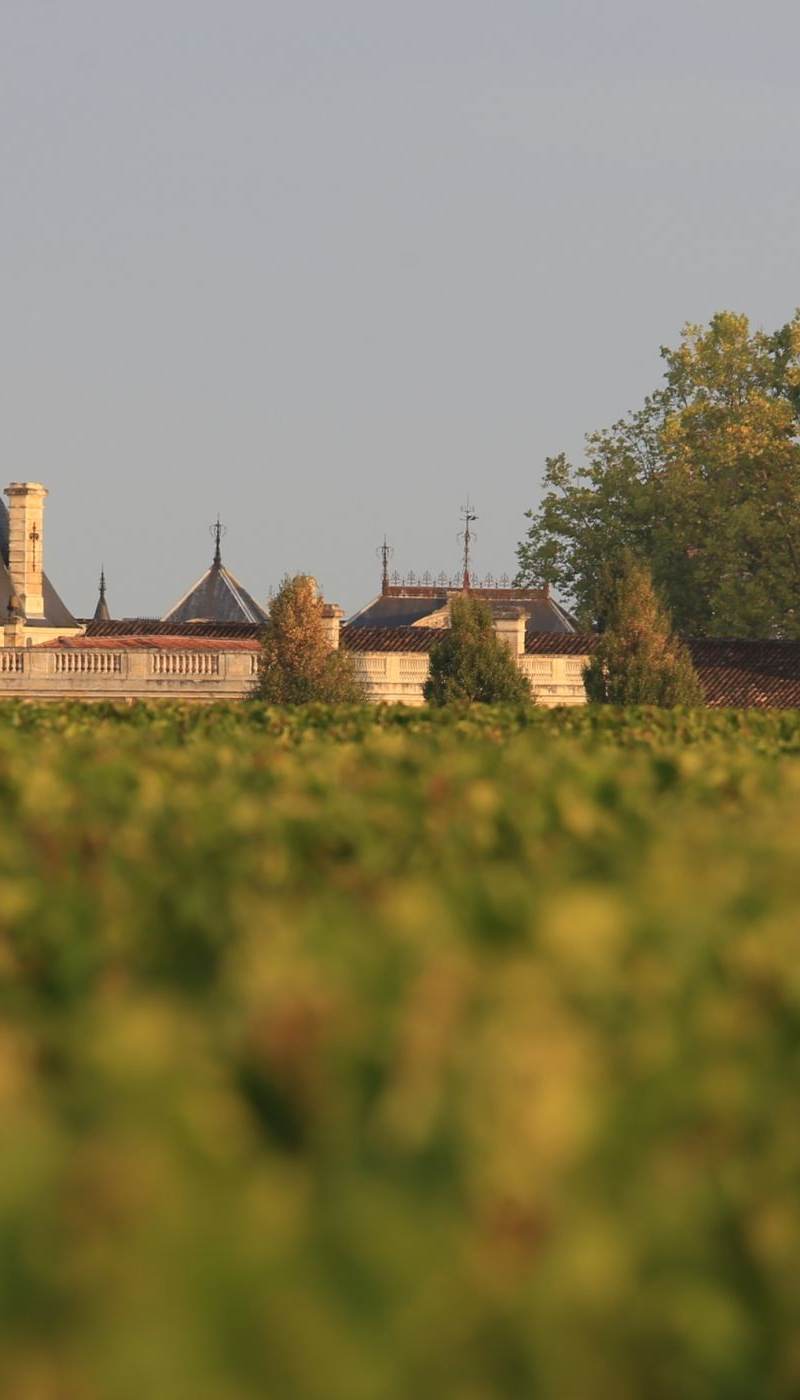
Identity
Château Durfort-Vivens, a Deuxième Grand Cru Classé in the 1855 classification, is situated in Margaux. The estate is managed by Gonzague Lurton. Léopold Valentin serves as technical director, with Éric Boissenot as consulting oenologist.
History and philosophy
The origins of Château Durfort-Vivens date back to the 14th century, when the Durfort de Duras family settled in Margaux. The name Vivens was appended in 1824 when Robert-Adrien Labat de Vivens became the sole proprietor of the estate. Château Durfort-Vivens was recognised as a Deuxième Grand Cru in the 1855 Bordeaux classification.
In 1937, the Lurton family, already major shareholders in Château Margaux, acquired Château Durfort-Vivens. Lucien Lurton took the helm in 1961. Gonzague Lurton assumed leadership of the estate in 1992.
The winegrowing estate began converting to biodynamics on selected plots in 2009, extending the approach across the entire vineyard in 2010. Full organic and Demeter (biodynamic) certifications were granted in 2016 for the whole vineyard. The estate implements viticultural practices centred on biodynamics (specialist preparations, herbal treatments, composting), agroecology (hedgerows, wildlife corridors, grass cover, cover crops), and precision viticulture (soil analysis, microbiology, intra-plot seeding). A programme dedicated to preserving the Médoc's plant heritage is also underway.
Appellations
Château Durfort-Vivens produces wines under the Margaux appellation, classified as a Deuxième Grand Cru Classé 1855. The estate also produces a white wine under the IGP Atlantique Blanc de Noirs appellation.
Practical information
Address: 3, rue du Général-de-Gaulle, 33460 Margaux.
Telephone: +33 (0)5 57 88 31 02
Email: j.ngoma@gc-lurton.com or infos@durfort-vivens.com
Visits are available by prior appointment. Online booking will open on 1 January 2026. Direct sales at the property and mail orders are available.
Find out more
Frequently asked questions
- What is the classification of Château Durfort-Vivens?
- Château Durfort-Vivens is classified as a Deuxième Grand Cru Classé in the official 1855 Bordeaux classification, reflecting its longstanding prestige within the Margaux appellation.
- What is the vineyard surface area and grape variety composition?
- The vineyard extends across 65 hectares. The primary grape varieties for red wines are 90% Cabernet-Sauvignon, 8% Merlot, and 2% Cabernet Franc. The estate also cultivates 1.7 hectares of Muscadelle for its white wine production.
- Does Château Durfort-Vivens practise sustainable viticulture?
- Yes, Château Durfort-Vivens has been certified organic and biodynamic (Demeter) across its entire vineyard since 2016. The estate began its biodynamic transition in 2009 and employs extensive agroecological practices.
- What makes the vinification at Château Durfort-Vivens distinctive?
- Vinification at Château Durfort-Vivens includes 18 months of ageing for the grand vin, conducted partly in new oak barrels (around 70%) and partly in terracotta amphorae (around 30%) since the 2018 vintage. The estate notably features an extensive terracotta amphora cellar.
The vineyard (terroir)
The vineyard spans 65 hectares. It is planted on deep gravel knolls set across three distinct geological terraces, encompassing 28 soil families with 92 identified soil sub-categories. The average vine age is 30 years. The parcels are situated across the communes of Margaux, Cantenac, Soussans, and Arsac.
The grape varieties for the red wines comprise 90% Cabernet-Sauvignon, 8% Merlot, and 2% Cabernet Franc. The estate also tends 1.7 hectares of white grape varieties, predominantly Muscadelle (5,400 vines), alongside a small parcel of Castets (325 vines). Harvesting is carried out by hand.
Flagship cuvées
The estate's Grand Vin is Château Durfort-Vivens. It delivers a hallmark expression of the appellation, combining structure and aromatic complexity, driven by a predominance of Cabernet-Sauvignon in the blend (for instance, 84% in 2022). The wines undergo 18 months of ageing, split between new oak barrels (around 70%) and terracotta amphorae (around 30%). The introduction of terracotta jars for ageing began in 2018, and the property houses an impressive amphora cellar. The wines are often distinguished by their freshness, refined tannins, and exceptional ageing potential.
The second wine, created in 2008, is named Relais de Durfort-Vivens or Vivens.
The estate also crafts single-plot cuvées under the Les Parcelles range, introduced with the 2019 vintage. These include:
- Le Plateau: sourced from plots in the commune of Soussans, with a blend of 65% Cabernet-Sauvignon and 35% Merlot.
- Le Hameau: from parcels in the commune of Cantenac, blended from 53% Cabernet-Sauvignon and 47% Merlot.
- Les Plantes: crafted from the vineyard's youngest vines, with a blend of 88% Cabernet-Sauvignon, 10% Merlot, and 2% Cabernet Franc.
These plot-by-plot cuvées are aged for 16 months, two-thirds in oak barrels and one-third in amphorae.
A cuvée named La Nature, introduced in 2017, is made from 100% Cabernet-Sauvignon and aged in amphorae without added sulphur.
The estate also produces a white wine under the IGP Atlantique Blanc de Noirs.
Vinification and ageing
The wines are aged in oak barrels and terracotta amphorae, the latter accounting for roughly a third of the grand vin's ageing since the 2018 vintage. The grand vin spends 18 months in elevage. The estate is acclaimed for its terracotta jar cellar, regarded as the largest in the world by volume.
- Appellation
- Margaux
- Commune
- Margaux-Cantenac
- Wine region
- Médoc
- Classification
- 2e Cru Classé 1855
- Owner
- Gonzague Lurton
- Technical direction
- Éric Boissenot
- Surface area
- 65 ha
- Second wine
- Relais de Durfort-Vivens ou Vivens
- Certifications
- Bio, Biodynamie
- Grape varieties
- Cabernet-Sauvignon 90%, Merlot 8%, Cabernet Franc 2%, Muscadelle, Castets
Estate news
05 August 2026
『ワイン王国』No.154 2026年9月号に掲載されました - モトックス
L'article annonce la parution des vins de la société Mottox dans le numéro 154 (septembre 2026) du magazine spécialisé "Wine Kingdom". Plusieurs vins sont présentés, notamment dans la section "Prime42 steakhouse & sky bar" où est mis en avant le Château Durfort-Vivens, un vin rouge français millésime 2020. D'autres sections du magazine sont mentionnées, telles que "Le nouveau leader des vins blancs : les charmes du Verdejo et de la région de Rueda", présentant l'Oro de Castilla Verdejo du domaine Bodega Hermanos del Villar, et "Les stars de cet été : les vins rosés naturels" avec le Château de Parenchere Bordeaux Clairet. Un article promotionnel sur Paul Mas met en avant l'Astelia Le Grand Blanc (blanc 2020) et l'Astelia Le Grand Vin Rouge (rouge 2022) des Domaines Paul Mas. La rubrique "À la recherche de 5 étoiles ! Dégustation à l'aveugle : pétillants rafraîchissants pour l'été" inclut plusieurs vins effervescents : Veuve du Vernay Rosé (Kriter Brut de Brut), Valdivieso Brut (Vina Valdivieso), Torre Oria Cava Brut (Torre Oria) et Rotari Brut Metodo Classico (ROTARI). Enfin, la section "Twinkle Line" mentionne que Mottox est le partenaire vin officiel du "NoName Festival KARUIZAWA 2026", un événement soutenant les chefs et l'avenir de la restauration. L'article se termine par des liens vers des publications antérieures dans "Wine Kingdom" (numéros 153, 152 et 151).
Read the source — mottox.co.jpPractical information
- Address
- 3, rue du Général-de-Gaulle, 33460 MARGAUX
- Phone
- +33557883102
- Contact form
- Contact the estate
- Visits
- Réservation en ligne disponible au 1er janvier 2026. Pour toute réservation, contacter par email.