
Château Richelieu
Updated on
Château Richelieu is a historic winegrowing estate in Fronsac, owned by Mme An since 2009. Certified HVE, it crafts AOC Fronsac wines from a 23-hectare vineyard. The estate also offers guest rooms.
Identity
Château Richelieu is a winegrowing estate located in the commune of Fronsac, in Gironde. It is owned by Mme An.
History and philosophy
The history of Château Richelieu dates back to 1630. The estate was acquired by cardinal Richelieu in 1632, and subsequently became the property of the duc de Fronsac, the cardinal's nephew. After being held by an industrialist couple in 1996, Château Richelieu was acquired in 2001. Since 2009, the estate has been owned by a Hong Kong-based group led by Mme An.
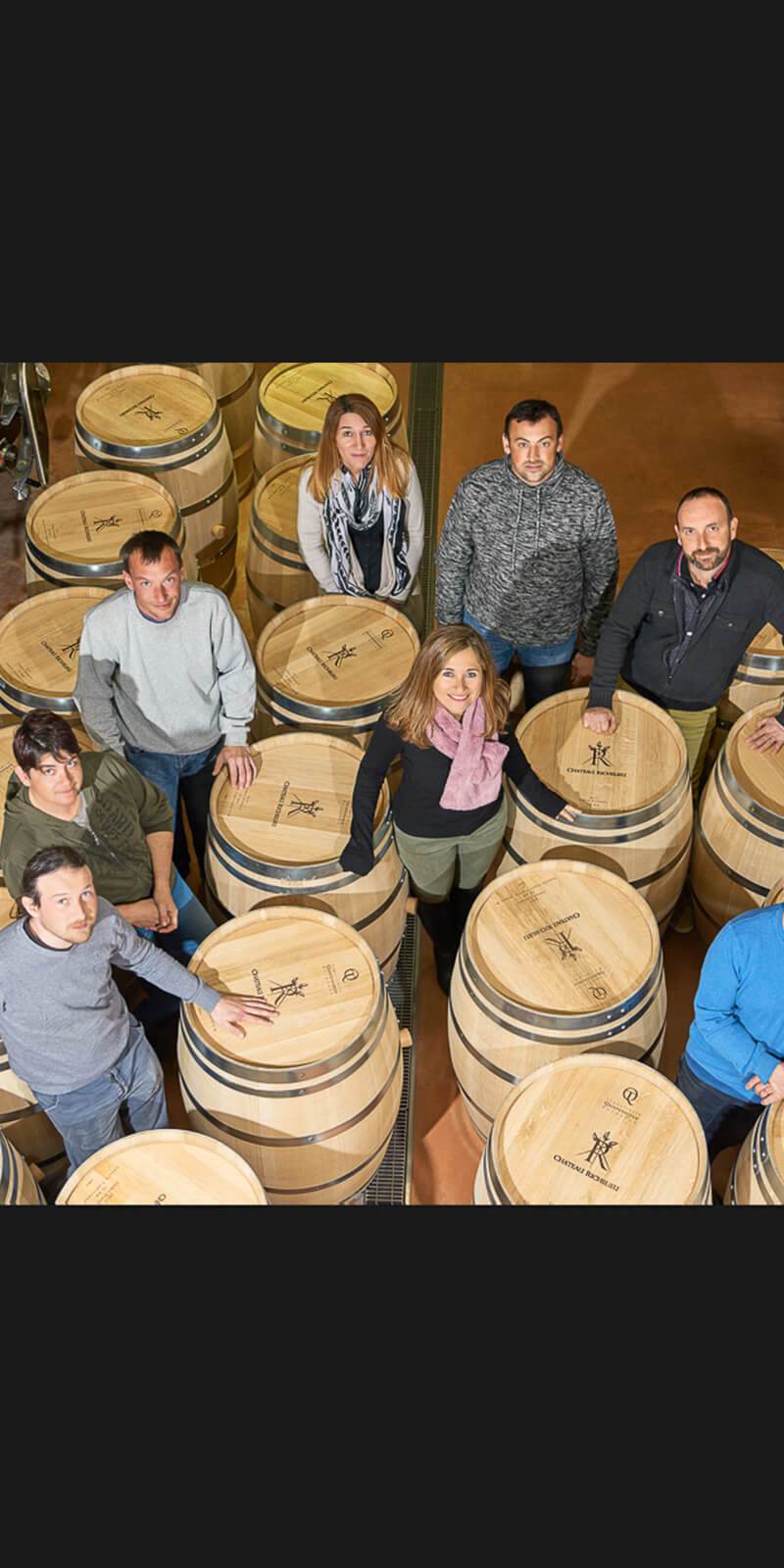
Château Richelieu is committed to sustainable viticulture and is certified HVE (Haute Valeur Environnementale). The vineyard manager is Jérôme Bertran. Oenological consultancy is provided by Julien Belle and Stéphane Toutoundji, while Cyril Meyrou serves as cellar master. The estate inaugurated a new cellar in 2017, in time for that year's harvest.
Appellations
Château Richelieu produces wines under the Fronsac Appellation d'Origine Contrôlée.
Practical information
Château Richelieu is located at 4 Chemin de Richelieu, 33126 Fronsac. The estate can be reached by telephone on +33 (0)5 57 51 13 94 and by email at info@chateau-richelieu.com.
The estate welcomes visitors for tours and tastings. One-hour visits are offered from Tuesday to Saturday, at 10:30 am or 3:00 pm, by appointment. They include a tasting of two wines and cost €10 per person. Staff members speak English and German. Guest rooms, set in a classical-period chartreuse, are also available.
Find out more
Frequently asked questions
- Who is the current owner of Château Richelieu?
- Since 2009, Château Richelieu has been owned by a Hong Kong-based group led by Mme An.
- What is the main appellation of Château Richelieu wines?
- The wines produced by Château Richelieu are crafted under the Fronsac Appellation d'Origine Contrôlée.
- What are the characteristics of Château Richelieu's terroir?
- The Château Richelieu vineyard rests on clay-limestone soils, typical of the Molasses du Fronsadais.
- Which grape varieties are grown at Château Richelieu and what is the vineyard size?
- The Château Richelieu vineyard covers 23 hectares and is planted predominantly with Merlot (70%), complemented by Cabernet Franc (15%), Cabernet Sauvignon (10%), and Malbec (5%).
The vineyard (terroir)
The Château Richelieu vineyard covers 23 hectares in production out of a total estate area of 30 hectares. The soils are clay-limestone, characteristic of the Molasses du Fronsadais. The average age of the vines is 35 years. The grape varieties planted comprise Merlot (70%), Cabernet Franc (15%), Cabernet Sauvignon (10%), and Malbec (5%).
Signature cuvées
The estate offers several cuvées. Château Richelieu represents the heart of the range. The La Favorite de Richelieu cuvée is crafted from a strict batch selection and benefits from longer ageing. Cuvée Royale is produced from a parcel selection, designed to yield a fleshy, powerful wine built for ageing.
Vinification and ageing
The maceration period for Château Richelieu wines lasts between 30 and 45 days. Ageing lasts 12 months, with at least 50% carried out in new barrels and the remainder in one-wine barrels.
- Appellation
- Fronsac
- Commune
- Fronsac
- Wine region
- Libournais
- Owner
- Mme AN
- Technical direction
- Cyril Meyrou
- Surface area
- 30 ha
- Second wine
- La Favorite de Richelieu
- Certifications
- HVE
- Grape varieties
- Merlot 70%, Cabernet Franc 15%, Cabernet Sauvignon 10%, Malbec 5%
Estate news
01 January 2015
Chine, liste 2015 des acquisitions chinoises à Bordeaux - Dico-du-Vin
Cet article du Dico-du-Vin présente une liste exhaustive des acquisitions de châteaux bordelais par des investisseurs chinois entre 1997 et 2014. Sur les 7400 châteaux de Bordeaux, 1,3% sont détenus par des Chinois, ce qui représente une centaine de propriétés, faisant de la Belgique le premier investisseur étranger en nombre de propriétés. La Chine est par ailleurs le cinquième consommateur mondial de vin et le premier importateur de vins de Bordeaux, un fait en partie expliqué par ces transactions. L'acquisition d'un château avec une véritable bâtisse est particulièrement recherchée par les acheteurs chinois, avec des prix débutant autour de 2 millions d'euros. Le vin produit est généralement exporté à plus de 80% vers la Chine, où l'image et le prestige des vins de Bordeaux peuvent multiplier leur valeur par dix par rapport au marché français. Parmi les acquisitions notables, on retrouve le Château Haut-Brisson (Saint-Emilion) en 1997 par Peter Kwok, le Château Latour-Laguens (Bordeaux) en 2008 par Haiyan Cheng/Longhai Group, ou encore le Château Richelieu (Fronsac) en 2009 par An Yinghui/A&A International. En 2011, le groupe Haichang, dirigé par Qu Naijie, a acquis plusieurs propriétés dont le Château Chenu-Lafitte (Côtes de Bourg), le Château Grand-Branet (Bordeaux), le Château Branda (Cadillac-en-Fronsadais), le Château Laurette (Sainte-Croix-du-Mont) et le Château Thébot (Sainte-Foy-Bordeaux). D'autres acquisitions incluent le Château de Viaud (Lalande-de-Pomerol) par COFCO, le Château Monlot (Saint-Emilion) par Zhao Wei, et le Château Bellefont-Belcier (Saint-Emilion Grand Cru classé) en 2012 par Monsieur Wang/Juxin Wines & Spirits, considérée comme l'acquisition la plus prestigieuse. En 2013, le Château Loudenne (Médoc) a été racheté par Moutai Wine Co et le Château de La Rivière (Fronsac) par Lam Kok/Brilliant Group. L'année 2014 a vu l'acquisition du Château Renon par James Zhou, le centième château bordelais passé sous pavillon chinois.
Read the source — dico-du-vin.comPractical information
- Address
- 4 Chemin de Richelieu, 33126 Fronsac
- Phone
- +33 (0)5 57 51 13 94
- Contact form
- Contact the estate
- Visits
- Sur rendez-vous