
Château Saincrit
Updated on
Château Saincrit, managed by Florence Prud’homme, is a 23-hectare winegrowing estate in Saint-André-de-Cubzac. Certified HVE and organic, it produces wines under the Bordeaux Rouge, Bordeaux Supérieur, Bordeaux Blanc BIO, and Bordeaux Rosé appellations.
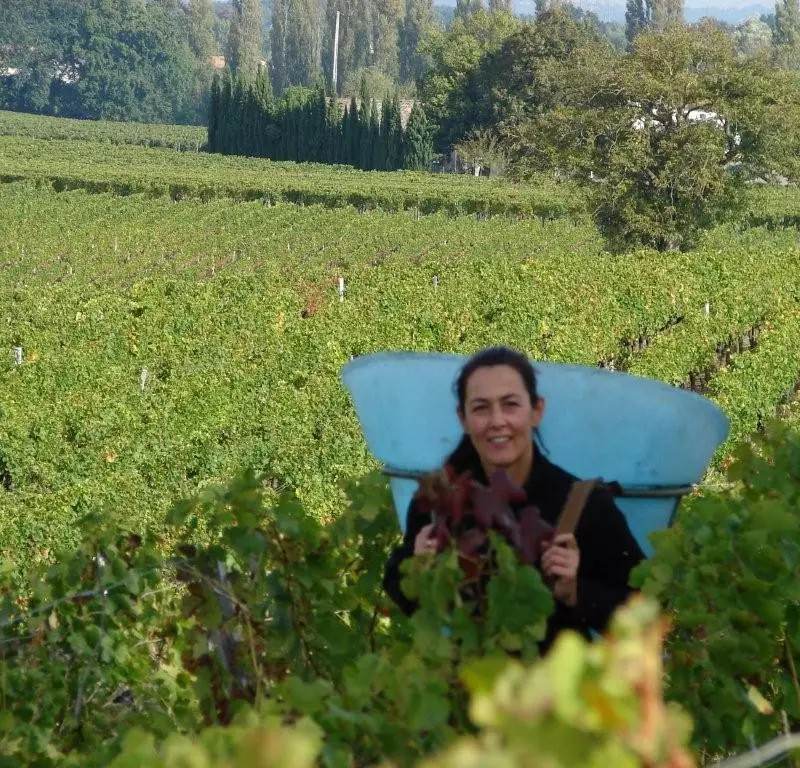
Identity
Château Saincrit is a winegrowing estate whose development has been shaped by the dedication of independent winegrower Florence Prud’homme, who manages the property. The estate is situated in the commune of Saint-André-de-Cubzac (33240).
History and philosophy
Florence Prud’homme took over the management of Château Saincrit in 2003. Upon her arrival, the property covered just 4.5 hectares. The estate has since expanded its vineyard, reaching 23 hectares. Since 2015, Château Saincrit has been committed to an environmental approach, achieving HVE (Haute Valeur Environnementale) Level 3 certification in 2017. In 2023, the estate also gained organic certification (Agriculture Biologique).
The appellations
Château Saincrit produces wines under various Bordeaux appellations, notably Bordeaux Rouge, Bordeaux Supérieur, Bordeaux Blanc BIO, and Bordeaux Rosé.
Practical information
Château Saincrit is located at 555, chemin du Peuy, 33240 Saint-André-de-Cubzac. For any enquiries, the estate can be contacted by telephone on +33 06 07 16 47 53 or by email at contact@chateau-saincrit.com. The property does not offer accommodation or direct cellar-door sales.
Find out more
Frequently asked questions
- Who is the owner of Château Saincrit?
- The owner and independent winegrower of Château Saincrit is Florence Prud’homme. She has been actively managing the estate since 2003.
- Which appellations are produced by Château Saincrit?
- Château Saincrit produces wines under the Bordeaux Rouge, Bordeaux Supérieur, Bordeaux Blanc BIO, and Bordeaux Rosé appellations.
- What is the surface area and grape variety breakdown of Château Saincrit's vineyard?
- The Château Saincrit vineyard extends across 23 hectares. The red grape varieties include Merlot, Cabernet Franc, and Cabernet Sauvignon. For white wines, Sémillon is cultivated.
- Is Château Saincrit committed to sustainable practices?
- Yes, Château Saincrit has been committed to an environmental approach since 2015. It achieved HVE Level 3 certification in 2017 and Organic Farming (Agriculture Biologique) certification in 2023.
The vineyard (terroir)
The vineyard of Château Saincrit covers an area of 23 hectares. The property's soils are characterised by clay-limestone and sandy parcels. The grape varieties for the red wines comprise Merlot, Cabernet Franc, and Cabernet Sauvignon. For the white wines, Sémillon is cultivated.
Flagship cuvées
Among the wines produced by Château Saincrit, the cuvée “Fougue” is a fine expression of their craft within the Bordeaux Supérieur appellation. The estate also crafts a single-varietal red wine made from Merlot. Organic white wines and rosés complete the estate's range.
- Appellations
- Bordeaux Supérieur, Bordeaux, Bordeaux Rosé
- Commune
- Saint-André-de-Cubzac
- Wine region
- Bordeaux & Bordeaux Supérieur
- Owner
- Florence Prud’homme
- Surface area
- 23 ha
- Certifications
- Bio, HVE
- Grape varieties
- Merlot, Cabernet Franc, Cabernet Sauvignon, Sémillon
Estate news
07 August 2026
« J’ai mis les rouges dans un seau à glace » : coup de chaud pour le vin en été
L'article de Sud Ouest aborde l'impact des vagues de chaleur récurrentes sur la consommation de vin à Bordeaux, soulignant l'adaptation des modes de consommation et de production. Face aux températures élevées, les professionnels du vin observent un changement dans les préférences des consommateurs, qui se tournent davantage vers les vins blancs et rosés, servis frais, au détriment des vins rouges traditionnels. Julien Chivé, du bar à vin Chez Julo à Bordeaux, a même dû mettre ses vins rouges dans un seau à glace pour les maintenir à une température acceptable. Émilie Fourrier, de Quvée, cave et bar à vin, confirme cette tendance, notant que les clients boivent moins d'alcool et privilégient les vins rouges légers, tels que le 100% merlot du Château Saincrit ou le « blouge » des Terres Dubien, qui peuvent être servis frais. Le vignoble bordelais innove en proposant des vins plus vifs, légers, avec une acidité marquée, une macération courte et sans bois, afin de s'adapter au climat. Ces innovations incluent des 100% merlot gourmands, des malbecs vifs, des médocs blancs, des pétillants naturels, des crémants, des « blouges » (mélange de raisins rouges et blancs), des clairet et claret, et même des vins désalcoolisés. Jérémy Veyssy, de la famille Banton, à Vignonet, produit des vins d'été sous l'IGP Atlantique, comme la gamme Santa Fé (blanc de noir, rosé d'assemblage et rouge 100% cabernet sauvignon), à boire frais et sans cérémonie. En revanche, les grands crus classiques et prestigieux de Bordeaux, tanniques et boisés (Saint-Émilion, Pessac-Léognan, Médoc), peinent à séduire en période de chaleur, le froid ayant tendance à durcir leurs tannins et diminuer leurs arômes, ce qui nuirait à leur dégustation.
Read the source — sudouest.frPractical information
- Address
- 555 Chemin du Peuy, 33240 Saint-André-de-Cubzac
- Phone
- +33 06 07 16 47 53
- Contact form
- Contact the estate