
Vignobles Moncets & Chambrun
Updated on
Vignobles Moncets & Chambrun brings together several winegrowing estates, including Château Moncets and Château de Chambrun in Lalande de Pomerol, alongside Château La Voûte (Saint-Émilion Grand Cru) and Château La Bastidette (Montagne Saint-Émilion).
Identity
Vignobles Moncets & Chambrun encompasses several winegrowing estates, including Château Moncets and Château de Chambrun. Château de Chambrun is located in the commune of Néac.
History and philosophy
Château Moncets boasts a history dating back to 1770. The estate was acquired by Général de Moncets in 1872. In 2012, a family-owned company purchased the property, embarking on a major transformation of the vineyard and cellar in 2015.
Château de Chambrun was established between the two World Wars and was initially known as Clos de Chambrun. In 1994, Jean-Philippe Janoueix acquired the estate. Silvio Denz took ownership in May 2007, before Château Moncets purchased Château de Chambrun in September 2015. A significant vineyard expansion followed in 2019.
Vignobles Moncets & Chambrun also develops wine tourism activities focused on biodiversity and the challenges of climate change.
Appellations
Château de Chambrun produces wines under the Lalande de Pomerol appellation. Château Moncets also crafts wines under the Lalande de Pomerol appellation. Château La Voûte belongs to the Saint-Émilion Grand Cru appellation, and Château La Bastidette to the Montagne Saint-Émilion appellation.
Practical information
The estate is managed by Julien Noël, Vineyard Director since 2019, alongside Nicolas Ballet as Vineyard Manager. Bruno Chaminade, Cellar Master, joined the team in April 2018.
Find out more
Official estate websiteThe vineyard (terroir)
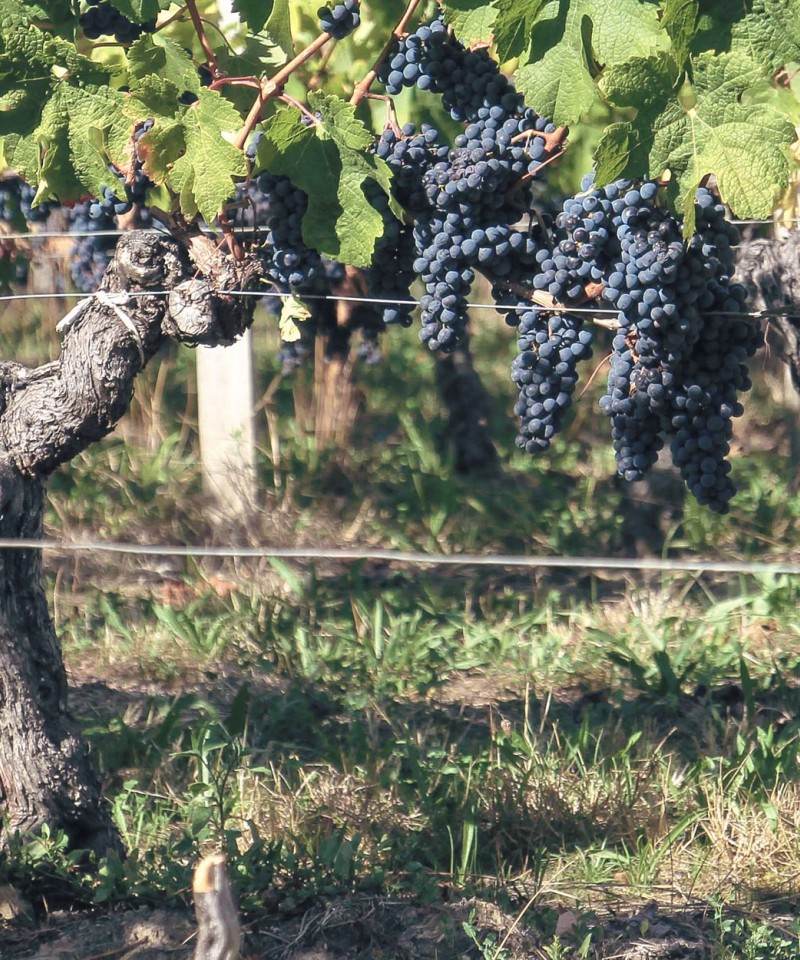
The vineyard of Château Moncets covers an area of 21.5 hectares divided into 23 parcels. Its soils are characterised by black clay. The estate spans three hillsides, offering eastern, western, and southern exposures. The grape varieties planted are Merlot and Cabernet Franc.
Château de Chambrun comprises 23 parcels across 5 locations. The soils feature deep black clay with surface gravels. The primary grape variety is Merlot. The surface area of Château de Chambrun has evolved over the years, growing from 1.70 hectares in 1994 to 5.14 hectares in 2007, then 8.84 hectares in 2015, reaching 13.84 hectares in 2019.
Château La Bastidette represents a surface area of 5.36 hectares, with 7 parcels situated in the western "black clay" sector of the Montagne Saint-Émilion commune. The dominant grape variety is Merlot.
Château La Voûte, covering a total area of 3.93 hectares including 1.42 hectares under vine, sits at the highest point of Saint-Étienne-de-Lisse at an altitude of 91 metres. Its terroir is characterised by a thin layer of red clay around 20 cm deep, resting on an asteriated limestone plateau. The vineyard is planted with old Merlot vines.
The Le Bourg cuvée comes from a parcel farmed since 2009, situated at the foot of the church in Néac. The soils of this parcel consist of gravel and blue clay.
Flagship cuvées
Among the wines produced, the Le Bourg cuvée originates from a dedicated parcel brought into production in 2009. The estate's wines are made from Merlot and Cabernet Franc, typical of the appellations worked.
Vinification and ageing
The estate undertook a comprehensive modernisation of its vinification facilities in 2015 for Château Moncets.
- Appellations
- Lalande-de-Pomerol, Saint-Émilion Grand Cru, Montagne-Saint-Émilion
- Commune
- Néac
- Wine region
- Libournais
- Technical direction
- Bruno Chaminade
- Grape varieties
- Merlot, Cabernet Franc
Practical information
- Address
- Néac
- Phone
- +33557511933
- Contact form
- Contact the estate