
 The essential
6 × Entre Amis red
6 bottles — Graves red 2022
The best price of the cellar: €12 per bottle delivered.
The everyday red: generous and straight to the point.
I want itSpider
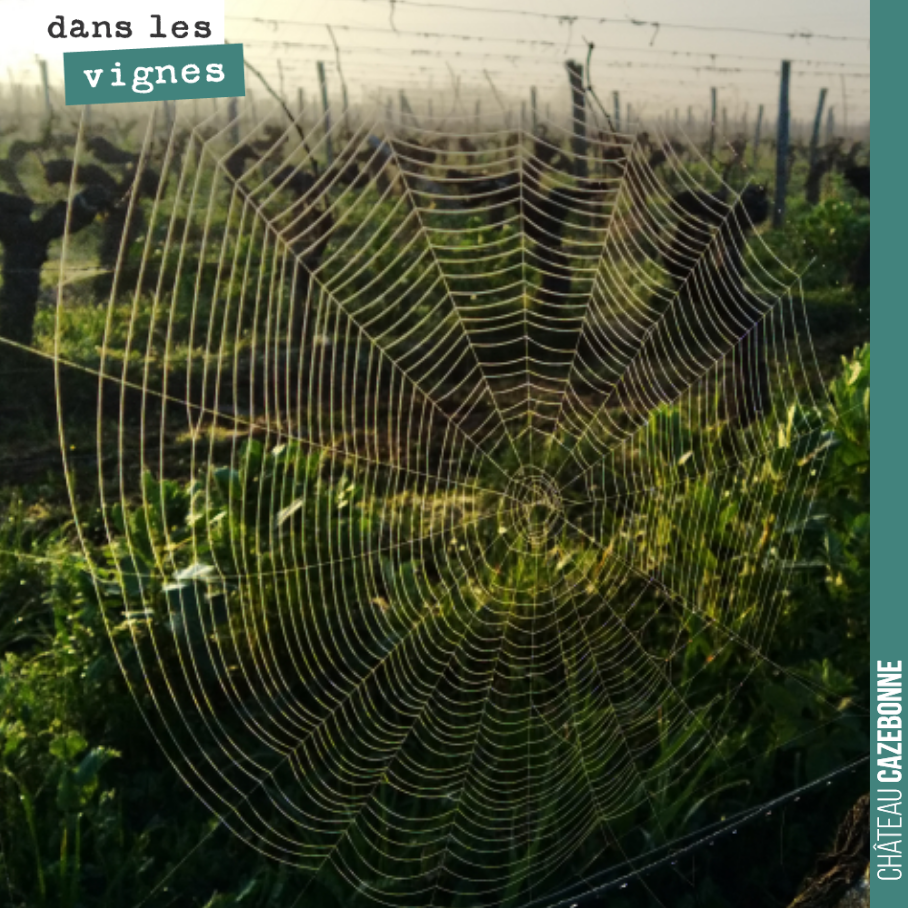
In our Château Cazebonne vineyards, spiders are discreet but essential inhabitants. Often invisible to the naked eye, their presence is sometimes revealed in the early morning, when their webs are beaded with dew, true ephemeral works of art woven between the rows of vines. These delicate architectures are much more than mere ornaments: they are the testament to an incessant and beneficial activity for the health of our plots and the future quality of our Bordeaux wines.
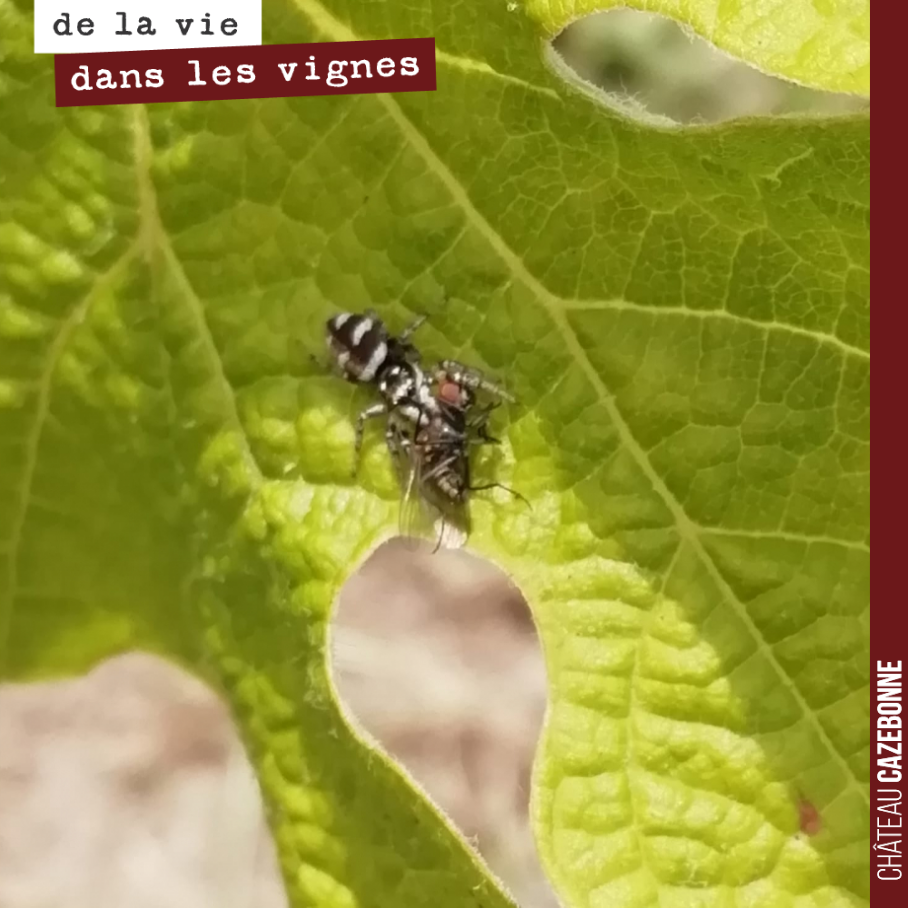
Far from popular belief, spiders are not pests for the vine, quite the contrary. They are precious allies, natural predators of a multitude of potentially devastating insects, such as aphids, leafhoppers, and certain mites. By regulating these populations, they help maintain a fragile biological balance, thus limiting the need for human intervention and treatments. This natural regulation is a pillar of our approach to sustainable viticulture, a philosophy that Jean-Baptiste Duquesne also explores in his book "Bordeaux, une histoire de cépages" (Éditions BBD), where the interdependence of species is highlighted as a key factor in the resilience of the wine-growing terroir.
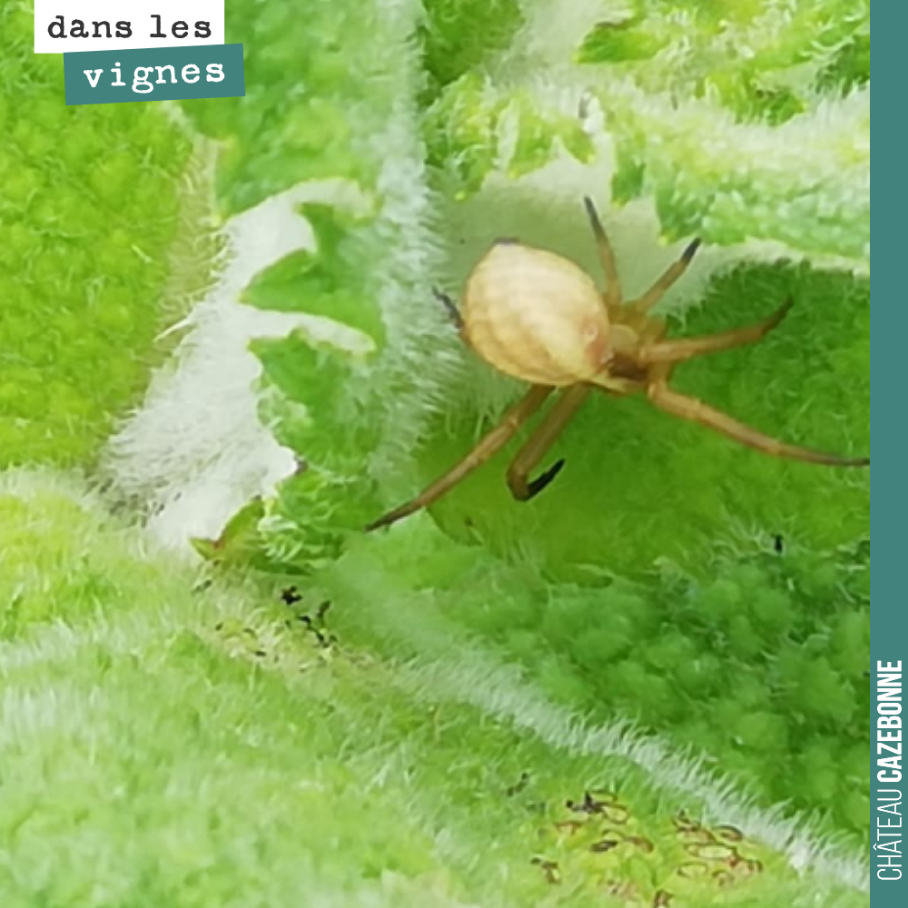
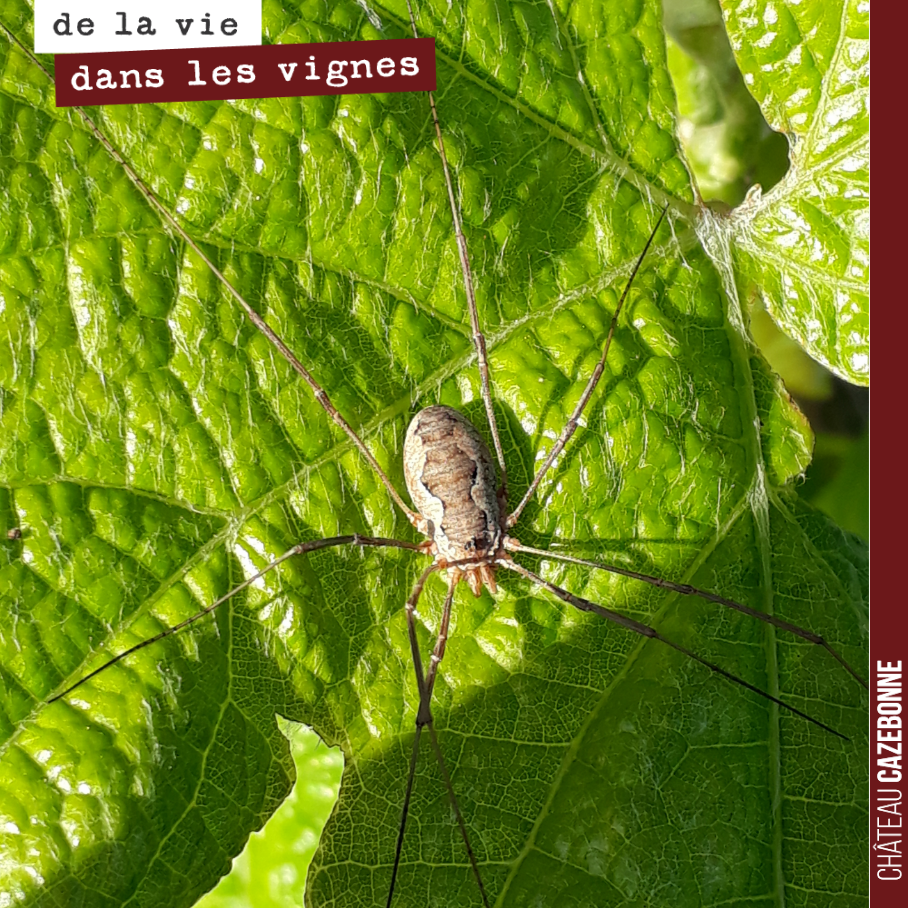
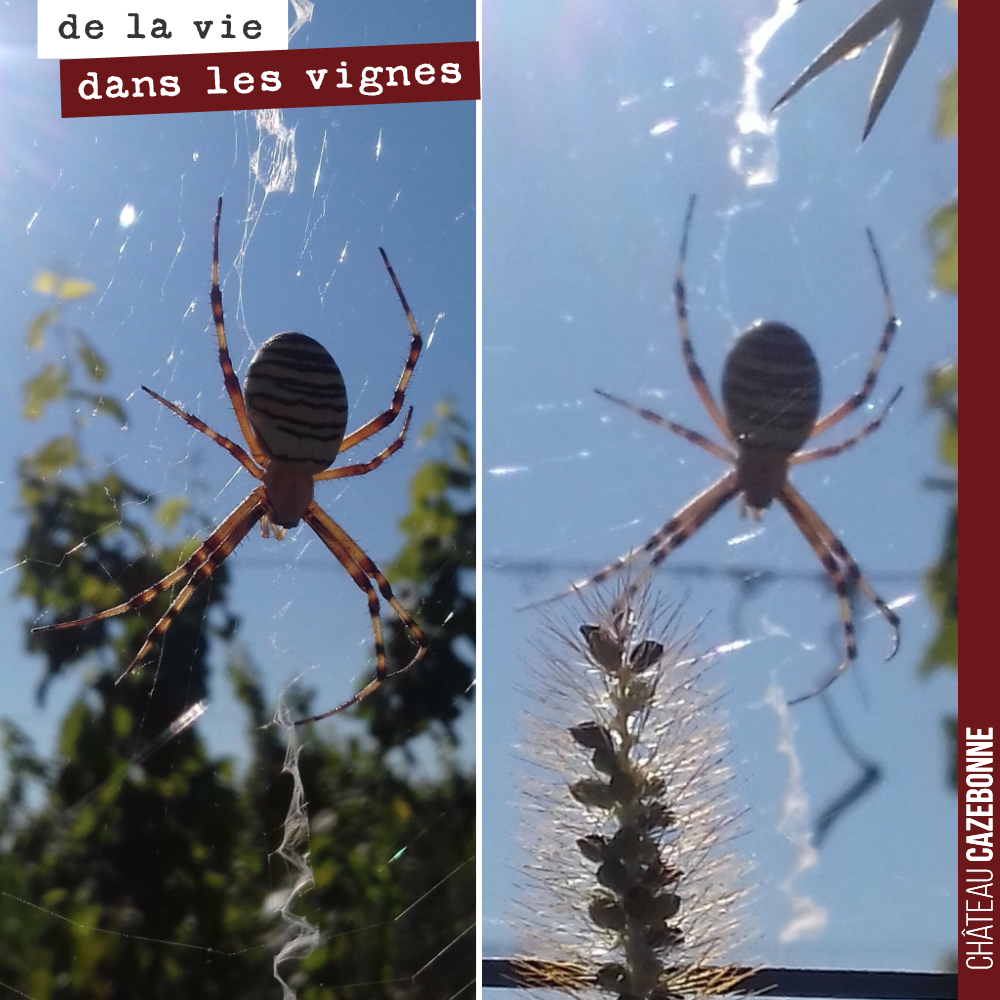
The term "spider" actually covers an order, the Araneae, which includes thousands of species. Their vernacular names are varied, often evoking a visual or behavioural characteristic, such as the crab spider or the wolf spider. Their size varies considerably, from a few millimetres to several centimetres, and their colours can blend perfectly into the scenery, ranging from green hues to browns, sometimes with distinctive patterns. At Cazebonne, some of them, like the argiope, are recognisable by their bright colours and geometric webs.
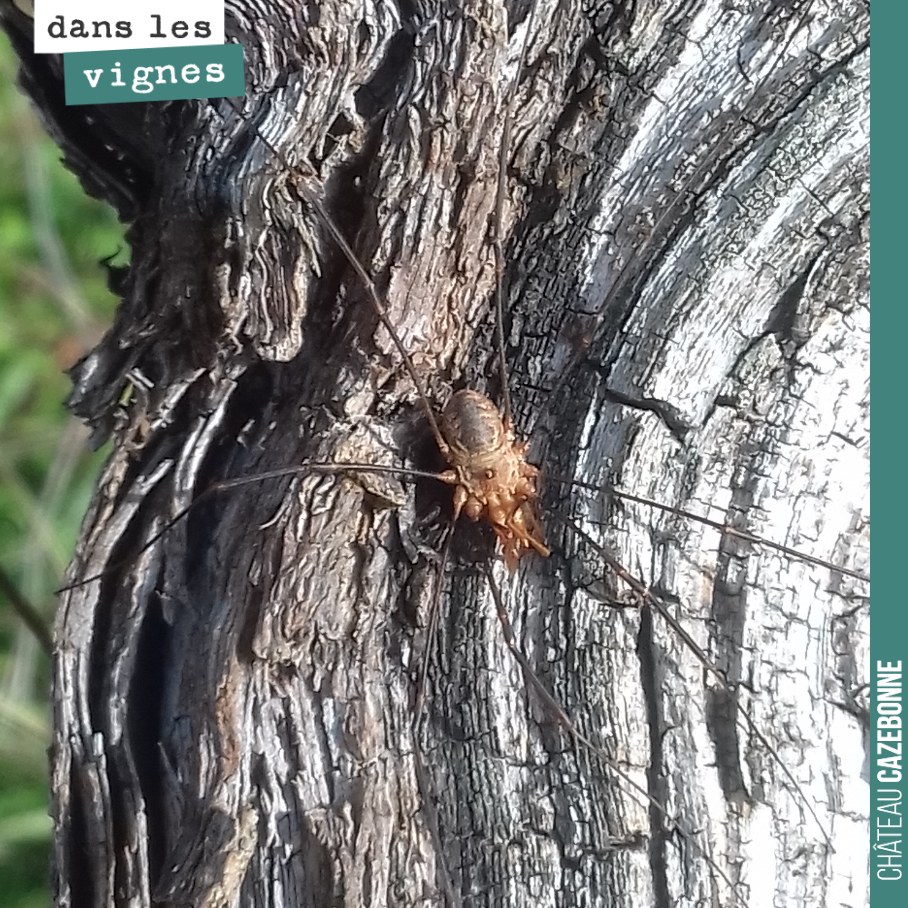
The life cycle of spiders is seasonal, with reproduction and growth phases that often coincide with the abundance of their prey. In spring, young spiders hatch and begin their hunt, whilst the adults are more visible in summer and autumn, a period during which they weave their most impressive webs. The latter are particularly visible in the early morning in September or October, when the dew makes them sparkle. They develop in various habitats within our vineyards: among the vine leaves, under the bark of the vines, in the tall grass of the grassed strips, or within the hedges that border our plots. We encourage these micro-habitats to increase biodiversity and the role of these allies.
The ecological role of spiders is therefore fundamental. They are generalist predators, meaning they do not limit themselves to a single species of prey. This dietary diversity makes them particularly effective in regulating insect populations in the vineyards, such as caterpillars, aphids, and other pests. Their presence is a concrete indicator of a healthy and balanced ecosystem.
The interaction of spiders with the vine is therefore mostly beneficial. They actively participate in the natural protection of the plants by reducing parasite pressure, thus limiting the use of phytosanitary treatments. At Château Cazebonne, we tangibly observe this interdependence. By leaving a degree of spontaneity to nature and encouraging the presence of a diverse flora within and around our plots, we offer spiders the necessary refuges and food resources that keep them active. This is one of the reasons why we do not seek to control nature, but to accompany it, to work in harmony with it. Some of these predators, such as red spiders, are sometimes confused with pests, whereas they play a crucial role in regulating their populations.
This commitment is demonstrated through our work in rehabilitating the forgotten grape varieties of Bordeaux, a living heritage that had disappeared from the wine-growing landscape. It is thanks to the unwavering support of the many enthusiasts who have adopted our wines and share our vision of a respectful, authentic viticulture that is intrinsically linked to the richness of its ecosystem that this exciting work is made possible. To explore the fascinating history of these varieties and our approach, we invite you to download the digital version of "Bordeaux, une histoire de cépages" and to test your knowledge of the wine world in general. You can also discover the expression of our terroirs and our philosophy by exploring our online shop.
Sources
Our suggestions
-5%on your 1st order with code BIENVENUE
The essential6 bottles — Graves red 2022
The best price of the cellar: €12 per bottle delivered.
The everyday red: generous and straight to the point.
I want it Our recommendation92/100 RVF
6 bottles — Graves red 2022, 92/100 RVF
Rated 92/100 by La Revue du vin de France: a solid 10-year ageing potential.
Our Graves for ageing, the finest gateway to the estate.
I want it Go further
12 bottles — the whole range
12 bottles, the whole range tasted: the best discovery-to-price ratio.
The complete tour of the estate, in a single case.
I want it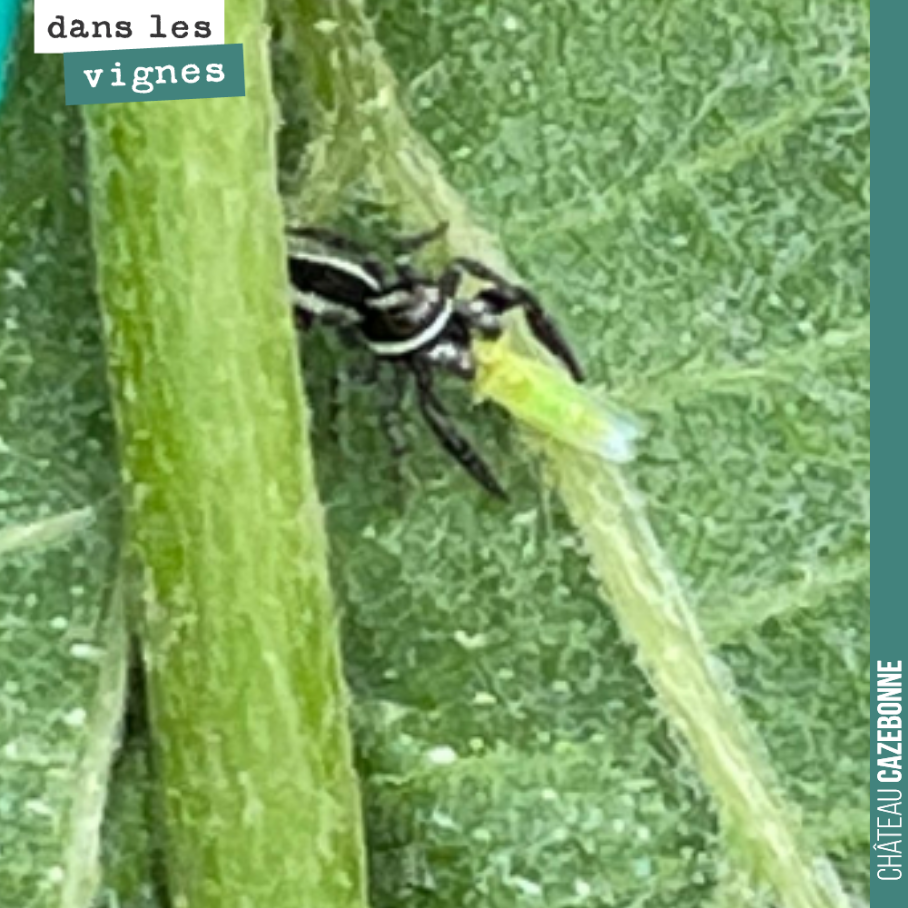
06 May 2022
08 March 2022
07 June 2021
31 May 2021
09 May 2020
30 November 2018
23 August 2018
The cellar, forgotten grape varieties and our cuvées, twice a month. 5% off your first order with the code BIENVENUE.