
Château de Malleret
Updated on
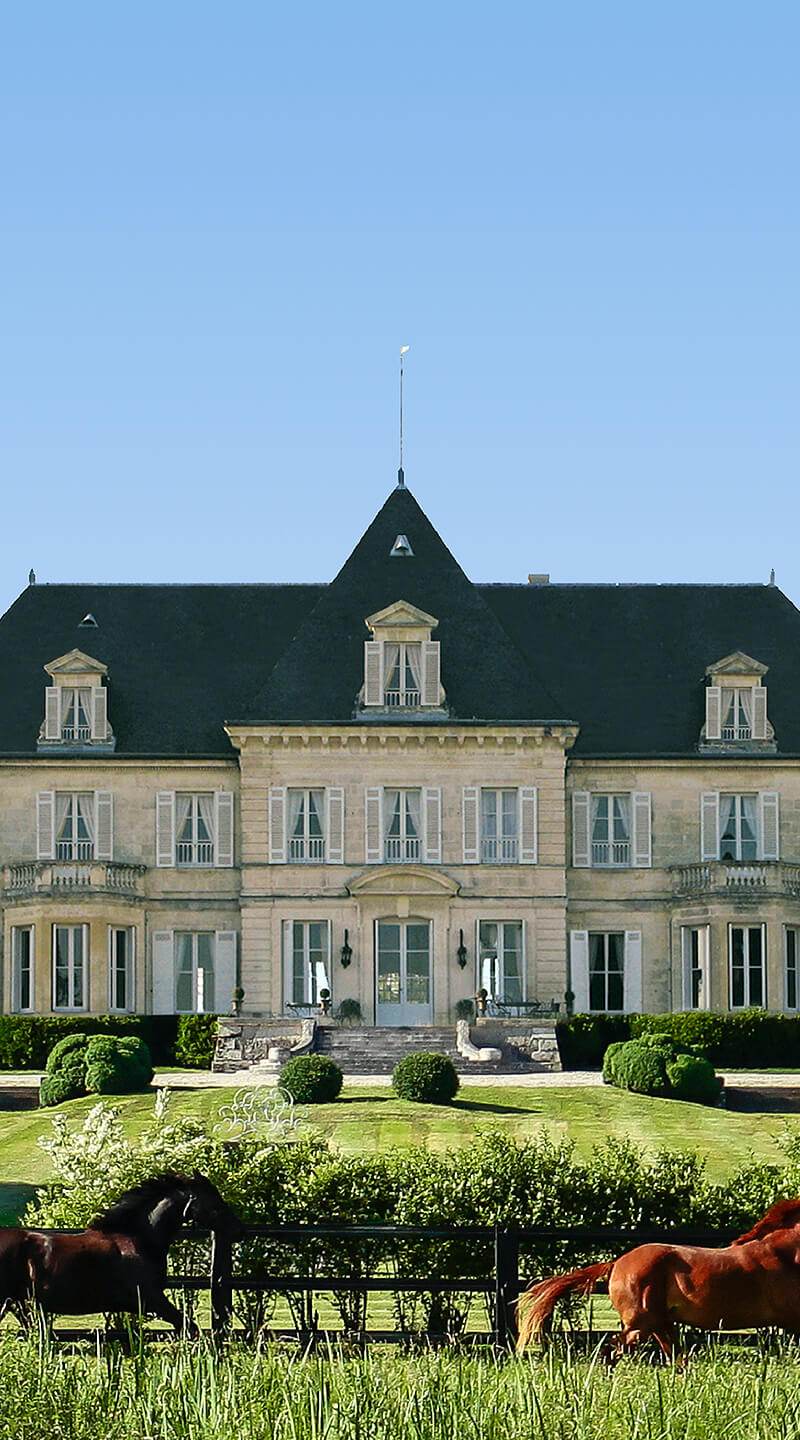
Château de Malleret, a Cru Bourgeois Exceptionnel in Le Pian-Médoc, cultivates 57 hectares using environmentally friendly practices. It produces Haut-Médoc and Margaux wines under the stewardship of the Clossmann descendants and the consulting expertise of Stéphane Derenoncourt.
Identity
Château de Malleret is located in the commune of Le Pian-Médoc, in the Gironde. The estate is owned by the descendants of Philippe-Frédéric Clossmann. Paul Bordes has managed the vineyard since 2013, with Stéphane Derenoncourt acting as consulting oenologist alongside his team, including Simon Blanchard and Hannah Fiegenschuh.
History and philosophy
The history of Château de Malleret dates back to the 16th century, with records mentioning Pierre Eyquem around 1500, followed by Pierre de Malleret's acquisition in 1593. In 1830, Vincent Février transformed Malleret into a winegrowing estate. Philippe-Frédéric Clossmann acquired the property in 1860, and the family has ensured its continuity for more than 150 years. The estate was classified as a Cru Bourgeois Exceptionnel in 2018 and 2020.
The estate's philosophy focuses on environmentally friendly viticultural practices. Soil management relies on earthing-up and un-earthing along the vine rows, while grass cover is maintained by sowing cereals to promote drainage. The estate uses neither herbicides nor insecticides, with the latter replaced by pheromone traps (sexual confusion). Organic matter is supplied by shredding vine prunings on site to create plant compost. Organic or biocontrol products are prioritised for plant protection treatments, with the exception of mandatory treatment against flavescence dorée. Trials are also underway, including UV vine treatments. The estate is equally committed to biodiversity, notably through hedgerow planting.
The appellations
Château de Malleret produces wines under several appellations. The main cuvée, Château de Malleret, alongside Le Baron de Malleret and Château Barthez, falls under the Haut-Médoc appellation. The estate also owns a plot in Margaux that yields the "Margaux" du Château de Malleret, under the Margaux appellation. Wines are also crafted under the Vin de France designation, such as Red de Malleret and Blanc de noir de Malleret. Finally, a white wine is produced under the Bordeaux Blanc appellation, alongside a Rose de Malleret as Vin de France.
Practical information
Château de Malleret is located at 470, chemin de Malleret, 33290 Le Pian-Médoc. The estate can be contacted by telephone on +33 (0)5 56 35 05 36 and by email at contact@chateau-malleret.fr. The estate welcomes visitors by appointment for tours and tastings, Monday to Friday, from 9:00 am to 12:00 pm and from 2:00 pm to 5:00 pm. These visits are offered at a rate of €15 per person.
Find out more
Frequently asked questions
- What is the history of Château de Malleret?
- The history of Château de Malleret began in the 16th century, with records dating back to 1500. The estate was turned into a vineyard in 1830. Acquired in 1860 by Philippe-Frédéric Clossmann, it remains in the hands of his descendants today. It has been classified as a Cru Bourgeois Exceptionnel since 2018.
- Which appellations are produced by Château de Malleret?
- Château de Malleret primarily produces wines in the Haut-Médoc appellation. The estate also crafts a cuvée in the Margaux appellation, as well as wines under the Vin de France designation (Red de Malleret, Blanc de noir de Malleret, Rose de Malleret) and Bordeaux Blanc.
- What grape varieties are planted at Château de Malleret?
- The documentary records indicate a specific 3.5-hectare plot in Margaux planted exclusively with Merlot. For the rest of the Château de Malleret vineyard, the grape varieties are not detailed in the available information.
- What viticultural practices are used at Château de Malleret?
- Château de Malleret is committed to environmentally friendly viticultural practices, using neither weedkillers nor insecticides (which are replaced by pheromones). Soil management is meticulous, featuring cover crops and additions of plant-based compost. Organic and biocontrol products are used, and trials such as UV treatments are conducted.
The vineyard (terroir)
The Château de Malleret vineyard spans 57 hectares within a 350-hectare estate. The average age of the vines is 30 years, and the target planting density is 10,000 vines per hectare. The soils consist of Günzian gravel and fine gravel, offering exceptional drainage. The vineyard is divided into three main plots of around 20 hectares each, each featuring distinct geology. A small plot of around 3.5 hectares, planted exclusively with Merlot, is situated in the Margaux sector. The grape varieties on the other plots are not specified in the documentary records. Harvesting is carried out by hand across the entire vineyard. Interplanting and replacing dead vines with Cabernet Sauvignon are also carried out.
Flagship cuvées
Château de Malleret offers several cuvées, each with its own character. Château de Malleret, classified as a Cru Bourgeois Exceptionnel, is the estate's iconic wine from the Haut-Médoc appellation. Le Baron de Malleret is the second wine of the estate, also under the Haut-Médoc appellation. The "Margaux" du Château de Malleret is a dedicated cuvée from a Merlot plot situated in the Margaux appellation. Blanc de noir de Malleret is crafted exclusively from Merlot. The estate also produces Red de Malleret, Château Barthez, Bordeaux Blanc de Malleret and Rose de Malleret, certified respectively under Vin de France, Haut-Médoc, Bordeaux Blanc, and Vin de France.
Vinification and ageing
Vinification at Château de Malleret relies on gravity-fed vatting into concrete and wooden vats ranging in capacity from 40 to 140 hectolitres. Punching down (pigeage) is carried out. Stéphane Derenoncourt and his team advise the estate on technical viticultural and winemaking practices.
- Appellations
- Haut-Médoc, Margaux, Vin de France, Bordeaux
- Commune
- Le Pian-Médoc
- Wine region
- Médoc
- Owner
- Descendants de Philippe-Frédéric Clossmann
- Technical direction
- Stéphane Derenoncourt
- Surface area
- 57 ha
- Second wine
- Le Baron de Malleret
Estate news
20 February 2020
Et voici le nouveau classement tant attendu des Crus Bourgeois
Le nouveau classement quinquennal des Crus Bourgeois du Médoc a été dévoilé le 20 février 2020 à la Conserverie à Bordeaux, succédant à l'ancien classement annulé en 2007. Ce classement est valable pour une durée de cinq ans et introduit trois niveaux de hiérarchie : « cru bourgeois », « cru bourgeois supérieur » et « cru bourgeois exceptionnel ». Il couvre les millésimes 2018, 2019, 2020, 2021 et 2022. Pour cette édition 2020, les propriétés ont présenté cinq millésimes choisis entre 2008 et 2016 afin de garantir la qualité et la régularité, et d'intégrer la notion d'aptitude au vieillissement des crus. Les critères d'évaluation comprenaient des aspects environnementaux (avec notamment les certifications HVE2 et HVE3 requises pour les niveaux supérieurs et exceptionnels), techniques, et d'image (promotion, distribution, œnotourisme). La dégustation, réalisée à l'aveugle par deux commissions de cinq dégustateurs, s'est déroulée de mars à juin 2019, sous la supervision d'un organisme indépendant garantissant l'impartialité. Au total, 249 châteaux ont été distingués, dont le Château de Malleret, promu Cru Bourgeois Exceptionnel, et le Château du Taillan, qui a également obtenu la mention Cru Bourgeois Exceptionnel, comme le souligne Armelle Cruse, l'une des propriétaires. Ce classement vise à relancer et dynamiser la famille des Crus Bourgeois, qui représentent 31% de la production de vin du Médoc, soit 28 millions de bouteilles. L'Alliance des Crus Bourgeois prévoit des budgets importants pour la promotion de ces vins, notamment aux États-Unis et en Asie.
Read the source — france3-regions.blog.franceinfo.frPractical information
- Address
- 470, chemin de Malleret, 33290 Le Pian-Médoc
- Phone
- 05 56 35 05 36
- Contact form
- Contact the estate
- Opening hours
- Du lundi au vendredi, de 9h-12h et 14h-17h. Fermé le week-end
- Visits
- Sur rendez-vous