
 The essential
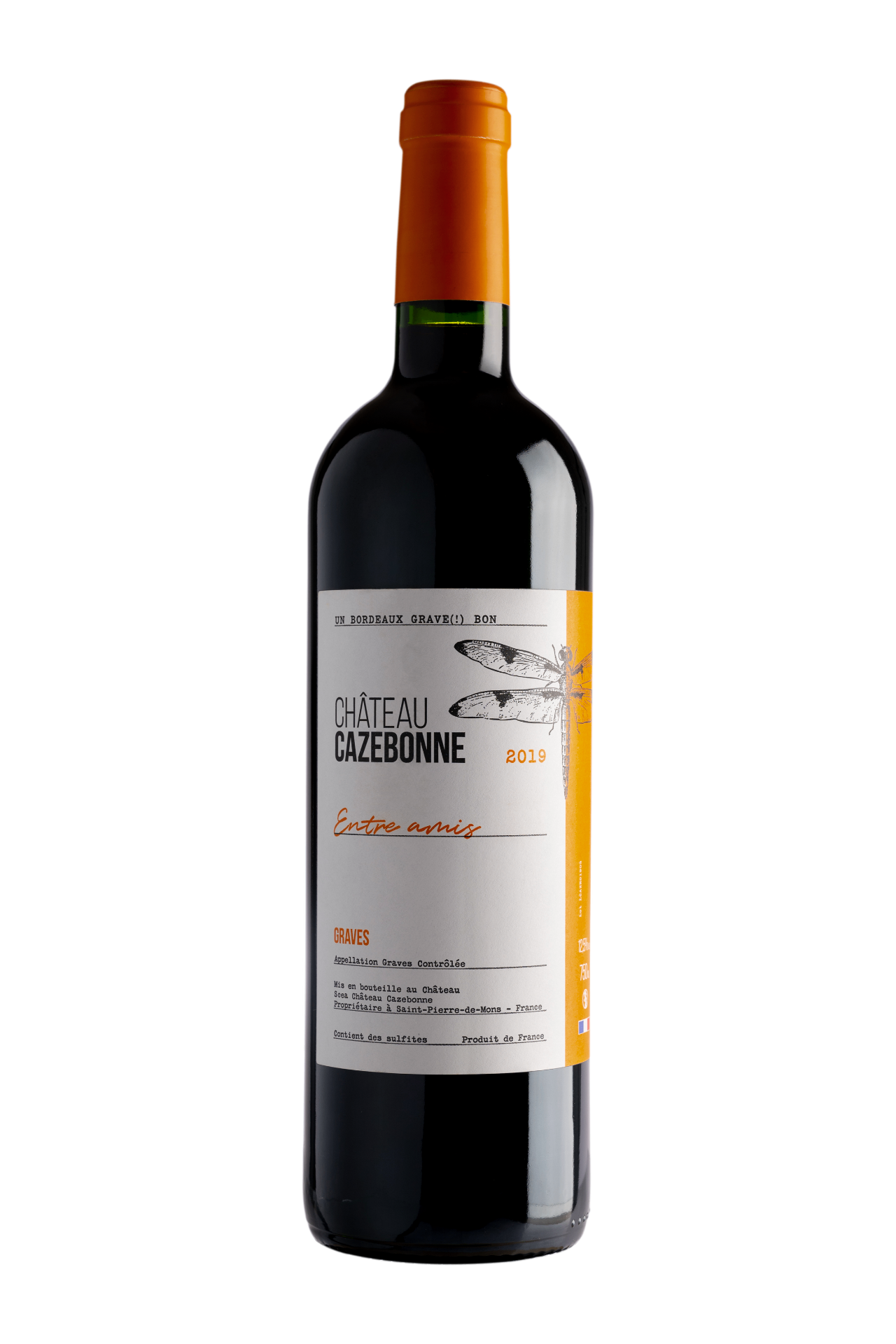
6 × Entre Amis red
6 bottles — Graves red 2022
The best price of the cellar: €12 per bottle delivered.
The everyday red: generous and straight to the point.
I want it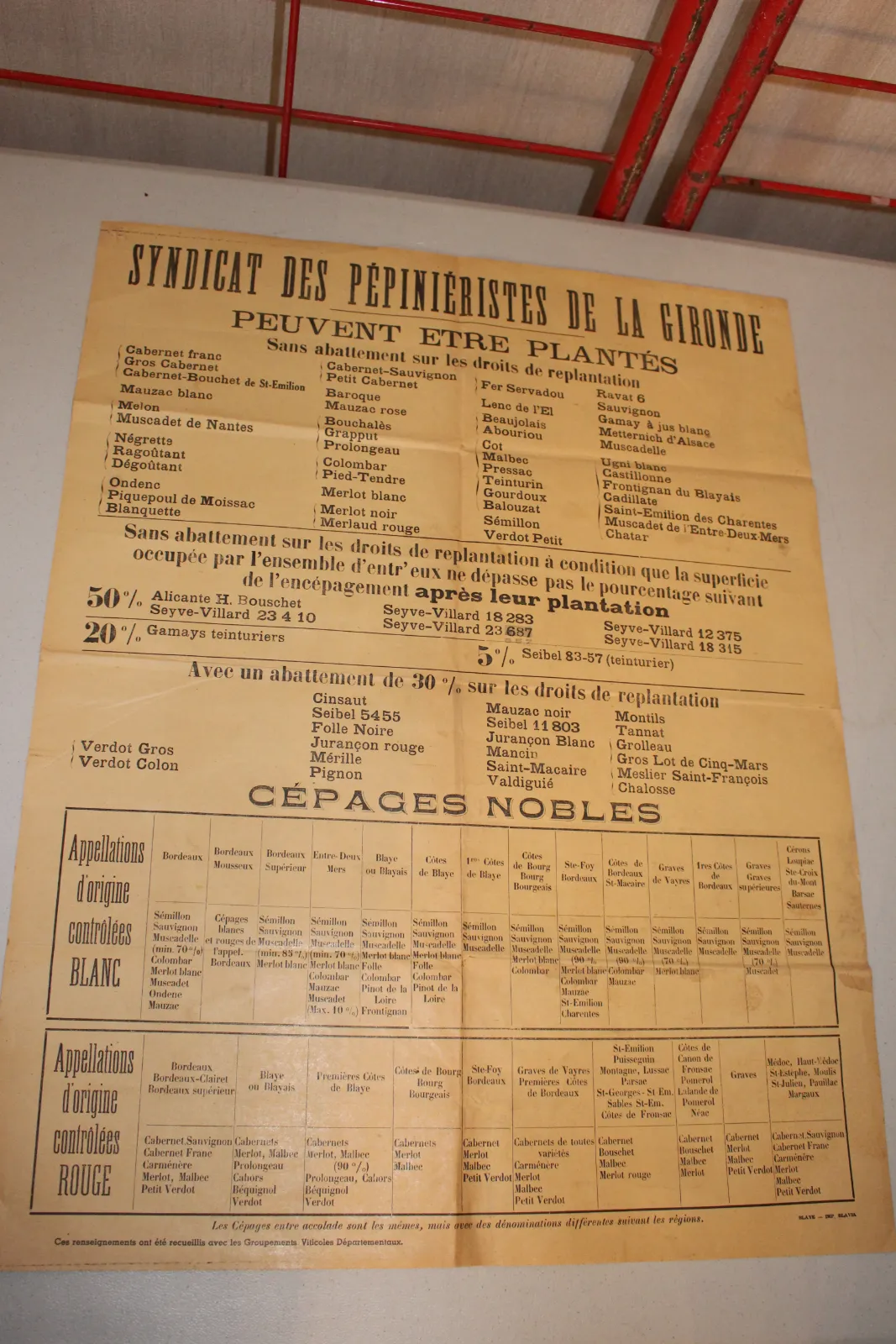
The poster presented here, distributed to Bordeaux winegrowers, belongs to that generation of regulatory charts that wine syndicates and the Fraud Repression services posted in wineries and town halls to remind producers which grape varieties could be replanted—and under what conditions. Its typography, the Seyve-Villard selection numbers it displays, the explicit mention of the 1963 decree, and the coexistence of traditional grape varieties alongside direct producer hybrids make it possible to date it with good accuracy to between 1963 and 1967. In its own way, it constitutes a snapshot of a varietal planting policy in the midst of transition.
To truly understand what this poster says, one must go back to Decree No. 53-977 of 30 September 1953. Adopted in a post-war context where French viticulture was seeking to restore quality and curb the production of ordinary table wines, this legislation established "national varietal discipline". Its Article 30 introduced a distinction that shaped half a century of French viticulture:
Recommended grape varieties could be replanted without penalty;
Merely authorised grape varieties incurred a 30% deduction on replanting rights.
The objective was clear: to gradually steer vineyards towards varieties deemed high in quality, while discouraging high-yielding varieties or direct producer hybrids, which had become widespread since post-phylloxera reconstruction.
Ten years later, Decree No. 63-445 of 29 April 1963 introduced greater flexibility to this framework. The 1965 INAO Bulletin clarified the logic: certain varieties, marked with an asterisk in the official lists, could henceforth be replanted without incurring the 30% deduction, provided they did not exceed a specific percentage of the estate's total varietal plantings.
This is precisely the framework used by the poster, organised into two main columns:
"Without deduction" (up to a set percentage): Alicante Bouschet, Gamay Teinturier de Chaudenay, Seibel 83-57, and a few others—meaning varieties that had previously been downgraded, whose presence remained tolerated as long as they formed a minority;
"With a 30% deduction": Cinsaut, Jurançon Rouge, Mérille, Pignon, Mauzac Noir, Montils, Tannat, Grolleau, Gros Lot, Meslier Saint-François, Chalosse Noire, etc.—authorised grape varieties, but ones the authorities were clearly seeking to phase out.
The poster is therefore not a literal transcription of the 1953 decree: it reflects its 1963 evolution, at a time when the French state was attempting to balance an ambitious quality policy with respect for a regional ampelographic heritage that was still remarkably diverse.
What is striking upon closer inspection is the diversity of grape varieties still permitted in Bordeaux at the time. As expected, it includes the recommended varieties that would come to dominate the landscape from the 1970s onwards (Cabernet Sauvignon, Cabernet Franc, Merlot, Sauvignon Blanc, Sémillon…). Above all, however, it bears traces of historic Bordeaux varieties—Mérille, Chalosse, Tannat, Mauzac Noir, Pignon, Montils—still present in the vineyards and deemed worthy of temporary preservation, subject to the deduction.
Even more surprising to a 21st-century reader is the persistence of direct producer hybrids, particularly Seibel and Seyve-Villard crossings, listed with their selection numbers on the poster. Long banned from AOC production, these hybrid varieties were still heavily planted in family vineyards, in areas dedicated to everyday table wine consumption, and in co-planted field-blend plots that persisted across Bordeaux estates. The authorities only tolerated them on the margins, subject to strict surface area limits—yet tolerated them nonetheless.
In Bordeaux, this policy pursued three concurrent goals:
Gradually phasing out direct producer hybrids and varieties deemed mediocre;
Promoting recommended grape varieties, which would form the cornerstone of modern Bordeaux viticulture;
Whilst preserving, on a transitional basis, certain traditional regional varieties through the 1963 exemptions.
The 30% deduction, a foundational principle, remained in the regulations for several decades: it featured in the Rural Code, then in the decrees of 2002, 2003, and 2008, before the French planting rights regime was integrated in 2016 into the European vine planting authorisation scheme.
This poster, seemingly purely administrative, tells a far richer story than a mere table of obligations. It documents the pivotal moment when Bordeaux viticulture moved away from the era of empirical diversity—characterised by co-planted plots, tolerated hybrids, and a wide array of regional grape varieties—to enter the era of quality selection, which would ultimately lead, by the end of the 20th century, to a dramatic narrowing of Bordeaux's ampelographic palette.
What it leaves unsaid is the price paid for this rationalisation: the disappearance from the vineyards of dozens of historic varieties—Mérille, Chalosse, Pignon (Pardotte), Mauzac Noir, Béquignol, Castets, and many others—which were first tolerated "with deduction", then gradually uprooted due to a lack of economic incentive in a viticultural model increasingly focused on a handful of dominant varieties.
It is precisely this heritage that Château Cazebonne is dedicated to replanting, parcel by parcel, restoring a rightful place in Bordeaux to those grape varieties that 1960s regulations had already begun to place on borrowed time. This work of living history is detailed in the book "Bordeaux, une histoire de cépages" by Jean-Baptiste Duquesne (BBD Editions), available to browse online or purchase in bookshops, and continues through our oenological quizzes on red grape varieties in 1961 to test your knowledge of these forgotten grapes. If you would like to support this initiative, we invite you to discover these wines made from rediscovered grape varieties in our online shop. Furthermore, for a deeper analysis of varietal planting dynamics across the region, you can explore seminal reference works such as Georges Bord and Bordeaux Varietal Plantings (1932).
Our suggestions
-5%on your 1st order with code BIENVENUE
The essential6 bottles — Graves red 2022
The best price of the cellar: €12 per bottle delivered.
The everyday red: generous and straight to the point.
I want it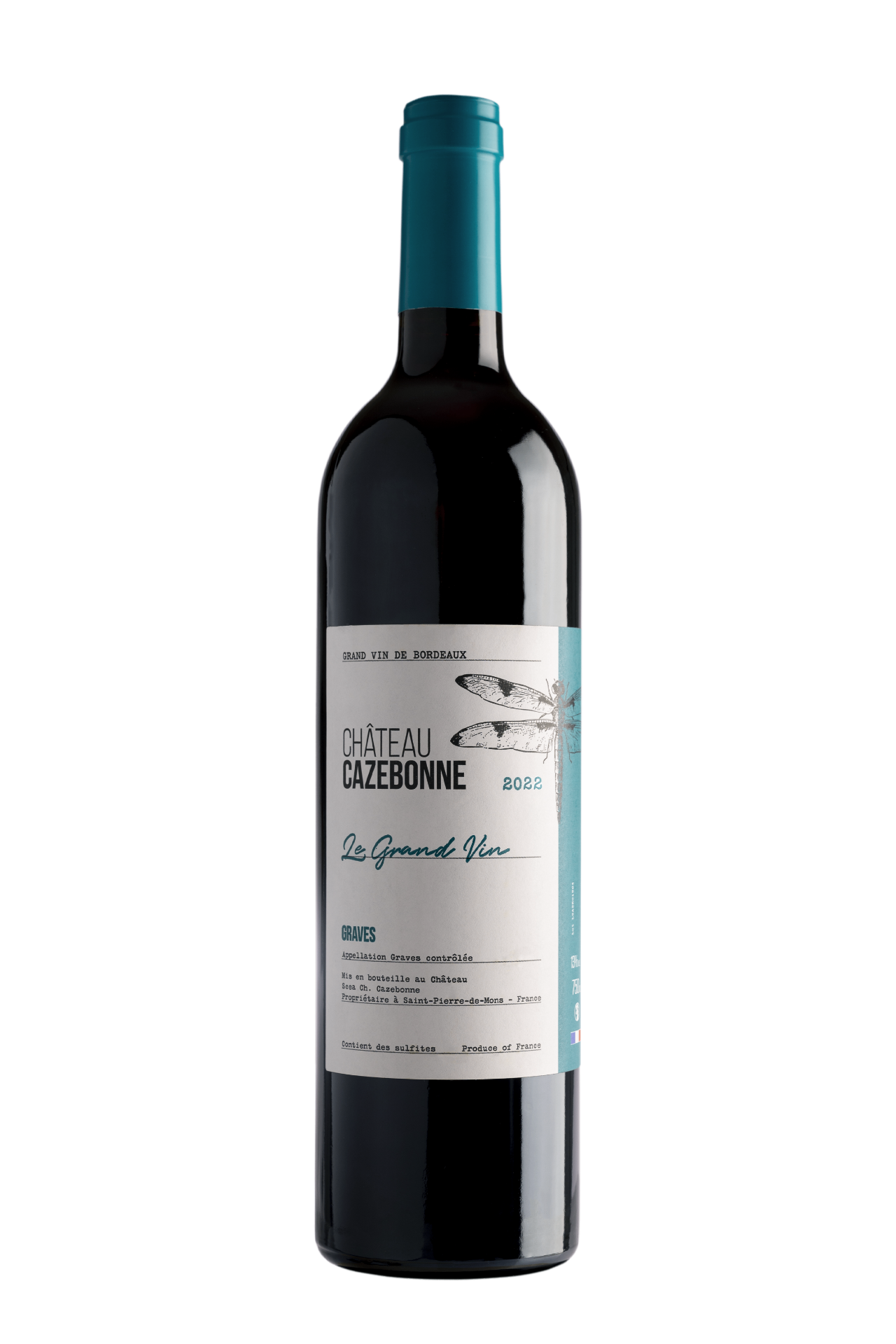 Our recommendation92/100 RVF
6 bottles — Graves red 2022, 92/100 RVF
Rated 92/100 by La Revue du vin de France: a solid 10-year ageing potential.
Our Graves for ageing, the finest gateway to the estate.
I want it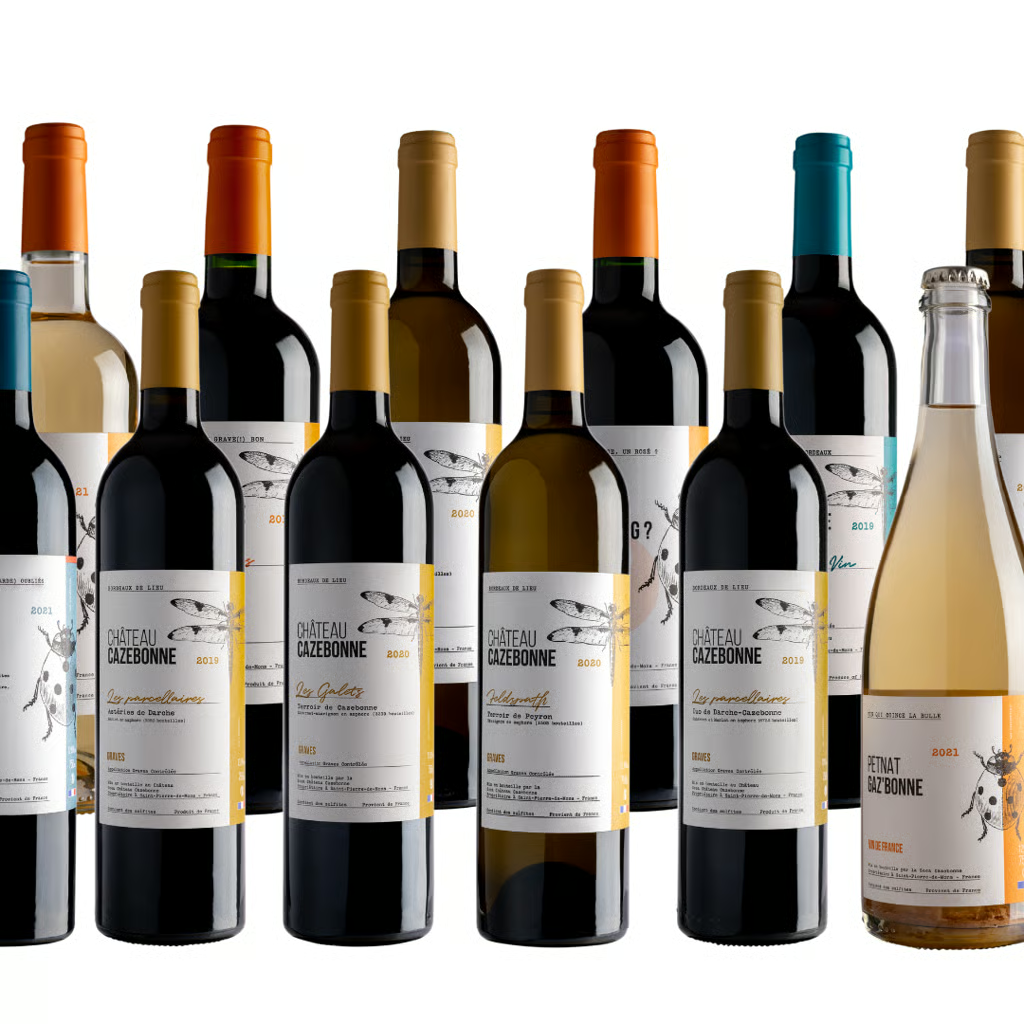 Go further
12 bottles — the whole range
12 bottles, the whole range tasted: the best discovery-to-price ratio.
The complete tour of the estate, in a single case.
I want it