
Château Bauduc
Updated on
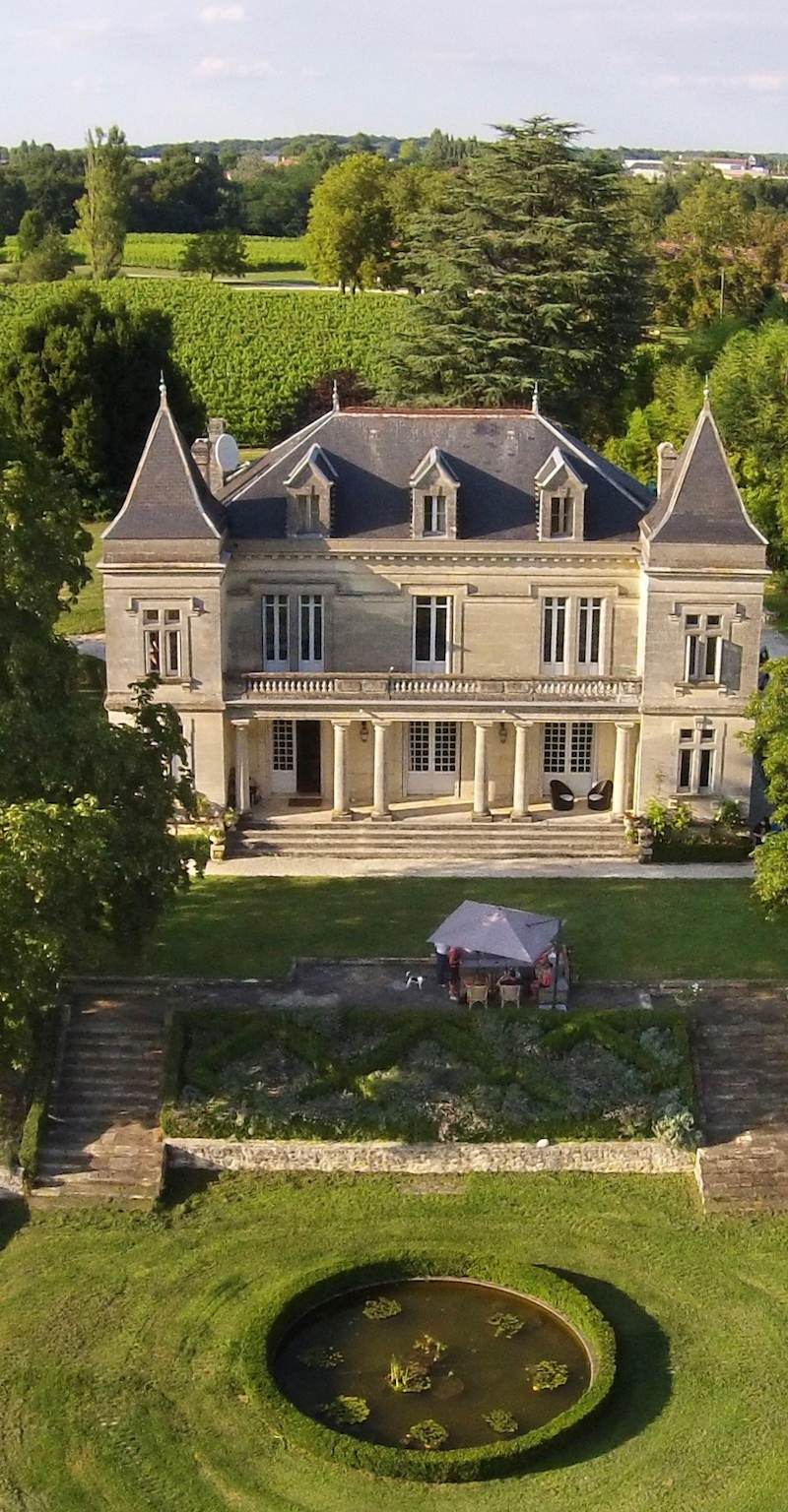
Château Bauduc is a winegrowing estate of over 25 hectares located in Créon, in the Gironde. Owned by Gavin and Angela Quinney, it produces wines under the Bordeaux Supérieur appellation, alongside white and rosé wines and a Crémant de Bordeaux. The vineyard is defined by a diverse terroir of gravel and clay.
Identity
Château Bauduc is a winegrowing estate located in Créon, in the Gironde. It is owned by Gavin and Angela Quinney.
History and philosophy
Since acquiring the property in 1999, Gavin and Angela Quinney have guided the direction of Château Bauduc. The estate relies on a dedicated team that includes staff members who have been present since 1999.
Viticulture at Château Bauduc involves intensive manual work on each vine, carried out 8 to 9 times per season. Tractor equipment also passes more than 20 times per row. The estate produces an average of around 200,000 bottles per year in vintages with favourable quality and yields. The vineyard has weathered climatic challenges, such as hail in 2009 and 2013, and spring frost in April 2017, which caused significant crop losses.
Appellations
Château Bauduc is located in Créon, approximately 25 km south-east of Bordeaux. Surrounding appellations include Entre Deux Mers, Bordeaux Supérieur, and Côtes de Bordeaux. The estate produces its red wines under the Bordeaux Supérieur appellation.
Practical information
Château Bauduc is located on the edge of Créon, approximately 25 km south-east of Bordeaux.
Find out more
Frequently asked questions
- Where is Château Bauduc located and what is its main appellation?
- Château Bauduc is located in Créon, in the Gironde. The estate produces its red wines primarily under the Bordeaux Supérieur appellation.
- What are the main grape varieties grown at Château Bauduc?
- For reds, Merlot is the dominant variety, complemented by Cabernet Sauvignon and Cabernet Franc. For whites, Sauvignon Blanc takes the lead alongside Sémillon. Small plantings of Malbec, Petit Verdot, and Carménère are also cultivated.
- How does Château Bauduc vinify its wines?
- Red wines are fermented in stainless steel vats with skin maceration, followed by oak barrel ageing. White and rosé wines are vinified in chilled stainless steel vats, with pre-fermentation maceration for the whites. The Crémant de Bordeaux is produced using the traditional method.
- What is the vineyard area of Château Bauduc and what are its terroir characteristics?
- The Château Bauduc vineyard covers over 25 hectares. Its terroir features a blend of sandy clay, gravel, and clay over limestone bedrock, situated across a plateau and south-, east-, and west-facing slopes.
The vineyard (terroir)
The Château Bauduc vineyard extends over more than 25 hectares, set within a total estate of 200 acres. The vineyard is planted on a hilltop plateau, with south-, east-, and west-facing slopes. The soil profile is diverse, composed of sandy clay, gravel (notably on the plateau), a layer of clay over limestone bedrock on certain south and west slopes, and gravelly clay to the east. The vineyard forms a single contiguous block surrounding the Château, comprising approximately 120,000 vines.
White grape varieties are dominant, led by Sauvignon Blanc and complemented by Sémillon. For the red grape varieties, Merlot is in the majority, accounting for more than two-thirds of plantings alongside Cabernet Sauvignon and Cabernet Franc. Minor plantings of Malbec, Petit Verdot, and Carménère are also present.
The estate benefits from around 10 hectares of old vines, the oldest of which were planted in 1947. Since 2000, 15 hectares have been replanted. Harvesting is partly mechanical, using harvesters fitted with on-board sorting and destemming systems. Grapes destined for the Crémant de Bordeaux and the Les Trois Hectares red cuvée are harvested by hand.
Flagship cuvées
The estate offers a wide range of cuvées. In red, it crafts a classic Bordeaux Supérieur and a "Celebration Cuvée magnum". In rosé, Château Bauduc Rosé—a blend of 40% Cabernet Franc, 40% Merlot, and 20% Cabernet Sauvignon—is complemented by Château Bauduc Rosé II. For whites, the Sauvignon Blanc is a signature bottling, alongside an old-vine cuvée released under the name Les Trois Hectares Blanc. A Crémant de Bordeaux Blanc de Blancs, made from 100% Sémillon, is also produced.
Vinification and ageing
The cellar facilities at Château Bauduc house 30 stainless steel vats ranging from 5,000 to 20,000 litres in capacity, many of which are fitted with an automated temperature-control system installed in 2006.
For the red wines, whole destemmed berries ferment in stainless steel vats. Fermentation is followed by maceration on the skins prior to pressing. Ageing then takes place in French oak barrels for around 12 months for the relevant cuvées, with barrels rotated over a 3- to 4-year cycle. The Les Trois Hectares red cuvée is aged entirely in French oak barrels. Red wines are bottled around 18 months after harvest under natural cork.
White and rosé vinification begins with cold maceration of crushed white grapes and juice in vat before pressing. The juice is clarified prior to fermentation, which takes place primarily in temperature-controlled stainless steel vats. A proportion of the white wines is also fermented in new oak barrels. Bottling for white and rosé wines takes place in January following the vintage, using Stelvin screwcaps.
The Crémant de Bordeaux, first produced in the 2014 vintage, is crafted using the traditional method. This involves hand-harvesting into small crates, whole-bunch pressing, and cold fermentation, followed by secondary fermentation in bottle.
- Appellations
- Bordeaux Supérieur, Crémant de Bordeaux, Entre-deux-Mers, Côtes de Bordeaux
- Commune
- Créon
- Wine region
- Bordeaux & Bordeaux Supérieur
- Owner
- Gavin et Angela Quinney
- Surface area
- 25 ha
- Grape varieties
- Merlot, Sauvignon Blanc, Cabernet Sauvignon, Cabernet Franc, Sémillon, Malbec, Petit Verdot, Carménère
Practical information
- Address
- Créon
- Contact form
- Contact the estate