
Château Cazebonne
Updated on
Château Cazebonne is a winegrowing estate in the Graves AOC and a pioneer of biodynamics in Saint-Pierre-de-Mons. It is renowned for replanting more than 45 historic Bordeaux grape varieties, crafting wines that express the richness of its gravel and limestone terroirs.
Identity
Château Cazebonne is located in the commune of Saint-Pierre-de-Mons, in Gironde. The estate is owned by Jean-Baptiste Duquesne, who acquired it in 2016. The technical team is managed by Florian de Perre alongside oenologist Nicolas Jamin. Myrtille heads sales and Agnès serves as administrative assistant. Bruno and Philippe work as tractor drivers, while Lise is an apprentice.
History and Philosophy
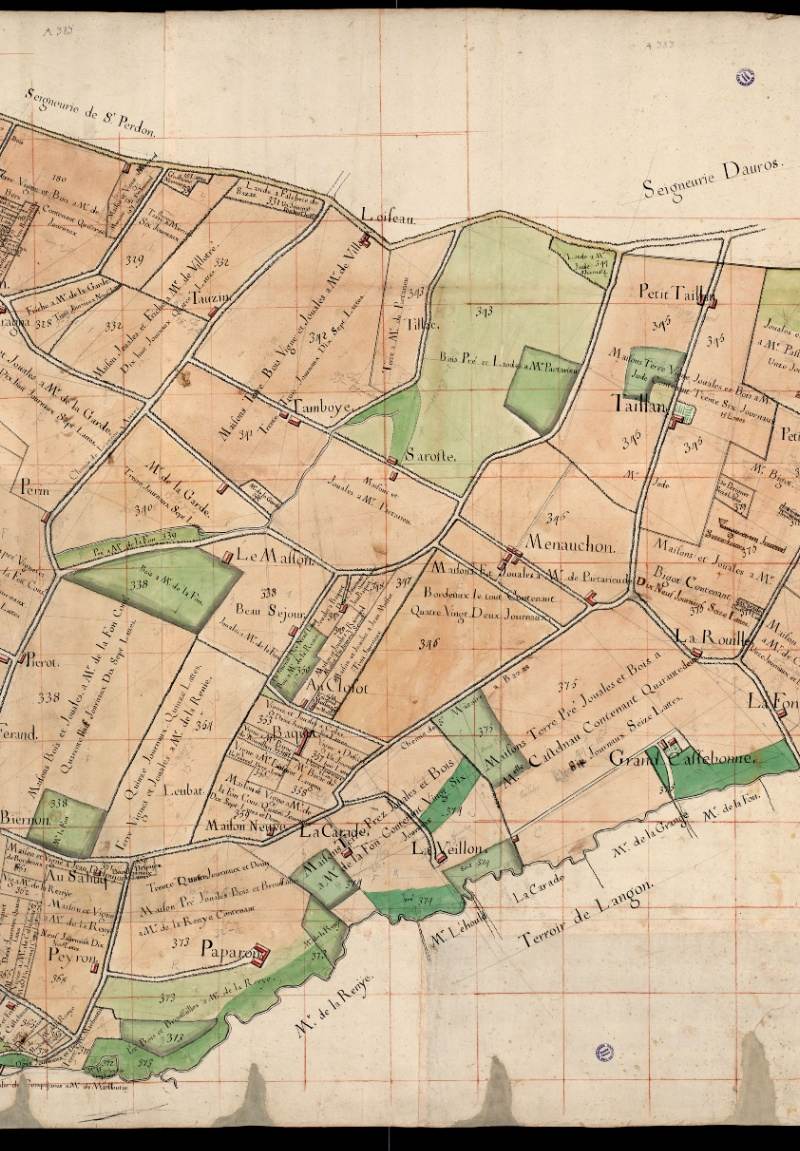
The Cazebonne estate boasts a winegrowing heritage dating back to the Middle Ages, with wines exported to England and Northern Europe as early as the 14th century. Historical owners include Gabriel Nicolas de La Reynie in the 17th century, the de Castelnau family from the 18th to the 19th century, and subsequently the Martinet family. Prior to its purchase in 2016 by Jean-Baptiste Duquesne, the estate was owned by the Bridet family, while the Sourget families held the Peyron and Bouché parcels.
Jean-Baptiste Duquesne took over Château Cazebonne in 2016. His philosophy is rooted in a profound commitment to biodynamics and the replanting of heritage, forgotten Bordeaux grape varieties to revive their original complexity. The estate has been certified organic (Agriculture Biologique) and biodynamic (Demeter) since 2020. Château Cazebonne is also part of the “Bordeaux Pirate” movement, which seeks to foster a dynamic revival across the Bordeaux vineyards. Jean-Baptiste Duquesne is the author of the book “Bordeaux, une histoire de cépages”.
Appellations
Château Cazebonne crafts wines under the Graves Appellation d'Origine Contrôlée (AOC). Certain cuvées are also produced under the Vin de France or IGP Atlantique appellations.
Practical Information
Château Cazebonne is located at 322 chemin de Peyron, 33210 Saint-Pierre-de-Mons. For inquiries or to book a visit, the estate can be contacted by telephone (Jean-Baptiste Duquesne: 06 89 77 42 12, Myrtille: 06 20 99 18 25) or by email at contact@cazebonne.fr. Tours and tastings are available by appointment. Direct cellar-door sales are also available.
Find Out More
Frequently asked questions
- What makes the Château Cazebonne vineyard unique?
- Château Cazebonne stands out for its commitment to biodynamics (Demeter-certified since 2020) and the replanting of over 45 forgotten historical Bordeaux grape varieties, aiming to restore the region's original complexity.
- What soil types characterise the terroir at Château Cazebonne?
- The terroir of Château Cazebonne comprises six distinct blocks featuring sandy, gravelly, and clayey gravels over limestone subsoils, alongside deep gravels, Asteria limestone, and loamy-clay soils.
- Which appellations are produced at Château Cazebonne?
- The estate produces wines under the Graves Appellation d'Origine Contrôlée (AOC). Certain cuvées are also crafted under the Vin de France or IGP Atlantique designations.
- How does Château Cazebonne vinify its wines?
- Château Cazebonne practises low-intervention winemaking using indigenous yeasts, minimal additives, and low sulphite levels. Macerations are gentle, with ageing carried out in seasoned oak barrels or amphorae.
The Vineyard (Terroir)
The Château Cazebonne vineyard covers nearly 30 hectares across six distinct terroir blocks, distributed over the lieux-dits of Grand Cazebonne, Peyron, Bouché, Darche, and Le Maine. The soils comprise sandy, gravelly, and clayey gravels over limestone subsoils. The terroir also features deep gravels, Asteria limestone (calcaires à astéries), as well as loamy and clay soils.
Vineyard management is strictly biodynamic without the use of herbicides, relying on mechanical tillage, carefully managed cover crops, and natural preparations. Biodiversity is actively encouraged throughout the parcels. The average age of the vines is 30 years for reds and 35 years for whites, planted at a density of 5,000 vines per hectare.
The red grape varieties are predominantly Cabernet Sauvignon (38%) and Merlot (31%), complemented by Cabernet Franc (9%), Malbec (cot) (9%), Mancin des palus (4%), Saint-Macaire (3%), Carmenère (2%), Castets (2%), as well as small proportions of Petit Verdot (1%), Merille (1%), Jurançon noir (1%), and Braucol (fer servadou) (1%), alongside various other red varieties (2%). The white plantings consist mainly of Sauvignon gris (45%) and Sauvignon blanc (45%), with Sémillon (8%) and various white varieties (2%). The estate has committed to replanting more than 45 forgotten historical Bordeaux varieties, including Blanc Auba, Sauvignonasse, Pardotte, Castets, Mancin, Saint-Macaire, Jurançon noir, Penouille, Mérille, Bouchalès, Prueras, and Baroque.
Flagship Cuvées
Château Cazebonne offers a diverse range of wines reflecting the richness of its terroirs and its focus on heritage grape varieties and natural practices. The wines are vinified with minimal added sulphites, indigenous yeasts, and very low intervention. Gentle macerations are favoured, and ageing takes place in seasoned barrels or amphorae.
Le Grand Vin
The Le Grand Vin cuvée is produced in both red and white under the Graves appellation. Le Grand Vin rouge, made primarily from Merlot and Cabernet Sauvignon, is aged in French oak barrels for 18 months. Le Grand Vin blanc, a blend of Sémillon and Sauvignon Blanc, is aged in barrels for 6 months and is distinguished by delicate floral aromas, citrus notes, and white-fleshed fruit flavours.
Cuvées Entre amis
Available in red and white under the Graves appellation, these cuvées are crafted to be approachable in their youth. The red, based on Merlot and Cabernet Sauvignon, is supple, fruit-forward, and versatile, offering aromas of crunchy red berries and subtle spicy undertones.
Forgotten Grape Variety Cuvées
The Comme en 1900 cuvée, bottled as Vin de France, is crafted from these replanted historic grape varieties. Other cuvées such as Argile Ocre, Les Galets de Cazebonne, La Dame Noire (IGP Atlantique), Le Mancin (IGP Atlantique), and Synergie (Graves) further showcase this vision. The red Galets cuvée, named after its gravel and rounded pebble soils, delivers freshness, elegance, and appealing fruit purity.
Vinification and Ageing
Winemaking at Château Cazebonne follows a natural approach: indigenous yeasts, low inputs, gentle macerations, and minimal use of sulphites. Red wines are aged for 18 months, whereas whites undergo 6 months of ageing. Vessels used for maturation include seasoned barrels and amphorae.
- Appellations
- Graves, Vin de France, IGP Atlantique
- Commune
- Saint-Pierre-de-Mons
- Wine region
- Graves & Sauternais
- Classification
- Domaine en biodynamie — cépages anciens
- Owner
- Jean-Baptiste Duquesne
- Technical direction
- Florian de Perre
- Surface area
- 30 ha
- Certifications
- Bio, Biodynamie
- Grape varieties
- Cabernet Sauvignon 38%, Merlot 31%, Cabernet Franc 9%, Malbec (cot) 9%, Sauvignon gris 45%, Sauvignon blanc 45%, Mancin des palus 4%, Saint-Macaire 3%, Carmenère 2%, Castets 2%, Divers noir 2%, Sémillon 8%, Divers blanc 2%, Petit Verdot 1%, Merille 1%, Jurançon noir 1%, Braucol (fer servadou) 1%
Estate news
04 August 2026
Fargues : Au château Quincarnon, le sauternes voit rose
Au château Quincarnon, situé sur un terroir réputé pour les grands vins blancs liquoreux, Mathilde et Gabriel Aseretto, à la tête de la propriété familiale depuis 2020, impulsent une nouvelle dynamique. En 2023, ils ont lancé un vin rosé, une initiative qui s'inscrit dans une stratégie de diversification et vise à séduire de nouveaux consommateurs. Ce projet estival, produit à partir de parcelles de Graves, a connu un succès rapide, doublant de volume depuis son lancement. L'histoire du château Quincarnon débute avec Carlos Aseretto, le père de Mathilde et Gabriel, qui a quitté le Pérou. Après que ses beaux-parents aient vendu le château Cazebonne, ils ont confié les vignes et la métairie de Quincarnon à leur fille et gendre. Carlos, initialement ingénieur en mécanique, s'est alors formé à la viticulture, construisant le chai et le cuvier dans les années 1980. Le domaine produit des vins sous trois appellations : Sauternes, Graves rouge et Bordeaux. En 2020, Carlos Aseretto a pris sa retraite, laissant la direction à ses enfants qui perpétuent l'héritage familial tout en apportant une touche de modernité avec ce vin rosé audacieux.
Read the source — echos-judiciaires.comPractical information
- Address
- Château Cazebonne, 322 chemin de Peyron, 33210 Saint-Pierre de Mons, 33210
- Phone
- 06 89 77 42 12
- contact@cazebonne.fr
- Contact form
- Contact the estate
- Visits
- Oui sur rendez-vous