
 The essential
6 × Entre Amis red
6 bottles — Graves red 2022
The best price of the cellar: €12 per bottle delivered.
The everyday red: generous and straight to the point.
I want itHeatwave
At Château Cazebonne, we carefully observe the meteorological phenomena that shape the destiny of our plots, and the heatwave is one of the most formidable. A heatwave is defined as high temperatures persisting for several consecutive days – generally at least three – and night-time temperatures failing to drop below a certain threshold, often above 20°C. These periods of intense heat, amplified by climate change, represent a major challenge for the vine and for crafting balanced wines.
A heatwave is not limited to hot days; it induces intense heat stress for the vine, exacerbated by nights when the temperature does not drop sufficiently. This lack of night-time coolness prevents the vine from "breathing" and recovering from the heat accumulated during the day. The ripening process is then disrupted. The plant's metabolic functions slow down, and if water stress is added, the vine can even completely stop the ripening of its berries, a phenomenon known as "ripening blockage".
Under the effect of a heatwave, the vine suffers significant water stress. To protect itself, it slows down its metabolism, sometimes even halting the ripening of the grapes. The berries, exposed to intense sunlight, are at risk of sunburn, which damages their skin and aromas. The perfect balance between sugars and acidity is disrupted, threatening the freshness and complexity of future wines. As Jean-Baptiste Duquesne points out in his book "Bordeaux, une histoire de cépages", not all grape varieties react in the same way to these extreme episodes; some, which are later-ripening or thick-skinned, show greater resilience. To find out more about how vines manage thirst, explore our category on the vine cycles.
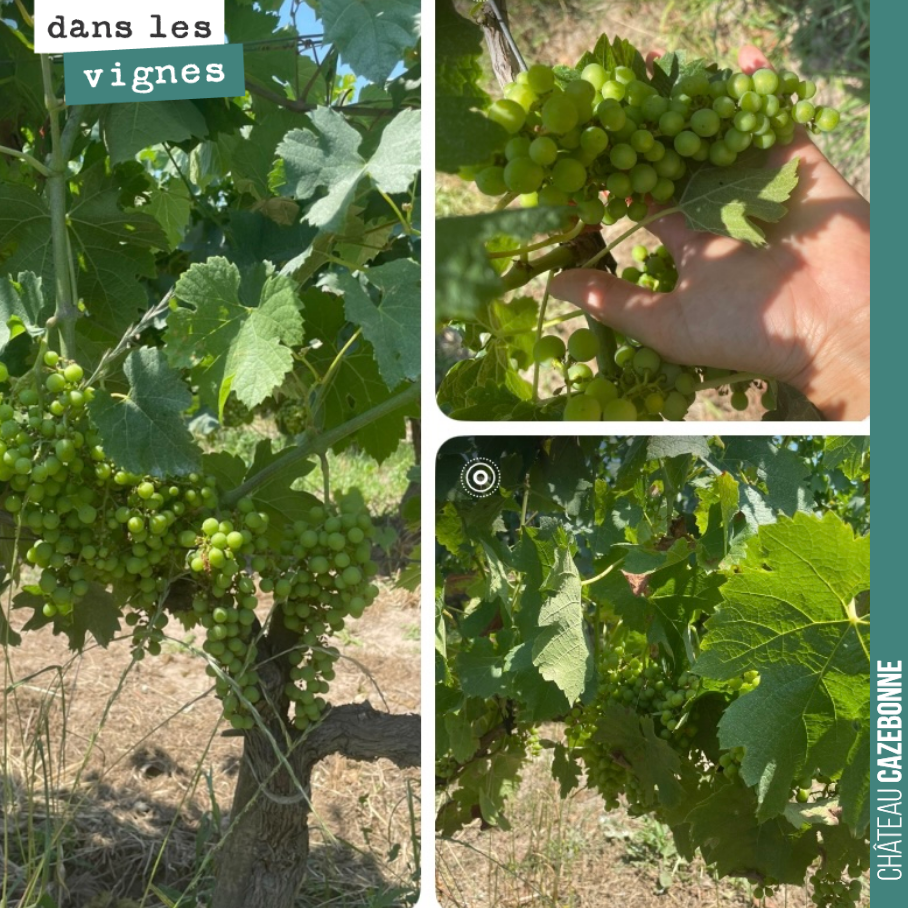
Heatwaves are generally associated with summer in the vineyards, mainly from July to September, a crucial period for veraison and grape ripening. However, with climate change, we are observing a trend towards early heat episodes in spring, which can impact flowering, or late heat in autumn, thus affecting the harvest. These variations disrupt the natural rhythms of the vine and require constant vigilance from winegrowers. Frost, another potentially devastating climatic risk, is discussed in our section on Frost in the vineyards.
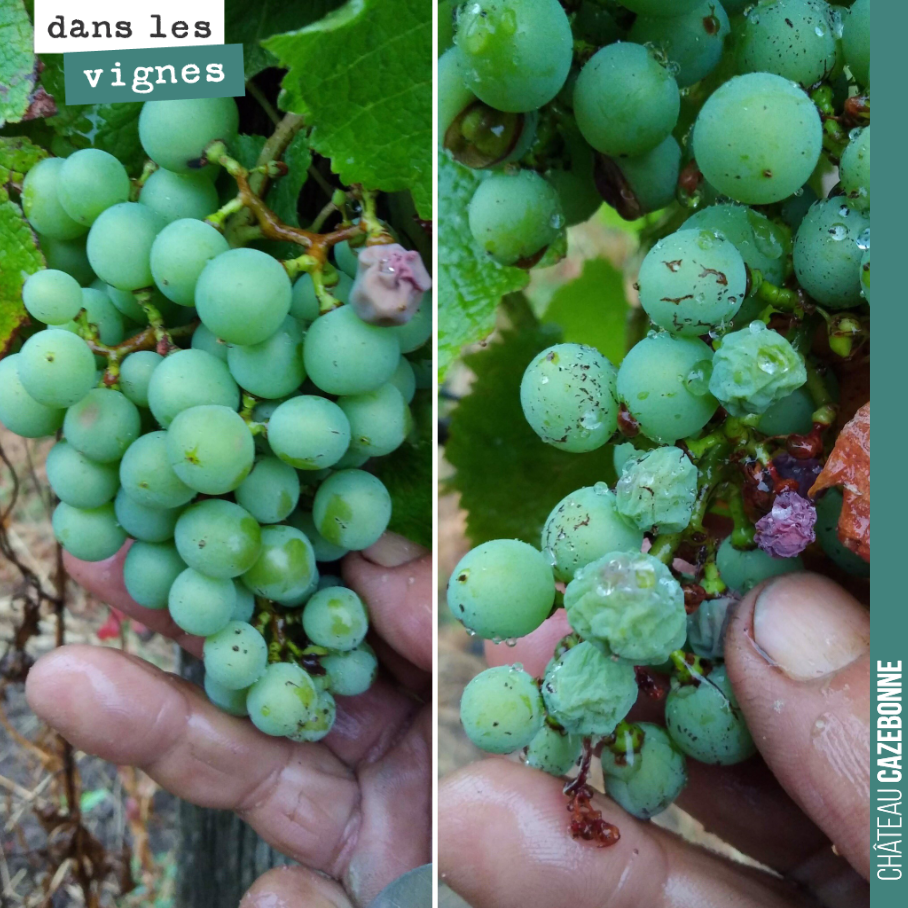
Several visual clues can identify a vine suffering from a heatwave. The foliage may turn yellow or become necrotic around the edges, the leaves roll up to limit evaporation, and exposed bunches may suffer "sunburn", which appears as brownish spots on the berry skins. Beyond the leaves, the soil itself can show signs of water stress, with deep cracks. Careful observation of these phenomena is essential for an appropriate response. Analysing living soils helps to better understand these interactions.
Faced with these challenges, we implement various strategies at Château Cazebonne. We favour environmentally friendly viticultural practices that improve the resilience of our soils and the vine's ability to cope with these stresses. Precise canopy management protects the bunches from the sun's fiery rays without compromising ripening. We are also rethinking our approach to cover crops and tillage to limit evaporation and retain moisture. These approaches are part of our commitment to sustainable viticulture.
A common misconception is that extreme heat is always beneficial for the wine, synonymous with good sugar concentration. However, while sugar increases, acidity can drop drastically, and the aromatic balance can be compromised, leading to heavy and unexpressive wines. Another thought is that old vines will not suffer the impact of a heatwave. Although older vines are often more deeply rooted and resilient, they are not immune.
It is crucial to understand that the quality of a vintage lies in balance, not in excess. Resistant grape varieties in Bordeaux are indeed valuable allies in this context.
Our approach is part of a broader vision of adapting to climate change. That is why we have undertaken to replant grape varieties in Bordeaux that had disappeared, varieties which, thanks to their agronomic characteristics, can better withstand drought and intense heat. This pioneering work is made possible by the unwavering support of the many enthusiasts who have embraced our wines and our approach. To deepen your knowledge of the viticultural history of our region and the grape varieties that shape it, we invite you to receive the digital version of the book "Bordeaux, une histoire de cépages" from Éditions BBD, written by Jean-Baptiste Duquesne. You can also test your knowledge of grape varieties and terroir by taking part in our oenological quizzes, or simply discover and support our cuvées by visiting the Cazebonne shop.
Sources
Our suggestions
-5%on your 1st order with code BIENVENUE
The essential6 bottles — Graves red 2022
The best price of the cellar: €12 per bottle delivered.
The everyday red: generous and straight to the point.
I want it Our recommendation92/100 RVF
6 bottles — Graves red 2022, 92/100 RVF
Rated 92/100 by La Revue du vin de France: a solid 10-year ageing potential.
Our Graves for ageing, the finest gateway to the estate.
I want it Go further
12 bottles — the whole range
12 bottles, the whole range tasted: the best discovery-to-price ratio.
The complete tour of the estate, in a single case.
I want it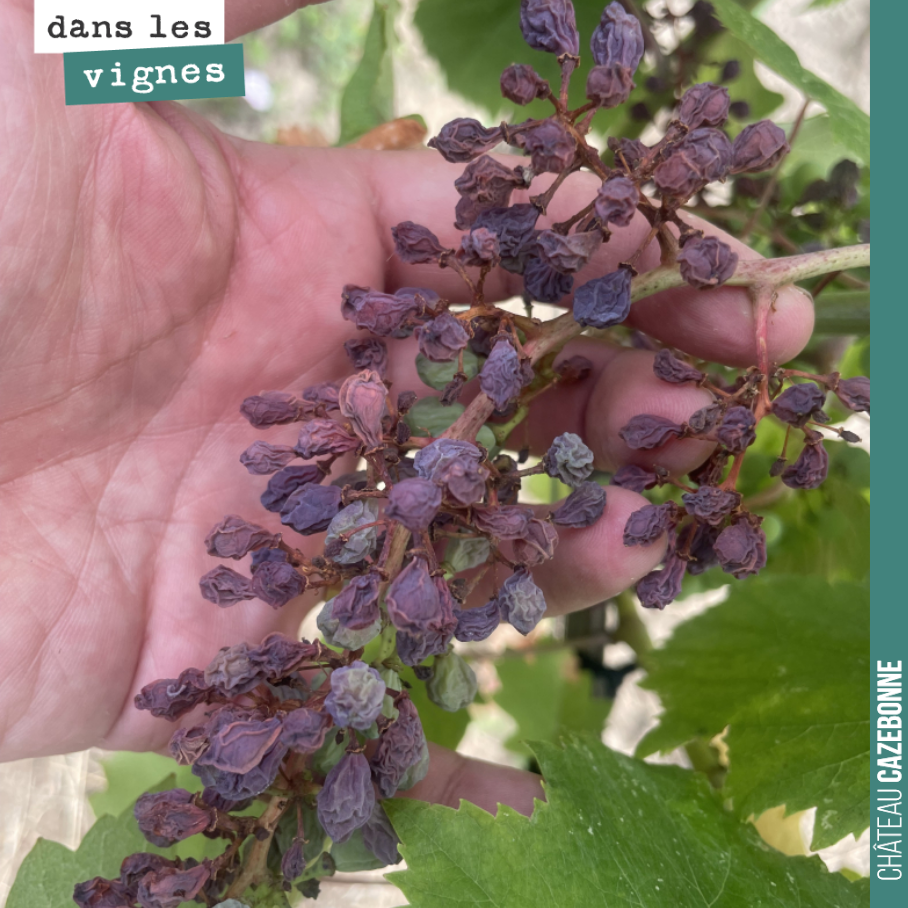
01 July 2026
18 June 2026
24 August 2019
29 July 2019
27 July 2019

27 June 2019
25 July 2018
The cellar, forgotten grape varieties and our cuvées, twice a month. 5% off your first order with the code BIENVENUE.