
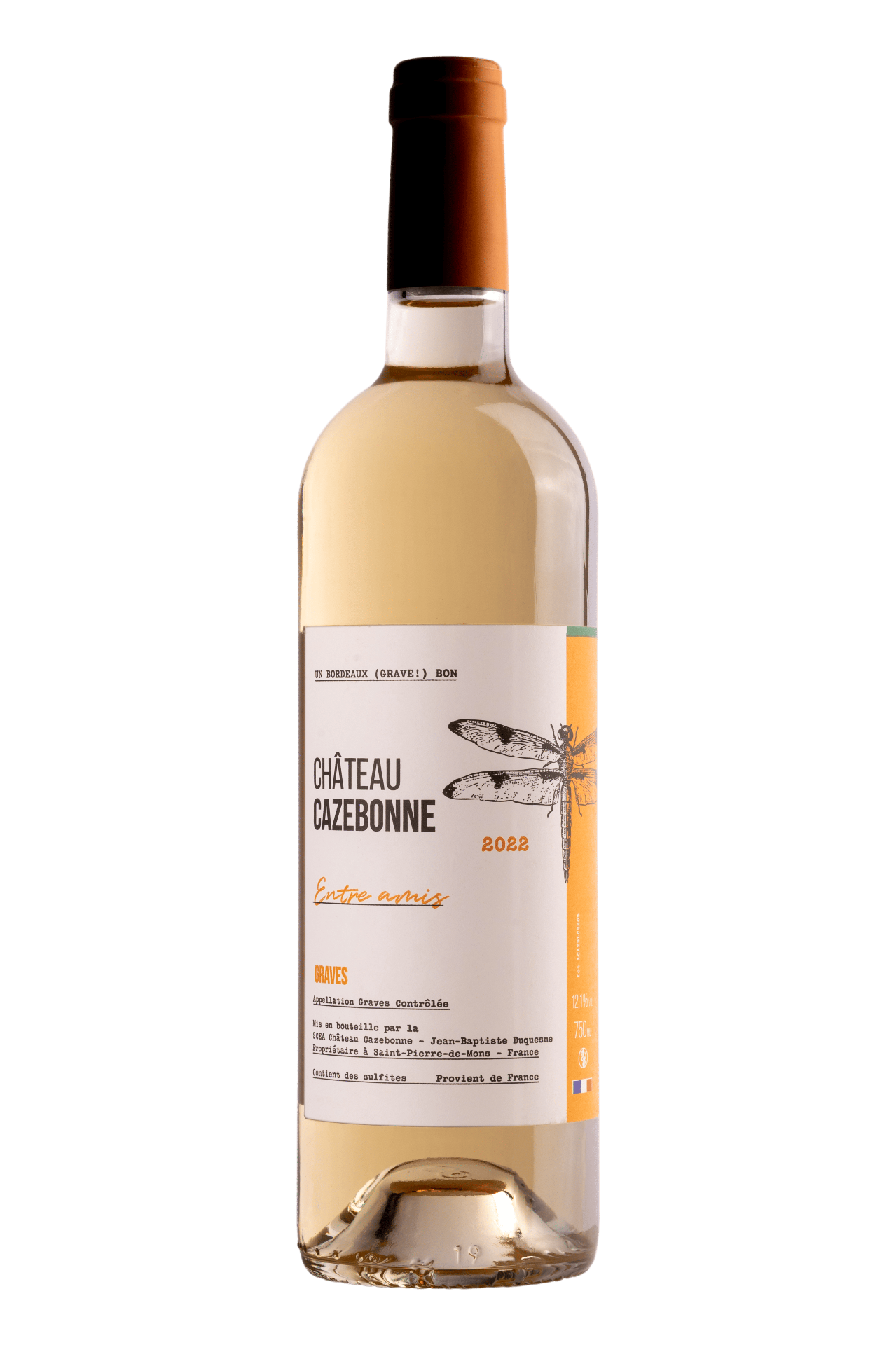
 The essential
Entre Amis white 2024
Graves white 2024
Crisp and saline: the easy aperitif, at a gentle price.
The estate's thirst-quenching white, open it without thinking.
I want itLa Vigne Française — Janvier 1897
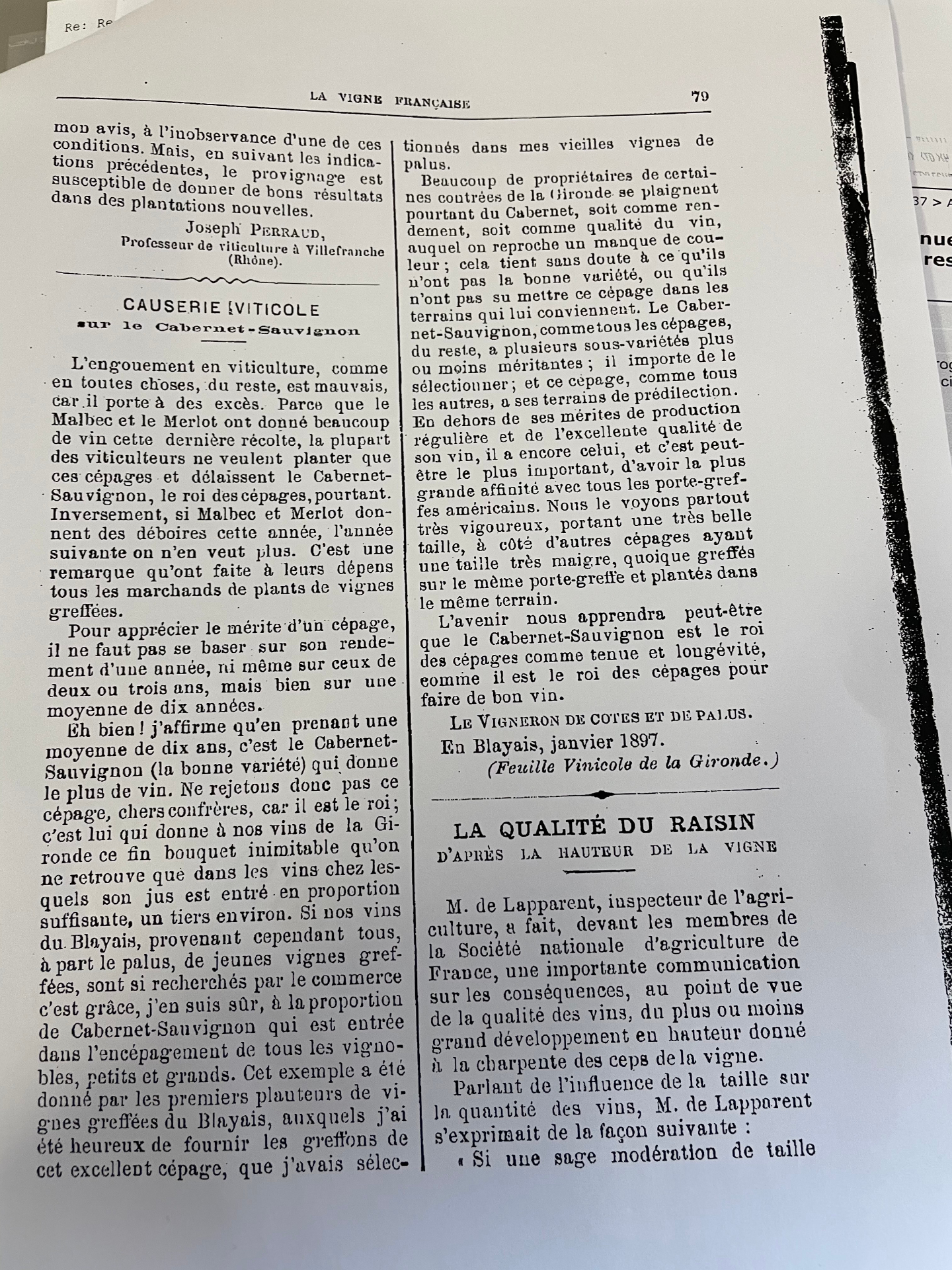
Viticultural address signed "Le Vigneron de Côtes et de Palus" — the pseudonym under which Jean Élie, vigneron des côtes et de palus published in La Vigne Française. This talk, given in the Blayais in January 1897, defends Cabernet-Sauvignon as the "king of grape varieties" at a time when growers, seduced by the yields of Malbec and Merlot, were turning away from it.
Fads in viticulture, as in all things for that matter, are ill-advised, for they lead to excess. Because Malbec and Merlot produced a heavy crop in this latest harvest, most growers want to plant only these varieties and are abandoning Cabernet-Sauvignon, yet the king of grape varieties. Conversely, if Malbec and Merlot disappoint this year, the following year nobody wants them anymore. This is an observation that all grafted vine plant nurseries have made at their own expense.
To judge the merit of a grape variety, one must not rely on the yield of a single year, nor even on that of two or three years, but on a ten-year average.
Well then! I maintain that over a ten-year average, it is Cabernet-Sauvignon (the proper variety) that produces the most wine. Let us not reject this variety, dear colleagues, for it is king; it is what imparts to our Gironde wines that delicate, inimitable bouquet found only in wines where its juice forms a sufficient proportion, around one third. If our wines from the Blayais—though all, except for the palus, originating from young grafted vines—are so sought after by the trade, it is thanks, I am certain, to the proportion of Cabernet-Sauvignon included in the varietal mix of all vineyards, great and small. This example was set by the earliest planters of grafted vines in the Blayais, to whom I was pleased to supply scions of this excellent variety, selected from my old palus vines.
Many estate owners in certain districts of the Gironde nevertheless complain about Cabernet, whether regarding yield or wine quality, criticising it for a lack of colour; this is undoubtedly because they do not have the right variety, or have failed to plant this variety in suitable soils. Cabernet-Sauvignon, like all grape varieties, comprises several sub-varieties of varying merit; selection is essential; and this variety, like all others, has its preferred soils. Beyond its merits of regular production and the excellent quality of its wine, it possesses another—perhaps the most important—which is its exceptional affinity with all American rootstocks. We see it everywhere displaying great vigour and bearing fine growth, alongside other varieties showing very sparse growth, despite being grafted onto the same rootstock and planted in the same soil.
The future may show us that Cabernet-Sauvignon is the king of grape varieties for its resilience and longevity, just as it is the king of grape varieties for making fine wine.
— Le Vigneron de Côtes et de Palus, Blayais, January 1897 (Feuille Vinicole de la Gironde)
"Le Vigneron de Côtes et de Palus" was the pseudonym under which Jean Élie (1852–1920), estate manager, grafter, and breeder of Cabernet-Malbec crossbreeds, regularly published in La Vigne Française and the Feuille Vinicole de la Gironde. His articles reflect a firm conviction: the post-phylloxera replanting had to be carried out using the right varieties, selected plot by plot, in suitable soils.
Jean Élie’s defence of Cabernet-Sauvignon still resonates today. Described as "king" as early as 1897 for its consistency and the quality of its wines, this grape variety contributed significantly to the renown of Bordeaux wines. Prized for its ability to produce tannin-rich wines with complex aromas of blackcurrant, green bell pepper, and cedar, it is essential to the Bordeaux identity. Thanks to its vigour and high affinity with American rootstocks, it served as a cornerstone of the vineyard's reconstruction following phylloxera.
Today, Cabernet-Sauvignon retains a significant place at Château Cazebonne, one hundred and twenty-eight years after this address. We cultivate it via massal selection, favouring gravel soils suited to this variety, and apply moderate pruning to encourage longevity and the expression of its aromas. In parallel, more than twenty historic grape varieties—some almost forgotten, such as Jean Élie's Cabernet-Malbec crosses—have been replanted. This work restores the Bordeaux ampelographic diversity lost in the 20th century, an endeavour you can explore in more detail by downloading the book "Bordeaux, une histoire de cépages" on our website. To support this initiative of replanting lost grape varieties and discover our wines, we invite you to visit our online shop. You can also test your knowledge of grape varieties and terroirs with our wine quizzes, which complement the information on our terroirs and philosophy.
Château Cazebonne is dedicated to preserving and enriching Bordeaux's viticultural heritage by replanting historic grape varieties that had disappeared—work made possible through the support of wine lovers who embrace our wines. Discover this fascinating history and much more by downloading our book "Bordeaux, une histoire de cépages" here, test your knowledge with our wine quizzes, and support our initiative by visiting our online boutique.
Our suggestions
-5%on your 1st order with code BIENVENUE
The essentialGraves white 2024
Crisp and saline: the easy aperitif, at a gentle price.
The estate's thirst-quenching white, open it without thinking.
I want it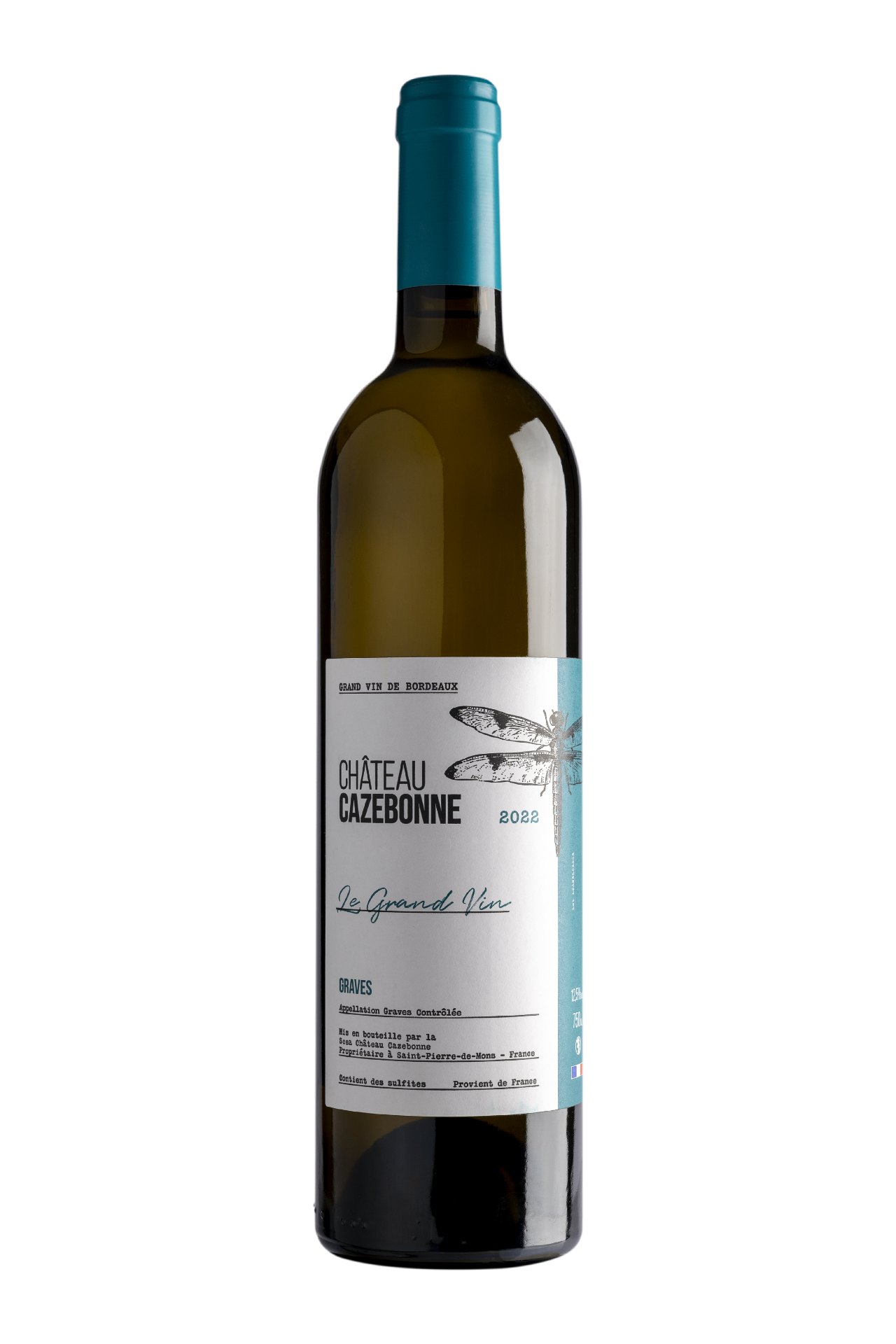 Our recommendation92/100 RVF
Graves white 2022, 92/100 RVF
Rated 92/100 by La Revue du vin de France: old-vine Sémillon.
The great Graves white: taut and deep.
I want it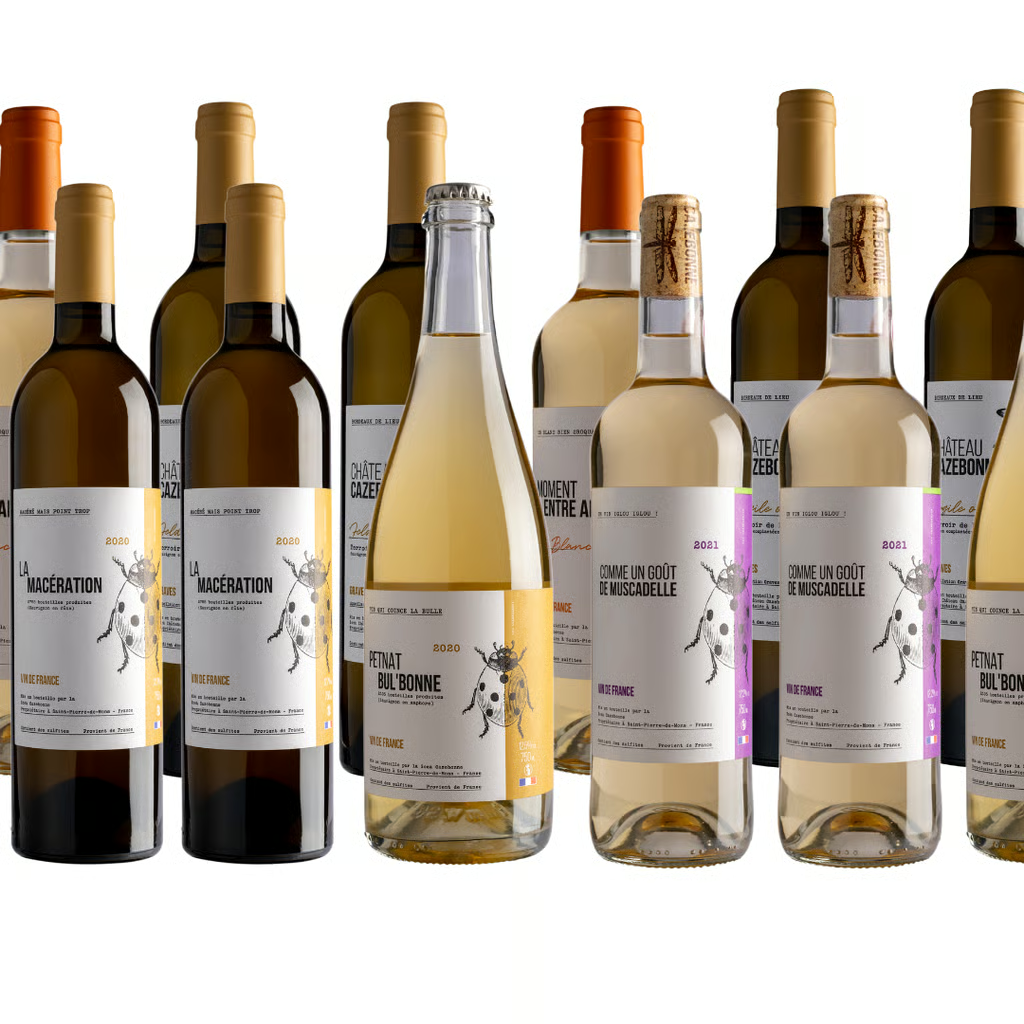 Go further
12 bottles — plot selection
All our organic whites together: the complete plot-by-plot flight.
To explore Sémillon in all its forms.
I want it