14 November 2019
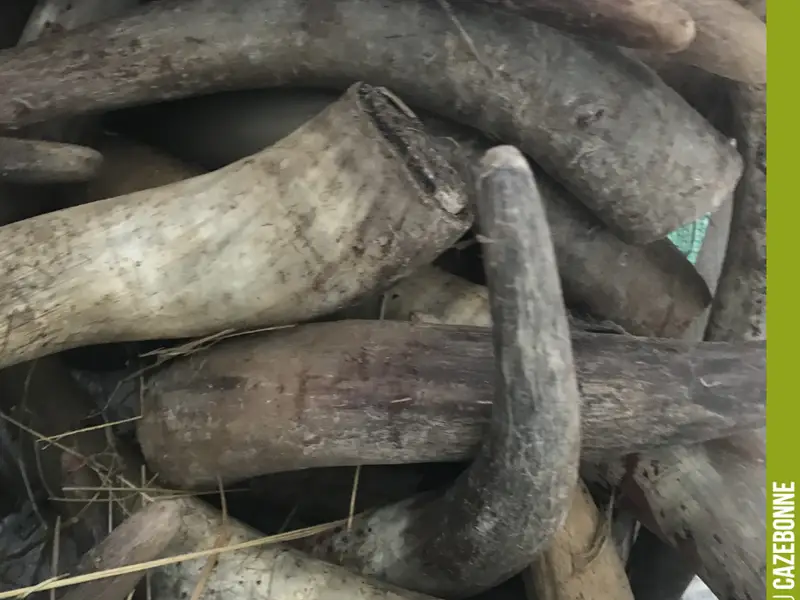
Shortage of horns in biodynamics to make preparation 500……Never mind, we travelled to Cantal to collect fresh Salers horns.
By Jean-Baptiste Duquesne

Star-of-Bethlehem
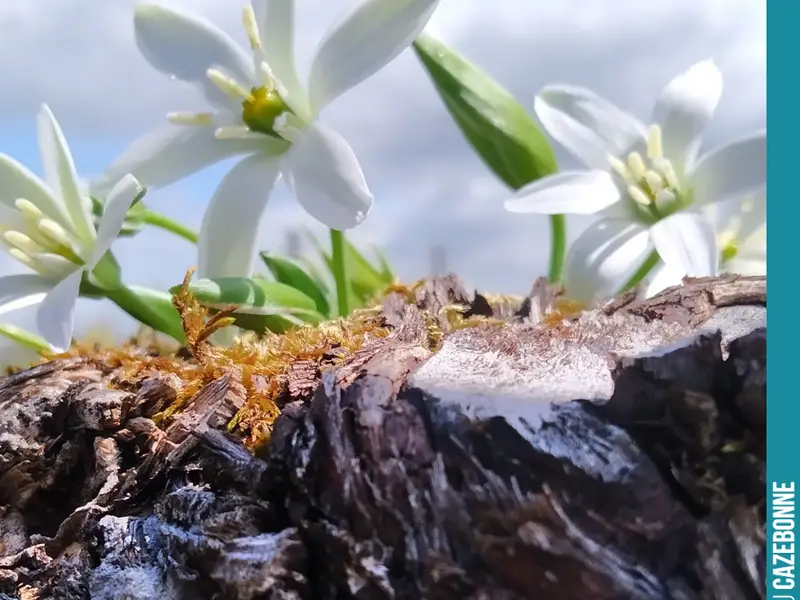
La Belle de Onze Heures, known scientifically as Ornithogalum umbellatum, is a perennial herbaceous plant that graces our vineyards at Château Cazebonne. Its common name evokes its unique characteristic: its white flowers generally open between ten and twelve o'clock in the morning and close at the end of the day, a daily cycle that illustrates the delicacy of this flower.
Visually, Ornithogalum umbellatum is distinguished by its six immaculate white petals, often striated with a green band on the reverse, forming a graceful star. The flowers are borne on a slender stem, generally measuring between 10 and 30 centimetres in height, and are grouped in loose corymbs. Its leaves are linear, fleshy, bluish-green and feature a fine white central line.
This plant follows a spring life cycle, flowering abundantly from March to May. Its presence coincides with key moments in the vineyard, such as bud break. At Cazebonne, we observe it mainly in plots where the soil is clay-loam, deep and well-drained, which is a testament to its vitality. These ideal conditions promote its development, particularly on our Cazebonne hillocks where pebbles surface.
Ornithogalum umbellatum plays a significant ecological role in our vineyard ecosystem. Its early flowering makes it an essential source of nectar and pollen for many pollinating insects, notably bees and other foraging insects, which are crucial for biodiversity. Serving as an indicator of living soil health, it confirms to us that our biodynamic and organic farming practices are beneficial.
The interaction of this flower with the vine is neutral, or even beneficial. It does not compete directly with the vine for nutrients or water as it flowers and completes its cycle before the vine's needs peak. On the contrary, by attracting pollinators and participating in the good structure of the soil's humus, it indirectly contributes to the vigour of our vines.
In practical terms, at Château Cazebonne, the abundance of La Belle de Onze Heures is a wonderful confirmation of the richness of our terroirs. It is one of the many floral species that contribute to the life of our plots, underlining our commitment to a diverse and resilient vineyard. It is the visible reflection of our philosophy of respecting natural cycles and the meticulous work we carry out, from vine pruning to vinification.
At Château Cazebonne, we are committed to preserving this flora and fauna, a task that aligns with our approach of replanting forgotten Bordeaux grape varieties. Our passion for biodiversity and authentic flavours is found in every bottle, crafted thanks to the support of enthusiasts who choose to adopt our wines. Discover our history and our methods by downloading our book "Bordeaux, une histoire de cépages" and test your knowledge of the wine universe with our oenological quizzes.
14 November 2019
By Jean-Baptiste Duquesne
26 April 2019
By Jean-Baptiste Duquesne
The cellar, forgotten grape varieties and our cuvées, twice a month. 5% off your first order with the code BIENVENUE.