← All topics

The 2025 Vintage in Bordeaux: Between Weather Challenges and Terroir Potential

Weather Conditions for the 2025 Vintage in Bordeaux

The 2025 growing season in Bordeaux was shaped by climatic events that defined the profile of the vintage. Following the vegetative cycle, crucial for vine development, the harvest period experienced a significant spell of rain. Recorded data shows that 25 mm of rain fell on 29 August, followed by 20 mm on 1 September, bringing the total to 49 mm over this pivotal week. This rainfall had a notable impact on vine physiology and grape ripening, directly influencing the quality and style of the wines crafted. To better understand the impact of weather on the vineyard, explore our section dedicated to vineyard weather.

Profile and Typicity of the 2025 Wines

White Wines

The 2025 white wines were characterised by their early harvest. The white grape varieties, notably Sauvignon and Sémillon, were picked on 27 and 28 August, just ahead of the rain. Harvesting early made it possible to preserve the freshness and aromatic balance of the grapes. The preliminary blends suggest a predominance of Sémillon, delivering aromas of yellow fruit and ripe apricot, complemented by the balance and acidity of Sauvignon. The white wine from this vintage promises breadth, richness, and the vibrant freshness characteristic of great Graves whites.

Red Wines

The 2025 red wines, meanwhile, benefited from the late August and early September rains. This rainfall contributed to a remarkable balance, yielding generous, fruit-forward wines. Merlot, in particular, looks very promising, displaying fruity and spicy notes, good structure, and an appealing roundness. This vintage will produce delicious red wines to be enjoyed in their youth, not necessarily intended for very long cellaring, but offering immense drinking pleasure. To learn more about how our red wines are made, visit our page on red winemaking.

The 2025 Vintage at Château Cazebonne

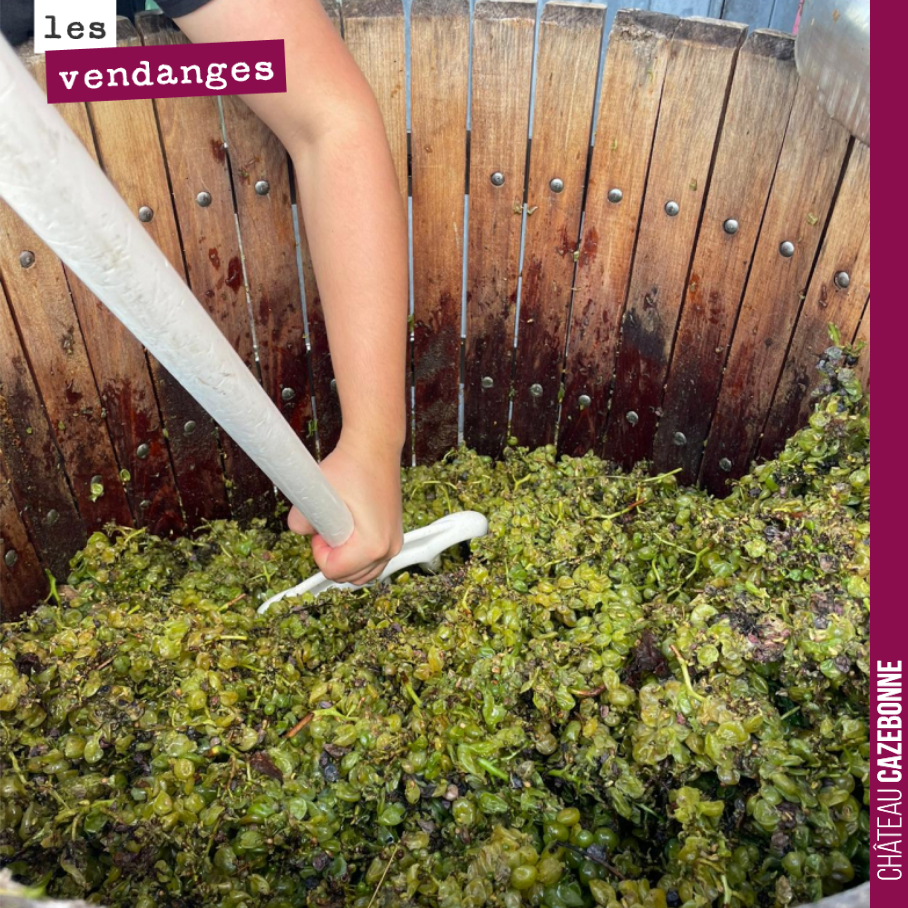
At Château Cazebonne, the 2025 harvest began as early as 27 August with the Sauvignon from the Peyron and Cazebonne parcels, followed by Bouché. Over the following days, we continued with the Sémillons from Cazebonne and Peyron, as well as the Sauvignon Gris from the Médecine parcel. The rains on 29 August and 1 September (a total of 49 mm) refreshed the vineyard and aided the ripening of the red grapes.
On 3 September, the Sauvignon Mazères was harvested. From 10 September, we picked the Merlots from Darche and Peyron, before moving on to historic grape varieties such as Bouchalès, Castets Darche, Jurançon Noir, and Mérille, along with several forgotten white varieties. On 15 September, the Blanc Auba was brought in. From 17 September, the Merlots from Cazebonne, the Malbecs from Couet, Maine, and Peyron, as well as varieties such as Béquignol, Penouille, Pardotte, Petit Péjac, Castets, and Jurançon Noir were harvested. A special vat was prepared with the Malbec Peyron and Merlot, and another with the Malbec Maine and Castets. Harvesting continued on 24 September with the Cabernet Sauvignon from Cazebonne, the Saint-Macaire from Maine, and the reds from Mazères, followed by the Cabernet Sauvignon from Peyron. On 26 September, the Saint-Macaire was harvested, and finally, 29 September brought the harvest to a close with Mancin, Petit Verdot, Gros Verdot, Carménère, and Bouchalès Maine. This diverse vintage reflects the estate's commitment to varietal diversity, including numerous forgotten grape varieties. This meticulous selection work enables Château Cazebonne to craft unique wines, vintage after vintage.

At Château Cazebonne, we are dedicated to replanting lost grape varieties in Bordeaux, contributing to the region’s ampelographic heritage. This long-term endeavour and philosophy are made possible by the invaluable support of wine lovers who have embraced our wines and share our vision. To learn more about this fascinating story, feel free to download our book “Bordeaux, a history of grape varieties”. To test your knowledge and discover even more about the world of wine, we invite you to take our wine quizzes, an enjoyable way to explore the secrets of wine. And to support our journey and discover the fruits of this hard work, we encourage you to explore our wines online and become part of this viticultural renaissance.

Sources

  • Le Grand Vin 2025 - Graves rouge - En primeur — Château Cazebonne, Château Cazebonne
  • Castets-Bouchalès 2025 - En primeur — Château Cazebonne, Château Cazebonne
  • Le Grand Vin 2025 - Graves blanc - En primeur — Château Cazebonne, Château Cazebonne
  • Comme en 1900 blanc 2025 - IGP Atlantique - En primeur — Château Cazebonne, Château Cazebonne
  • Bordeaux, une histoire de cépages — Jean-Baptiste Duquesne, BBD — Partie 21
  • Bordeaux, une histoire de cépages — Jean-Baptiste Duquesne, BBD — Partie 16

Related news

2025 Bordeaux from barrel

L'article présente une analyse détaillée du millésime 2025 des vins de Bordeaux, basé sur des dégustations en barrique réalisées en avril 2026, ainsi que des dégustations du millésime 2023. L'auteur a dégusté plus de 300 vins du millésime 2025 et plus de 50 du millésime 2023. La saison de croissance 2025 a été marquée par un hiver doux et pluvieux, un printemps chaud favorisant un débourrement et une floraison homogènes, et un été très chaud avec plusieurs canicules et de longues périodes de sécheresse. Les pluies de fin août ont été cruciales pour la maturation des raisins, permettant d'atteindre une maturité phénolique satisfaisante. Les nuits fraîches ont contribué à maintenir des niveaux d'alcool modérés. Les vignobles avec des sous-sols calcaires et argileux ont mieux résisté à la sécheresse. Les rendements ont été historiquement bas, atteignant seulement 2,29 millions d'hectolitres, le plus faible en 34 ans, avec des appellations comme Pomerol et Margaux enregistrant respectivement 25 hl/ha et 30 hl/ha. Les conditions sanitaires des vignes étaient excellentes, sans problèmes de gel, de grêle ou de mildiou. Les meilleurs vins rouges du millésime 2025 sont décrits comme concentrés, avec des fruits expressifs, une belle structure et un bon équilibre, offrant une finale longue et envoûtante. Ils présentent une acidité prononcée et des tanins variés. Le millésime 2025 se distingue par sa fraîcheur et sa concentration, partageant des similitudes avec les millésimes 2020 et 2023. La qualité des vins rouges varie, les grands châteaux ayant mieux géré les défis climatiques. Les régions de Graves/Pessac-Léognan, St. Émilion, Pomerol, St. Julien et Pauillac ont produit des vins particulièrement réussis. Les vins blancs secs et liquoreux, notamment de Sauternes et Barsac, sont également très réussis, grâce à des conditions idéales. L'auteur exprime sa gratitude envers les propriétaires et vignerons tout en déplorant un manque d'attention perçu lors de certaines visites à Pomerol. Parmi les vins dégustés, l'auteur mentionne le Château Lafleur et Pensées de Lafleur, louant leur potentiel et leurs qualités aromatiques.

Read the source

Our suggestions

Treat yourself

-5%on your 1st order with code BIENVENUE

6 × Le Grand Vin redThe essential92/100 RVF

6 × Le Grand Vin red

6 bottles — Graves red 2022, 92/100 RVF

Rated 92/100 by La Revue du vin de France: a solid 10-year ageing potential.

Our Graves for ageing, the finest gateway to the estate.

I want it
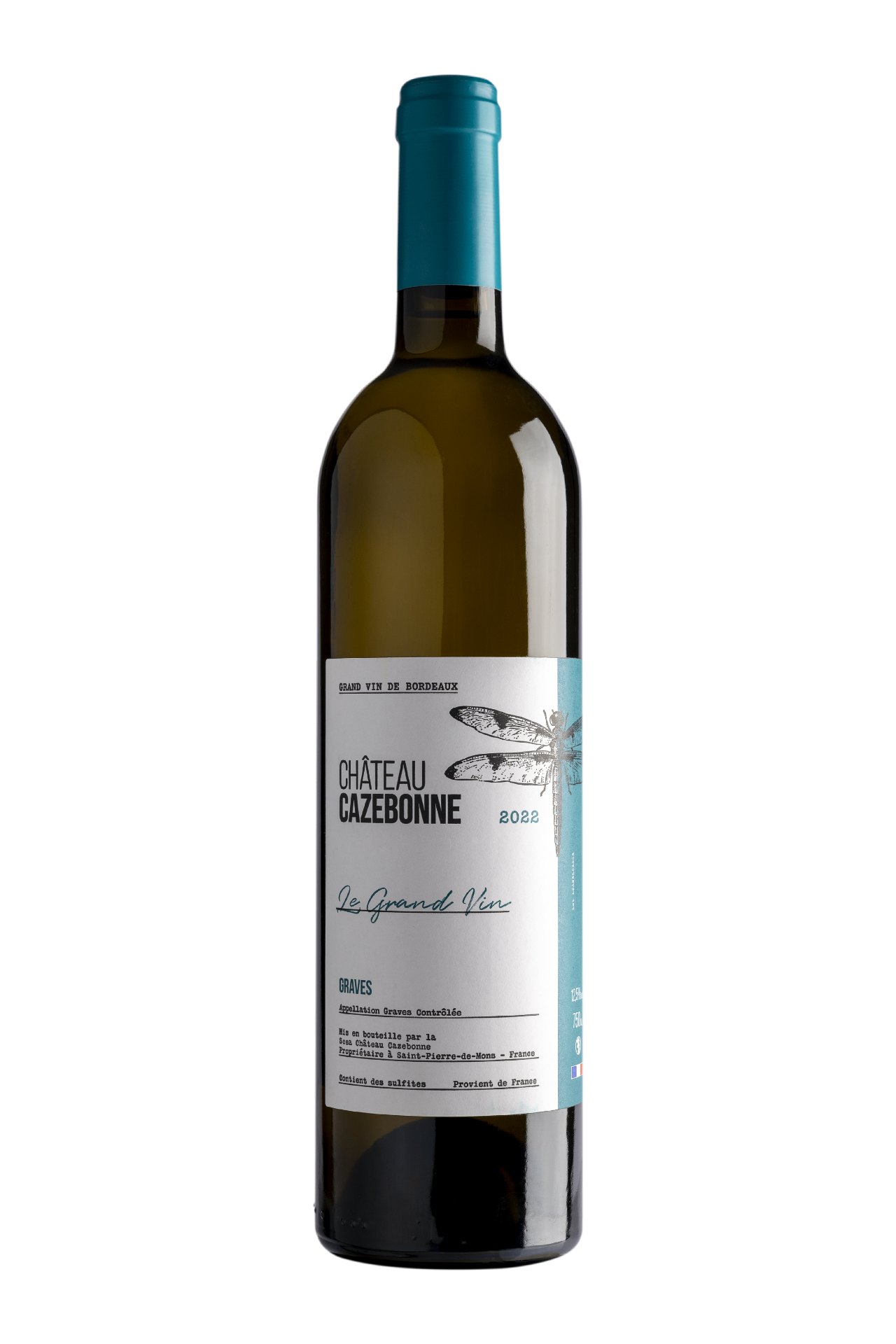
Le Grand Vin white 2022Our recommendation92/100 RVF

Le Grand Vin white 2022

Graves white 2022, 92/100 RVF

Rated 92/100 by La Revue du vin de France: old-vine Sémillon.

The great Graves white: taut and deep.

I want it
Case of 6 redsGo further

Case of 6 reds

6 bottles — Graves & Bordeaux

Six organic reds to compare the estate's plots.

The reds discovery, short format.

I want it

News from the estate

The cellar, forgotten grape varieties and our cuvées, twice a month. 5% off your first order with the code BIENVENUE.

I am:

Built by

... by Good Morning AI

Websites, marketing and automation for winegrowers.