The essential
6 × Entre Amis red
6 bottles — Graves red 2022
The best price of the cellar: €12 per bottle delivered.
The everyday red: generous and straight to the point.
I want itMint
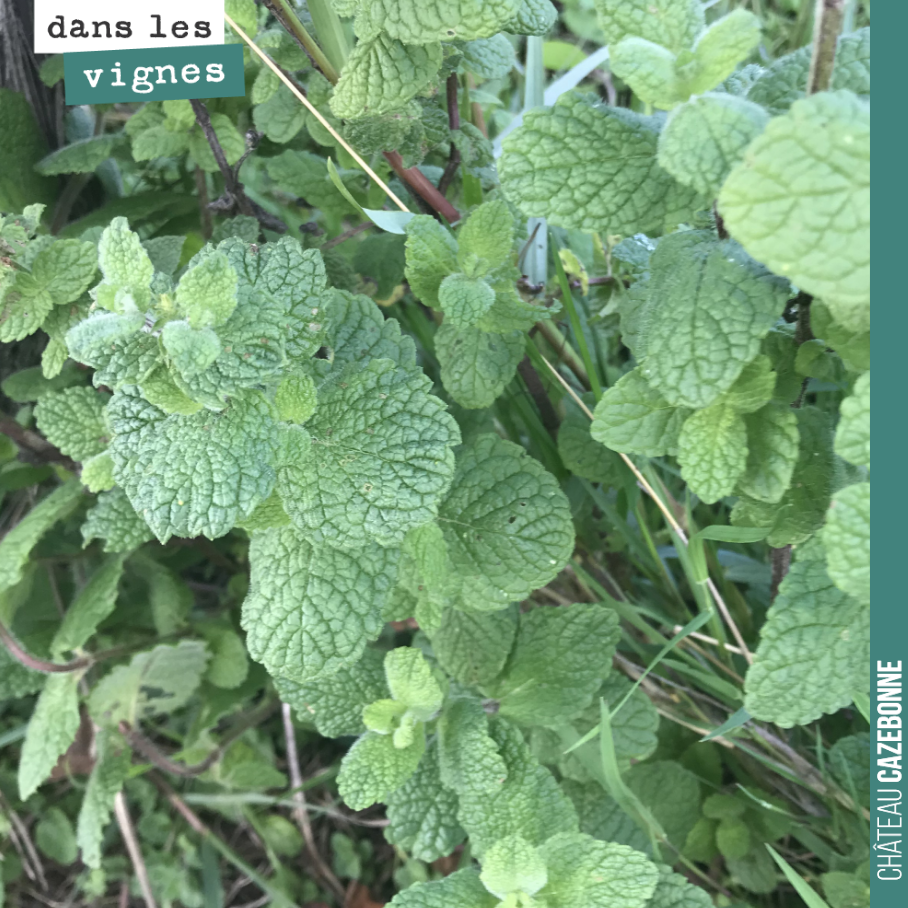
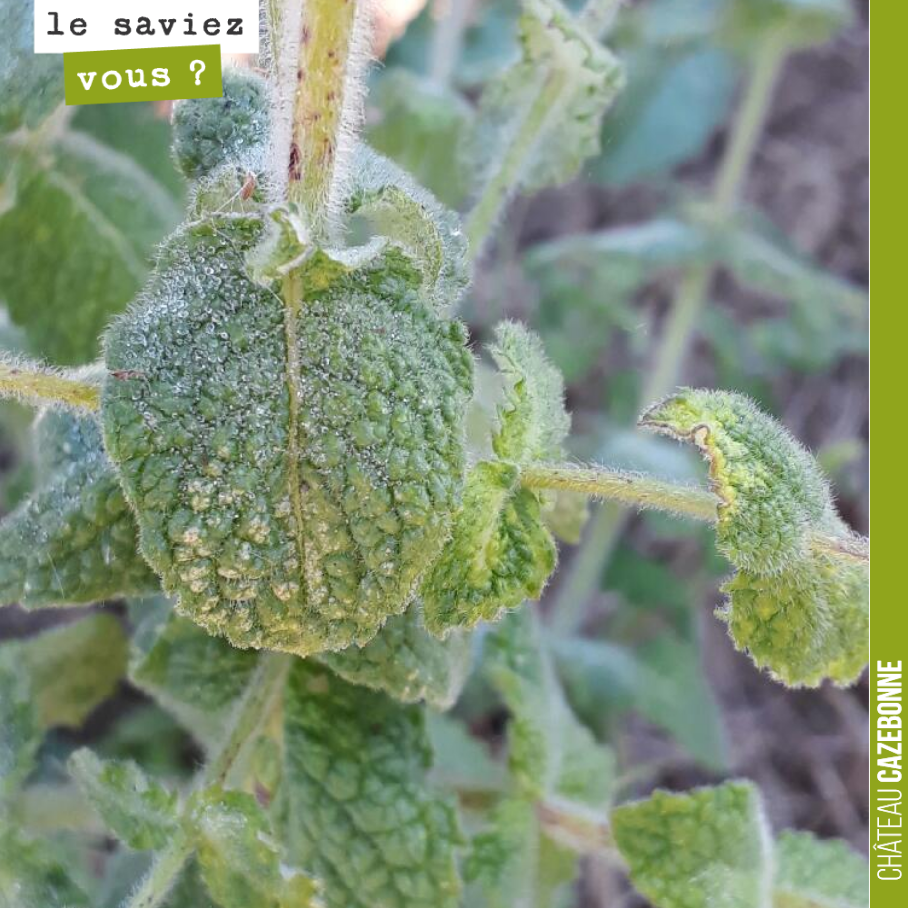
At the heart of our vineyard plots, amidst the carefully maintained vines, one can sometimes detect the discreet yet significant presence of a plant with unexpected virtues: mint. This aromatic herb, belonging to the vast Lamiaceae family, appears in various species, each bringing its own special touch to the biodiversity of our soils. With its intensely fragrant leaves and small flowers, it is a precious guest in our living soils.
Mint (genus Mentha), particularly peppermint (Mentha piperita), is characterised by quadrangular stems, opposite, oval or lanceolate leaves that are often toothed, and flowers usually grouped in terminal spikes. Its growth often forms dense carpets thanks to its rhizomes, reaching a height of 30 to 90 centimetres. Leaf colour varies from light to dark green, sometimes with purplish reflections.
A perennial plant, mint establishes its life cycle in the vineyard by emerging in spring, offering lush foliage in summer before partially dying back in winter. Its resilience allows it to persist from year to year, continually enriching the soil. You can observe it in freshly tilled areas or along the edges of the plots where it prefers cool, moist soils, but it also adapts to the drier conditions of the vineyard, notably on the Graves soils.
Beyond its characteristic aroma, mint plays a multifunctional ecological role. Its roots contribute to soil aeration and structure, while its dense foliage helps maintain moisture and limit the growth of other less desirable weeds. Furthermore, its flowering attracts numerous pollinating and beneficial insects, such as bees and hoverflies, which are highly beneficial to the vineyard's ecosystem and overall biodiversity.
In our sustainable viticulture approach at Château Cazebonne, we observe that mint does not harm the vines. On the contrary, it indicates a healthy soil and contributes to a favourable microclimate. Its aromatic compounds can even have a repellent effect on certain pests, thus reducing the pressure on the vines. We notice that where mint is present, soil vitality and the balance of insect populations are often better, perfectly aligning with our agroecology philosophy.
This long-term, passionate, and meticulous work for the biodiversity and life of our soils is only possible thanks to the invaluable support of all wine lovers. To find out more about the fascinating history of the forgotten grape varieties of Bordeaux and our commitment, we invite you to download the digital version of the book "Bordeaux, une histoire de cépages". You can also test your oenological knowledge with our quizzes, and discover the unique expression of our terroirs and our rediscovered grape varieties by visiting our online shop.
Sources
Our suggestions
-5%on your 1st order with code BIENVENUE
The essential6 bottles — Graves red 2022
The best price of the cellar: €12 per bottle delivered.
The everyday red: generous and straight to the point.
I want it Our recommendation92/100 RVF
6 bottles — Graves red 2022, 92/100 RVF
Rated 92/100 by La Revue du vin de France: a solid 10-year ageing potential.
Our Graves for ageing, the finest gateway to the estate.
I want it Go further
12 bottles — the whole range
12 bottles, the whole range tasted: the best discovery-to-price ratio.
The complete tour of the estate, in a single case.
I want itThe cellar, forgotten grape varieties and our cuvées, twice a month. 5% off your first order with the code BIENVENUE.