
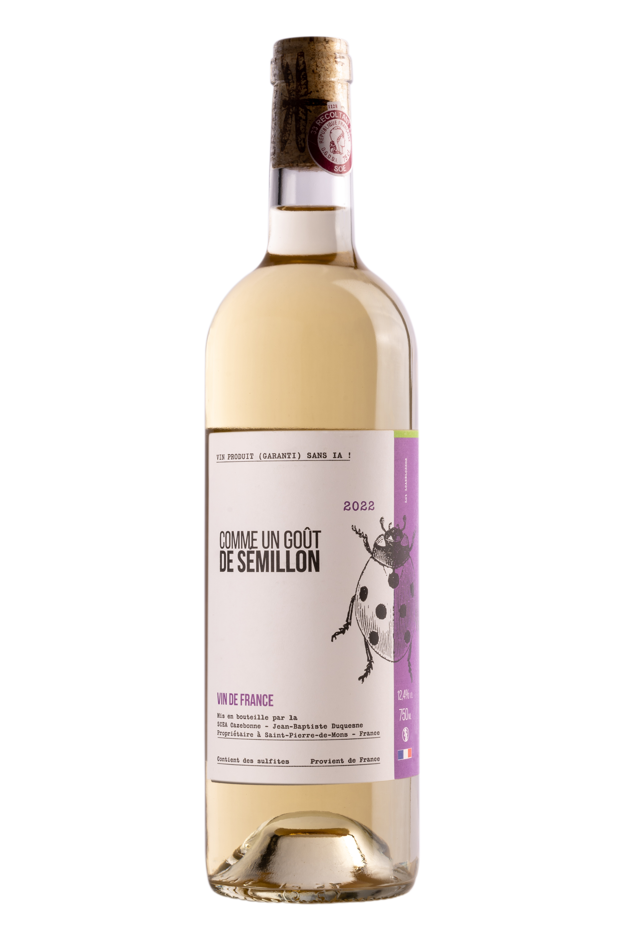
 The essential
Comme un goût de Sémillon 2022
Sémillon — skin contact
Skin-contact Sémillon: the grape skin in your glass.
A characterful white for curious palates.
I want itNatural Bordeaux wine
The term "natural wine" (vin nature), although open to multiple interpretations and lacking a single legal definition, embodies a production philosophy resolutely focused on authenticity. It advocates minimal intervention, both in the vineyard and in the cellar, keeping human input and additives to an absolute minimum. At Château Cazebonne, we proudly embrace this dynamic that is redefining the contours of Bordeaux wine, offering vibrant, living wines that are a sincere reflection of our terroir.
Natural wine stands out through a holistic approach, prioritising soil life and the purest expression of the grape. It involves organic or biodynamic viticulture, free from synthetic chemicals, and low-intervention winemaking. This includes spontaneous fermentation with indigenous yeasts, no chaptalisation or acidification, and very limited—if any—use of added sulphites. The aim is to let nature take its course, thereby revealing the profound identity of the terroir and the vintage. It is an approach that goes beyond standard certification specifications, seeking the intrinsic authenticity of the wine.
Producing wines with no added sulphur poses significant technical challenges, particularly in a region like Bordeaux where grape ripeness profiles can often lead to naturally high pH levels (above 3.7). A high pH increases the wine's susceptibility to oxidation and spoilage micro-organisms, making sulphur-free winemaking particularly perilous. Some winemakers choose to harvest earlier to achieve lower pH levels, but this can compromise the phenolic and aromatic ripeness of the grapes, altering the desired profile of the wine. At Château Cazebonne, we prioritise full grape ripeness, which is essential to expressing our terroir. This approach leads us to accept, for certain cuvées, a measured use of sulphur—far below conventional and even organic limits—to ensure the stability and integrity of our wines while respecting their living character. We nevertheless offer no-added-sulphur cuvées, the result of rigorous selection and advanced technical mastery, such as our Pet'Nat' de Cazebonne.
Our approach is part of a broader living wine movement, where respect for terroir and biodynamics are paramount. We work to foster living soils and explore the potential of historic, forgotten Bordeaux grape varieties to enrich our aromatic palette and enhance resilience to climate change. It is in this same spirit that the Bordeaux Pirate movement operates.
The replanting of these forgotten grape varieties is a long-term project at Château Cazebonne, made possible thanks to the unwavering support of the many wine enthusiasts who have embraced our wines. It is through your trust that we can continue to innovate and preserve this precious viticultural heritage. To delve deeper into the fascinating history of Bordeaux grape varieties and the living wine movement in Bordeaux, we invite you to download the digital version of the book "Bordeaux, une histoire de cépages", published by Éditions BBD and written by Jean-Baptiste Duquesne. You can also test your knowledge and learn more about wine with our wine quizzes, or simply discover our cuvées and support our approach by visiting our online shop.
Sources
Our suggestions
-5%on your 1st order with code BIENVENUE
The essentialSémillon — skin contact
Skin-contact Sémillon: the grape skin in your glass.
A characterful white for curious palates.
I want it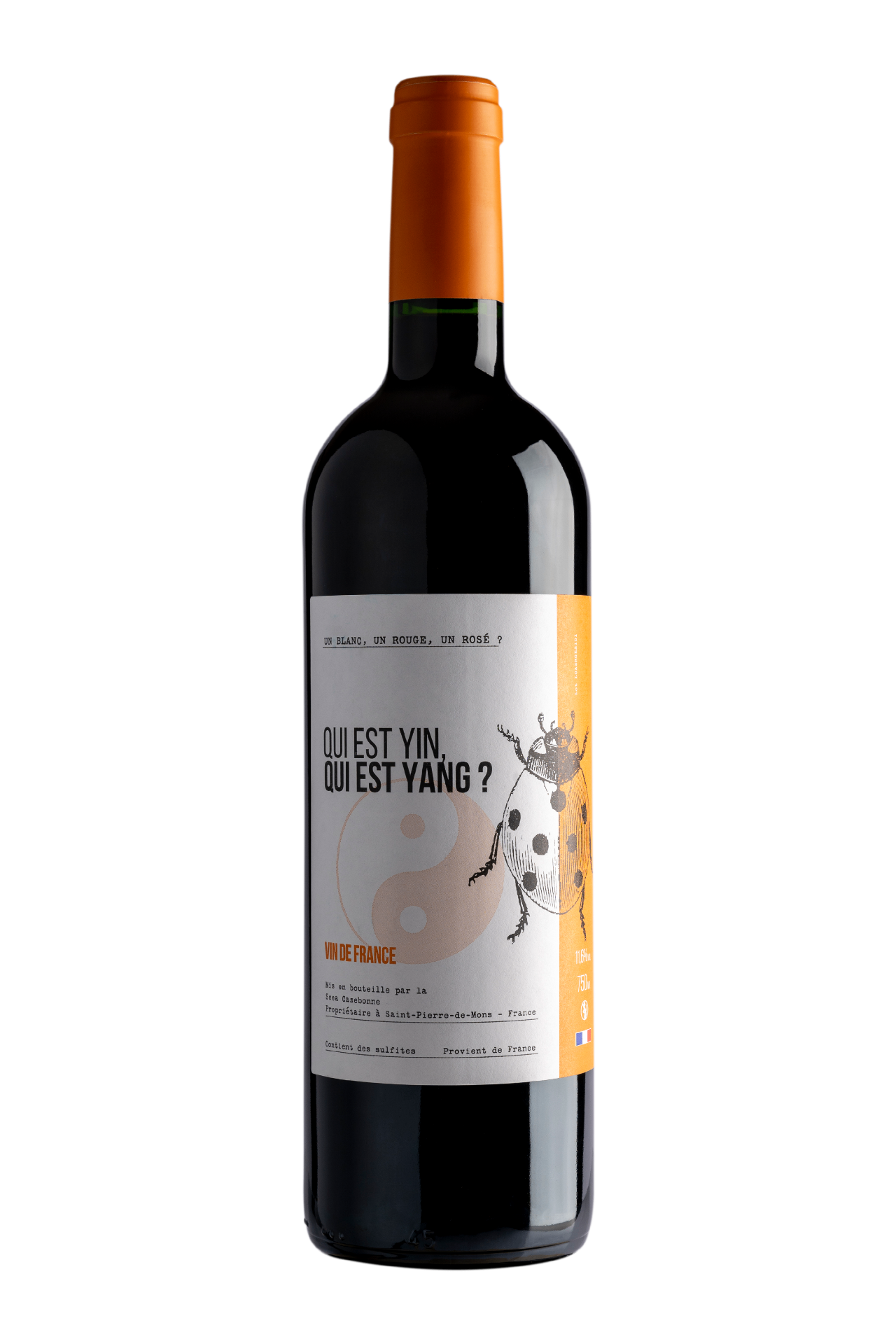 Our recommendation
Vin de France — a duo of plots
Two vinifications, one terroir: a comparative tasting in a bottle.
The wine made to be tasted side by side.
I want it Go further
12 bottles — the whole range
12 bottles, the whole range tasted: the best discovery-to-price ratio.
The complete tour of the estate, in a single case.
I want it
14 September 2026
**Letting go or letting nature take its course?** _Insights into our winemaking at Cazebonne_, where we do not go so far as making natural wine. We explain why in this article. #NaturalWine #ChateauCazebonne
By Jean-Baptiste
The cellar, forgotten grape varieties and our cuvées, twice a month. 5% off your first order with the code BIENVENUE.