24 February 2019
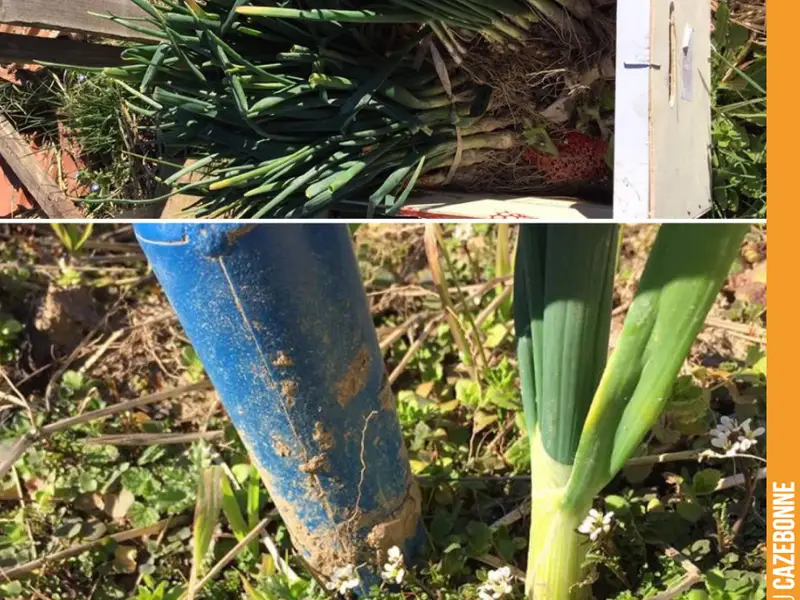
Yesterday, Francis took advantage of a root day to transplant onions in the Jardin des vignes……The garlic he planted during the winter is thriving and growing very quickly with the temperatures of the last.
By Jean-Baptiste Duquesne

Onion
At Château Cazebonne, the onion (Allium cepa), an ancestral vegetable plant from the Amaryllidaceae family, is not just a condiment. Its long history, which began over 5,000 years ago in Central Asia, makes it a symbol of resilience and adaptation. Its versatile bulb, leaves and edible flowers fit perfectly into our agroecological approach, where the vegetable garden and the vineyard coexist in harmony.
The multiple protective layers of the onion, evoking perseverance and hidden wealth, illustrate the philosophy of Château Cazebonne. We strive for sustainable development that respects the terroir and rehabilitates forgotten agricultural practices. Growing onions between the rows, a once-common method brought up to date by Francis's project, underlines our commitment to integrated agriculture that is mindful of biodiversity. This approach is a continuation of Bordeaux's winemaking history, where diversity and adaptability are fundamental pillars in facing climatic and environmental challenges.
Just as the onion reveals its flavours layer by layer, we are dedicated to reviving Bordeaux grape varieties that had almost disappeared from the viticultural landscape. This long-term work is supported by a community of passionate enthusiasts, whose informed choices and commitment are the driving force behind this wine renaissance. These exceptional wines, the result of our research and perseverance, are the reflection of a rediscovered and enhanced terroir.
The integration of onions into our vineyards, as in the Jardin des Vignes, offers several benefits for the health of the soil and the vine. The onion has natural repellent properties against certain pests, contributes to biodiversity and participates in the overall ecological balance of our ecosystem. Its cultivation also promotes a living soil by improving its structure and stimulating microbial activity, which are essential elements for sustainable viticulture. Furthermore, it is an excellent companion for other market garden crops such as carrots or tomatoes.
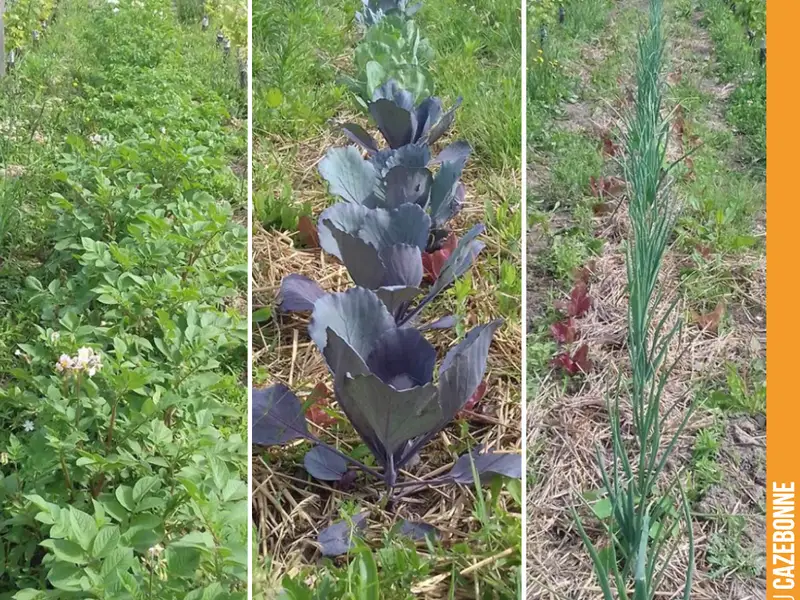
The onion, which has a rich botanical history, was one of the first plants cultivated by man. It is found in the Egyptian, Greek and Roman civilisations, which appreciated its nutritional and medicinal qualities. Over the centuries, it spread throughout the world, becoming an essential ingredient in many cuisines. A former companion of the vineyards, particularly in polyculture systems such as joualle cultivation, it is now being reintroduced for its ecological benefits and its role in agricultural diversification, alongside crops such as garlic and cabbage.
Château Cazebonne is committed to preserving and promoting Bordeaux's viticultural heritage by replanting grape varieties that had disappeared. This long-term work is made possible thanks to the support of wine lovers who have chosen to adopt our wines. To learn more about the fascinating history of Bordeaux grape varieties, you can download the digital version of the book "Bordeaux, une histoire de cépages". Feel free to also test your knowledge with our oenological quizzes, or discover our exceptional wines directly in our online shop.
24 February 2019
By Jean-Baptiste Duquesne
02 February 2019
By Jean-Baptiste Duquesne
25 June 2018
By Jean-Baptiste Duquesne
The cellar, forgotten grape varieties and our cuvées, twice a month. 5% off your first order with the code BIENVENUE.