09 May 2019
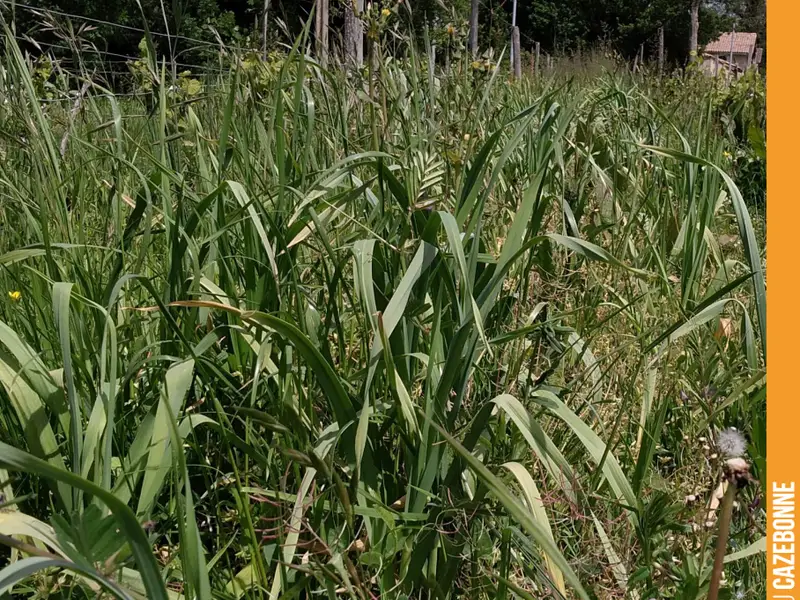
Admittedly, the garlic is a bit overgrown with grass, but it's going to be delicious and organic!
By Jean-Baptiste Duquesne

Market Gardening
At Château Cazebonne, the Jardin des Vignes is a pioneering initiative that reintroduces an ancient and beneficial practice: market gardening right within the vineyard plots. Once common under the name of "joualles" or "contre-cep" in the Bordeaux region, this polyculture was a pillar of local agriculture until the transformations of the 1950s. It provided remarkable food self-sufficiency, with each plot being utilised to its maximum potential.
The integration of market gardening crops into the vineyards, far from being a mere nostalgic reminiscence, is an approach resolutely focused on the future. It aims to recreate natural synergies, where vegetables benefit from the protective shade of the vines and the retained moisture, while the vines benefit from an improved microclimate and increased biodiversity. This plant diversity contributes to the biodiversity and resilience of the vineyard ecosystem, fostering beneficial interactions between the plants and the soil. It is a concrete illustration of agroecology in viticulture, helping to maintain living soils that are fertile by limiting their erosion and improving their structure.
At the Jardin des Vignes, a wide variety of vegetables are cultivated. Among them, garlic, onions, lettuce, tomatoes, potatoes, and even cabbage grow alongside the vines. These diversified crops are not solely intended for human consumption; they also play a crucial role in the health of the vineyard. Some plants, with their deep roots, decompact the soil, while others attract beneficial auxiliary insects that participate in the natural regulation of pests. The choice of species is also guided by their compatibility with the vine's cycle, ensuring a harmonious coexistence and an optimised use of resources.
This project is fully in line with Château Cazebonne's overarching vision of sustainable and environmentally friendly viticulture. It highlights the importance of the forgotten grape varieties of Bordeaux and the region's extraordinary ampelographic diversity, themes explored in depth in the book "Bordeaux, une histoire de cépages". By reviving these ancestral practices, we are creating a more integrated and resilient viticulture model. The estate's winegrowers follow an approach inspired by biodynamics, using specific and carefully applied preparations to strengthen the vitality of the soil and plants.
We are proud of this project, which demonstrates that innovation can also mean returning to our roots. Château Cazebonne is committed to replanting grape varieties that have disappeared from our winegrowing landscape, a task made possible thanks to the support of enlightened enthusiasts who, by savouring our cuvées available in our shop, contribute to this renaissance. To delve deeper into these themes, we invite you to download our book "Bordeaux, une histoire de cépages" or to test your knowledge with our oenological quizzes on the subject.
Sources
09 May 2019
By Jean-Baptiste Duquesne
01 May 2019
By Jean-Baptiste Duquesne
27 April 2019
By Jean-Baptiste Duquesne
The cellar, forgotten grape varieties and our cuvées, twice a month. 5% off your first order with the code BIENVENUE.