The essential
6 × Entre Amis red
6 bottles — Graves red 2022
The best price of the cellar: €12 per bottle delivered.
The everyday red: generous and straight to the point.
I want itPruning shears
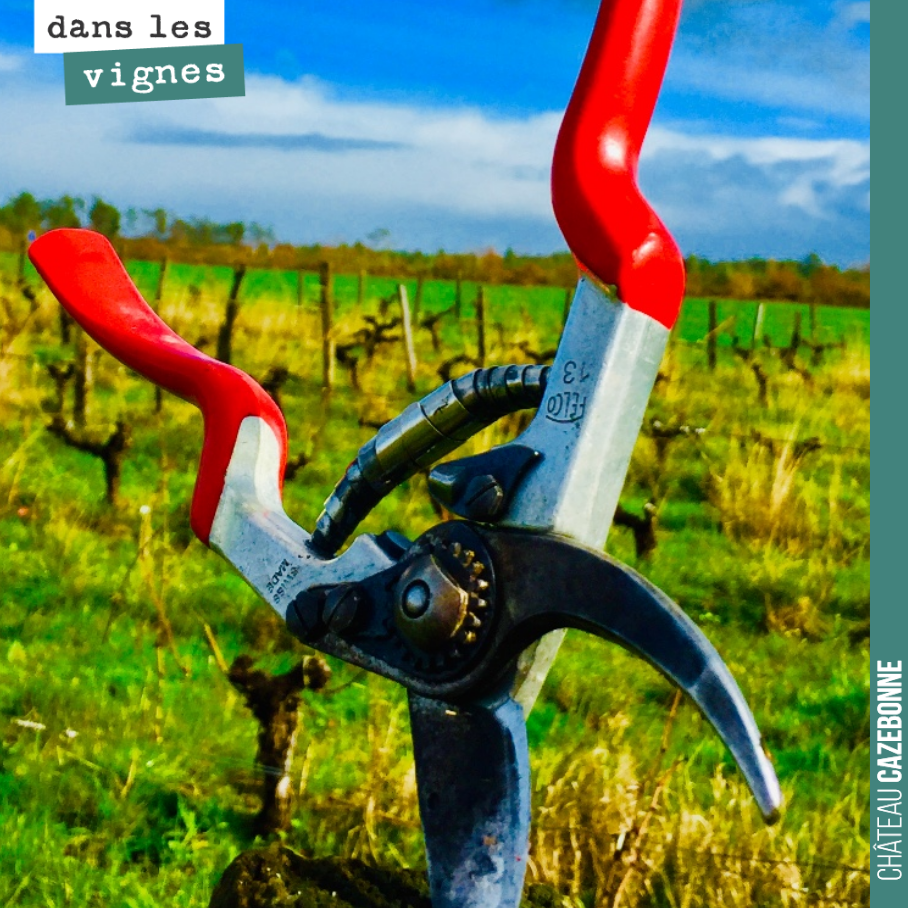
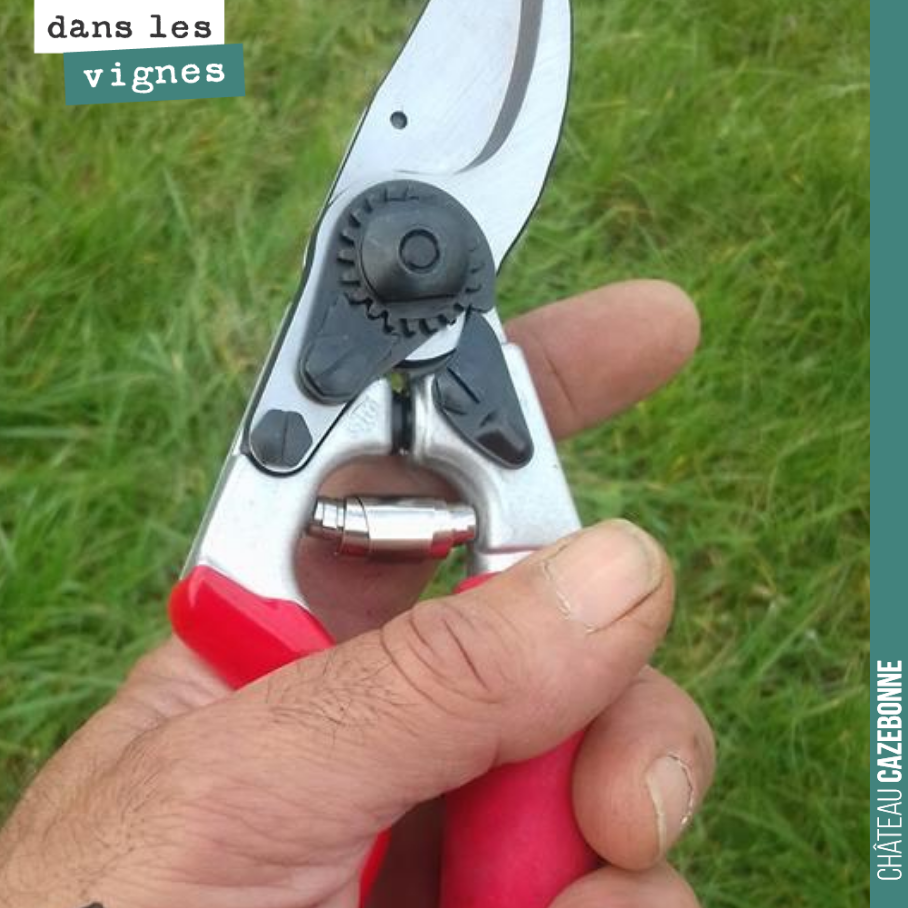
At the heart of the winegrower's arsenal, secateurs prove to be much more than a simple cutting instrument; they are the expert extension of the hand, the fundamental tool that shapes the future of the vine. Their blade, whether bypass or draw-cut, defines the destiny of the vine shoots, precisely guiding the plant's growth and determining the potential of the coming harvest.
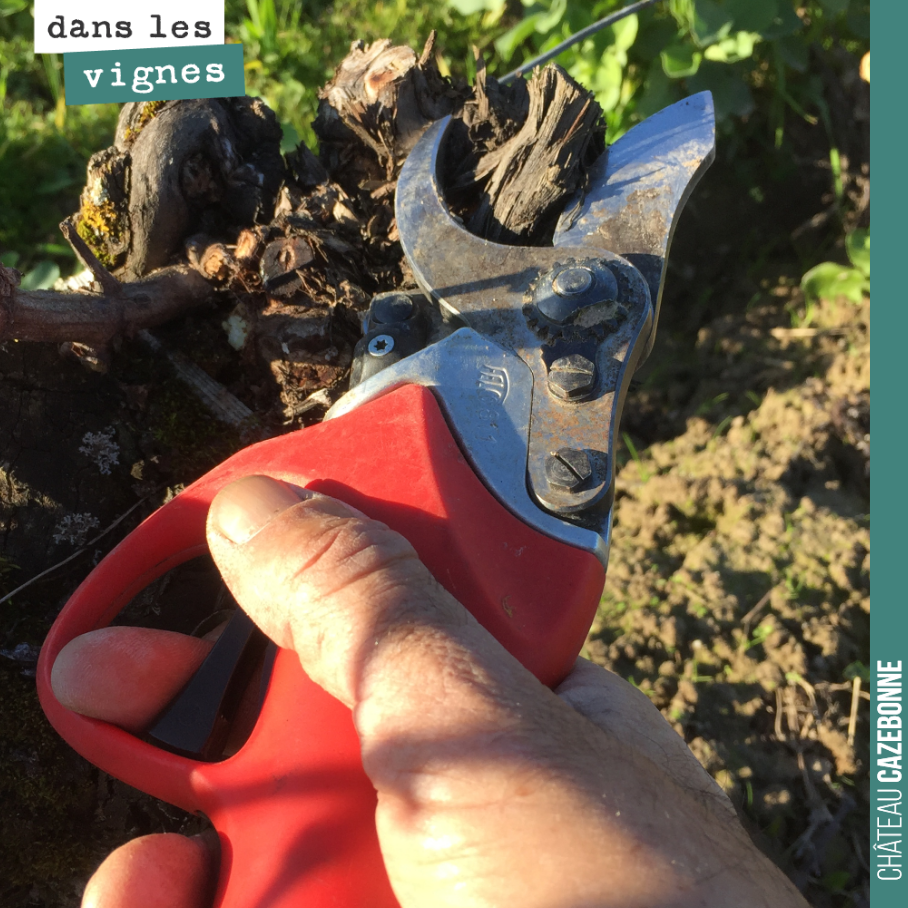
Winter pruning, carried out with meticulous care, is undoubtedly the most crucial step for the production of future great wines. It is at this precise moment that the secateurs come into action, allowing the lignified shoots from the previous year to be cut. The winegrower carefully selects the "woods" that will bear the buds, the promise of the next harvest. This precise gesture is decisive: it controls the vigour of the vine, balances its fruit load and ensures the quality and concentration of the berries. Masterful pruning is a commitment to the harmony of the plant and the purest expression of its terroir. There are different types of secateurs, the choice of which depends on the pruner's hand and the pruning method used (Guyot, Cordon de Royat, etc.), all designed for clean cuts that promote rapid healing and limit the risk of wood diseases.
The ideal time for pruning generally coincides with the vine's period of winter dormancy, from November to March, once the sap has descended back into the roots. This winter window is essential to minimise the flow of sap, a phenomenon known as "vine bleeding", which could weaken the vine if pruning were carried out too late, just before budburst. The precision of the cuts and the respect of these periods ensure better healing of the shoots and optimal preparation of the vine for the coming vegetative cycle.
While the manual version remains the icon of tradition, evolution has given rise to electric secateurs, which considerably alleviate the physical strain of the work, especially over large areas, while guaranteeing a regular and precise cut. These technological developments perfectly illustrate the constant search for balance between respecting ancestral practices and integrating innovations that make the winegrower's daily life easier, without ever compromising the quality of the work carried out on the vine.
This model is characterised by a sharp blade that slides along a thick, curved counter-blade, acting as a vise. It is ideal for cutting dead or hard wood, but it can crush the tissues of green wood if it is not perfectly sharpened, which can hinder healing.
Equipped with two crossing blades, these secateurs offer a clean and precise cut, minimising the crushing of the wood fibres. They are preferred for cuts on living wood and for fine pruning, as they promote better healing and limit entry points for diseases.
At Château Cazebonne, the secateurs are symbolically the tool of our ambition. It is with this same precision and this desire to reveal the best that we are committed to replanting the historic grape varieties of Bordeaux, treasures of the past which, as highlighted in the book "Bordeaux, une histoire de cépages" by Jean-Baptiste Duquesne published by Éditions BBD, forged the identity of our region. Vineyard equipment, like the secateurs, makes this fascinating and demanding work possible, thanks to the unwavering support of the many wine lovers who have embraced our wines and share our vision. Their loyalty allows us to persevere in this quest for renewal, combining tradition and innovation to bring an exceptional viticultural heritage back to life and create wines of unique typicity.
Delve deeper into the world of our forgotten grape varieties and their history by downloading the digital version of the book "Bordeaux, une histoire de cépages" via this link: find out more. To test your knowledge and refine your palate, feel free to explore our oenological quizzes. And of course, to discover the fruits of our labour and our passion, we invite you to visit our online shop.
Sources
Our suggestions
-5%on your 1st order with code BIENVENUE
The essential6 bottles — Graves red 2022
The best price of the cellar: €12 per bottle delivered.
The everyday red: generous and straight to the point.
I want it Our recommendation92/100 RVF
6 bottles — Graves red 2022, 92/100 RVF
Rated 92/100 by La Revue du vin de France: a solid 10-year ageing potential.
Our Graves for ageing, the finest gateway to the estate.
I want it Go further
12 bottles — the whole range
12 bottles, the whole range tasted: the best discovery-to-price ratio.
The complete tour of the estate, in a single case.
I want itThe cellar, forgotten grape varieties and our cuvées, twice a month. 5% off your first order with the code BIENVENUE.