
Château Fourcas Dupré
Updated on
Château Fourcas Dupré is a 46-hectare winegrowing estate in Listrac-Médoc, owned by Gérard Jicquel and managed by Lucas Leclercq. It produces red wines under the Listrac-Médoc AOC and white wines under the Bordeaux AOC from a gravel terroir.
Identity
Château Fourcas Dupré is a winegrowing estate located in the commune of Listrac-Médoc. General management is overseen by Lucas Leclercq, and the property is owned by Gérard Jicquel.
History and Philosophy
The history of vine growing at the "Fourcas" locality dates back to the early 13th century. The name "Fourcas Dupré" emerged in 1843 under the ownership of Maître Jean Antoine Dupré, an attorney at the Bordeaux Court of Appeal, who owned the Roullet cru. The Pagès family acquired the estate in 1970. In 2019, Gérard Jicquel bought the property. The estate is committed to an environmental approach, earning Haute Valeur Environnementale (HVE) Level 1 certification in 2019, with the goal of achieving Level 3 by 2023.
Appellations
Château Fourcas Dupré produces wines under the Listrac-Médoc appellation for its reds and under the Bordeaux appellation for its whites.
Practical Information
Château Fourcas Dupré is located at Lieu Dit Le Fourcas, 33480 Listrac-Médoc. The estate can be contacted by telephone on +33 (0)5 56 58 01 07 or by email at visite-boutique@fourcasdupre.com. Tours and tastings are available from Monday to Friday, 9 am to 6 pm, and on weekends by appointment. The estate offers paid tour-and-tasting experiences and welcomes groups (up to 25 people), with spoken languages including French, German, and English. Cellar-door sales are available on site. The estate has been awarded the Best Of Wine Tourism label.
Find Out More
Frequently asked questions
- Where is Château Fourcas Dupré located?
- Château Fourcas Dupré is established in the commune of Listrac-Médoc. Its vineyard enjoys a privileged setting on the Fourcas plateau, characterised by Pyrenean gravel.
- Who owns Château Fourcas Dupré and since when?
- Château Fourcas Dupré is owned by Gérard Jicquel, who acquired the estate in 2019. Lucas Leclercq serves as the general manager.
- Which appellations are produced at Château Fourcas Dupré?
- The estate produces red wines under the Listrac-Médoc appellation and white wines under the Bordeaux appellation. The entire vineyard is classified as AOC.
- What are the grape varieties grown at Château Fourcas Dupré?
- For the red wines, the grape varieties consist mainly of Merlot (55%) and Cabernet Sauvignon (44%), complemented by Petit Verdot (1%). The white wines are crafted from Sauvignon Blanc (70%) and Sémillon (30%).
The Vineyard (Terroir)
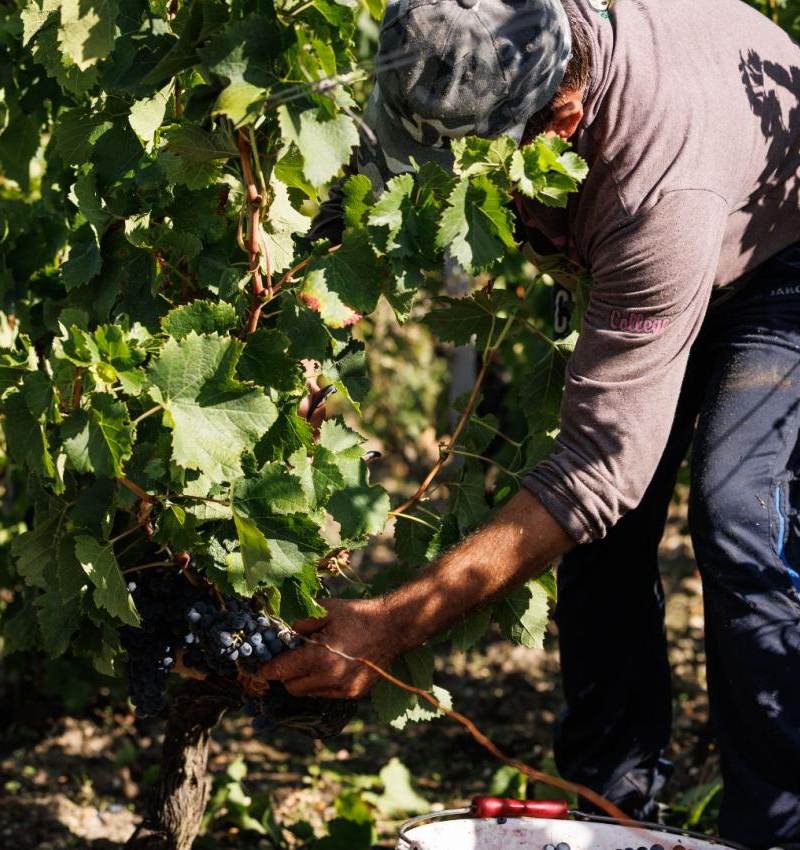
The vineyard of Château Fourcas Dupré spans 46 contiguous hectares, all fully classified under AOC. It is situated on the Fourcas plateau, reaching a maximum altitude of 42 metres. The terroir is characterised by Pyrenean gravel, forming the oldest geological layer in the Médoc, nicknamed the "roof of the Médoc". The grape varieties for the red wines comprise Merlot (55%), Cabernet Sauvignon (44%), and Petit Verdot (1%). For the white wine, the blend of grape varieties is 70% Sauvignon Blanc and 30% Sémillon. The average vine age is 35 years. Harvesting is carried out both manually and mechanically.
Flagship Cuvées
The estate produces several cuvées. The flagship red cuvée is Château Fourcas Dupré, crafted predominantly from Merlot and Cabernet Sauvignon, with a touch of Petit Verdot. Through its blend and gravel terroir, this wine offers a quintessential Médoc expression characterised by an assertive structure and ripe fruit aromas. The estate also produces a second red wine, Bellevue de Fourcas-Dupré, as well as Hautes Terres de Fourcas Dupré, both under the Listrac-Médoc appellation. For white wines, the estate offers Château Fourcas Dupré Grand Vin Blanc and the Parfaitement Sauvignon cuvée, both in the Bordeaux appellation. These white wines, based largely on Sauvignon Blanc and Sémillon, focus on freshness and aromatic complexity.
Vinification and Ageing
The red wines are aged in cement vats, followed by ageing in new, one-wine, and two-wine barrels for twelve to fourteen months. The white grapes are pressed and racked directly into new barrels for ageing on lees with regular bâtonnage (stirring).
- Appellations
- Listrac-Médoc, Bordeaux, Margaux, Moulis-en-Médoc, Saint-Julien, Pauillac, Saint-Estèphe
- Commune
- Listrac-Médoc
- Wine region
- Médoc
- Owner
- Gérard Jicquel
- Technical direction
- Lucas Leclercq
- Surface area
- 46 ha
- Second wine
- Bellevue de Fourcas-Dupré
- Certifications
- HVE
- Grape varieties
- Merlot 55%, Cabernet Sauvignon 44%, Petit Verdot 1%, Sauvignon Blanc 70%, Sémillon 30%
Estate news
15 August 2026
Dans le vignoble bordelais, la guinguette réinvente la visite au château
L'œnotourisme dans le Bordelais connaît une transformation majeure avec l'essor des guinguettes dans les propriétés viticoles. Cette nouvelle approche vise à démocratiser l'accès aux châteaux en proposant une ambiance conviviale, avec concerts, braseros, pétanque et restauration, allant au-delà de la traditionnelle visite de chais et dégustation. L'objectif est d'attirer de nouveaux publics qui ne sont pas nécessairement experts en vin ou intimidés par le caractère parfois formel des visites classiques. Ces initiatives, comme la Guinguette Lauduc à Tresses, proposent de découvrir le domaine et ses vins de manière plus décontractée, en associant plaisir et découverte. Le Médoc, notamment, a structuré ce phénomène avec ses "Afterbeach", offrant 27 soirées dans 20 lieux différents pour l'été 2026, y compris au Château Fourcas Dupré à Listrac-Médoc et au Domaine Jean-Christophe Coubris à Moulis-en-Médoc. Le Château Couhins à Villenave-d'Ornon participe également à cette tendance en proposant bar à vin, musique live et ateliers pour enfants. Plus largement, des propriétés comme Château Fonroque à Saint-Émilion et Château Mazeyres à Pomerol intègrent des expériences œnotouristiques complètes avec hébergement, restauration et événements, transformant les châteaux en véritables destinations. L'article souligne que cette évolution, tout en gardant un lien direct avec le domaine, vise à rendre le vignoble moins solennel et plus accessible, invitant les visiteurs à passer un moment partagé au château plutôt qu'une simple visite technique.
Read the source — bordeaux-gazette.com11 June 2026
Afterbeach en Médoc | Bordeaux Tourisme & Congrès
Les Afterbeach en Médoc sont de retour pour leur 9ème saison, du 11 juin au 10 septembre 2026, tous les mercredis et jeudis de 17h à 21h. Ces événements, organisés par les offices de tourisme Médoc plein Sud et Médoc Atlantique, proposent une expérience gourmande et authentique au cœur des vignobles médocains. Chaque semaine, deux châteaux viticoles ouvrent leurs portes pour des visites commentées par les propriétaires ou leurs équipes, permettant de découvrir le savoir-faire viticole du Médoc. Le programme inclut des dégustations de vins des domaines participants ainsi que des planches apéritives et gourmandes composées de charcuterie, fromages et diverses spécialités. L'ambiance est décrite comme chaleureuse et décontractée, idéale pour prolonger une journée estivale. Parmi les châteaux participant figurent le Château Sipian, Château Fonréaud, Château Carmenère, Château Mauvesin Barton, Île de Patiras, Château Citran, Château Saint-Hilaire, Château Cap Léon Veyrin, Les Vignerons d’Uni-Médoc, Château Meyre, Château Bellerive, Château Fourcas Hosten, Château Lestage, Château Loudenne, Château Dutruch Grand Poujeaux, Château Reverdi, Château Fourcas Dupré, Domaine Jean-Christophe Coubris, Clos La Rose de Grave, et Vignerons Associés Moulis, Listrac et Cussac. Les réservations sont fortement conseillées, avec un tarif débutant à 15€.
Read the source — bordeaux-tourisme.comPractical information
- Address
- Lieu Dit Le Fourcas, 33480 Listrac-Médoc
- Phone
- +33 (0)5 56 58 01 07
- Contact form
- Contact the estate
- Opening hours
- Du lundi au vendredi de 9h à 18h et le week-end sur rendez-vous
- Visits
- du lundi au vendredi de 9h à 18h et le week-end sur rendez-vous