The essential
6 × Entre Amis red
6 bottles — Graves red 2022
The best price of the cellar: €12 per bottle delivered.
The everyday red: generous and straight to the point.
I want itEffluents
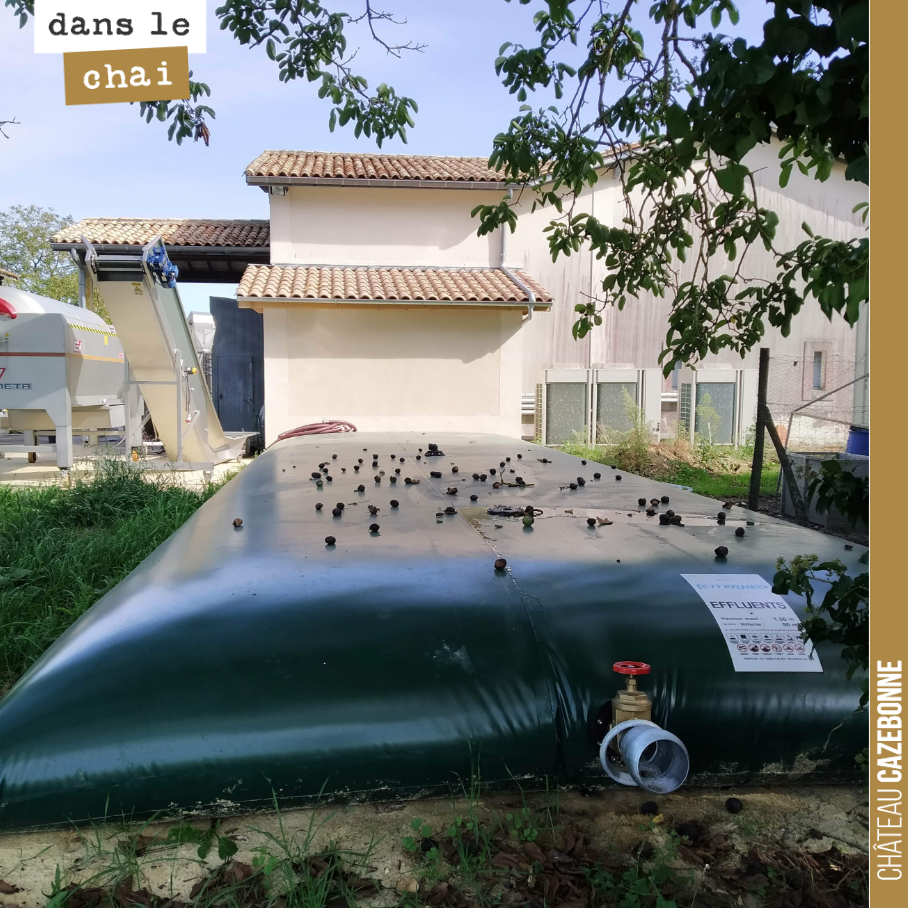
Beyond the art of winemaking, the rigorous management of effluents is a major preoccupation at Château Cazebonne, reflecting our deep commitment to preserving the environment. Winemaking, from receiving the harvest to cleaning the cellar, generates effluents whose treatment is not only a legal obligation but also an essential ethical approach to minimising our impact on natural resources.
Every stage of life on our estate is designed to be part of a dynamic of sustainability. Regarding the by-products of winemaking – grape pomace, lees, washing water – we implement suitable and respectful solutions. Rather than considering them merely as waste, we seek to make the best use of them. Grape pomace, for example, which is rich in organic matter, can be composted and reintegrated into our soils, thus contributing to the natural fertilisation of our vines and the improvement of biodiversity.
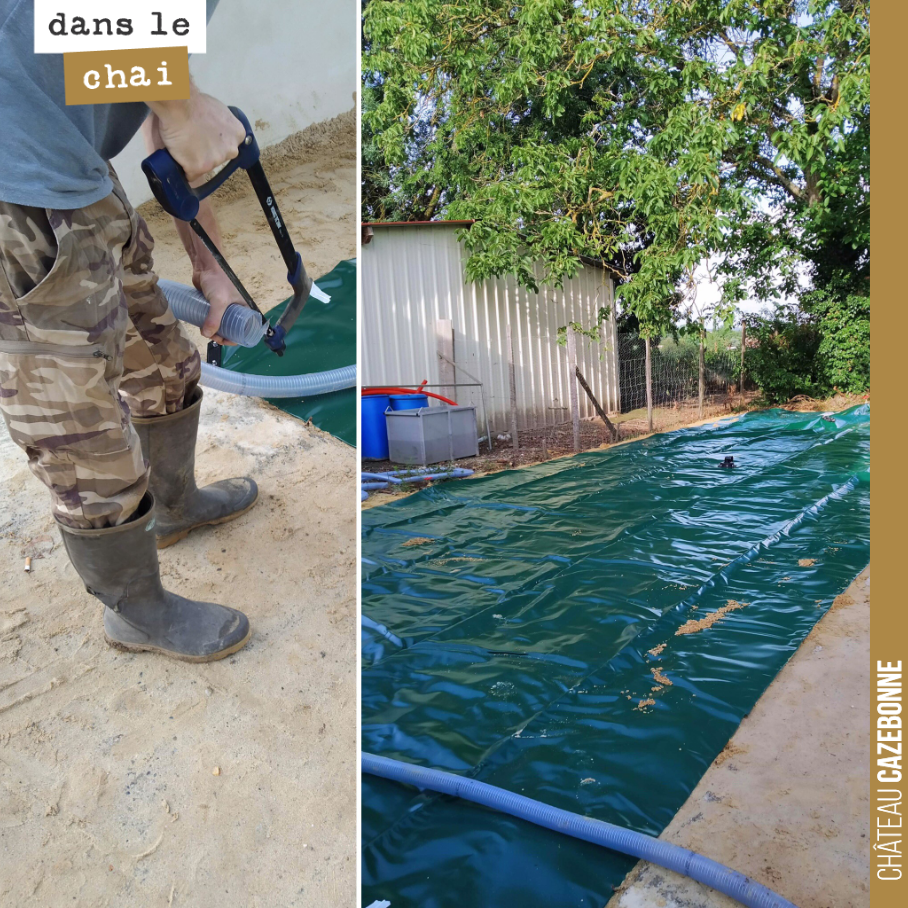
Water, a precious resource, is the subject of special attention. We optimise its use throughout the winemaking process and ensure the effective treatment of wastewater. Our facilities are designed to purify these effluents before they are discharged, guaranteeing that they will not have a negative impact on local ecosystems. This circular and responsible approach is fully in line with our philosophy of respecting the terroir, a conviction we share with figures such as Jean-Baptiste Duquesne, who insists on the need for respectful viticulture in his book "Bordeaux, une histoire de cépages".
This commitment allows us to produce wines of excellence while ensuring the long-term future of our environment. By replanting in Bordeaux the forgotten grape varieties that made our terroir so rich, we are working towards a diversified and resilient viticultural heritage. This fascinating work is made possible thanks to the unwavering support of the many wine lovers who have adopted our wines and share our vision.
Would you like to discover our cuvées and support our approach? You can find them for sale in the Cazebonne boutique.
To delve deeper into the subject of Bordeaux grape varieties, discover the book "Bordeaux, une histoire de cépages" by Jean-Baptiste Duquesne, published by Éditions BBD. You can receive the digital version by email by visiting our website.
The management of viticultural effluents encompasses all operations aimed at collecting, treating, and recycling the liquid and solid by-products resulting from the wine estate's activities. These effluents mainly include washing water (from equipment, vats, and cellar floors), winemaking lees, grape pomace, and filtration residues. The objective is to prevent any pollution of soils and water, whether from direct discharges into natural environments or the contamination of groundwater. Proper management is crucial for sustainable viticulture and respect for the surrounding ecosystem, particularly waterways and biodiversity.
The main objective of effluent management is twofold: to reduce the environmental impact of viticultural activity and, if possible, to recycle these by-products. Beyond regulatory obligations, good management preserves water and soil quality, fundamental elements of our terroir. Valuing pomace and lees through composting, for example, helps rebuild humus and enrich organic matter in the soils of our plots, thus contributing to the natural nutrient cycle and the vitality of the vines. This fits perfectly with our biodynamic approach.
Effluent production is not limited to the harvest. Although the winemaking period generates the largest volumes, the regular cleaning of the cellar and equipment, the maintenance of facilities, and other work throughout the year also produce effluents. The management schedule is therefore a continuous process, adapted to peaks in activity, but requiring constant vigilance and appropriate practices in all seasons.
Effluent management involves several crucial stages:
Various types of equipment are necessary for effective effluent management: wastewater recovery and channelling systems, screens, decanters, purification lagoons, or micro-stations. The most advanced estates may also use membrane filters or physical-chemical treatments to refine the quality of the discharges. Investing in this cellar equipment is proof of an estate's environmental commitment.
Many wine estates, such as Château Cazebonne, favour solutions inspired by agroecology for treating their effluents. Composting organic matter is an ecological alternative that creates a natural fertiliser beneficial to the vine. Phytopurification techniques, using aquatic plants to cleanse water, are also increasingly explored options. These alternatives reduce dependence on organic treatments and foster a virtuous cycle within the estate.
At Château Cazebonne, we integrate effluent management as an essential component of our overall environmental approach. We systematically collect all washing water and by-products from both red and white winemaking. The pomace and lees are composted directly on-site, participating in the natural fertilisation of our soils and the improvement of their biodiversity. Our biological purification facilities guarantee that any water discharged is of impeccable quality, thus ensuring the protection of our local environment. This rigorous commitment is a cornerstone of our philosophy aimed at working in harmony with nature, much like our quest for forgotten grape varieties.
By replanting the grape varieties that had disappeared from Bordeaux, Château Cazebonne is contributing to a diversified and resilient viticultural heritage, fascinating work made possible by the support of the wine lovers who adopt our wines. To find out more about the fascinating history of Bordeaux grape varieties, feel free to take a look at our downloadable book or test your knowledge with our oenological quizzes. And to discover all our cuvées, we invite you to visit our online boutique.
Sources
Our suggestions
-5%on your 1st order with code BIENVENUE
The essential6 bottles — Graves red 2022
The best price of the cellar: €12 per bottle delivered.
The everyday red: generous and straight to the point.
I want it Our recommendation92/100 RVF
6 bottles — Graves red 2022, 92/100 RVF
Rated 92/100 by La Revue du vin de France: a solid 10-year ageing potential.
Our Graves for ageing, the finest gateway to the estate.
I want it Go further
12 bottles — the whole range
12 bottles, the whole range tasted: the best discovery-to-price ratio.
The complete tour of the estate, in a single case.
I want itThe cellar, forgotten grape varieties and our cuvées, twice a month. 5% off your first order with the code BIENVENUE.