05 December 2019
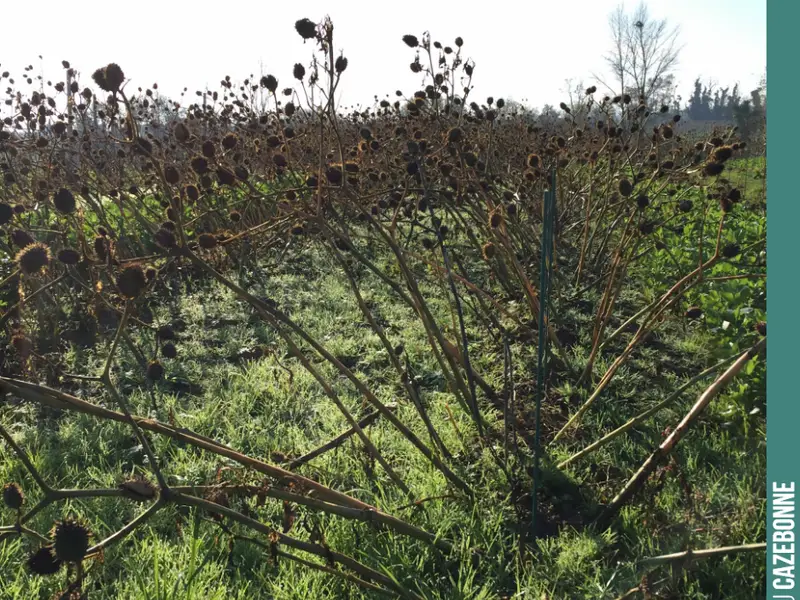
A sad sight: this field of datura in the middle of our planting of forgotten grape varieties (bouchalès on this plot)……We didn't have time to tend to this plot this summer, and the datura.
By Jean-Baptiste Duquesne

Weeding
At Château Cazebonne, mechanical weeding is a cornerstone of our winemaking philosophy. Far from superficial removal, it is part of a global approach to respecting the terroir and environmental balance. This method allows us to manage grass cover in the vineyard without resorting to chemicals, thereby protecting biodiversity and the health of our soils.
Mechanical weeding involves controlling spontaneous vegetation between the rows and under the vines using tools driven by a motive force, whether human, animal (such as a horse), or motorised. This technique allows us to uproot, cut, or hoe unwanted weeds, effectively replacing herbicides.
The main objective of mechanical weeding is to control the competition for water and nutrients between the vines and the spontaneous flora, especially during periods of water stress. By eliminating weeds under the row, we also reduce the "mildew bridges" that they can create, thus limiting the spread of diseases and the need for treatments. This promotes better aeration of the vine base and optimises the effectiveness of compost or other soil amendments.
The timing of interventions varies according to the vigour of the vines and the growth of the weeds. Generally, mechanical weeding is carried out from spring until véraison. Passes are more frequent at the beginning of the vegetative cycle, when the young vine shoots are most sensitive to competition and the weeds are in full growth. Careful observation of the plot is crucial to determine the right frequency.
Several techniques and tools are used for mechanical weeding:
Mechanical weeding equipment is diverse. It includes inter-vine tools, specific ploughs, mowers, shredders, and hoes. At Château Cazebonne, we use tools adapted to our terroir and our organic practices, which allow for meticulous work without damaging the vines. The use of tools such as clod-breaking discs and Kress finger weeders is part of our arsenal.
Mechanical weeding stands out as an ecological alternative to herbicides, which are prohibited in organic farming. It is often combined with managed grass cover (deliberately controlled between the rows) or the establishment of cover crops to increase biodiversity and soil fertility. This integrated approach contrasts with total chemical weeding, once common in conventional viticulture.
At Château Cazebonne, the practice of mechanical weeding is a concrete expression of our commitment to sustainable and respectful viticulture. It is demanding work that requires rigour and observation, but it guarantees living soils and healthy vines. This effort contributes to the uniqueness of our wines and the preservation of our environment.
This meticulous work, combining tradition and innovation, is only made possible by the unwavering support of a community of enlightened enthusiasts. Your commitment and appreciation of our wines allow us to continue this adventure and breathe new life into grape varieties that have so much to offer to the typicity of Bordeaux wines. If you wish to deepen your knowledge of the fascinating history of Bordeaux grape varieties and understand the importance of this approach, we invite you to receive the digital version of the book "Bordeaux, une histoire de cépages" via this link: our book on the forgotten grape varieties of Bordeaux. Do not hesitate to test your oenological knowledge with our fun quizzes, and of course, to discover all our vintages available directly on our online shop. It is also an opportunity to discover articles on important topics for viticulture such as vine uprooting.
05 December 2019
By Jean-Baptiste Duquesne
02 August 2019
By Jean-Baptiste Duquesne
13 June 2019
By Jean-Baptiste Duquesne
The cellar, forgotten grape varieties and our cuvées, twice a month. 5% off your first order with the code BIENVENUE.