
 The essential
6 × Entre Amis red
6 bottles — Graves red 2022
The best price of the cellar: €12 per bottle delivered.
The everyday red: generous and straight to the point.
I want itHorse
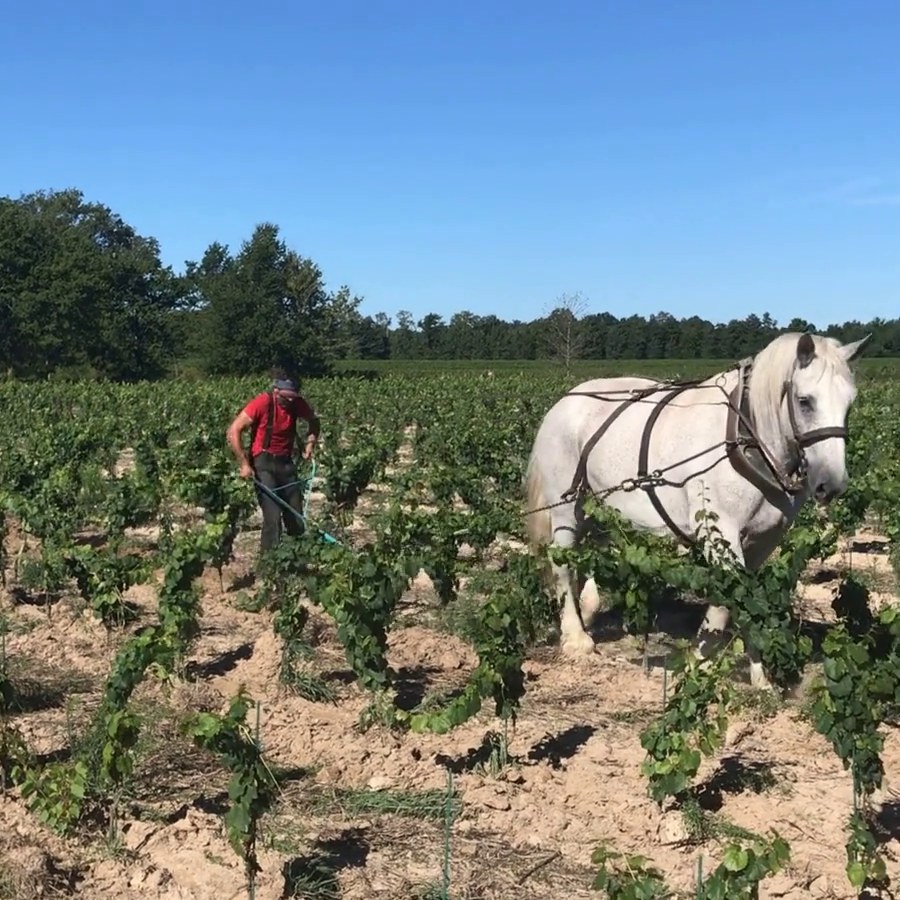
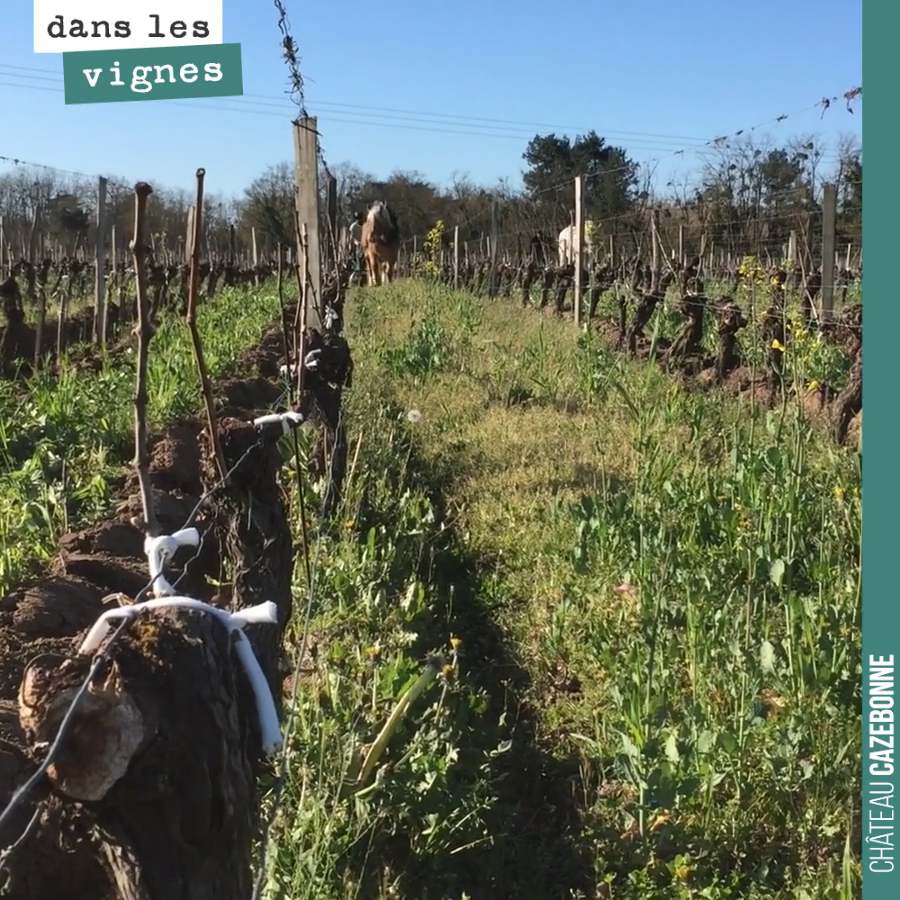
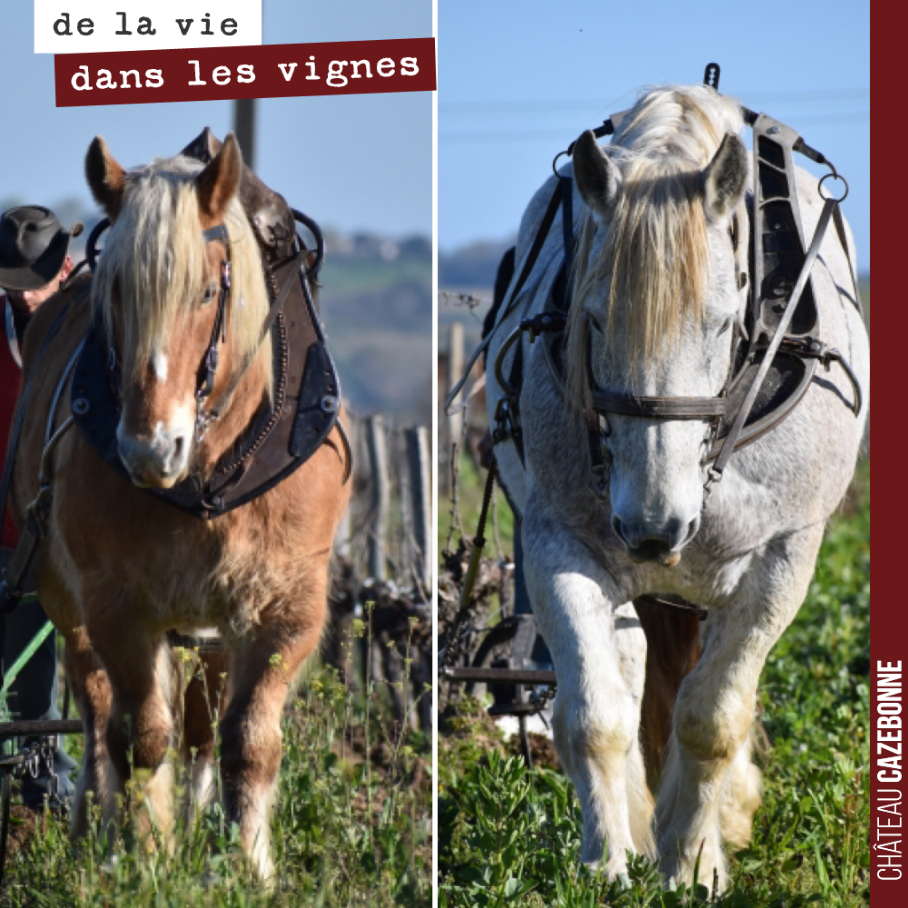
At Château Cazebonne, our quest for excellence and our unconditional respect for living things have naturally led us to reintroduce horse-drawn work in our vineyards. Far from being simple nostalgia for the practices of yesteryear, this ancestral method is part of a resolutely forward-looking vision, embodying a sustainable viticulture that is deeply respectful of its terroir. It is a harmonious alliance between man, animal, and earth, a silent ballet that contributes to the vitality of our soils and the uniqueness of our wines.
The use of horses, particularly valuable in our plots of old vines and those that have just been replanted, offers unequalled advantages. Their quiet strength allows for remarkably precise work, where the weight of a modern tractor would inevitably compact the earth. This natural loosening of the soil promotes optimal aeration and stimulates microbial life, crucial elements for the health and vigour of the vine. The roots can thus plunge deeper, drawing essential water and nutrients from deep within. This robust rooting is vital: it gives the plant better resilience to climatic hazards and allows for a more subtle and complex expression of the nuances of our terroir in the wine. As highlighted in the book "Bordeaux, une histoire de cépages" by Jean-Baptiste Duquesne, the vine's ability to explore its underground environment is intrinsically linked to the richness and aromatic authenticity of our crus.
The horse works with incomparable delicacy, avoiding the vibrations and excessive compaction that can disrupt the harmonious development of the vine. This gentle work preserves the soil structure and supports its biodiversity, a fundamental pillar of our commitment to demanding viticulture. Each pass is an invitation to symbiosis, a perfect illustration of our desire to reveal the best of our grapes whilst protecting this natural heritage.
This approach, which successfully marries tradition and innovation, reflects our overall mission at Château Cazebonne: the rebirth of the historic grape varieties of Bordeaux. These forgotten varieties, with such a rich past, are today finding a new lease of life thanks to our replanting work. A commitment made possible by your unfailing support and the appreciation you have for our wines, true ambassadors of this rediscovered heritage.
To discover the fruits of this labour and passion, you can find our cuvées for sale in the Cazebonne boutique.
To deepen your knowledge of the fascinating history of Bordeaux grape varieties and understand the importance of this approach, we also invite you to receive the digital version of the book "Bordeaux, une histoire de cépages" by Doctor Jean-Baptiste Duquesne, sent directly by email when you visit our website.
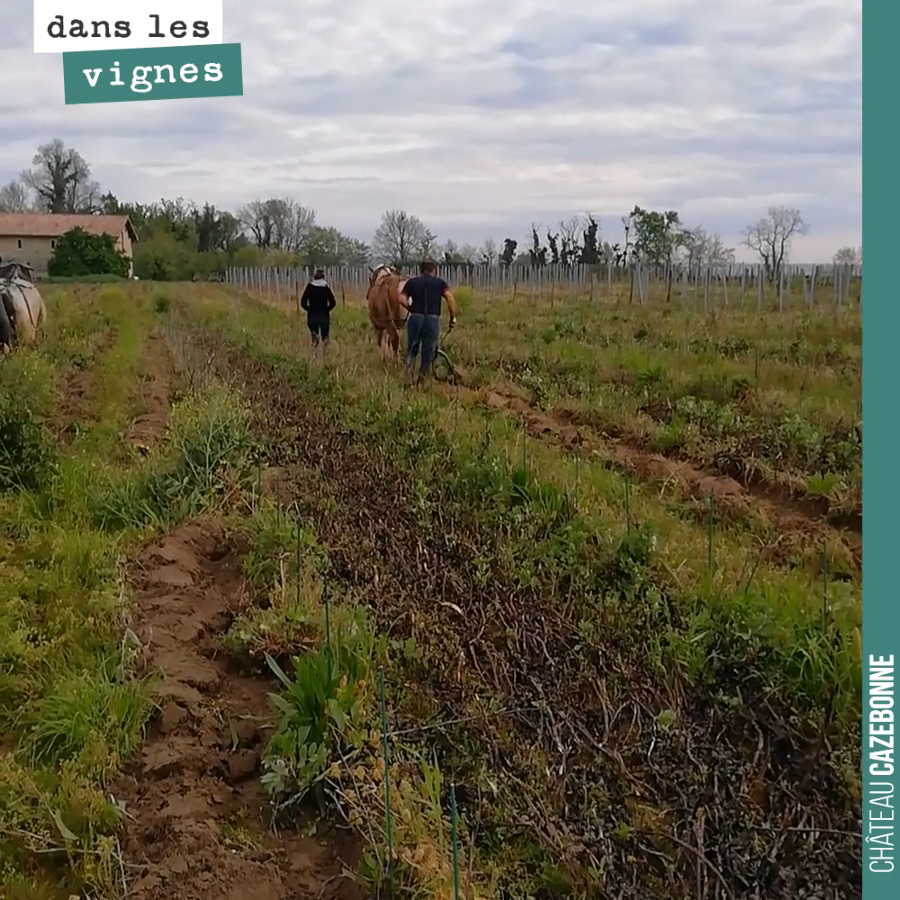
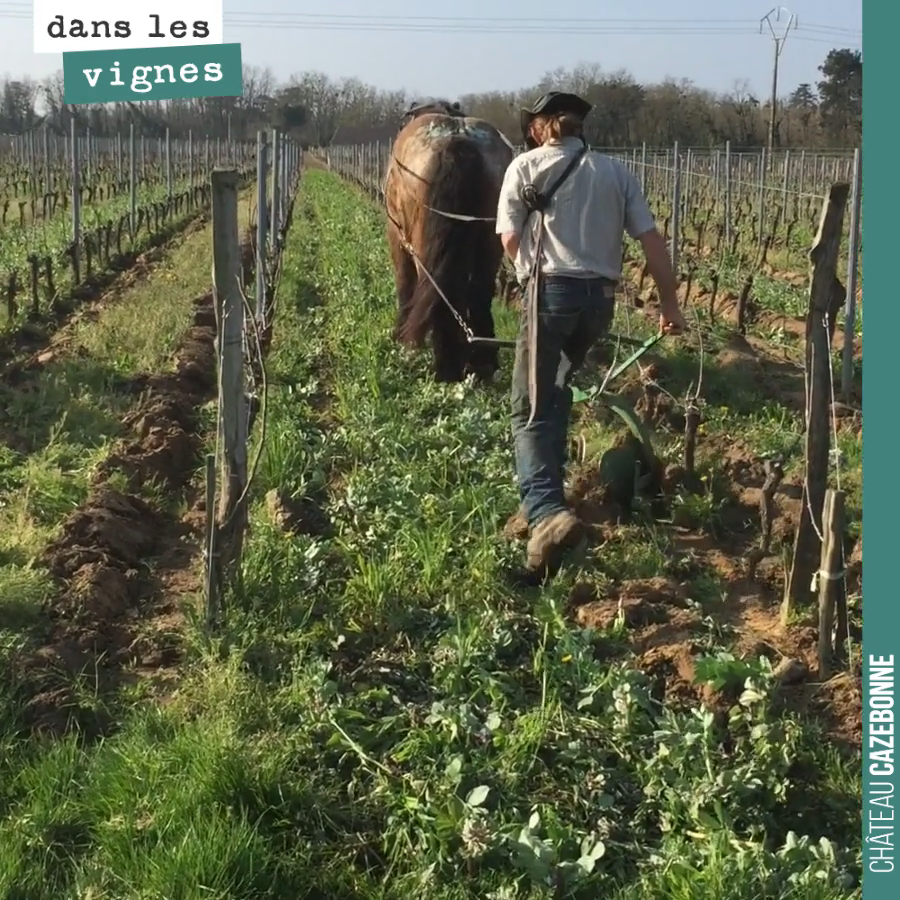
Working with horses in the vineyards is a method that involves using animal traction to carry out cultural operations such as ploughing, décavaillonage (ploughing out the vines) or soil scratching. Unlike motorised vehicles, the horse exerts less pressure on the soil, which prevents compaction. This practice is particularly relevant on fragile land or plots where the repeated passage of tractors could alter the structure of living soils. It is an approach of great agronomic value, far from being anecdotal, which actively contributes to the health and vitality of our terroirs.
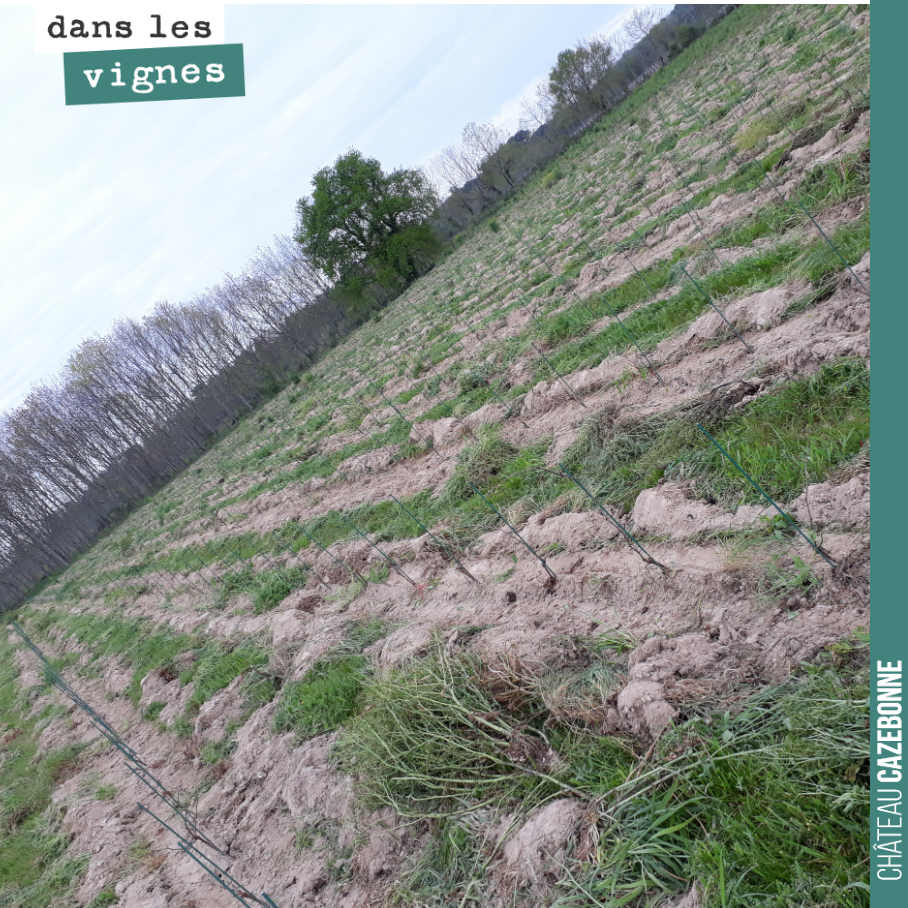
The main agronomic objective of using horses is to promote better soil aeration and stimulate its microbial life. By avoiding compaction, the horse helps maintain a crumbly structure, conducive to the development of essential microorganisms. This action allows the vine roots to sink deeper, thus exploring a larger volume of soil. This deep rooting makes the vine more resistant to water stress (such as a heatwave in the vineyards) and allows it to better express the complex nuances of the terroir, contributing to the complexity and typicity of the wines.
The horse intervenes mainly during the vine's vegetative period, from the beginning of spring until the end of summer, although work can be carried out in winter (winter in the vineyards) to manage grass cover. Operations begin after budburst and continue until veraison. The frequency of passes will depend on rainfall, the vigour of the grass cover (managing grass cover in the vineyard), and the maturity of the soils. An experienced winegrower knows how to listen to nature to determine the precise moment when the horse's intervention will be most beneficial.
The practical stages of the work include the passage of the plough or the undervine plough. Before any operation, the soil is observed to assess its moisture and compactness. The horse, guided with expertise by the winegrower, creates shallow furrows that aerate the earth without excessively disturbing soil life. This work is often complemented by other less invasive tools such as harrows or cultivators, in order to perfect the refinement of the soil. Patience and attention are the watchwords of this ancestral practice, where every gesture is thought out for the well-being of the vine and the soil.
The equipment used is adapted to animal traction: simple ploughs, blade or finger undervine ploughs, and light harrows. Hitching the horse requires specific harnessing and a good knowledge of the animal. At Château Cazebonne, we favour tools that respect the soil, allowing for delicate and precise work. The choice of horse is also essential: it must be calm, robust, and well-trained to move with grace and efficiency between the vine rows.
While mechanisation remains predominant in many vineyards, working with horses represents an alternative of choice for a more respectful viticulture. On plots farmed organically or biodynamically (all you need to know about biodynamics), it constitutes an effective method of mechanical weeding and aeration without resorting to chemicals. Although more costly in time and labour, this choice reflects a strong commitment to soil quality and the singularity of the wine, fitting perfectly into our approach to Graves wines without additives.
At Château Cazebonne, the use of horses is much more than a simple cultivation technique; it is a philosophy, a return to our roots, and a deep commitment to our terroir. We employ it on plots of old vines and young plantings, where delicacy and precision are paramount. This practice is part of our desire to revive the forgotten grape varieties of Bordeaux (the forgotten grape varieties of Bordeaux), by offering them the best conditions for development. The horse, silent and effective, is an essential partner in our quest for excellence and the production of living wine.
Château Cazebonne is committed to the rediscovery and replanting of the historic grape varieties of Bordeaux, meticulous work that we pursue with passion. Your support is invaluable for the success of this mission, and we invite you to discover our approach by downloading the history of these grape varieties, "Bordeaux, une histoire de cépages", available in a digital version. To test your knowledge of wine and viticulture, do not hesitate to take part in our oenological quizzes. Finally, to appreciate the fruits of our labour, we invite you to discover and order our wines online.
Sources
Our suggestions
-5%on your 1st order with code BIENVENUE
The essential6 bottles — Graves red 2022
The best price of the cellar: €12 per bottle delivered.
The everyday red: generous and straight to the point.
I want it Our recommendation92/100 RVF
6 bottles — Graves red 2022, 92/100 RVF
Rated 92/100 by La Revue du vin de France: a solid 10-year ageing potential.
Our Graves for ageing, the finest gateway to the estate.
I want it Go further
12 bottles — the whole range
12 bottles, the whole range tasted: the best discovery-to-price ratio.
The complete tour of the estate, in a single case.
I want it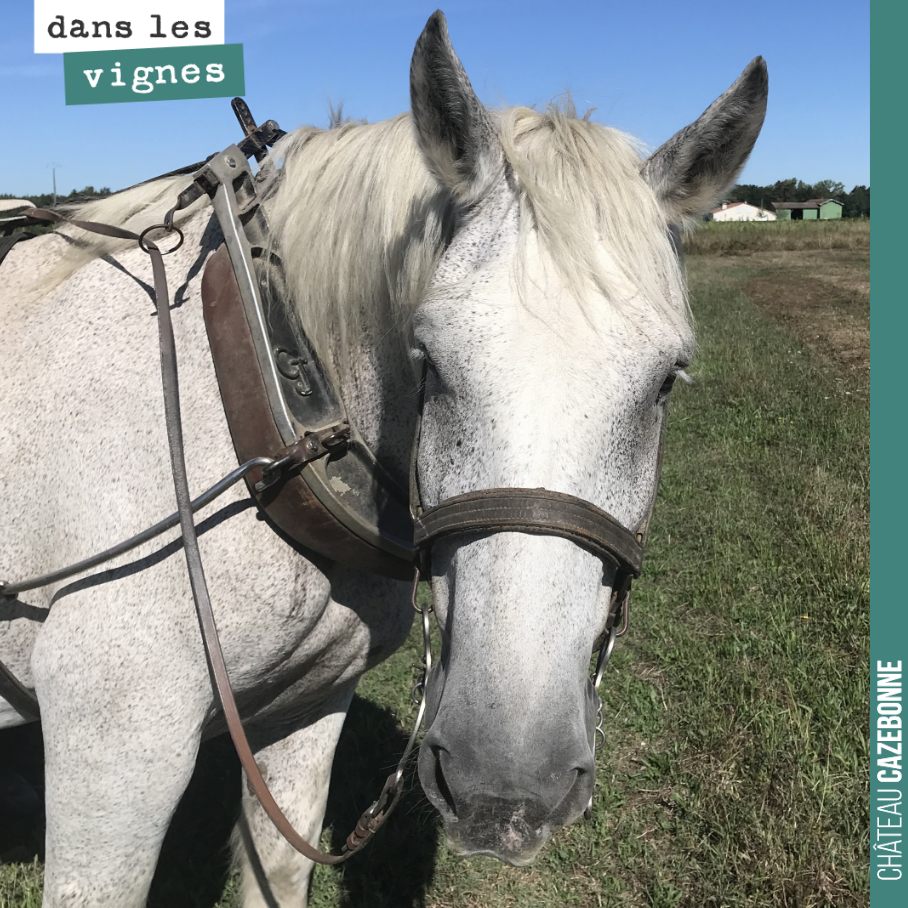
21 September 2020
28 August 2020
11 April 2020
10 April 2020
29 December 2019
01 April 2019
27 March 2019
The cellar, forgotten grape varieties and our cuvées, twice a month. 5% off your first order with the code BIENVENUE.