
14 March 2021
A fascinating read on more than one count
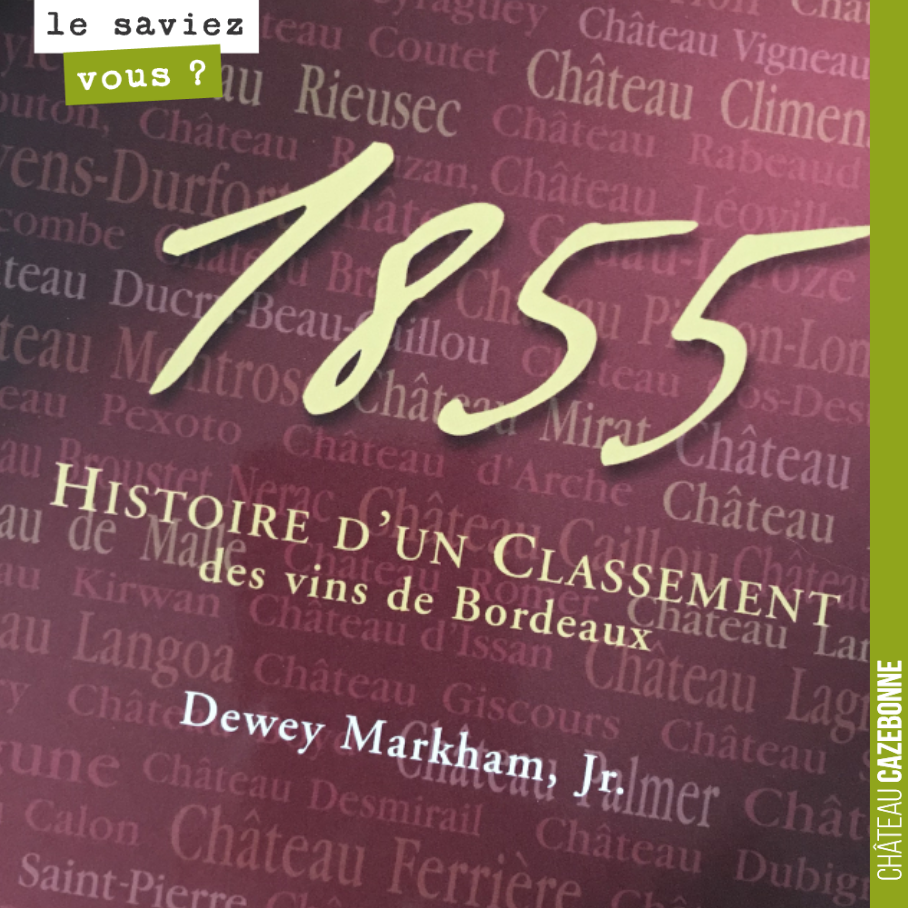
We learn how the Gironde organised the presentation of its wines at the 1855 Universal Exposition.
The whole challenge was to present all the Gironde wines as a united front, under a single banner, organised by the Chamber of Commerce. All the crus were presented under a single label prepared by the Chamber of Commerce, bearing only the name of the commune for the most ordinary wines, and the name of the cru and its owner for the classified growths (and originally the owner's name was not meant to appear, but Lafite intervened with Jérôme Bonaparte to ensure otherwise!).
The drawing up of the list of classified growths and their ranking was entrusted to the Syndicat des courtiers based on the historical transaction prices of the wines. The estates were then asked to supply 6 bottles for tasting in Paris, but more than half would never send any samples.
There were extensive negotiations behind the scenes to ensure that medals were not awarded to individual estates, but to all of these classified growths as a whole (Médoc and Sauternes).
The Chamber of Commerce won its case, not without difficulty, and the 1855 classification was born. After the Universal Exposition closed, Bordeaux proprietors learned of the birth of this classification in the newspaper, despite its unofficial status at the time. Some attempted to intervene with the Chamber of Commerce to obtain its revision. In vain.
Only Cantemerle managed to add its name to the bottom of the list after the fact. To do so, they approached the brokers' union directly (and not the Chamber of Commerce) and justified the prices of their wines exported directly to Holland, thereby bypassing transactions through the Bordeaux marketplace.
Subsequently, all attempts at revision failed (with the exception of the revision of the first tier, with Mouton becoming a Premier Cru Classé). Officially, the revision of the classification remains open, and it would involve revising the second tier. But this will almost certainly never be done again. Everyone opposes it!
It should be noted that this classification took place in the midst of the powdery mildew (oidium) crisis, which wiped out most of the harvest in the vineyard. This certainly explains the low participation of the estates and their failure to send samples.
The brokers captured a snapshot of the established estates, of sufficient size to have gained renown.
It is regrettable that the book does not provide further explanation regarding the absence of the crus of Graves (with the exception of Haut-Brion, which incidentally did not send samples to the Chamber of Commerce either, but made sure it was tasted at the Universal Exposition).
Undoubtedly, the powdery mildew crisis, which hit Graves severely, played a part in this.
This classification would become the benchmark because any subsequent revision would prove far too sensitive. A classification that was nevertheless organised on the sly, with very limited involvement from the main players!
Our suggestions
Treat yourself
-5%on your 1st order with code BIENVENUE
 The essential
6 × Entre Amis red
6 bottles — Graves red 2022
The best price of the cellar: €12 per bottle delivered.
The everyday red: generous and straight to the point.
I want it Our recommendation92/100 RVF
6 × Le Grand Vin red
6 bottles — Graves red 2022, 92/100 RVF
Rated 92/100 by La Revue du vin de France: a solid 10-year ageing potential.
Our Graves for ageing, the finest gateway to the estate.
I want it Go further
Discovery case, 12 bottles
12 bottles — the whole range
12 bottles, the whole range tasted: the best discovery-to-price ratio.
The complete tour of the estate, in a single case.
I want it