23 March 2020
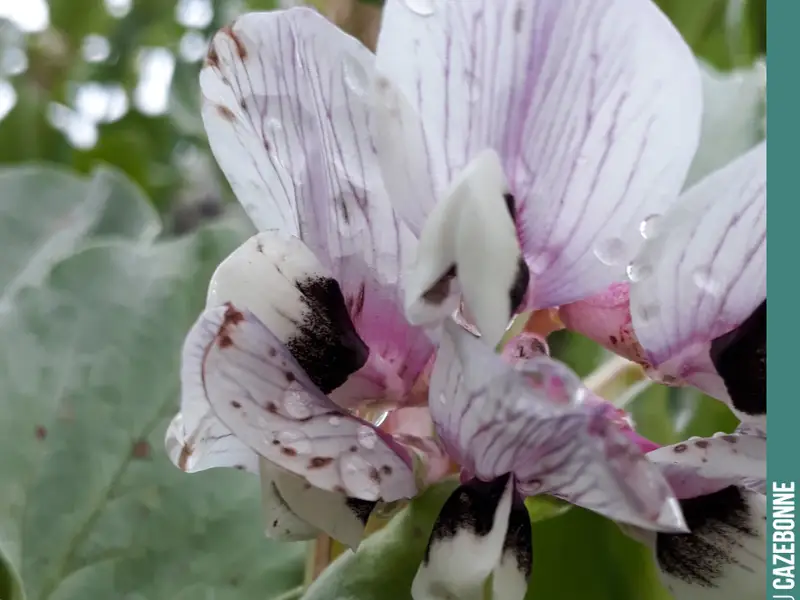
Lovely field bean blossoms……We will be rolling them over the coming days to form a mulch and return nitrogen to the soil and the vines.
By Jean-Baptiste Duquesne

Fava Bean Flowers
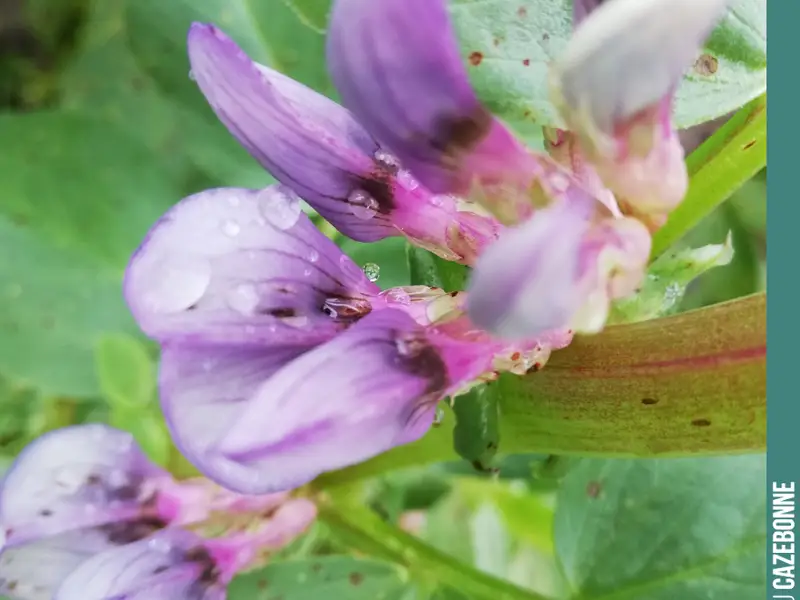
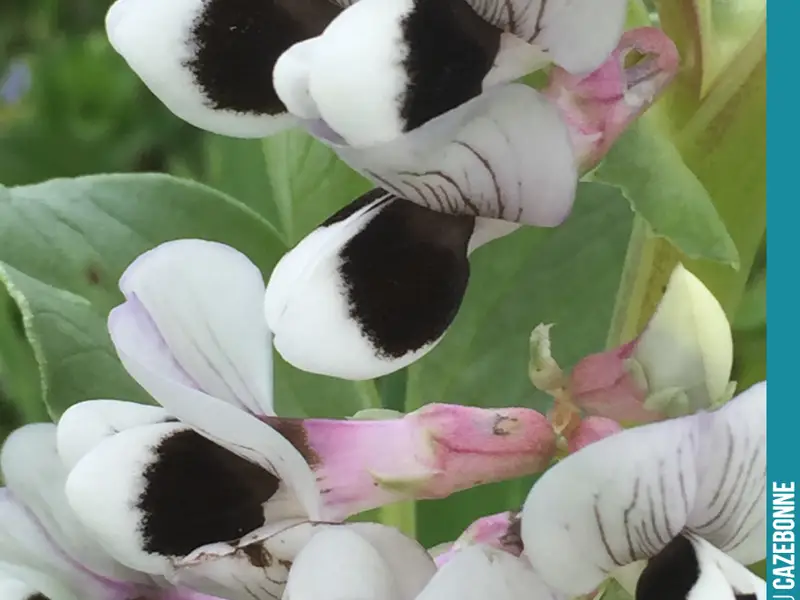
At Château Cazebonne, our commitment to the health of our soils drives us to adopt innovative and environmentally friendly practices. Among the key players in this regeneration are field beans, annual plants belonging to the Fabaceae family, which hold a prominent place between our vine rows. Characterised by their robust stems, deep green leaves and, above all, their delicate flowers, often white, but sometimes tinged with pink or purple, they bring a touch of natural beauty and precious vitality to our vineyard.
Field beans are not only aesthetically pleasing; they are formidable allies for the balance and vitality of the soil. Their principal virtue lies in their ability to fix atmospheric nitrogen. Thanks to a symbiosis with specific bacteria located in their roots (Rhizobium), they transform nitrogen gas from the air into a form that plants can assimilate. This nitrogen is an essential nutrient for vine growth, contributing to its vegetative development, the vigour of its shoots and the formation of aromatic compounds in the berries. By naturally enriching the soil with nitrogen, this reduces our need for external inputs and promotes a fairer nutritional balance for our vines, thereby contributing to living and healthy soils.
But the role of the field bean is not limited to nitrogen. Their taproots explore the depths of the soil, improving its structure and promoting better drainage and optimal aeration. Once mown, the above-ground and root biomass of the field beans decomposes, providing rich and diverse organic matter. This matter feeds the soil's microbial ecosystem, thereby multiplying its fertility and its ability to retain water. Their flowers also attract a multitude of pollinating insects and beneficial auxiliaries, contributing to the vineyard's biodiversity and the natural balance against pests. You can learn more about the role of legumes on our blog.
The major agronomic objective of integrating field beans into the vineyard is the natural fertilisation of the soil. By fixing atmospheric nitrogen, they significantly reduce the need for synthetic nitrogen fertilisers. Furthermore, their deep root system helps to decompact the soil, promoting better water infiltration and increased aeration, essential conditions for the good health of the vine. They also contribute to increasing the organic matter in the soils.
Field beans are generally sown in autumn, after the harvest, or in early spring. This period allows them to develop during the winter and spring, accumulating biomass and nitrogen. They are then mown or rolled in the spring, before the flowering of the vine or in early summer. This management makes it possible to return nutrients to the soil precisely when the vine needs them most, particularly during budburst and flowering.
At Château Cazebonne, the cultivation of field beans is fully in line with our biodynamic Bordeaux approach and our commitment to sustainable viticulture. We sow them between the rows of our plots, thus forming one of the many cover crops we use. This choice not only promotes the fertility of our terroirs, but also contributes to microbial life and the population of beneficial auxiliaries in our vines. This meticulous work is made possible by the unfailing support of the many enthusiasts who embrace our wines and share our vision of respectful and innovative viticulture.
This meticulous work is made possible by the unfailing support of the many enthusiasts who embrace our wines and share our vision of respectful and innovative viticulture. To deepen your knowledge of the fascinating history of Bordeaux grape varieties and these virtuous practices, you can download the digital version of the book "Bordeaux, une histoire de cépages" and test your knowledge with our oenological quizzes. Finally, to discover the fruits of our long-term labour and support our commitment, we invite you to visit the Cazebonne shop.
23 March 2020
By Jean-Baptiste Duquesne
10 March 2020
By Jean-Baptiste Duquesne
06 April 2019
By Jean-Baptiste Duquesne
The cellar, forgotten grape varieties and our cuvées, twice a month. 5% off your first order with the code BIENVENUE.