
 The essential
6 × Entre Amis red
6 bottles — Graves red 2022
The best price of the cellar: €12 per bottle delivered.
The everyday red: generous and straight to the point.
I want itFava Beans
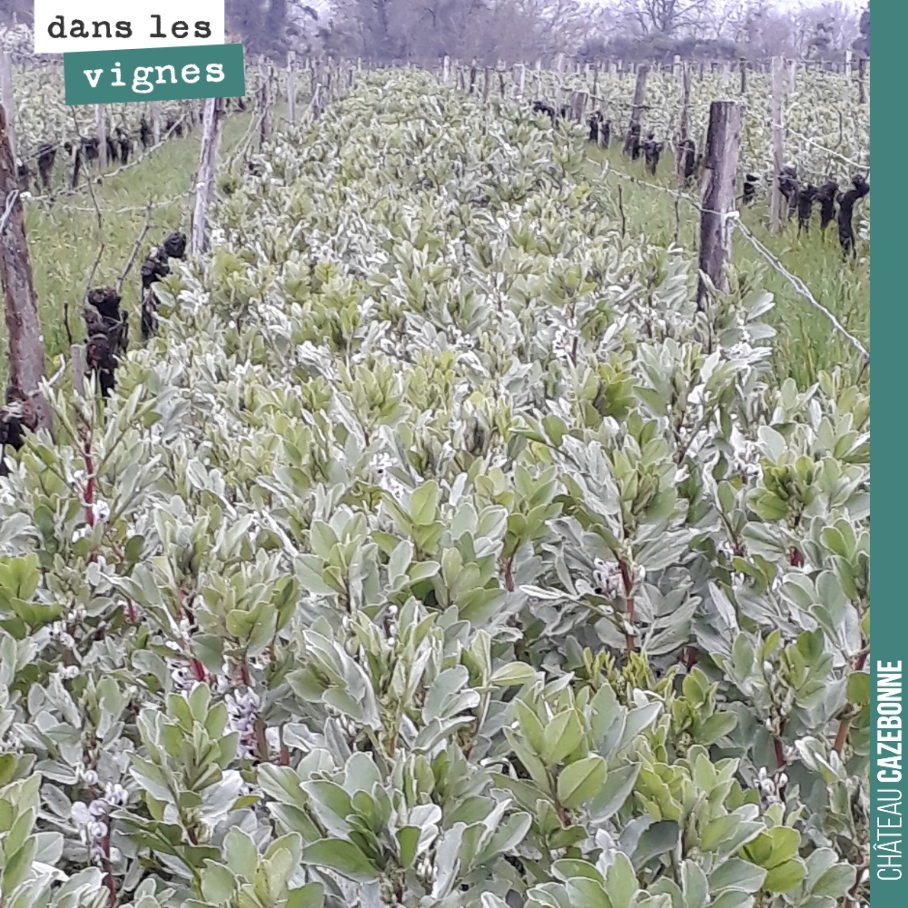
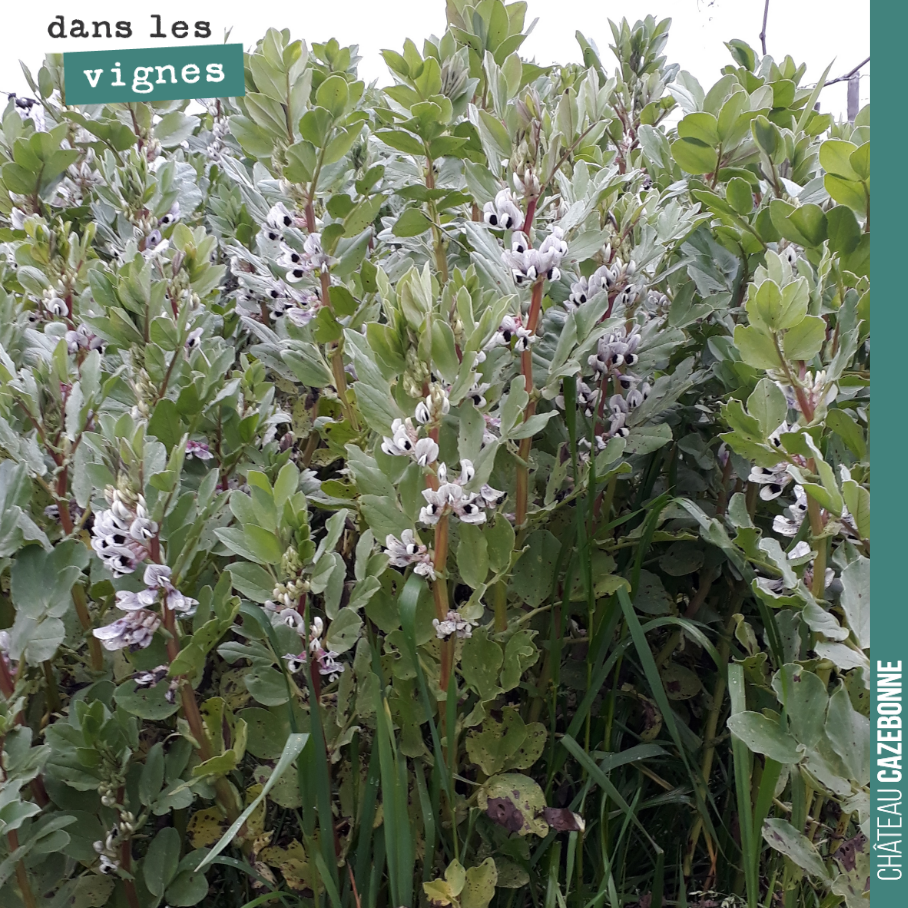
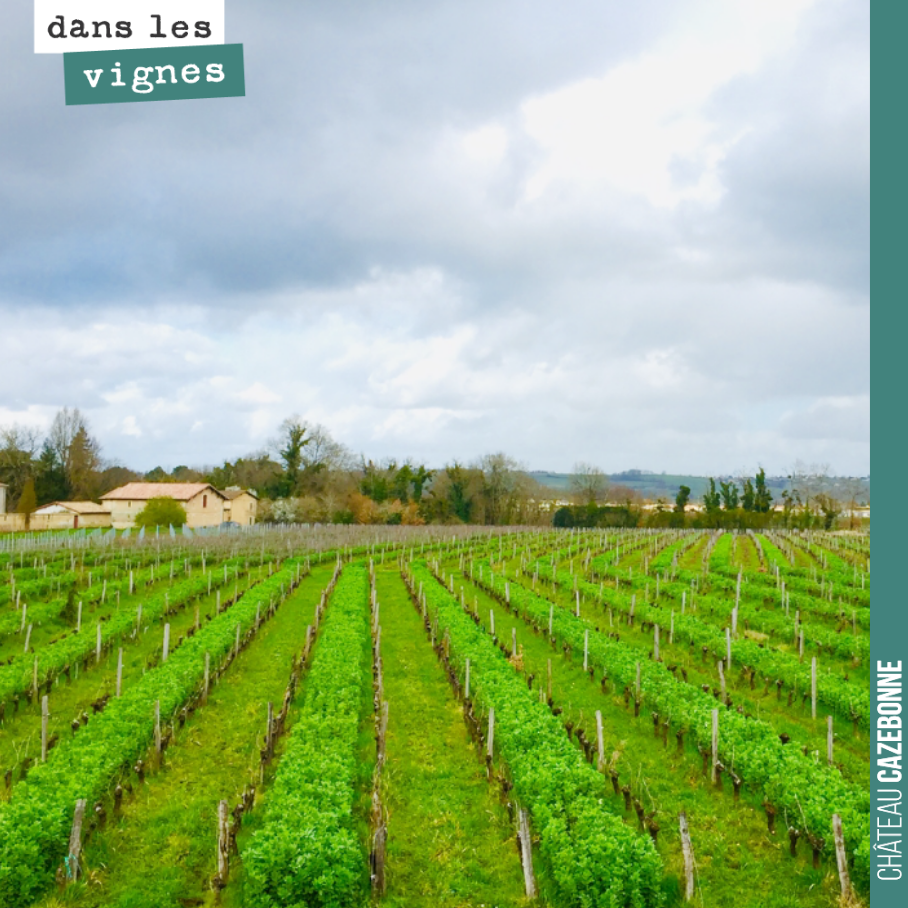
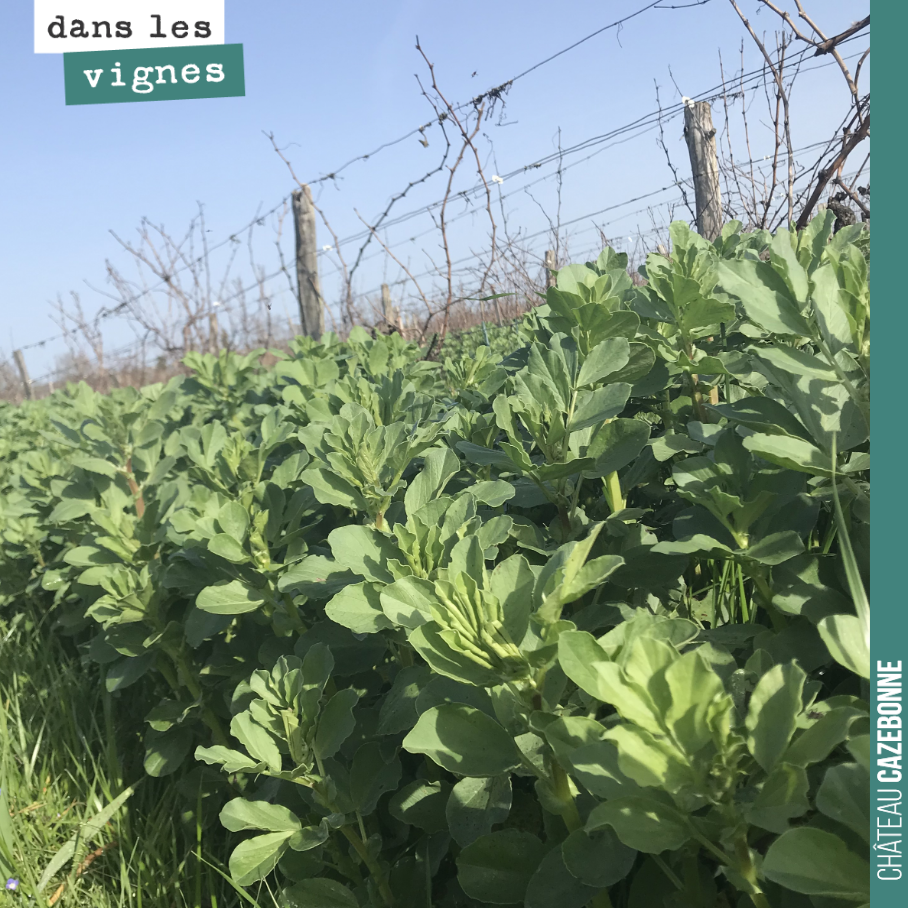
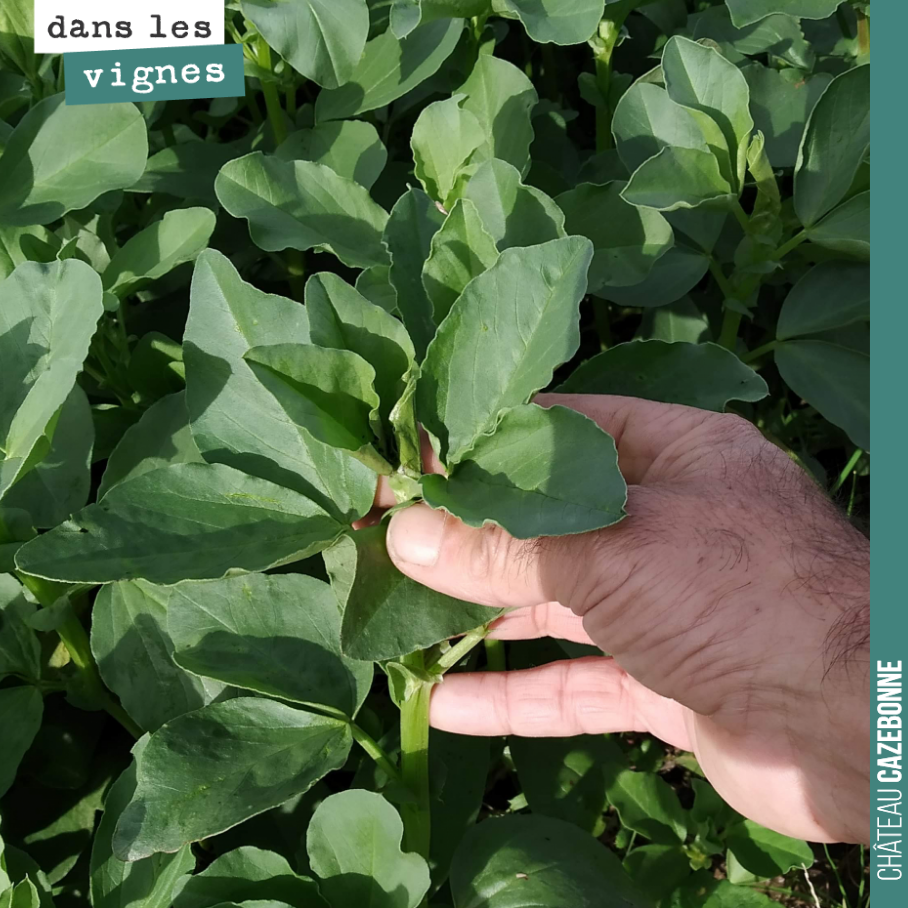
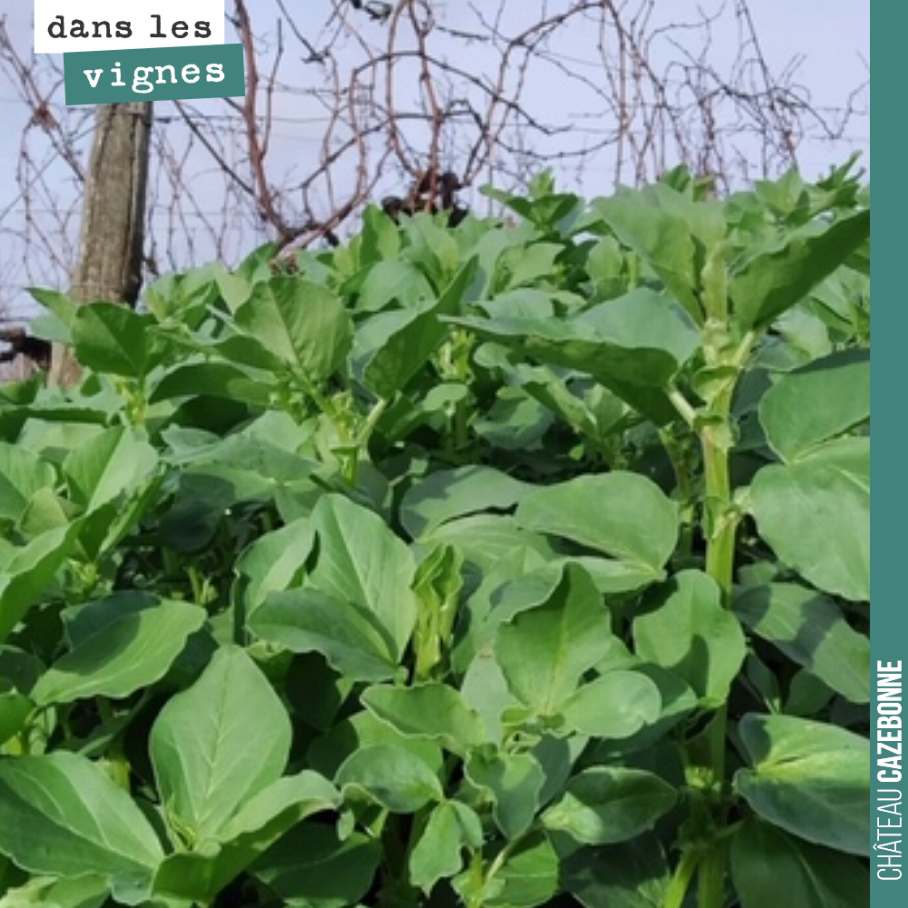
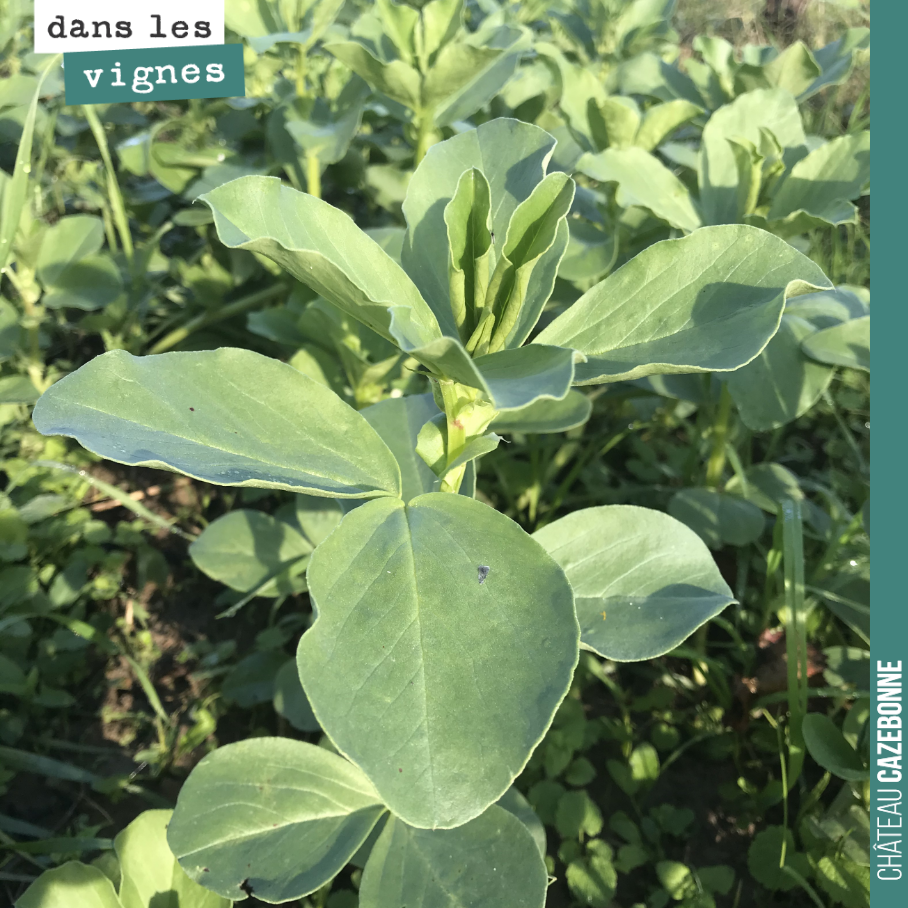
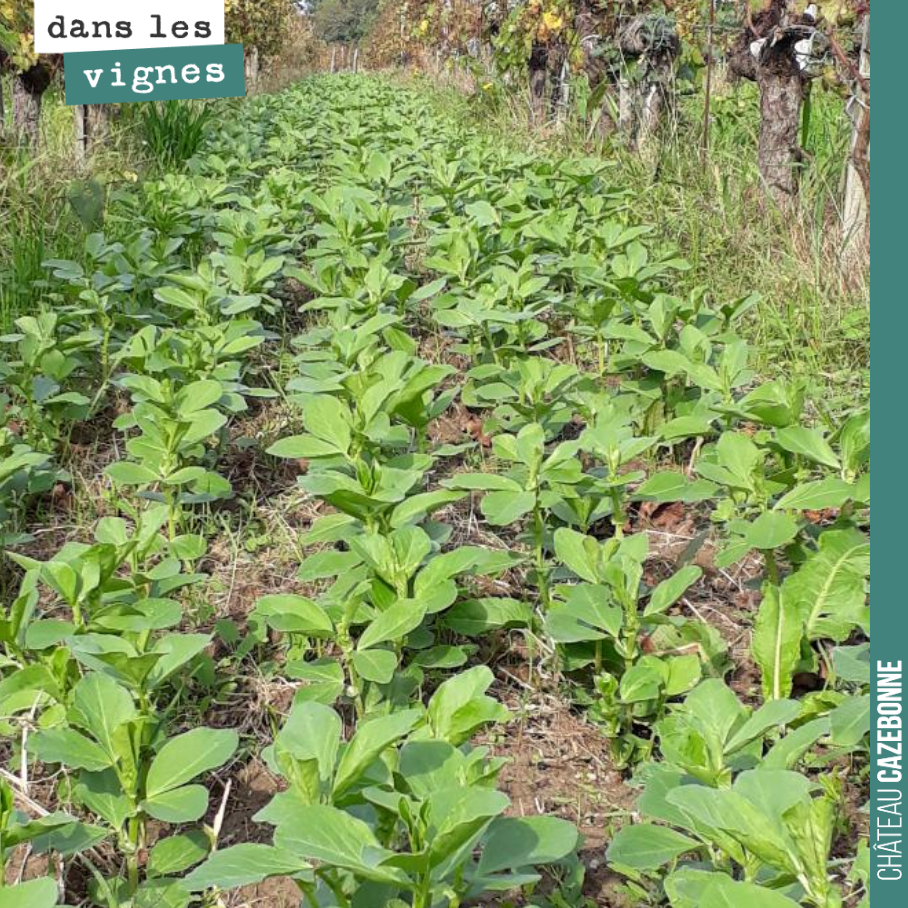
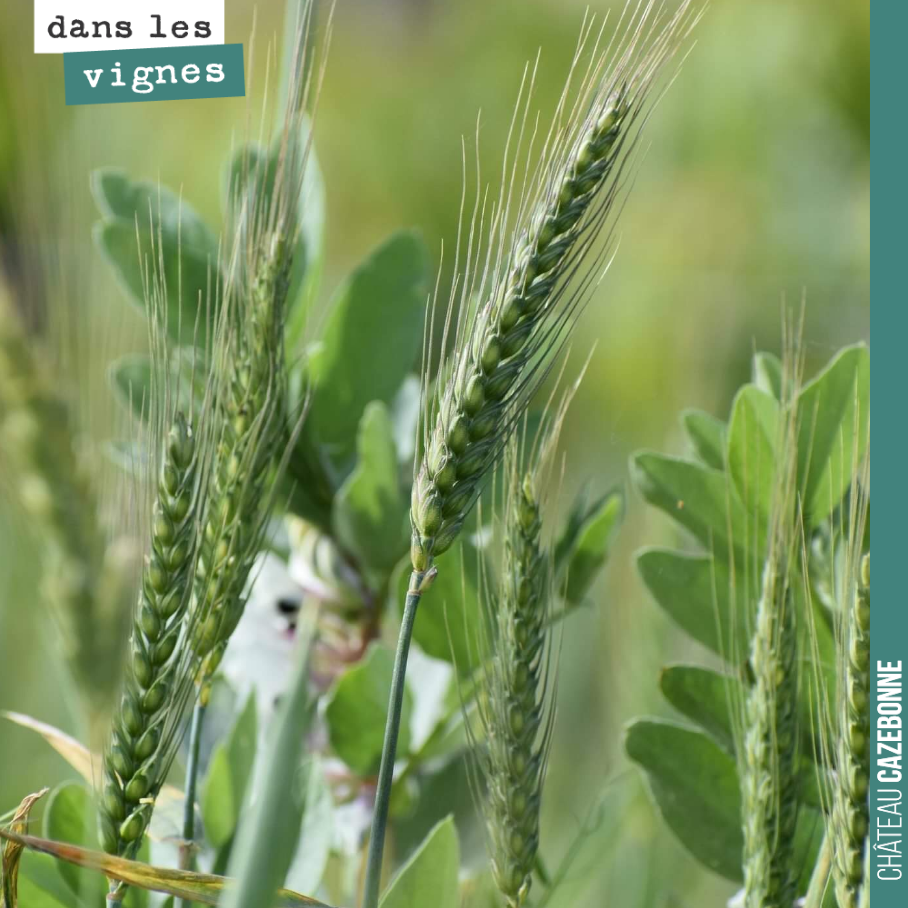
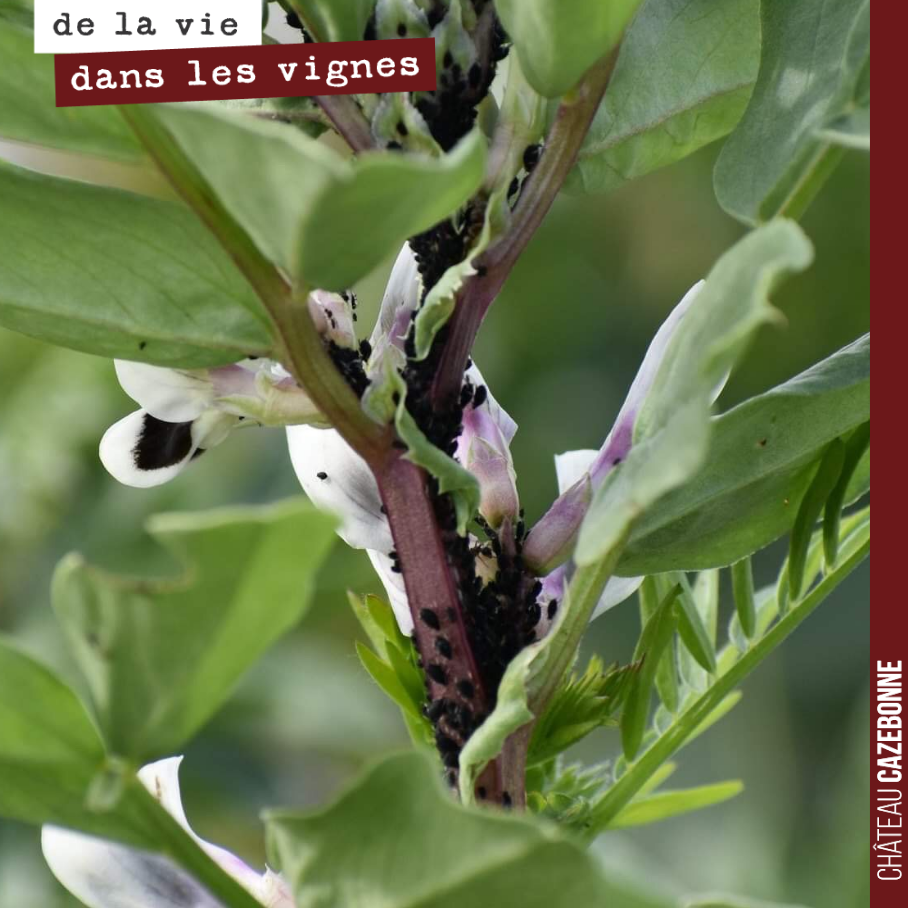
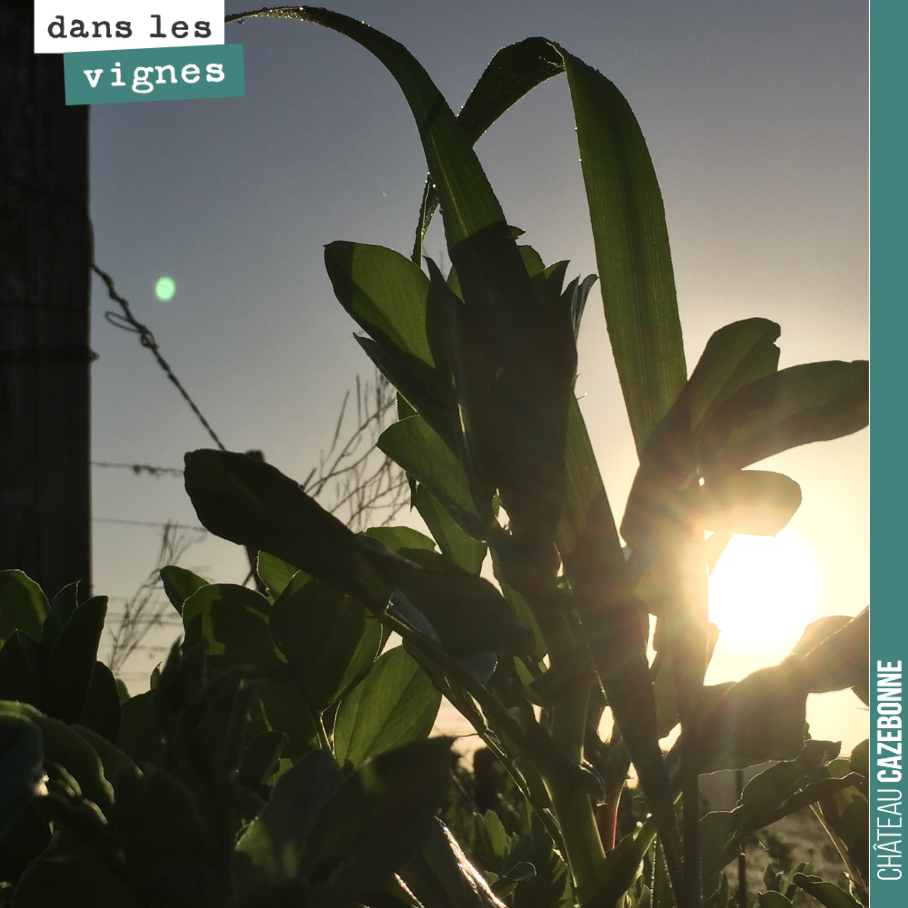
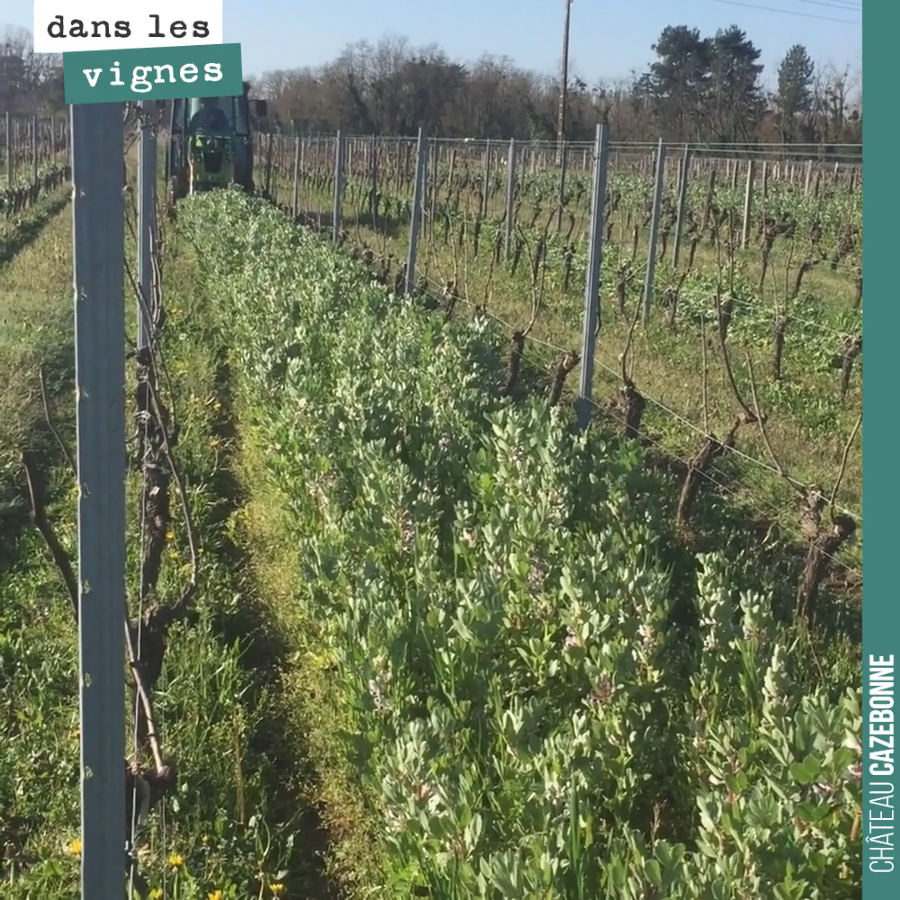
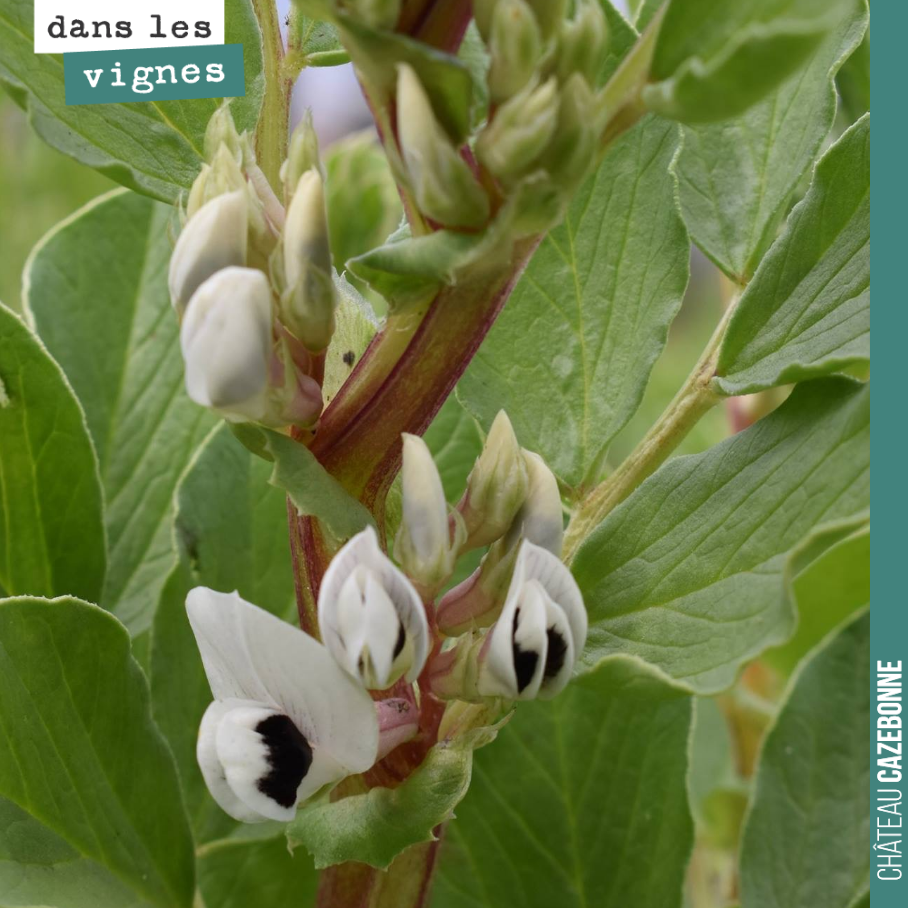
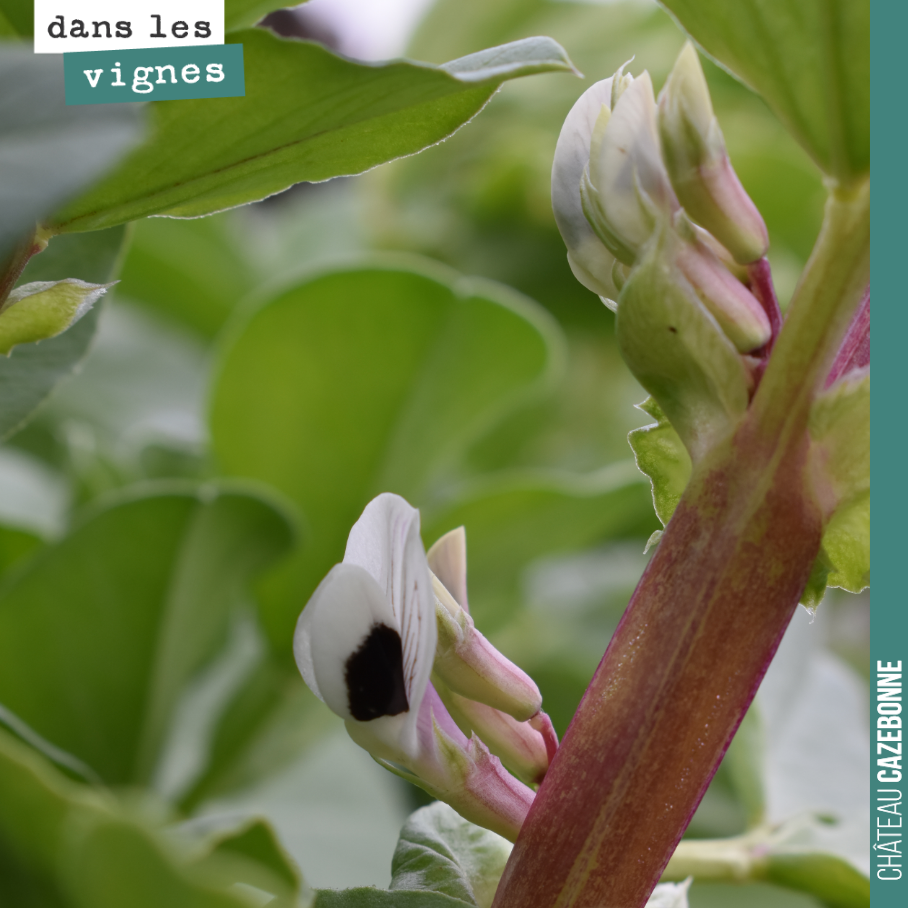
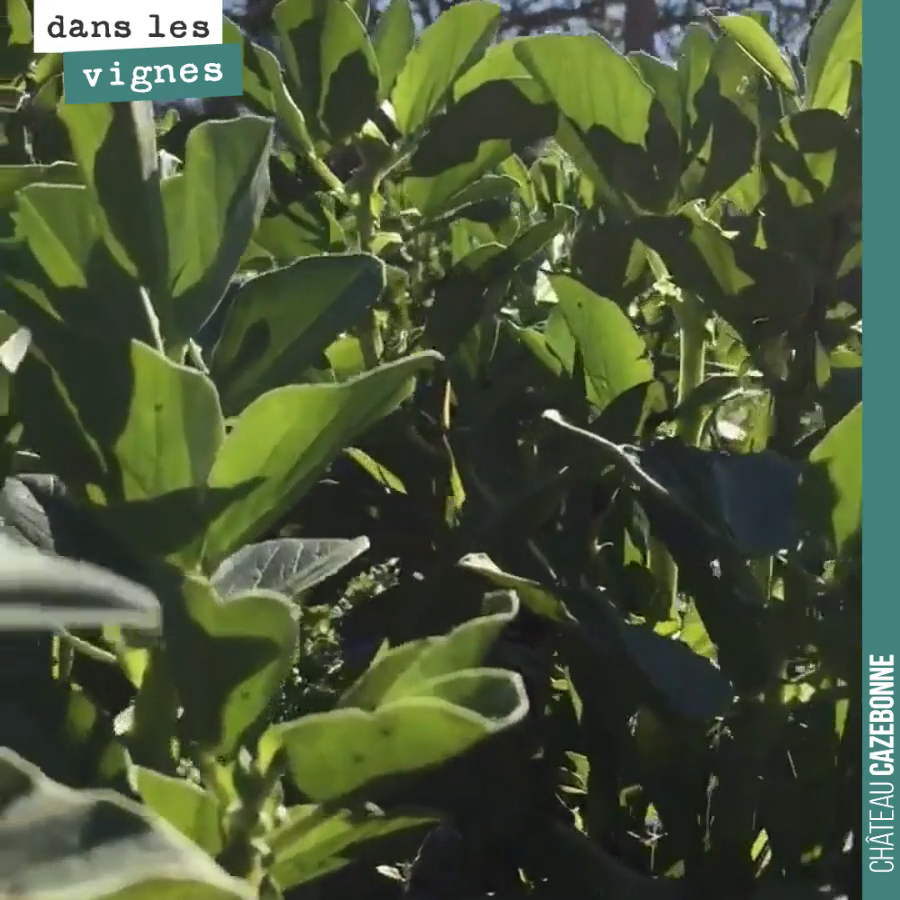
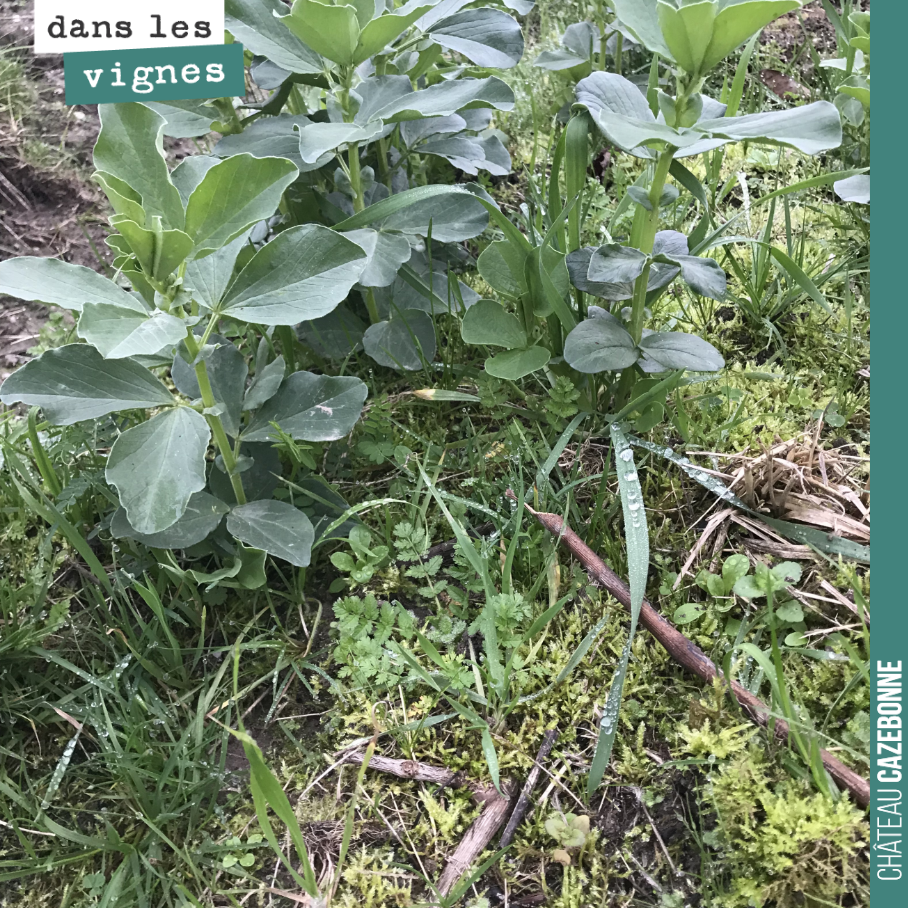
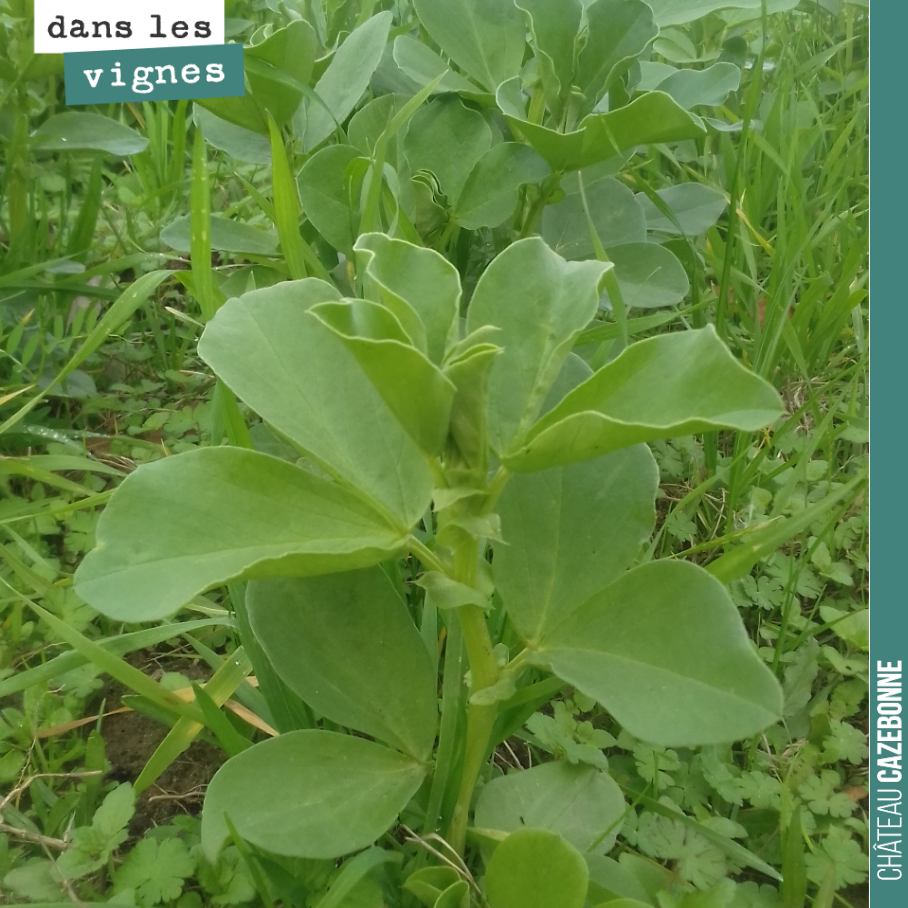
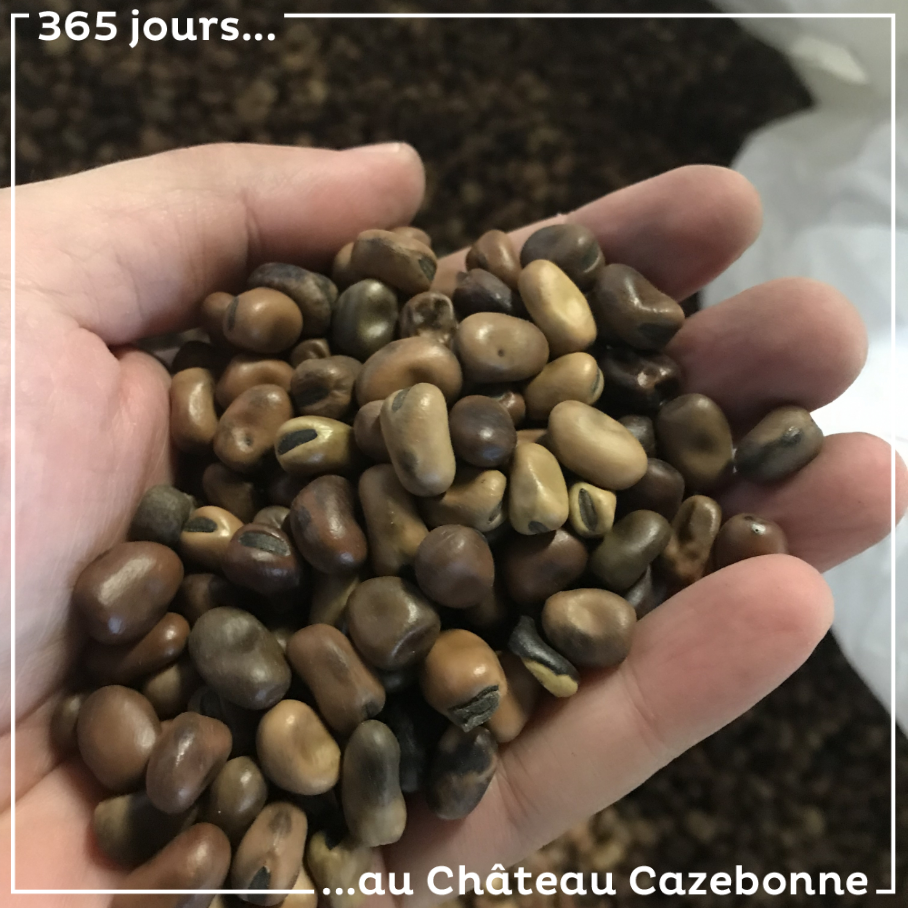
At Château Cazebonne, the field bean (Vicia faba) is much more than a simple cover crop. This legume plays a central role in our approach to regenerative viticulture, bringing considerable benefits to the health of our terroirs. Its integration is part of a global approach aimed at improving the resilience of our vineyards and the quality of our wines.
The field bean is a natural solution for soil restoration. Its actions are multiple and complementary. It works simultaneously on the physical structure, biological life, and nutritional richness of the soil, fundamental elements for the health of our soils and, by extension, our vines.
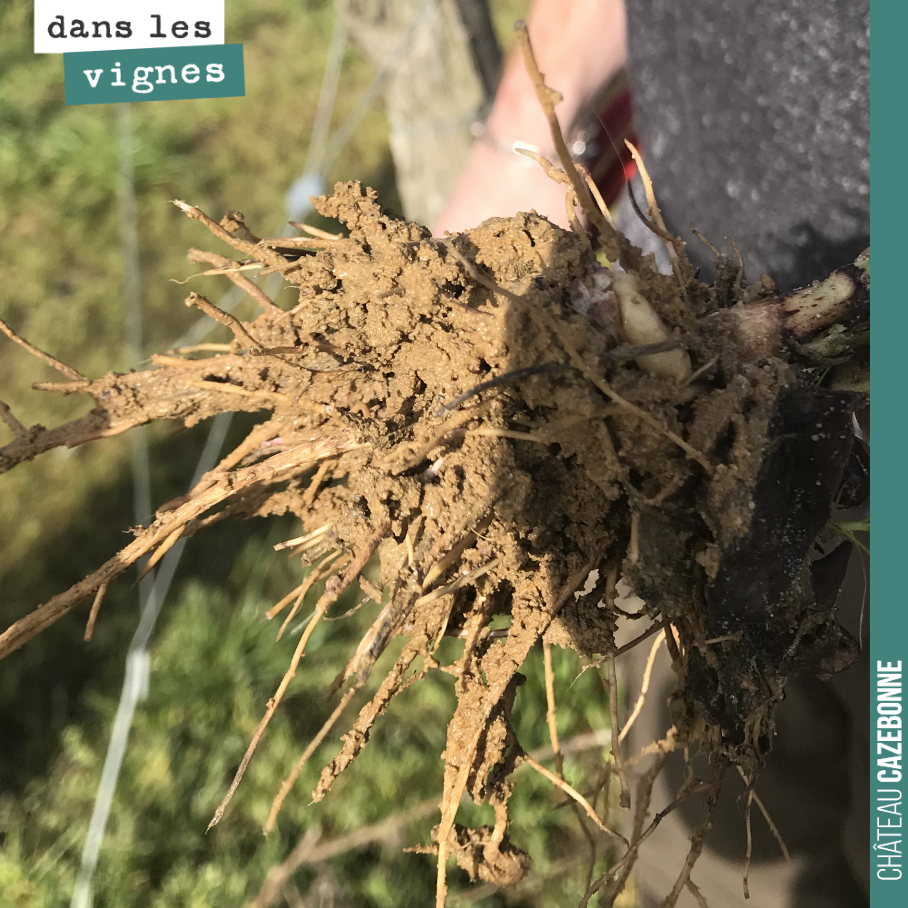
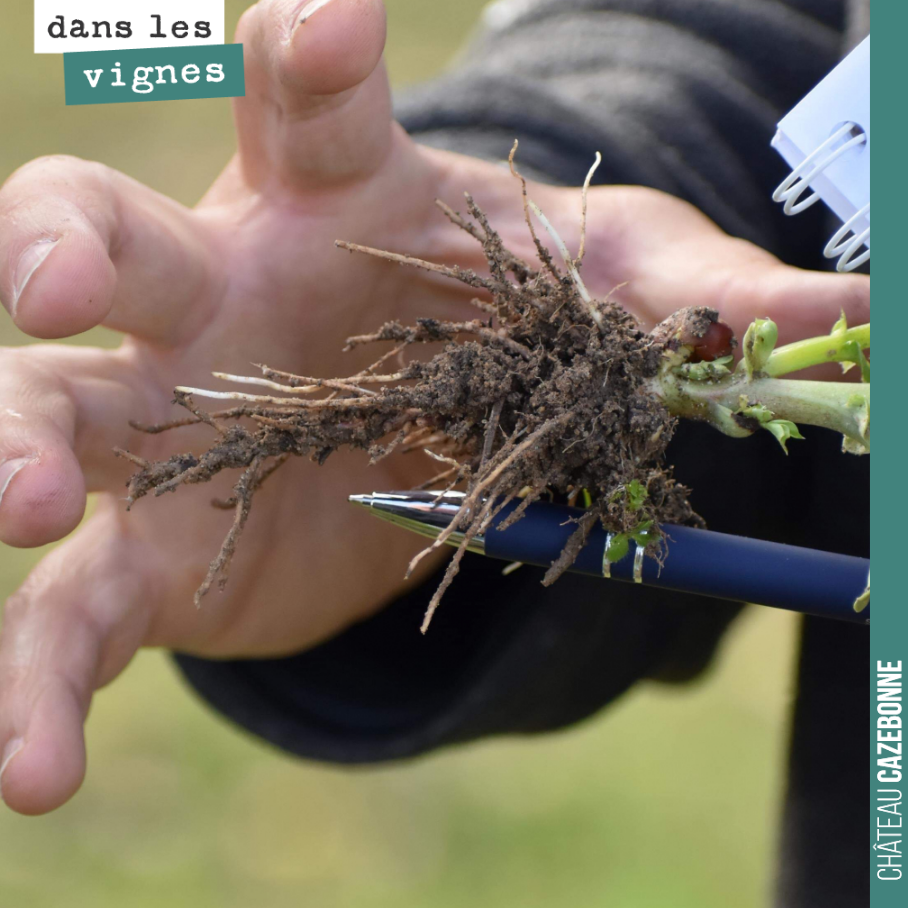
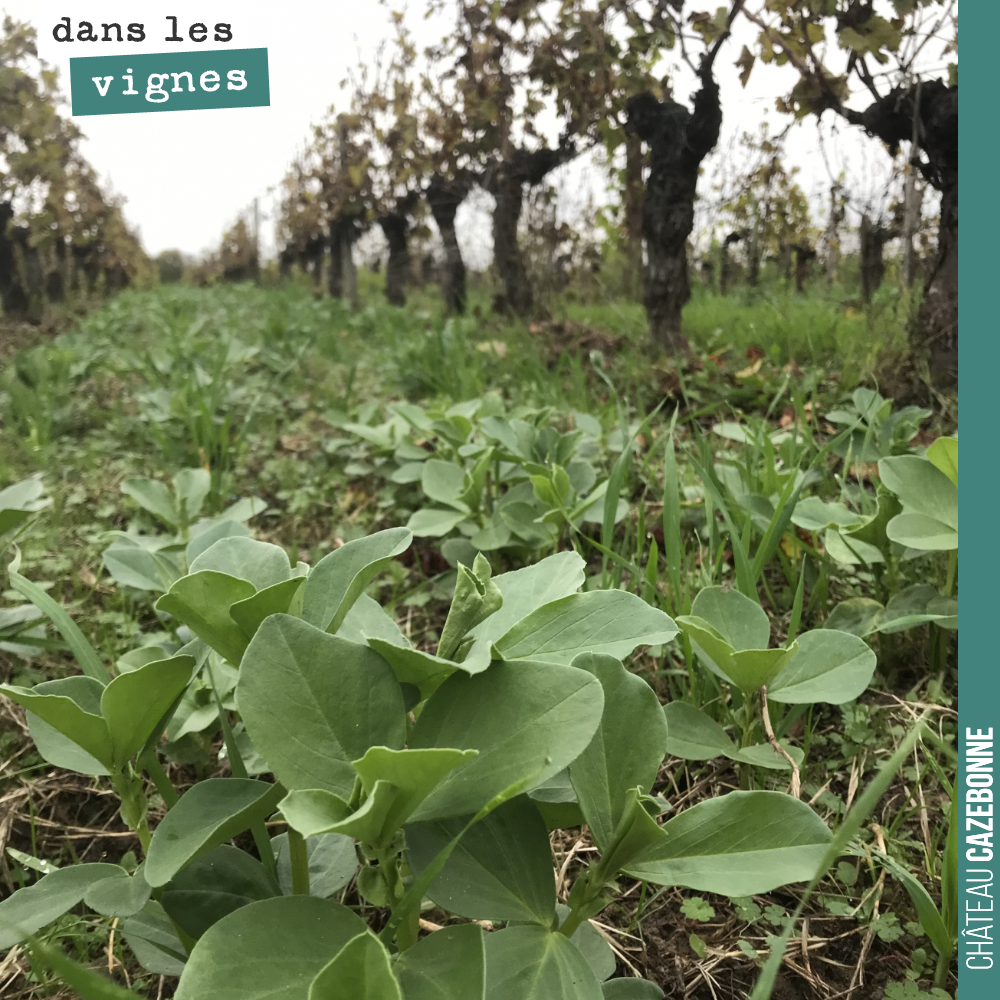
Thanks to its powerful and deep root system, the field bean penetrates compacted layers, acting as a "natural subsoiler". This decompacting action promotes better infiltration of water and air, essential for soil respiration and the development of vine roots. A well-structured soil is less prone to erosion and provides better anchorage for the vines.
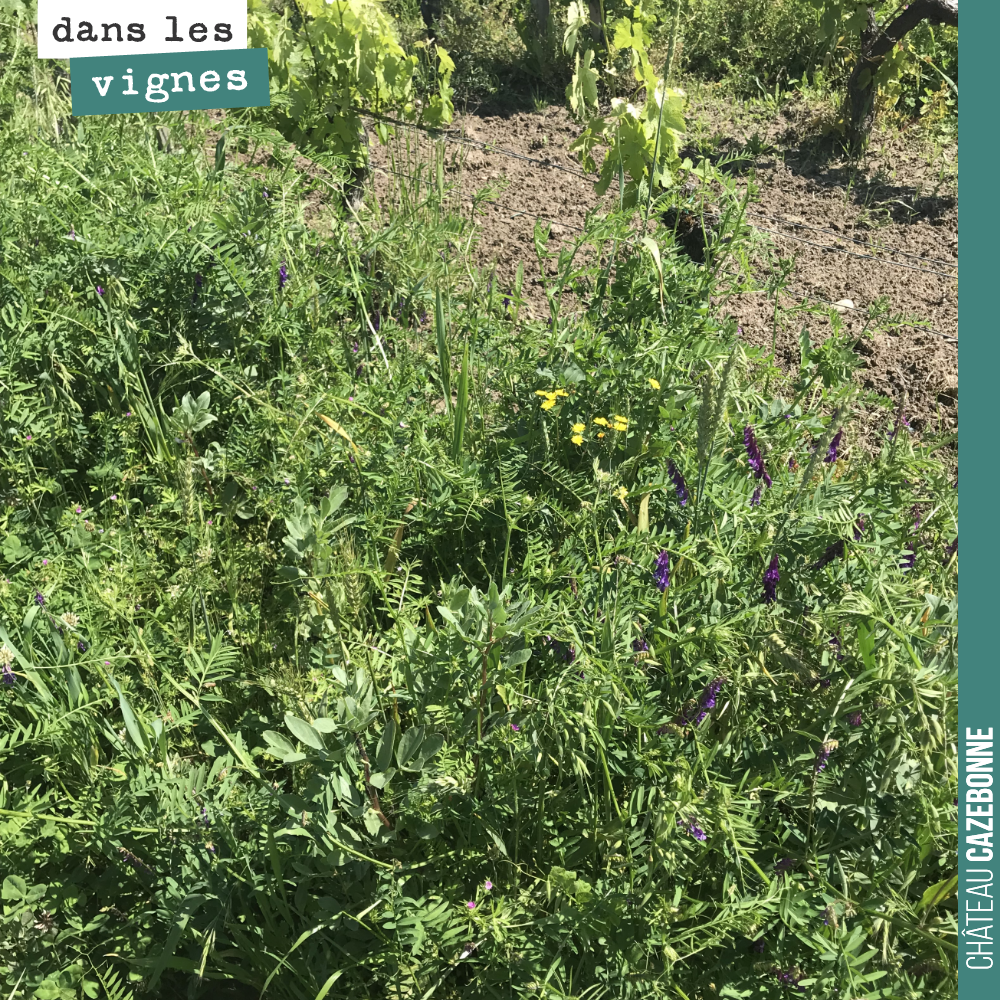
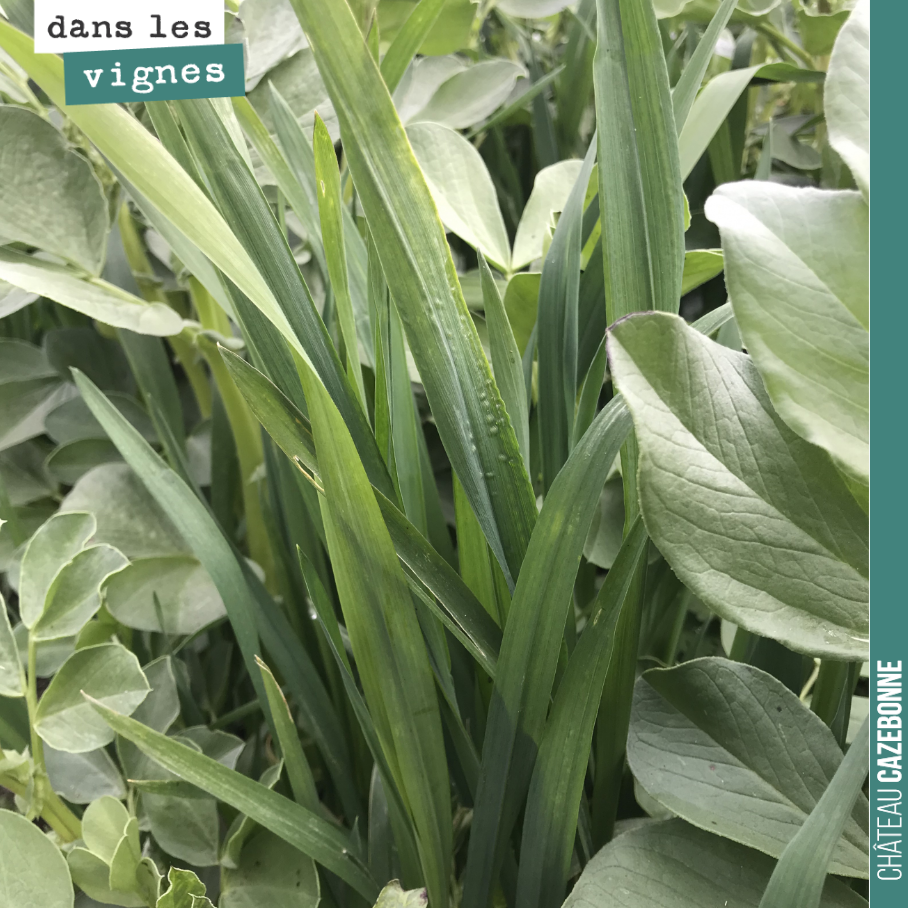
As a legume, the field bean is capable of capturing nitrogen from the atmosphere and transforming it into a form that plants can assimilate, thanks to a symbiosis with bacteria of the Rhizobium genus present in its root nodules. This nitrogen is then gradually released into the soil after decomposition, providing natural and lasting fertilisation to the vine, thereby reducing our dependence on chemical inputs. This is a crucial aspect regarding the role of legumes in general and nitrogen management specifically. In this respect, it shares similar properties with vetch and other plants such as clover.
The field bean produces significant biomass which, once ploughed in or left on the surface to decompose, enriches the soil with organic matter. This matter is the pillar of soil fertility, stimulating microbial activity, improving water and nutrient retention capacity, and promoting the creation of stable humus.
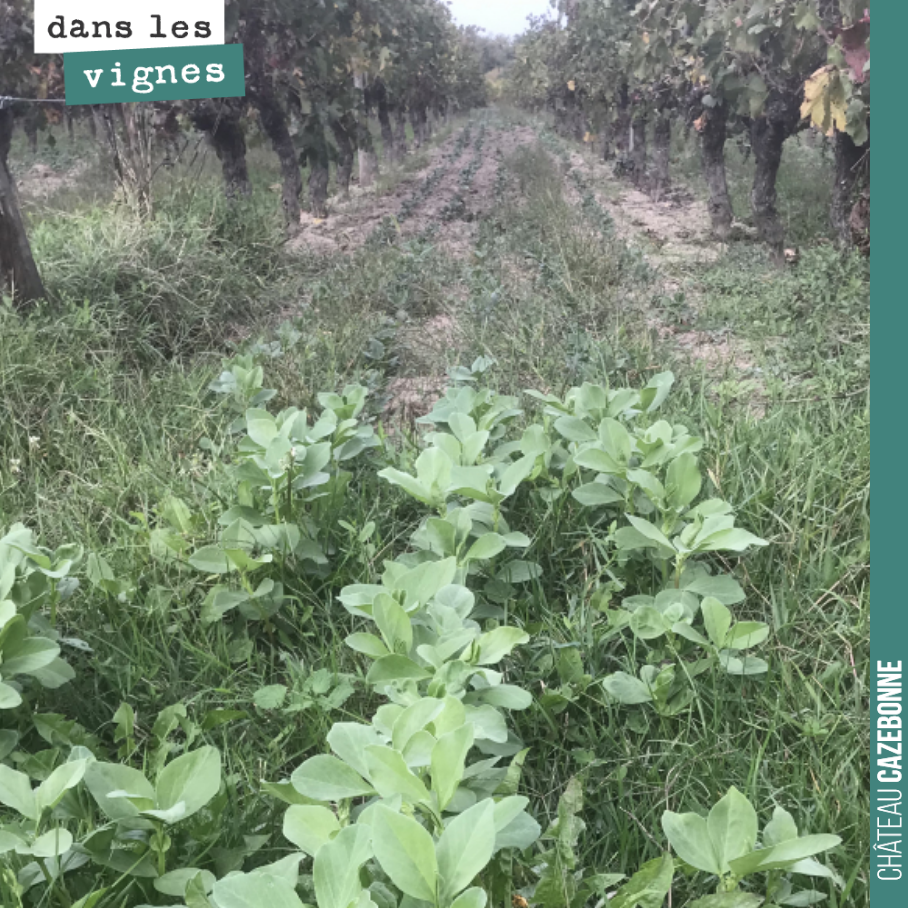
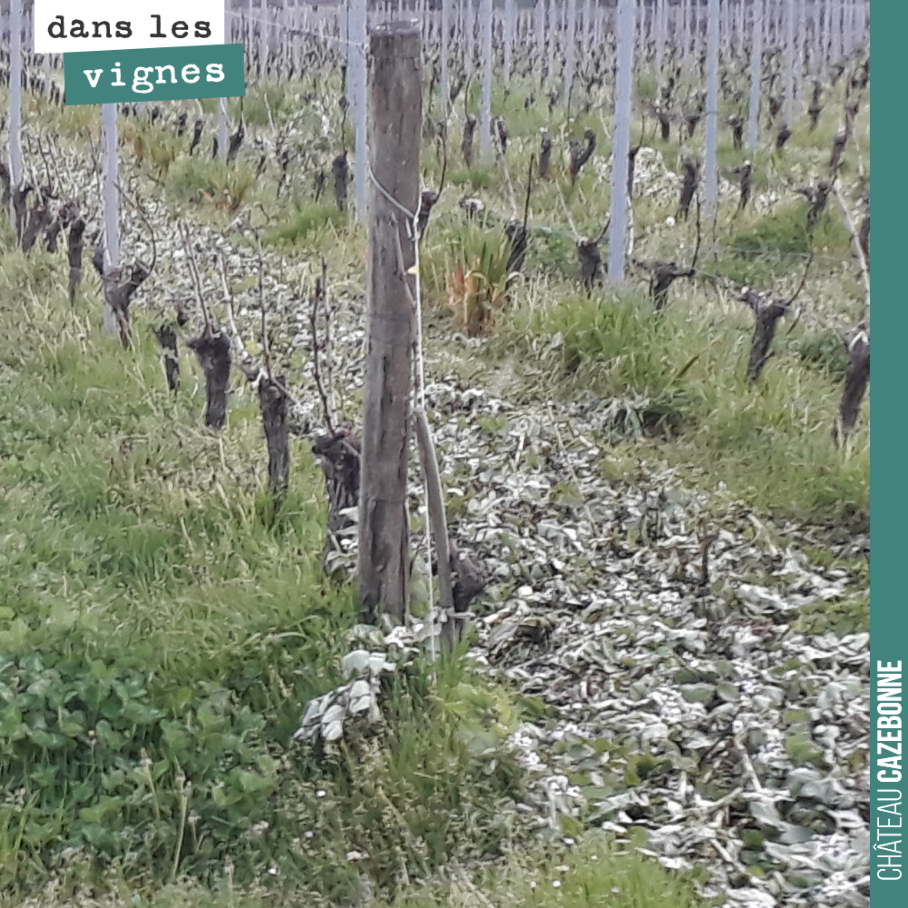
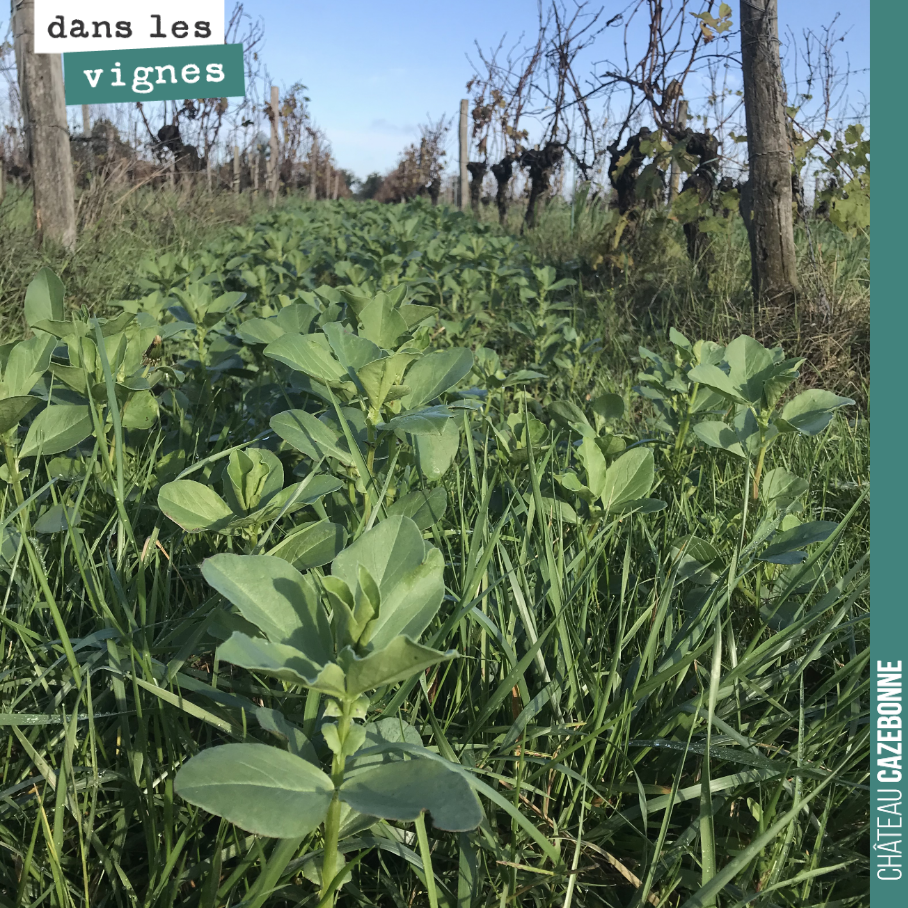
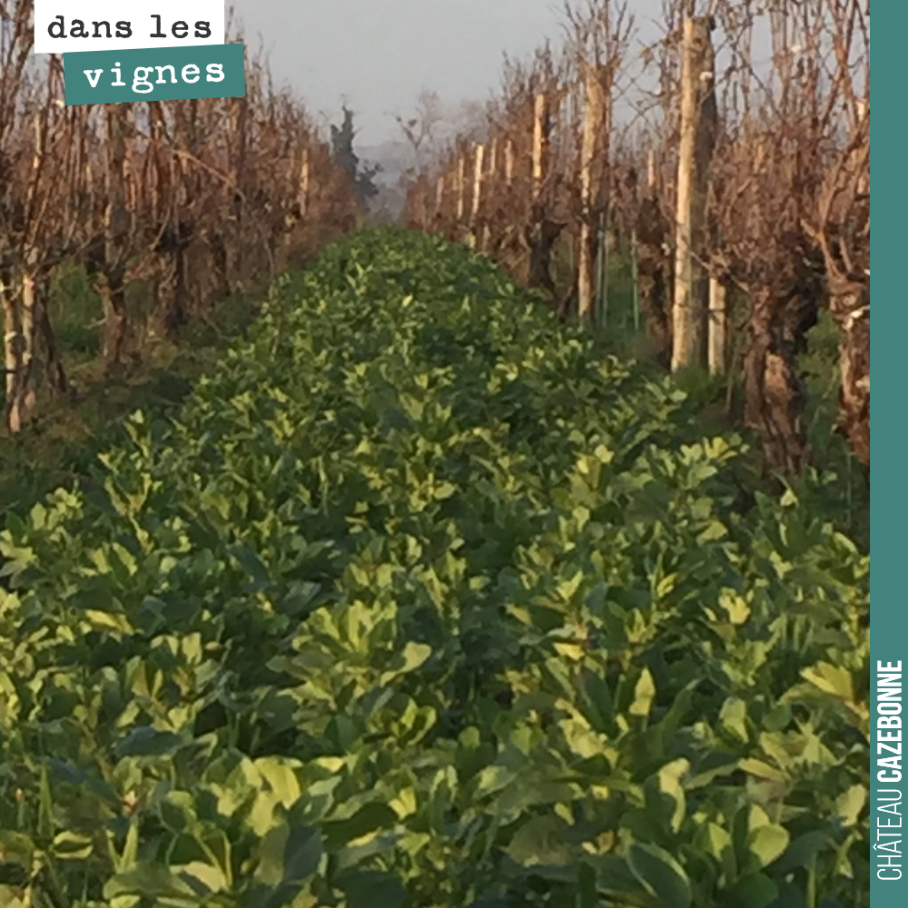
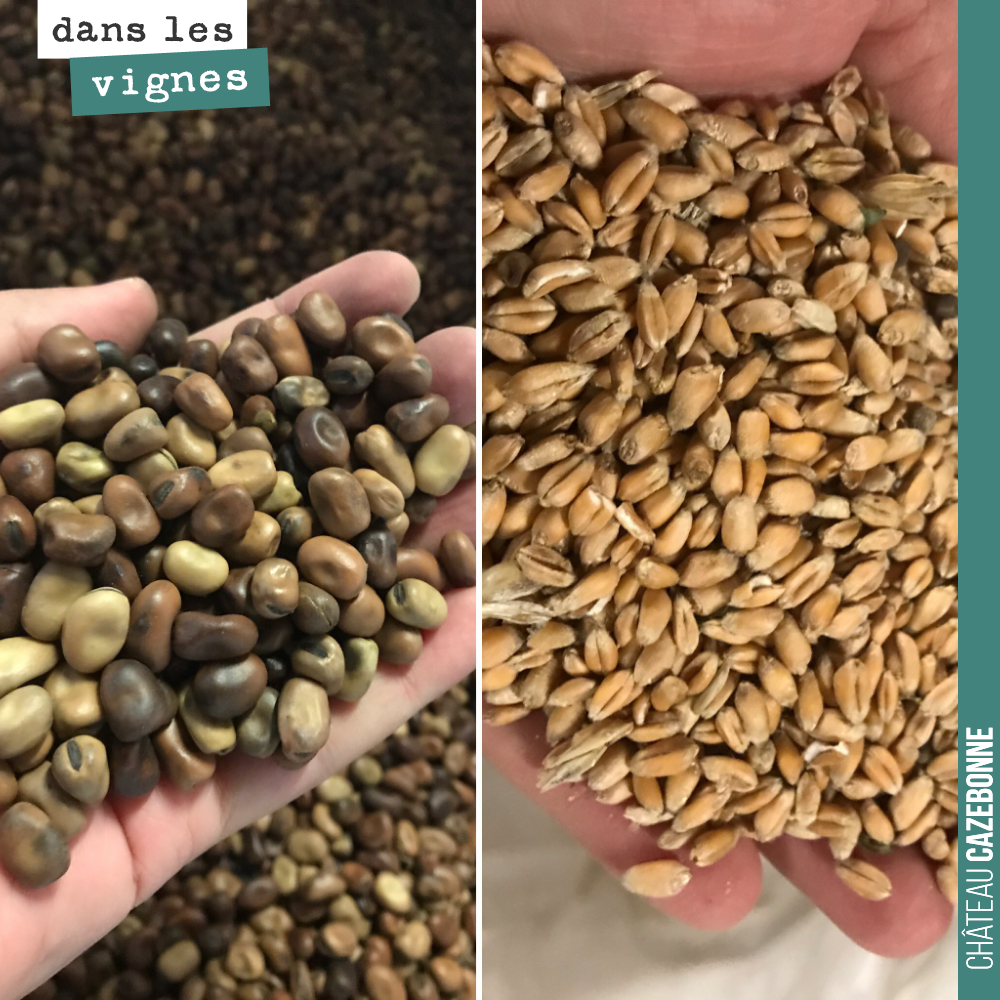
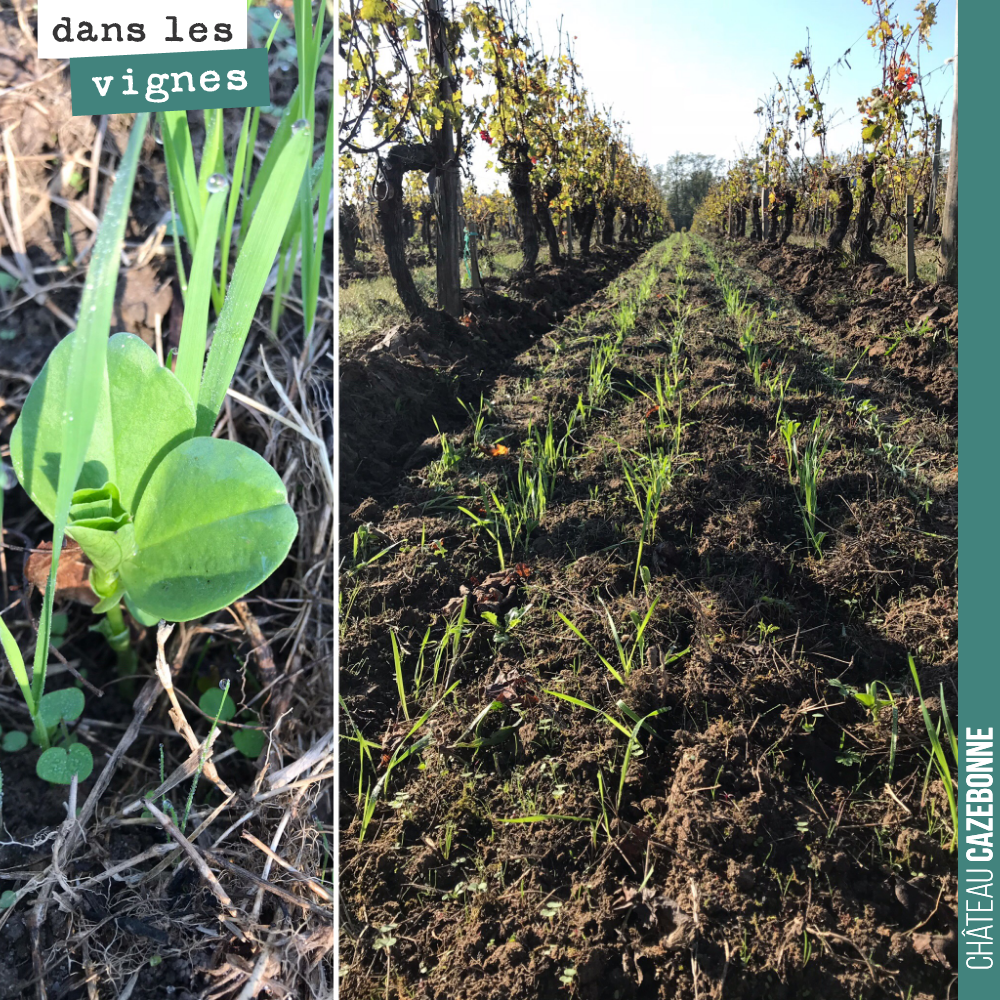
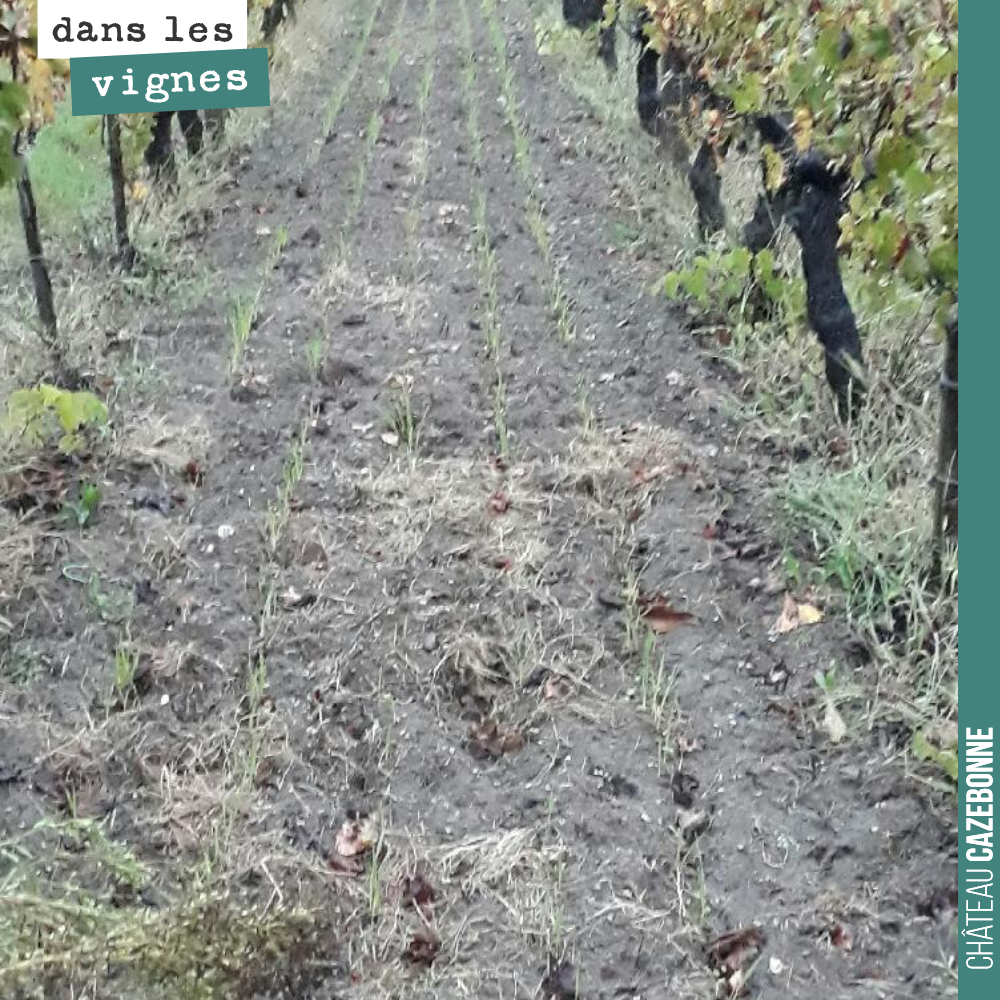
At Château Cazebonne, we sow field beans primarily in the autumn, after the harvest, to allow them to establish before winter. This promotes deep root development and soil protection during the cold months. The equipment used is a specific seed drill that allows precise sowing between the vine rows without disturbing the vine's root system. The field bean is mown or mulched before the spring flowering of the vine, or left to decompose for a significant contribution of biomass. Cover crops, like the field bean, are an essential component of our strategy for managing grass cover in the vineyard.
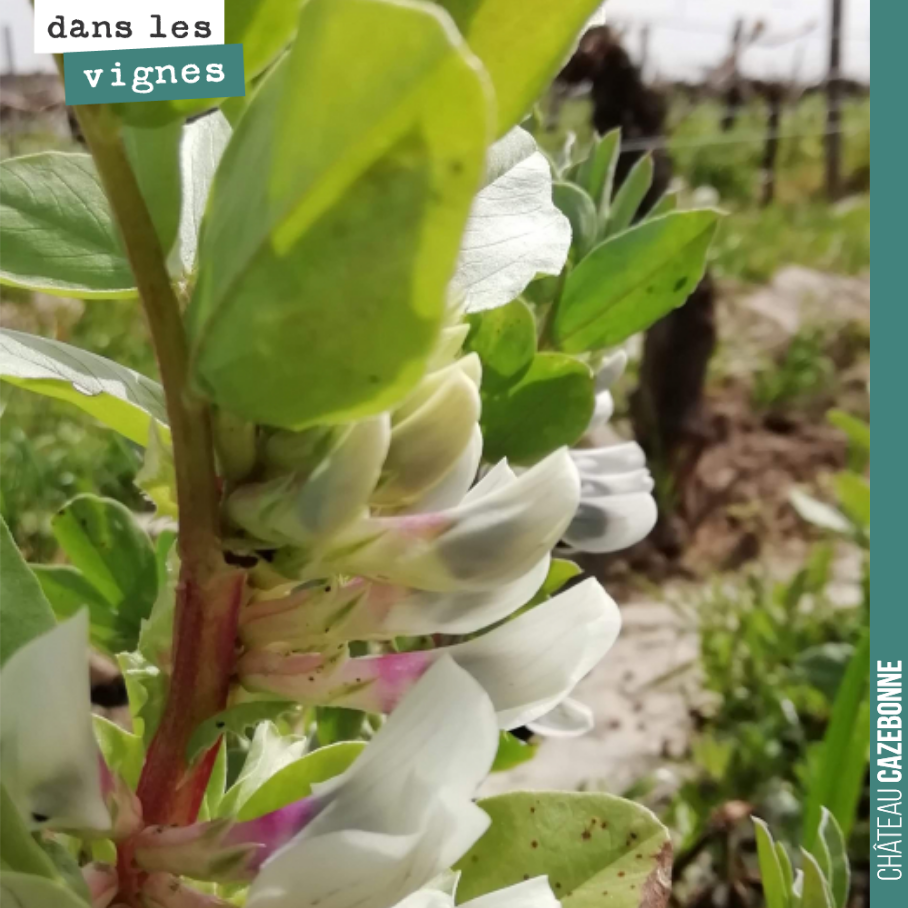
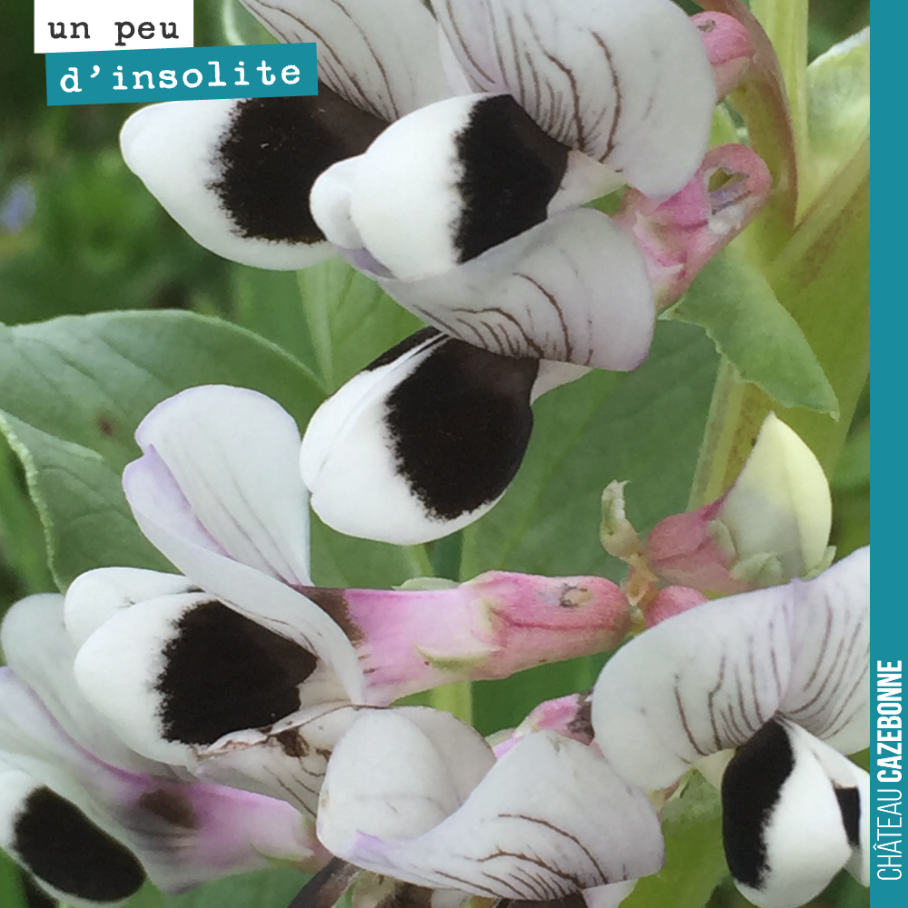
At Château Cazebonne, planting field beans is fully in line with our commitment to agroecology in viticulture and biodynamics. It actively contributes to soil life, the balance of the vineyard ecosystem, and the reduction of our environmental footprint. We regularly observe the development of its field bean flowers, a sign of the good health of our plots.
This meticulous work, inspired by Bordeaux's winemaking history and our desire to reintroduce virtuous practices, is the foundation of our wines' quality. We are exploring ancient grape varieties and forgotten cultivation methods to enrich our terroir. You can learn more about this approach by downloading our book on the history of Bordeaux grape varieties. To test your wine knowledge, do not hesitate to take part in our oenological quizzes. And of course, to support our work and discover the fruit of this labour, our wines are available on our online shop. It is also in this vein that we promote ancient wheats, symbols of this respectful agriculture.
Our suggestions
-5%on your 1st order with code BIENVENUE
The essential6 bottles — Graves red 2022
The best price of the cellar: €12 per bottle delivered.
The everyday red: generous and straight to the point.
I want it Our recommendation92/100 RVF
6 bottles — Graves red 2022, 92/100 RVF
Rated 92/100 by La Revue du vin de France: a solid 10-year ageing potential.
Our Graves for ageing, the finest gateway to the estate.
I want it Go further
12 bottles — the whole range
12 bottles, the whole range tasted: the best discovery-to-price ratio.
The complete tour of the estate, in a single case.
I want it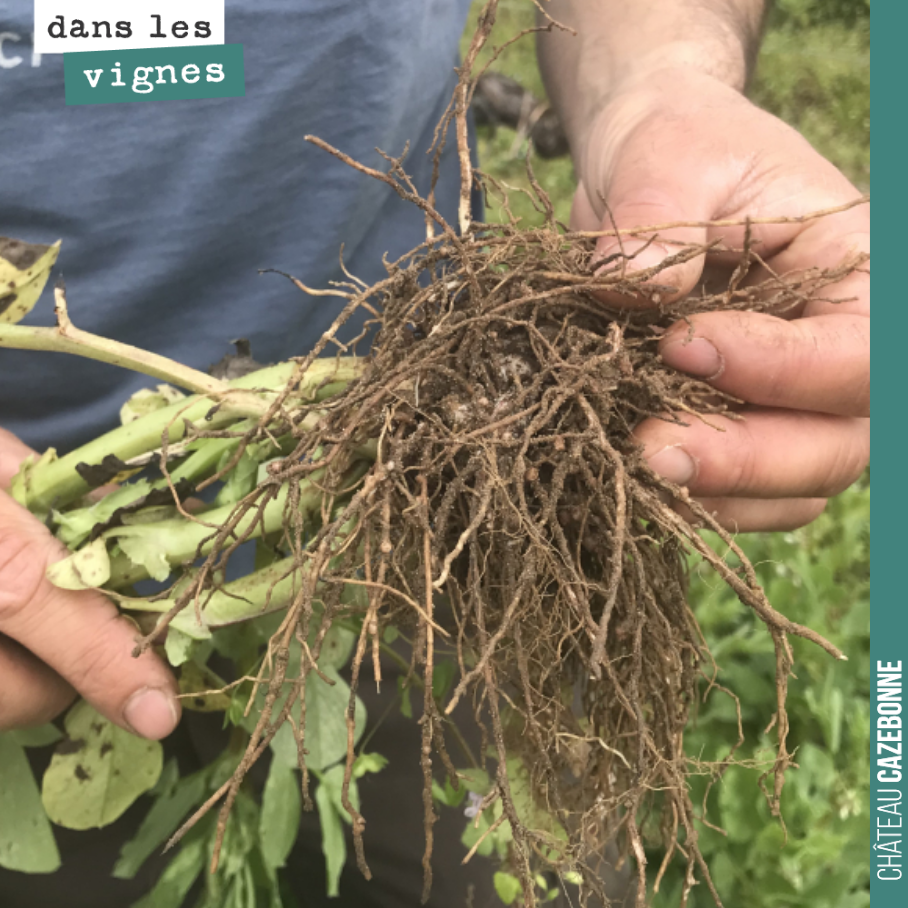
25 March 2023
29 October 2022
04 April 2021

05 March 2021
26 March 2020
24 March 2020
22 March 2020
27 February 2020
15 February 2020
14 February 2020
28 December 2019
29 November 2019
19 November 2019
18 November 2019
31 October 2019
03 June 2019
15 May 2019
14 May 2019
14 May 2019
09 April 2019
06 April 2019
22 March 2019
11 March 2019
04 March 2019
03 March 2019

01 March 2019
20 February 2019
10 February 2019
10 February 2019
19 January 2019
30 December 2018

20 December 2018
14 December 2018
03 December 2018
02 December 2018
18 November 2018

16 November 2018
15 November 2018
10 November 2018
29 October 2018
15 October 2018
07 September 2018
The cellar, forgotten grape varieties and our cuvées, twice a month. 5% off your first order with the code BIENVENUE.