The essential
6 × Entre Amis red
6 bottles — Graves red 2022
The best price of the cellar: €12 per bottle delivered.
The everyday red: generous and straight to the point.
I want itVetch
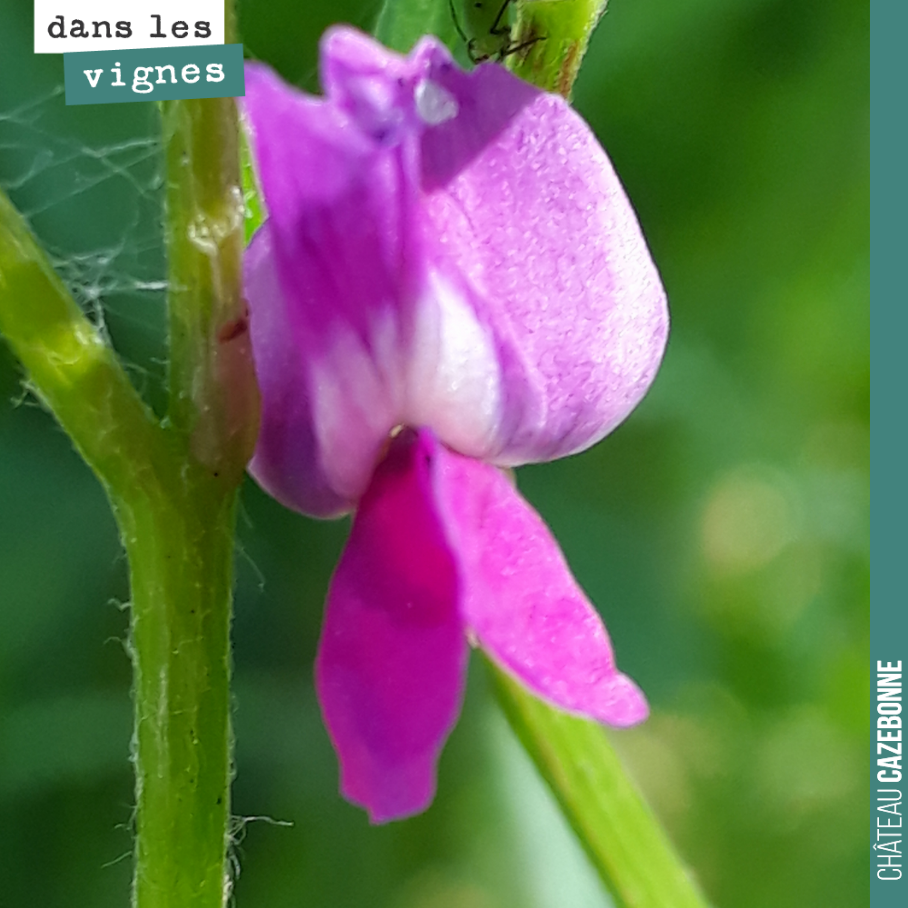
At the heart of our soil regeneration strategies at Château Cazebonne, vetches take pride of place among our cover crops. These annual plants, belonging to the Fabaceae family – the same one that gives us peas and beans – are much more than mere weeds. They are true agronomic engineers, endowed with multiple benefits for the vine and its environment.
Vetches are particularly highly regarded for their ability to fix atmospheric nitrogen. Thanks to a symbiosis with specific bacteria present in their roots, they capture nitrogen from the air and transform it into a form that can be assimilated by the vine. This natural nitrogen supply is a godsend, as it significantly reduces our need for synthetic fertilisers, thereby promoting more environmentally friendly agriculture. Their root systems, both fasciculated and taproot, also help to deeply loosen the soil, improving its structure, porosity, and water retention capacity. This is crucial for our terroirs, especially during periods of drought or heavy rainfall.
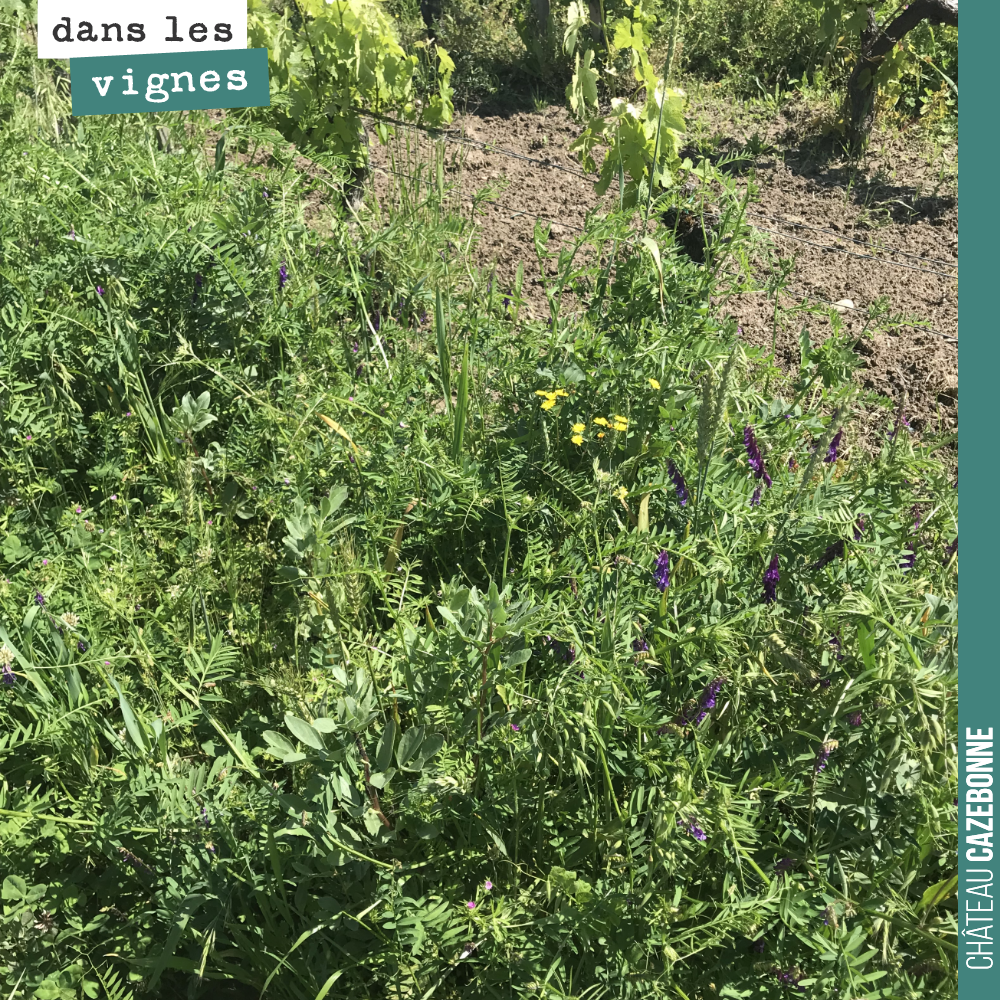
As a ground cover, vetches form a dense plant carpet that effectively protects the soil against erosion, a phenomenon exacerbated by bad weather. This cover crop also plays a thermal role, moderating temperature variations at ground level and creating a more stable microclimate conducive to microbial life. They actively participate in enriching the soil's organic matter: once mowed or wilted, their residues decompose to feed the subterranean ecosystem. This biomass increases soil fertility, stimulating the activity of earthworms and microorganisms essential for a healthy ecological balance in our parcels.
The main objective of introducing vetches into our vineyards is to strengthen overall soil health and naturally optimise vine nutrition. By providing nitrogen biologically, vetches reduce our reliance on chemical fertilisers, fully aligning with an agroecological approach. They also improve soil structure, facilitating water infiltration and limiting run-off, which is crucial for the resilience of our vines against climatic hazards. This practice directly contributes to sustainable viticulture by fostering a living, fertile soil, essential for the expression of our terroirs.
Vetches are generally sown in the autumn, after the harvest, or in early spring. Autumn sowing is preferred at Château Cazebonne, as it allows the plants to establish themselves before winter, benefit from winter rains, and offer maximum soil coverage from the following spring. They can thus be present during the vine's flowering and veraison periods, when their benefits are most notable. They are then mowed or rolled before summer, leaving their biomass on the ground to enrich its organic matter.
The cultivation of vetches begins with minimal soil preparation, often after a light decompaction if necessary. Sowing is carried out using a suitable seed drill to ensure an even distribution of seeds between the vine rows. A shallow burying of the seeds is usually sufficient. No additional irrigation is generally required. In spring, before the vetches start competing with the vine for water and nutrients or become too invasive, they are laid down or mowed. This operation creates a natural mulch that will decompose, gradually releasing nitrogen and other nutrients into the soil, whilst regulating soil temperature and moisture.
For sowing, an inter-row seed drill or a precision seeder can be used. For burying, simple tillage tools like a tine harrow or a rotary harrow are sufficient. Mowing can be done with a flail mower or a crimper roller, which flattens the plants without cutting them, allowing for slower decomposition and better soil protection. We favour these gentle methods to preserve soil life. Regarding alternatives, vetches are often integrated into cover crop mixtures alongside other legumes such as field beans, whose role is also paramount, or clover, as well as grasses like rye to diversify the inputs and benefits to the soil. Field bean flowers, for example, provide highly valued floral biodiversity.
The integration of vetches into our practices is part of our overall approach to soil regeneration. While this plant was once valued for its forage yield, as detailed in "Bordeaux, une histoire de cépages" when discussing the importance of Fabaceae in ancient agrarian systems, it is today a pillar of our sustainable viticulture. This holistic approach to viticulture also allows us to breathe new life into forgotten grape varieties. In Bordeaux, we are passionately replanting these ancestral varieties that had disappeared from the Bordeaux wine landscape, such as Castets or Mancin. This meticulous work is the result of in-depth research and a profound belief in the richness of our local genetic heritage. This ambitious project is only possible thanks to the unwavering support of the many wine enthusiasts who embrace our wines and share our vision of respectful and innovative viticulture. By choosing our cuvées, you are directly participating in the preservation of this lost biodiversity and the construction of a vineyard for the future.
To further your knowledge of the fascinating history of Bordeaux grape varieties, you can receive the digital version of the book "Bordeaux, une histoire de cépages", published by Éditions BBD and written by Jean-Baptiste Duquesne. You can also test your oenological expertise on our quiz page and discover the fruits of our labour by visiting our online shop, where every bottle tells a story of passion and respect for the terroir.
Sources
Our suggestions
-5%on your 1st order with code BIENVENUE
The essential6 bottles — Graves red 2022
The best price of the cellar: €12 per bottle delivered.
The everyday red: generous and straight to the point.
I want it Our recommendation92/100 RVF
6 bottles — Graves red 2022, 92/100 RVF
Rated 92/100 by La Revue du vin de France: a solid 10-year ageing potential.
Our Graves for ageing, the finest gateway to the estate.
I want it Go further
12 bottles — the whole range
12 bottles, the whole range tasted: the best discovery-to-price ratio.
The complete tour of the estate, in a single case.
I want itThe cellar, forgotten grape varieties and our cuvées, twice a month. 5% off your first order with the code BIENVENUE.